In Focus This Week
Federal Work Study funds eligible for variety of elections-related activities
Coalition of organizations create toolkit to help
By M. Mindy Moretti
electionline.org
Federal Work Study funding for community service has always been permitted for use with community groups and local governmental agencies, but until recently there wasn’t much guidance as to whether this was also true for voter engagement work.
 Two years ago, the U.S. Department of Education (ED) issued a “Dear Colleague” letter reminding institutions of higher education of their obligation under the Higher Education Act to “make a good faith effort” to distribute voter registration forms to their students.
The letter also stated that “If a student is employed directly by a postsecondary institution, the institution may compensate a student for Federal Work-Study employment involving voter registration activities that take place on or off-campus.”
In an additional “Dear Colleague” letter issued in February of 2024, the Department clarified that higher education institutions can partner with local or state elections offices to place FWS student workers in positions that support nonpartisan and non-political activities such as broad-based get-out-the-vote activities, voter registration, providing voter assistance at a polling place or through a voter hotline, or serving as a poll worker.
The letter said, in part:
“… [The] Department is today clarifying that FWS funds may be used for employment by a Federal, State, local, or Tribal public agency for civic engagement work that is not associated with a particular interest or group, consistent with 34 CFR § 675.22(b)(5). This work can include supporting broad-based get-out-the-vote activities, voter registration, providing voter assistance at a polling place or through a voter hotline, or serving as a poll worker. We believe this reading is supported by the language of 34 CFR § 675.22(b)(5) and adheres to the meaning of the regulation when read as a whole, namely promoting student employment in the public interest while ensuring that such work is neither associated with any faction in election for public or party office, nor constitutes political activity.”
 “This is an extremely important clarification, because we strongly encourage partnerships between higher education institutions and local election offices for many reasons,” said Zoe Williamson, associate digital communications director with the Students Learn Students Vote Coalition. “Local election offices are often understaffed and have a vital – and nonpartisan – job every election cycle. We also know that less than 5% of election workers are ages 18-25, and young people can add creativity and capacity to these offices while gaining work experience that offers students a unique opportunity to build their leadership skills, learn more about the community, and further their research and academic goals. At the same time student election workers can help forge stronger working relationships between nonpartisan on-campus voter engagement efforts and local election offices.”
Coalition Creates Toolkit
A coalition of student voting organizations – SLSV Coalition, Campus Vote Project and All IN Campus Democracy Challenge – worked together to create a toolkit to pull together a resource that could help guide campus personnel through the entire FWS process in order to take advantage of the federal guidance in time for the 2024 elections.
 According SLSV’s Williamson, the resource covers a lot of ground, to ensure campuses have everything they need to successfully establish a voter registration FWS position or integrate voter registration into existing FWS positions.
“We pulled together information on the FWS program itself, what the typical FWS process looks like, how institutions can classify voter registration work as  part of their community service requirement which in turn allows it to be 100% federally funded, what obstacles institutions may encounter while establishing the positions and how to address them, guidance on how to use the funding successfully once it’s approved and procured, and examples of institutions doing so successfully in the past,” Williamson said.
She noted that it was a lot of work in a relatively short period of time, but it was necessary to expedite since the coalition recommends institutions begin this process no later than May in order to have positions established when students return to campus in the fall.
“By utilizing FWS funding to support local election offices, higher education institutions can strengthen our democracy, add support to a workforce that needs it, and start building a generation of election workers who can ensure continued trust in our nation’s elections,” Williamson said.
Opposition to Department’s Clarification
Not everyone agrees that the funds can be used for the activities as defined by the Dept. of Education.
Republican attorneys general from 14 states signed onto a letter penned by West Virginia Attorney General Patrick Morrissey and Indiana Attorney General Todd Rokita disagreeing with the DOE’s assertion the funds can be used. Their letter asserts that the federal funds may not be used for partisan activities claiming that voter outreach, registration and even poll workers are inherently partisan activities.
“Your ‘Dear Colleague’ letter … says that colleges and universities may use Federal tax dollars to subsidize “broad-based get-out-the-vote activities, voter registration, …voter assistance …, or servi[ce] as a poll worker.” These activities are political—at least in the non-partisan sense—and are often the most valuable political activities in which a party or candidate can engage.”
The letter from the attorneys general compares the use of federal work study funds to private funding offered to elections officials in 2020 and the impact they believe it had on the election results. Since 2020, 28 states have enacted legislation limiting or regulating the use of private funds for elections.
“In other words, laudable activities like encouraging voter turnout and registering voters have to happen somewhere, and that somewhere decides elections. Your guidance effectively licenses colleges and universities to subsidize this activity—and potentially swing elections by choosing where to direct these funds—with taxpayer money. That approach violates limitations imposed by law,” the letter states.
Justin Levitt, Professor of Law, Gerald T. McLaughlin Fellow at Loyola Law School said he does not understand the objection presented by the AGs.
“Students who are working for public agencies and helping with voter registration or helping at polling places – already working in nonpartisan fashion, because they’re working for public agencies – can get paid by the agencies they’re working for. This notice just clarifies that Federal work-study funds can be used to help,” Levitt said.
Levitt said he agrees with the Dept. of Education on their legal analysis and that it seems to him that the best way to square the statutory instruction that the funds can be used in ways that “increase civic participation” with the regulatory instruction that it can’t involve any “partisan or nonpartisan political activity” is to understand that the prohibited “nonpartisan political activity” is activity on behalf of a particular nonpartisan candidate (like a local municipal candidate) or ballot measure.
Though Dept. of Education regulations aren’t under the Hatch Act, he said that’s very consistent with the Hatch Act, which defines “partisan political activity” as activity directed toward the success or failure of a party, candidate for partisan office, or partisan political group, and a nonpartisan election as an election for nonpartisan candidates or a ballot issue.
“Put those together, and nonpartisan political activity would be activity directed toward the success or failure of a candidate for nonpartisan office or a nonpartisan ballot issue,” Levitt said. “ED very clearly fenced out that activity. In contrast, nonpartisan voter registration and the like seems like exactly the sort of activity designed to increase civic participation that Congress said is just fine for work-study.”
New Guidance from CISA, FBI, ODNI
Agencies release guidance on foreign malign influence operation
CISA, FBI, and ODNI release guidance for securing election infrastructure
 This week, the Cybersecurity and Infrastructure Security Agency (CISA), Federal Bureau of Investigation (FBI), and the Office of the Director of National Intelligence (ODNI) released Securing Election Infrastructure Against the Tactics of Foreign Malign Influence Operations, a guidance document that details the latest tactics employed in foreign malign influence operations to shape U.S. policies, decisions, and discourse and could be used to target America’s election infrastructure.
The product discusses popular tactics used in foreign malign influence operations, provides recent examples, and recommends potential mitigations for election infrastructure stakeholders. While many of these tactics are not new, recent advances in generative artificial  intelligence (AI) technology have made it much easier and cheaper to generate and spread convincing foreign malign influence content.
“The elections process is the golden thread of American democracy, which is why our foreign adversaries deliberately target our elections infrastructure with their influence operations. Defending our democratic process is the responsibility of all of us,” said CISA Senior Advisor Cait Conley. “CISA is committed to doing its part to ensure these officials – and the American public – don’t have to fight this battle alone. We will continue to work with the election community to ensure they have the tools and information they need to run safe and secure elections in 2024 and beyond.
“The FBI and its partners work diligently every day to disrupt foreign malign influence operations targeting our democratic institutions,” said Acting Assistant Director Joseph Rothrock of the FBI’s Counterintelligence Division. “We are putting out this guide because our strategy in  combatting this threat starts with awareness and collaboration. We will continue to relentlessly pursue bad actors looking to disrupt our election infrastructure.”
“Foreign actors continue to pursue efforts aimed at sowing discord among the American people, with the ultimate goal of eroding confidence in our democratic institutions,” said ODNI Foreign Malign Influence Center Director Jessica Brandt. “The normalization of influence activities, combined with the rise of new technologies, increasingly presents a whole-of-society challenge for the Intelligence Community to address alongside the broader U.S. Government, industry, and civil society.”
View the Securing Election Infrastructure Against the Tactics of Foreign Malign Influence Operations guide.
electionline Daily News Email
 What’s the best part of waking up? electionline Daily News in your inbox of course so be sure to sign up for your daily dose.
Each morning you’ll receive the top headlines of the day, plus a listing of states featured in that day’s news round up.
To sign up, simply visit our site and provide us with your email and you’ll begin receiving the news in your inbox each morning.
We Google so you don’t have to!
Election News This Week
 Daily News: In an effort to promote transparency, Pennsylvania Secretary of State Al Schmidt has been providing daily updates in the lead up to the state’s April 23 primary. The updates are streamed daily on Facebook and PACast. “The Pennsylvania Department of State is committed to transparency in our electoral process, and these daily updates are part of that effort,” Schmidt said. “The more Pennsylvanians understand about all the work that goes into safeguarding our elections, the more confident they can feel in the process.” One focus of the updates has been voting by mail. With nearly 900,000 Pennsylvanians requesting a mail ballot and with ever-changing rules and procedures, Schmidt used one of his daily check-ins to show how to properly fill out a mail ballot to help voters avoid mistakes that may cause their ballot to be rejected. During a briefing earlier this week Schmidt also talked about election security noting that a new election threats and security task force is already communicating with law enforcement and election administrators on a local, state and federal level to ensure primary voting proceeds smoothly and securely.
 Youth Engagement: This week in Tennessee, Secretary of State Tre Hargett visited Middleton and Crockett County High School and Trinity Christian Academy to award students with the Dudley Award. He says that speaking to this group is important. “Its important to have all voters but if you look at the voters registration participation numbers the worse voters turnout is ages 18 to 29. So we really want to help these students learn how to flex their civic muscle. Get them registered to vote. Help them to understand what it takes to register to vote,” said Hargett. The Dudley Award is in honor of Anne Dallas Dudley who was a woman’s suffrage and voting activist. To receive the Dudley award, schools must meet a certain registered voter threshold. For a gold award, 100% of students age 18 or older must be registered to vote. In Iowa, Secretary of State Paul Pate presented the Fremont-Mills High School with the Carrie Chapman Catt Award. The award goes to any school district registering a high number of eligible students to vote ahead of the June primaries in Iowa. Pate tells KMA News that Fremont-Mills was one of the schools that well surpassed the required percentage. “There’s hundreds of school districts across the state and when you look at this, we’re recognizing roughly 40 high schools in the entire state that have achieved this,” said Pate. “What they’ve done is they’ve registered over 90% of the eligible students to vote and this is the first step of course getting them registered and then they’ll hopefully be stepping up in the June primaries and in the fall elections.” This year, Pate says Fremont-Mills registered 100% of eligible senior students, with this being the second time they have received the award. Pate adds that getting eligible high school seniors registered to vote can also impact their family members and peers.
 Sticker News: The Sedgwick County, Kansas Election Office unveiled the new artwork voters will see the next time they cast their ballots. Yamilet Salazar, an eighth grader at Mayberry Middle School, is the artist behind the county’s new “I voted” sticker. Her design features the American flag, the sunflower and the state flag. Sedgwick County Election Commissioner Laura Rainwater said more than 300,000 stickers will be printed and available for the primary election on Aug. 6 and the general election on Nov. 5. Salazar was among 127 students from 12 different schools in the county who entered the contest. The county said it hopes to hold the contest annually.
 International Election News: Here at electionline, we stick to domestic elections, but every once in a while we like to feature some international news and with voting starting in the world’s largest democracy this week, we have some interesting pieces on what it takes to pull off elections in India. With nearly 1 billion eligible voters, the election in India is the largest in the world. During our story searches we always see incredible headlines about the elections in India. Given the size of the electorate, there isn’t a single date when everyone will vote. Instead, polling will unfold over seven phases around the country, beginning on April 19 and ending on June 1. All the votes from the country’s 28 states and eight union territories will be counted and results released on June 4. From the high peaks of the Himalayas to the remote forests of India’s central states, votes are cast electronically across more than 1 million polling stations. Some 15 million election workers will be deployed, traveling via road, boat, camel, train and helicopter to reach every Indian voter. At 15,256 feet (4,650 meters), Tashigang, a village in the far northern state of Himachal Pradesh on the border with China, was the world’s highest polling station when its residents voted in 2022 state government elections.
Personnel News: Patrise Perkins-Hooker has announced her resignation from the Fulton County, Georgia board of elections. Cathy Woolard has been appointed to serve in the interim. Citing threats, Vanderburgh, Indiana County Clerk Carla Hayden has announced her retirement. Haley Rawles is the new Vance County, North Carolina elections director. Rená Morris has retired as the Wilson County, North Carolina board of elections director. Tasha Bell is the new Wilson County, North Carolina board of elections director. Niki Wilkinson has been appointed to the new role of office administrator for the Columbiana County, Ohio board of elections. James Satcher has been appointed the new supervisor of elections for Manatee County, Florida. Natick, Massachusetts Town Clerk Lynn P. Kelly is no longer on the job. Bryson Behm has been appointed interim county clerk/auditor of Cache County, Utah. Stephen Trout has joined Clear Ballot as director of strategic partnerships. Incumbent Escambia County Supervisor of Elections Robert Bender has filed to run for re-election.
 Congratulations: Congratulations to U.S. Virgin Islands Elections Supervisor Caroline Fawkes for receiving an honorary degree from the University of Virgin Islands. Fawkes will receive an honorary Doctor of Humane Letters degree, honoring her trailblazing accomplishments as an aviator and the role she plays as a mentor and inspiration to the territory’s youth. A native of St. Croix, she made history as the first female to pilot the U.S. Army’s C23 Sherpa airplane and the first female state aviation
  officer in the Army National Guard. And congratulations also go out to Wisconsin Election Administrator Meagan Wolfe who received the 2024 National Public Service Award from the American Society for Public Administration (ASPA). The award recognizes “outstanding contributions to public service,” and was established by ASPA and the National Academy of Public Administration in 1983. “Leadership can be a struggle even during the best of times,” WEC chairman Don Millis said. “But in these challenging times, when electoral myths are widely accepted and invectives often drown out civil debate, Meagan has shown tremendous leadership, calmly working with the Commission staff, clerks and the commissioners to ensure that Wisconsin elections are secure and trusted.”
New Research, Reports and Studies
 Voting Accessibility: U.S. Election Assistance Commission (EAC) – in partnership with Rutgers University – released a new report examining how the Help America Vote Act (HAVA) impacted the voting experiences of voters with disabilities, since enacted in 2002. In 2020, an estimated 38.2 million people with disabilities were eligible to vote. In 2024, this is expected to rise to above 40.2 million with an updated estimate expected from Rutgers later this year. The EAC worked with researchers from the Program for Disability Research in the School of Management and Labor Relations at Rutgers University to complete the report. The reports and other information for “Voting Experiences Since HAVA: Perspectives of People with Disabilities” can be found on the EAC’s website. The research reveals that since its passage, HAVA has improved the voting experiences of people with disabilities and that it can be used to continue to address the difficulties people with disabilities face when voting. Other key findings include: Turnout of voters with disabilities has increased since HAVA was adopted and Accessibility of polling places has improved significantly over the last 20 years. The researchers used qualitative data from six focus groups of 44 voters with disabilities to examine their perspectives on their voting experiences, and how their experiences have changed over time. The report also presents quantitative data from national surveys on voter turnout and accessibility to provide context for exploring the focus group discussions. “Ensuring accessibility for voters with disabilities and protecting the right to casting a private and independent ballot has been a priority for the agency since it was established,” said EAC Chairman Ben Hovland. “As this report demonstrates, in the 22 years since the passage of HAVA, significant progress has been made to improve accessibility for voters with disabilities. The EAC will continue to support state and local election officials as they work to improve accessibility of the voting process in the 2024 elections and beyond.”
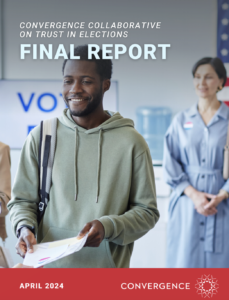 Trust in Elections: The Convergence Collaborative on Trust in Elections Final Report is informed by a thorough landscape analysis of the issues surrounding distrust of U.S. elections and a months-long convening of cross-partisan and cross-sector leaders. The Report explores the challenges and solutions for public messaging that could renew trust in the electoral process. It also includes a customizable template for local election officials to demystify the voting process in their communities as well as resources from other organizations working to increase trust in elections and unite Americans across political divides. The project was done in parallel with the Braver Angels Trustworthy Elections Campaign. “In recent years, there have been concerning developments in how Americans perceive the voting process. Without trust in our elections, we risk undermining our democratic republic,” notes Mariah Levison, CEO and President of Convergence. “However, I am encouraged by the opportunity for us to unite in ensuring that Americans are well-informed and feel confident in our electoral system. Convergence and other organizations working to bridge divides across differences, such as Braver Angels, are playing a crucial role to restore faith in both the voting process and our nation as a whole. We are proud to be part of this collective effort.” Building off of a landscape analysis of the issues surrounding distrust of U.S. elections, Convergence convened the Convergence Collaborative on Trust in Elections, a group of cross-ideological and cross-sectoral leaders with deep expertise in elections at national, state, and local levels, alongside communications and behavior change experts to discuss approaches and solutions for equipping election administrators with credible messages for educating and informing their constituents, thereby increasing trust in elections. Ultimately, Collaborative participants created a template for local election officials to educate and inform young and new voters about what happens in their jurisdiction after a ballot is cast. The template provides local election officials with the opportunity to explain – succinctly and clearly – the entire voting process in their jurisdiction.
Election Security Updates
 Fighting Mis-and Disinformation: The Global Cyber Alliance has partnered with the DISARM Foundation. The DISARM Foundation has developed the “DISARM Framework,” a tool and approach to identifying and addressing misinformation and disinformation. While GCA offers a free cybersecurity toolkit for elections managers that provides implemetable tools to mitigate basic cyber hygiene risks, the toolkit did not until now include a tool to address misinformation and disinformation. The Global Cyber Alliance believes the DISARM Framework tool has merit and could be useful for elections managers and organizations that support them. While GCA’s toolkits are designed for smaller, under-resourced elections offices, the DISARM Framework may effectively serve elections offices that have a higher “cyber maturity” level. The framework tool is free to use and the foundation also offers reasonably priced training to augment use of the tool.
 Threats and Harassment Dataset: Building on pilot data collection conducted in 2022, Bridging Divides Initiative has now publicly released the Threats and Harassment Dataset (THD), a first-of-its-kind dataset capturing hostility towards local officials in the United States. The longitudinal event-based data tracks the rate, frequency, types, and targets of threats and harassment faced by a wide range of local officials around the country, from elected officials at the municipal, county, and township level to appointed officials and election workers. At launch, the dataset contains more than 750 unique observations of threats or harassment from January 2022 to March 2024, based on information gathered from traditional media, open-source monitoring, and a network of data contributors. Going forward, the THD will be updated monthly to provide users with near-real-time data on the evolving threat and harassment landscape going into the election and beyond, in order to better support evidence-based decision-making to protect civic spaces.
Legislative Update
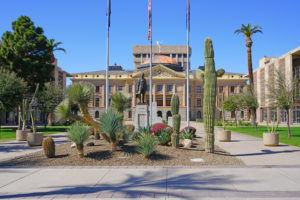 Arizona: Gov. Katie Hobbs (D) has vetoed several election bills. On April 10, Hobbs vetoed bills passed by the GOP-controlled legislature that would ban those convicted of ballot abuse from holding elected office and prevent county recorders from providing voter registration cards to most of those whose mailing addresses are outside of the state. She also vetoed a bill that would have required political parties that opt to conduct their own presidential primary election instead of participating in the publicly administered one to provide accommodations to allow disabled voters and overseas military personnel to participate. Hobbs also described the bill to limit mailing of voter registration cards, House Bill 2404, as unnecessary, writing in her veto letter that state law and the Elections Procedure Manual, which carries the force of law, “already outline the process when a voter provides a new residential address that is located outside the state.”
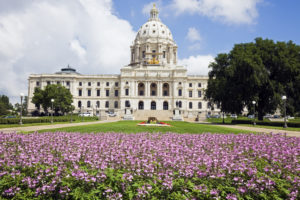 Minnesota: The Office of the Secretary of State is expected to receive about two-thirds of supplemental funding allocated for elections functions. Much of that would tie into a policy provision that would let cities, counties and school districts use ranked choice voting for local offices within the political subdivision. With a supplemental spending target of $500,000 in fiscal year 2025, HF4411, as amended, would provide $209,000 for ranked choice voting purposes. Approved by the House Elections Finance and Policy Committee on a split-voice vote, the bill’s next stop is the House Ways and Means Committee. The secretary of state’s office would also receive an additional $127,000 for the voting operations, technology, and election resources account that assists local governments with certain election-related expenses. Other financial provisions would transfer $144,000 from the General Fund to the Voting Rights Act cost sharing account in the special revenue fund — money that could be used by local governments if the “Minnesota Voting Rights Act” becomes law — and $20,000 from the General Fund would go to the Campaign Finance and Public Disclosure Board to standardize local election reporting requirements created in the bill. The latter comes from HF3645, sponsored by Rep. Nathan Coulter (DFL-Bloomington).
 Nebraska: Lawmakers passed a bill April 11 to restore the voting rights of those convicted of felonies upon the completion of their sentences, including prison and parole time. The bill, introduced for years by Omaha state Sen. Justin Wayne, passed by a wide margin in the last year of Wayne’s second term. He is barred by term limits from running this year for a third term. Currently, a person who has been convicted of a felony must wait two years after completing all the terms of their conviction before regaining voting rights. Wayne’s measure eliminates that waiting period, established in 2005 by the Legislature. Prior to the waiting period, a person convicted of a felony lost their right to vote indefinitely. The passage of the bill “means everything for the thousands of people who have not been full participants in society,” said TJ King, a Lincoln, Nebraska-based outreach specialist with the Nebraska AIDS Project who was unable to vote in the 2022 general election after coming off probation for drug and theft convictions three months earlier. King said the bill’s passage is the final layer in his ability to be civically engaged and “have a full voice and complete connection to the community.” Republican Gov. Jim Pillen’s office did not immediately respond to messages by The Associated Press asking whether he would sign the bill into law.
Jersey City, New Jersey: With a 7-0 vote the city council approved a measure to implement ranked choice voting. Before the new law can take effect, however, the state legislature will have to pass bills known as S1622/A4042 to authorize municipalities’ use of RVC (ranked choice voting). And then, the city would have to ask voters in a binding referendum “to be held at the first general election in November following the enactment of state legislation,” whether they wanted to amend the city’s charter to accommodate the proposed method for helping decide elections. As described by the newly-passed city ordinance, RCV “is a simple upgrade to the way Jersey City voters currently vote. RCV enables voters to rank candidates in the order of preference and ensures that winners of any election have the support of – and are accountable to – a majority of voters.”
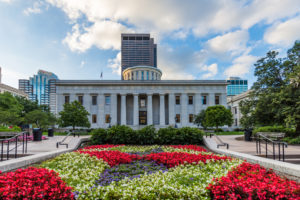 Ohio: State Rep. Gary Click, R-Vickery, has introduced a bill that would make it easier to transfer registrations between counties, by encouraging voters to list their previous address when they register. In a committee hearing to introduce his bill, Click described it as “a common sense piece of legislation designed to streamline the integrity of Ohio’s voter rolls through a citizen-initiated process.” Right now, if an Ohio resident moves to another county and updates their voter registration, they’re supposed to fill out a separate form to cancel their previous registration. The thing is that almost never happens. By extending the voter registration form to include past addresses, Click’s measure allows voters to kill two birds with one stone and get the ball rolling immediately on updating voter files. “Although the voter registration rolls are periodically reviewed for the purpose of flagging duplicate, inactive or deceased voters,” Click said, “HB 457 will streamline the process, saving time and money while improving accuracy.” In his testimony, Click noted he got input on the legislation from the Ohio Secretary of State’s office and the Ohio Association of Election Officials. In a statement, Nazek Hapasha from the League of Women Voters of Ohio noted “although we have not yet been in discussion with elections officials about HB 457, the proposed legislation appears to offer a common sense update to our voter registration system that helps local boards of elections streamline voter registration processes, and saves time and money.”
 Rhode Island: The Senate Judiciary Committee voted to hold bill S2779, which would amend the state constitution by removing a policy that requires residents to register to vote a minimum of 30 days before a state election. At the hearing, Sen. Alana DiMario (D-North Kingstown, Narragansett, New Shoreham), who sponsored the bill, said that the amendment “would allow the voters of Rhode Island to decide if it is time to remove the outdated — and longest in the country — 30-day in advance voter registration deadline from the state constitution.” Opponents of the bill testified citing concerns related to residency requirements, credibility and voter apathy. Secretary of State Gregg Amore (D) said at the hearing that same-day voter registration would improve voting accessibility and civic engagement. He also noted that people who become naturalized citizens late in the year might miss the registration deadline, which could exclude a large population from exercising their newly attained rights. Amore also noted that same-day voter registration has already been implemented for presidential elections. “An average of 6000 voters in the last two presidential elections cast a same day vote when they registered … and the process worked,” he said.
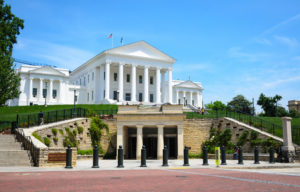 Virginia: Gov. Glen Youngkin (R) blocked bills meant to continue the adoption of ranked choice voting, expand legal protections for voting rights and modify data practices to avoid canceling the registrations of eligible voters. The governor also vetoed a measure that would have expanded the state’s existing ban on guns at polling places and nixed a bill that would have added photo identification cards issued by nursing homes and other state-licensed medical facilities to Virginia’s list of acceptable IDs for voting. Youngkin vetoed a relatively minor bill that would have required election officials to accept identification cards issued by state-licensed private medical facilities such as nursing homes. “Expanding this list presents additional complexities for poll workers in discerning which forms of identification are acceptable,” Youngkin’s veto said. Youngkin also vetoed Democratic bills that would have restored Virginia’s participation in ERIC, a multi-state voter data sharing program that has been abandoned by many red states after coming under fire from conservative activists. In his veto statement on the ERIC bill, Youngkin said there were valid concerns about how the organization was being run. “I have been explicitly clear about my affirmation of the legitimacy of our elections,” the governor’s veto said. “My focus is safeguarding Virginians’ private information and continuously improving an efficient, cost-effective voter registration system.”
Legal Update
 Federal Litigation: Smartmatic agreed this week to settle its lawsuit against the conservative cable television network One America News over its coverage of the 2020 election. According to The Washington Post, the terms of the settlement, including any compensation involved, were not announced. “Smartmatic has resolved its litigation against OANN through a confidential settlement,” Smartmatic’s lead attorney, J. Erik Connolly, said in a written statement. Charles L. Babcock, an attorney representing OANN, confirmed the case was settled but provided no further details. The case against OANN, filed in November 2021, was part of a slew of lawsuits aimed at right-leaning television networks that aired unproven or disproven allegations of voting fraud by attorneys associated with Donald Trump. Smartmatic, headquartered in Florida, also sued Fox News Channel — for $2.7 billion — and Newsmax; both of those cases are ongoing, according to court dockets. The voting company’s suit noted that its involvement in the 2020 election was extremely limited, with its technology only being used in Los Angeles County. Pro-Trump advisers and media figures had suggested Smartmatic meddled in the election nationwide. “OANN knew its assertions about Smartmatic were not true,” the lawsuit said. “OANN had seen no evidence to support the assertions. But OANN chose to spread disinformation.” OANN, owned by Herring Networks, had denied that Smartmatic’s allegations had any merit, and countered that its on-air personalities were merely covering a newsworthy election.
 Colorado: A Colorado Court of Appeals has decided that a defamation lawsuit against the Trump campaign and other conservative groups from a former employee of Denver-based Dominion Voting Systems can move forward. Eric Coomer was Dominion’s director of product strategy and security. He sued for defamation after he found himself at the center of right-wing conspiracies, alleging that he personally rigged the 2020 presidential election for Joe Biden. He was forced into hiding after receiving death threats. On Dec. 22, 2020, Coomer sued the Trump campaign, several campaign surrogates, and pro-Trump media outlets. On April 10 the court ruled Coomer’s case could move forward because he established a reasonable likelihood of success on his claims for defamation and intentional infliction of emotional distress. Trump supporters tried to dismiss the case under Colorado’s anti-SLAPP statute (strategic lawsuit against public participation). “Under that statute, we do not decide whether Coomer will prevail on his claims. Nor do we determine who is telling the truth about what occurred. Instead, the sole question we must answer is whether Coomer has done enough to pursue his claims further,” wrote Judge Karl Schock in his 117-page opinion. The court concluded that Coomer presented sufficient evidence to show those statements “were false and that defendants made them with actual malice.”
 Georgia: U.S. District Judge Eleanor Ross upheld Georgia’s citizenship verification requirements for new Americans, dismissing the case midway through the trial after three days of testimony. Ross granted a directed verdict in court, finding that the plaintiffs failed to prove that the voting rights of naturalized citizens are violated when they have to show papers or get a new state ID before they can vote. The quick ruling brings an abrupt end to a lawsuit that has been pending since 2018 over state laws that prevent new citizens from casting ballots until they show that they’re eligible. Attorneys for Georgia said in court this week that citizenship checks are needed to prevent the possibility of illegal voting. During this week’s trial, witnesses included three voters who said they had to jump through hoops before they were allowed to vote. But the defense showed that all of those voters were eventually able to vote after they overcame hurdles to registering with county election officials who didn’t properly process citizenship paperwork. Ross, an appointee of President Barack Obama, found that Georgia’s elections are open to all citizens and that the state has an interest in ensuring that only citizens are allowed to vote.
Judge Beryl Howell rejected Rudy Giuliani’s request for a new trial in a defamation case brought by two former Fulton County election workers. In December, a jury in U.S. District Court in the District of Columbia awarded Ruby Freeman and Shaye Moss more than $148 million in damages because Giuliani falsely and repeatedly accused them of voting fraud in the 2020 presidential election. Giuliani later asked Howell to override the verdict and order a new trial.
 Idaho: The Idaho Supreme Court unanimously affirmed a district court’s decision to dismiss a lawsuit related to two voting laws passed during the 2023 legislative session — effectively bringing an end to the lawsuit. The decision comes nearly one year after voter advocacy groups, Babe Vote and the League of Women Voters, sued the state of Idaho for its passage of two bills — House Bills 124 and 340 — which modified forms of identification accepted when registering to vote and voting at the polls. House Bill 124, which took effect in January, removed student identification cards as an accepted form of identification when voting at the polls. House Bill 340 has been in effect since July, and it eliminated the option to prove identity by providing the last four digits of a person’s Social Security number when registering to vote. It also added methods for a person to prove their identity including an Idaho’s driver’s license or identification card — which previously only the number was required — a passport or other federal identification card, a tribal identification card or a state license to carry a concealed weapon. Lastly, House Bill 340 set provisions for the state to provide no-fee identification cards that can be used to register to vote for adults who have not possessed a driver’s license within the last six months. According to court documents, the Idaho Supreme Court upheld the district court’s decision because the Idaho Constitution permits the Legislature to enact additional “qualifications, limitations and conditions” on the right of suffrage. The court found that the laws do not discriminate against a specific group of people, and they are related to the government’s interest in preserving election integrity. The Secretary of State’s office in a press release Thursday afternoon said it is pleased with the court’s decision. “Voters can have confidence in Idaho’s elections as they head to the polls,” Secretary Phil McGrane said in the press release. “Our office looks forward to collaborating with the League of Women Voters and Babe Vote to encourage more Idahoans to register and actively participate in the upcoming May 21 primary and Nov. 5 general elections.”
 Louisiana: Christina Sam in Evangeline Parish was indicted on 36 counts of voter fraud for acts committed between May and November of 2022. Sam is accused of having people agree to vote for her in the November race by changing their residential address to her district for the sole purpose of voting for her, and not with the intention to reside there indefinitely, as the law requires, according to the attorney general’s office. The Evangeline Parish Grand Jury indicted Sam for: Eighteen counts of Election Offenses Affecting Registration and Election Fraud or Forgery and Eighteen counts of Filing or Maintaining False Public Records. Sam was previously arrested and indicted on election fraud charges by Evangeline Parish District Attorney Trent Brignac, but those charges were dropped in September.
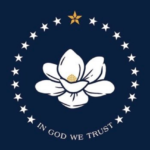 Mississippi: Aberdeen Alderwoman Lady Garth is accused of assaulting an election worker at a polling place during the April 2 city elections. Monroe County Sheriff Kevin Crook said deputies arrested Garth, 64, on Sunday, April 14 on two misdemeanor warrants: simple assault and disturbance of an election. Crook said his office received warrants for her arrest on April 5 and spent the following week trying to locate her. Deputies found and arrested her on Sunday following a church service. She will spend five days in jail in connection with a former case.
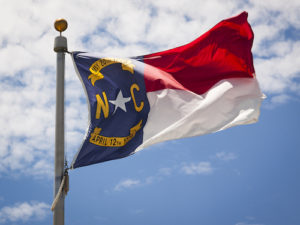 North Carolina: The North Carolina Supreme Court heard arguments last week in a libel suit filed by voters accused of committing voter fraud in the 2016 gubernatorial election. The original main defendant in the case is William Porter, a Guilford County Republican official who — along with others — used flawed data to target voters with official election protests on behalf of former Republican Governor Pat McCrory. Those protests claimed the voters had committed fraud, sowing doubt about the results of an election which McCrory lost. In the end, hundreds of voters were targeted. The plaintiffs claim that Porter and others defamed them, interfered with their right to vote and subjected them to national media attention and public embarrassment. The defendants argue their participation in the fraud-reporting process grants them absolute privilege and immunity from libel charges. Craig Schauer, lawyer for the defendants, argued that because the defendants were participating in official judicial proceedings in the form of election protests, they’re shielded by governmental privilege and can’t be held liable.The state appeals court only partially agreed with these arguments in 2021.
 Washington: The U.S. Supreme Court this week declined to take up a Republican legal challenge to Washington’s state-level voting rights act. Enacted in 2018, the Washington Voting Rights Act (WVRA) is a state law modeled after certain aspects of the federal Voting Rights Act of 1965 that was established to ensure minority groups have an equal opportunity to elect candidates of their choice and protects them from discrimination in voting. In June 2023, the Washington Supreme Court unanimously upheld the WVRA, rejecting an appeal from a Franklin County GOP precinct commissioner, James Gimenez, who argued that the law violates the Washington State and U.S. Constitutions by making race the “predominant factor” in redistricting. In November 2023, Gimenez appealed the Washington Supreme Court’s decision upholding the WVRA to the U.S. Supreme Court. In his petition to the nation’s highest court, Gimenez urged the justices to consider whether the WVRA violates the U.S. Constitution’s Equal Protection Clause, arguing that the law unconstitutionally requires “local governments to change their election systems based on race alone.” With the U.S. Supreme Court declining to take up Gimenez’s appeal today, the WVRA will remain in effect.
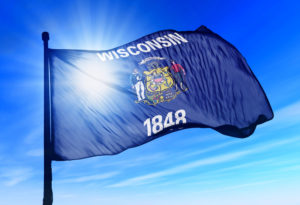 Wisconsin: A group of voting rights groups filed a lawsuit against the Wisconsin Elections Commission (WEC) to allow voters with disabilities to cast and file absentee ballots electronically. The lawsuit argues that every voter in Wisconsin has the right to a secret ballot, however a law against voting electronically denies some voters with disabilities that right because they need an assistant to help read and fill out a traditional paper ballot. The suit was brought by Disability Rights Wisconsin and the League of Women Voters of Wisconsin as well as four voters with disabilities — two who are blind, one who has cerebral palsy and one with spinal muscular atrophy. On several occasions, the WEC has acknowledged that blind and low vision voters have no way of casting an absentee ballot independently under the current system. The lawsuit states because of the failure to correct this, Wisconsin’s voting statutes force voters with disabilities to “relinquish” their constitutional right to a secret ballot in order to exercise their right to vote. “Because these voters can vote absentee only by using a paper ballot, they must select an assistant to read and mark their ballot for them,” the lawsuit, filed in Dane County Circuit Court, states. “Doing so forces voters with disabilities to surrender their independence and privacy, share their vote, and trust that their ballot was marked accurately — a surrender of the constitutional right to a secret ballot not demanded of voters without disabilities.”
Opinions This Week
National Opinions: Election workers | Election subversion efforts | Noncitizen voting, II | Ranked choice voting | Voting system
Alabama: Ranked choice voting
California: Special election costs
Colorado: Secretary of state
Connecticut: Poll workers | Absentee voting
Florida: Voting rights | Election observers | Election official duties
Hawaii: Democracy
Maryland: Election security
Minnesota: State voting rights act
Nebraska: Voter ID
New Hampshire: Affidavits
New Jersey: Ballot design
Ohio: Secretary of state
Oregon: Secretary of state, II
Rhode Island: Ranked choice voting
Texas: Tarrant County
Washington: Election reform
Wisconsin: Poll workers
Upcoming Events
The Misinformation and Disinformation Idea-thon: Help Solve a Major Societal Problem—Bring Your Ideas to Fight Misinformation and Disinformation Misinformation and disinformation pose a significant threat to democracy. They are spread by authoritarian state actors and malign non-state actors bent on undermining and damaging free and liberty-loving republics. Unfortunately, most solutions come internally from social media platforms or rest with governments to devise. A new grassroots strategy is needed: bottom-up rather than top-down. That is why R Street Institute and George Mason University are holding an Idea-thon to address the problem and find new solutions. Teams will form to attack misinformation and disinformation from four tracks: government, business/technology, nonprofit, and education. Winning teams will receive prizes. Examples of work products include new legislation and regulations, a business plan for a tech start-up, a mobile app, an academic course, or a new nonprofit. Be creative! Software developers are needed, but no computer science skills are necessary to participate. Just bring your best ideas for combating misinformation and disinformation. When: April 20. Where: Fairfax, Virginia
Administering Elections in 2024: Lessons from Pennsylvania: The Center for Election Innovation and Research (CEIR) and the Committee of Seventy are co-hosting a webinar on the progress being made in Pennsylvania’s election administration and the Committee of Seventy’s priorities for future reforms. Pennsylvania is in many ways a bellwether for the country as a whole, so the discussion will include issues facing election administrators across the nation. CEIR is a nonpartisan nonprofit that works with election officials at the state and local level from around the country and from both sides of the aisle. The Committee of Seventy is a nonpartisan, nonprofit organization that has promoted, supported and facilitated government ethics and election integrity for more than a century. Speakers David Becker, Executive Director of CEIR, and Lauren Cristella, President and CEO of the Committee of Seventy, will also answer questions from the audience. When: April 23, 12pm Eastern. Where: Online
Elections in the Age of AI: The 2024 election cycle is coinciding with the wide and growing accessibility of sophisticated AI technology, creating an inflection point that will test the resilience of democratic structures and tech companies’ ability to scale AI tools safely and responsibly. Current media coverage of AI’s impact on elections tends to reside in the extreme. Headlines depict apocalyptic hypotheticals in which AI will threaten election security, flood the zone with inaccurate election information, and sway the will of voters. Yet, just one and a half years since ChatGPT was first released to the public and with just over six months before the presidential election, we must be realistic about the probable threats and appropriate responses—as well as opportunities—that AI presents for the U.S. election ecosystem. Join us for an expert discussion to better understand what the widespread availability of AI might mean for voters, campaigns, and election officials this year. When: April 24 8pm Eastern. Where: Online and Washington, DC.
Election Center Special Workshop: The Election Center will hold a Special Workshop in Portland, Oregon with a focus on state trainings, certifications and conferences. Covered topics will include AI and election management, training new employees, working with interns, volunteers and law students, executive staffing and working with the Legislature. There will also be presentations by the U.S. Elections Assistance Commission and CISA. The workshops will kick off with a tour of the Multnomah County elections office. Additionally several CERA classes will be held in conjunction with the workshop. When: April 24-28. Where: Portland, Oregon.
The High Cost of Public Service: Threats are part of the disturbing new reality of American politics. While abuse directed at federal officeholders grabs the headlines, a new Brennan Center report reveals that intimidation aimed at state and local officials is distressingly common: 43 percent of state legislators, for example, have experienced threats within the past three years. In addition to menacing public servants and their families, these threats have serious repercussions for representative democracy. Officeholders report being less willing to work on contentious issues like reproductive rights and gun control and more reluctant to continue serving. Additionally, intimidation is often targeted at groups already underrepresented in government, such as women and people of color. Panelists Gowri Ramachandran, deputy director of the Brennan Center’s Democracy Program, Florida State Rep. Anna Eskamani, and former Nevada State Assemblymember Tom Roberts will be joined by moderator Deirdre Walsh of NPR. New York State Attorney General Letitia James, who herself has experienced threats of violence, will also deliver remarks. Where: April 30, 3pm Eastern. Where: Online
Disinformation, Elections & Democracy: Election Day 2024 will be one of the most consequential in U.S. history, and disinformation campaigns loom large in influencing millions of Americans on what’s really at stake when they head to polls this fall. Journalists across the country must be prepared with the skills to pre- and debunk conspiracy theories, misinformation, and more — well before Nov. 5. Join the National Press Club Journalism Institute for a practical look at current tactics used by disinformation specialists to disrupt the 2024 election and what journalists can do to counter them. This virtual session, will empower journalists with the tools to challenge election-specific disinformation and lies with tact and authority while respecting audiences who may be vulnerable to such campaigns.Participants will learn: The most prevalent current election disinformation tactics: What they are and how to counter them; How election administration and other public officials are addressing disinformation tactics with the public; How news organizations have found success in halting the spread of lies; and How to talk about disinformation in ways that instill trust among communities traditionally underserved by mainstream media Confirmed speakers include: Tina Barton, senior elections expert, Committee for Safe and Secure Elections; Yael Eisenstat, senior fellow at Cybersecurity for Democracy and PEN America consultant; Christine Fernando, democracy reporter, Associated Press; Sheera Frenkel, technology reporter for the New York Times; and Chad Lorenz, editor-in-chief, VoteBeat. This program is part of the Institute’s four-part training series focused on ethics in the age of disinformation. The series, produced in part with funding from the Inasmuch Foundation, is designed to provide tools and best practices to support ethical, trustworthy journalism. When: May 1. Where: Online
Focus on the Voters: It’s full steam ahead to 2024’s general election. What are lawmakers and election administrators thinking about now to prepare? Find out in this four-part series, hosted by the National Conference of State Legislatures in partnership with the U.S. Election Assistance Commission. We’ll focus on the elections workforce; counting and recounts and more post-voting work; the voters’ perspectives and voter confidence. Who are the most important people in an election? The voters. In the third installment of NCSL’s four-part webinar series on election administration, U.S. Election Assistance Commissioner Tom Hicks will address questions voters often ask and how states “get out the information” to voters. He’ll cover how states ensure the right to vote for people with disabilities and citizens living abroad (military and otherwise). When: May 10, 2pm Eastern. Where: Online.
ESRA 2024 Conference: The 8th Annual Summer Conference on Election Science, Reform, and Administration (ESRA) will be held in person from May 16-17, 2024 at the University of Southern California in Los Angeles, California. Call for Proposals The 2024 conference Call for Proposals is now open through February 16! Learn more about this year’s conference and submit your proposal here. Registration: Registration to attend the 2024 conference has not yet opened. To hear the news first when it does, please sign up to join our mailing list. When: May 16-17. Where: Los Angeles
Voter Confidence: What Can Move the Needle: It’s full steam ahead to 2024’s general election. What are lawmakers and election administrators thinking about now to prepare? Find out in this four-part series, hosted by the National Conference of State Legislatures in partnership with the U.S. Election Assistance Commission. We’ll focus on the elections workforce; counting and recounts and more post-voting work; the voters’ perspectives and voter confidence. Voter confidence is top of mind for elections stakeholders this cycle. In the final part of NCSL’s spring webinar series, U.S. Election Assistance Commissioner Christy McCormick will delve into state policies that can increase voter confidence. Perfecting processes and procedures comes first: clarifying all policies before the first vote is cast; cleaning voter lists; adopting strong chain-of-custody procedures for ballots and equipment; updating emergency plans; using pre- and post-election audits; and more. The next job is to ensure all that good technical work is transparent and communicated well to voters and the public. When: June 14, 2pm Eastern. Where: Online.
Job Postings This Week
electionlineWeekly publishes election administration job postings each week as a free service to our readers. To have your job listed in the newsletter, please send a copy of the job description, including a web link to mmoretti@electionline.org. Job postings must be received by 5pm on Wednesday in order to appear in the Thursday newsletter. Listings will run for three weeks or till the deadline listed in the posting.
Advocacy Campaign Strategist, Elections and Government Program, The Brennan Center– The Elections and Government Program is looking to hire an experienced campaign strategist. The Advocacy Campaign Strategist position reports to the DC-based Deputy Director of the Elections and Government Program. Responsibilities: Contribute to planning and execution of advocacy campaigns to achieve Elections and Government Program goals, including: Provide project management, organization, logistical solutions, and administrative support, as needed. Identify tools and methods to increase effectiveness and efficiency of team’s work. Coordinate communications between program staff and internal/external stakeholders. Engage in field advocacy, including: Participate in coalition meetings, convenings, briefings. Develop and maintain productive relationships with election officials, grassroots allies, civic partners, government staff, elected officials, and other outside stakeholders. Identify and create opportunities to advance program goals in the field, as well as to improve the program’s advocacy with learning and perspectives from the field. Conceive and execute advocacy products, such as blog posts, digital media products, public comments, FAQs, and other assets, in collaboration with communications colleagues where appropriate, with focus on broadening and increasing partner engagement with program’s work. Contribute research and writing for policy and empirical research reports that will form the basis of advocacy campaigns. Contribute to program’s media and public education work, including strategy, talking points, and speaking engagements. Help to train new program support staff, including program associates, and serve as their first point of advice on routine matters. Application: For the complete job listing and to apply, click here.
Assistant Election Supervisor, Bartow County, Georgia– Reporting to the Elections Supervisor, this position is responsible for supervising voter registration activities as well as assisting in the coordination of federal, state, county, and municipal elections within Bartow County. Major duties: Registers voters and researches and resolves unusual and/or complicated registration issues. Maintains correct street, precinct and district information for the county; audits streets to ensure proper districting. Processes and certifies absentee ballots. Researches and determines the result of provisional ballots to make recommendations to the Board. Researches and interprets national, state and local laws as well as the rules of the State Election Board and the opinions of the Attorney General. Supervises employees by assigning registration tasks, answering questions, and coordinating schedules. Drafts and maintains written procedures for voter registration. Conducts press interviews, prepares press releases and maintains social media accounts as necessary. Troubleshoots voting issues on Election Day and during the early voting process. Compiles legally-required paperwork and supplies for Election Day and early voting. Assists in tabulating and canvassing election results. Designs and presents poll worker training. Conducts voter education and voter registration drives. Attends intergovernmental meetings with city, other county, and state agencies. Maintains office supply inventory; reorders as needed. Performs the duties of the Election Supervisor in his or her absence. Serves as Chief Deputy Registrar for the Board. Performs related duties. Salary: $51,771 to $63,107/Annually DOE/DOQ. Application: For the complete job listing and to apply, click here.
Cybersecurity Junior Analyst, Palm Beach County, Florida– The Cybersecurity Junior Analyst is responsible for monitoring the organization’s log aggregation tools and triage suspicious activity or detection alerts generated by the security controls implemented within the Supervisor of Elections Office network environment. Additionally, this position will serve as the first line of defense and response for identified security events in accordance with the Information Security Policy, and cybersecurity procedures. Candidate must be organized and personable with a great attitude, be able to work well in a team environment, calmly respond to identified security incidents, and meet deadlines under pressure. Excellent work ethic, including consistent performance, integrity, reliability, and attendance, is a must. Candidate must be detail-oriented and understand the importance of security and safety for all. Must be available 24/7 365, be able to handle simultaneous projects, be a self-starter, and remain informed on emerging threats and technologies. Application: For the complete job listing and to apply, click here.
Departmental Analyst 9-P11- Data & Programs Section, Michigan Dept. of State – This position serves as the street index and addressing administrator for the Michigan Qualified Voter File (QVF). QVF is used by all election officials, county, township, and city, statewide. This position must analyze and coordinate all activities associated with the data integrity of the street index of the QVF. Salary:$49,712 – $77,916 Annually. Deadline: April 26. Application: For the complete job listing and to apply, click here.
Deputy Director, Rhode Island Board of Elections– To assist in the planning, supervision, review of programs and administrative functions of the Elections Division as assigned; to organize, assist and direct subordinates to fulfill agency responsibilities as described in Title 17 of the Rhode Island General Laws as well as achieve agency goals and objectives, as directed by the Executive Director. SUPERVISION RECEIVED: Works under the general supervision of the Executive Director and assists in carrying out the directives and policies established by the Board. SUPERVISION EXERCISED: Assist the Executive Director supervising the permanent and seasonal staff of the Elections Division. Salary Range: $101, 756 – $116,916. Application: For the complete job listing and to apply, click here.
Director Board of Elections/Voter Registration, Bucks County, Pennsylvania— Are you ready to play a pivotal role in the election processes in Bucks County, the fourth largest county in the State of Pennsylvania? Are you committed to ensuring the efficient and accurate administration of elections while also maintaining the integrity of vital records of 470,992 registered voters? If so, we invite you to consider the role of Director of the Bucks County Board of Elections/Voter Registration. The Board of Elections office is at the heart of our community’s election governance, overseeing critical functions that impact every Bucks County resident. As a member of our team, you will collaborate with a dedicated group of 20 full-time and 40+ seasonal part-time employees, working under the direction of the Board of Elections/Voter Registration Director. Bucks County has an excellent benefits package including medical, vision, dental, and prescription as well as an employer-matched retirement program. Bucks County is a wonderful community to live, work, and play and is uniquely located along the I-95 Corridor. Directs operation of the offices of Board of Elections, Voter Registration, and Voting Machines. This includes planning and conducting elections, voter registration management, and ensuring compliance with election laws and regulations. The Director is responsible for training election staff, overseeing technological security measures to safeguard voting integrity as well as creating an annual budget. Communicates election information to the Board of Elections, County administration, and the public. Addresses any issues or concerns that may arise during the election process. Application: For the complete job listing and to apply, click here.
Elections and Democracy Fellow, Center for Democracy & Technology– The Elections and Democracy Fellow will contribute to the organization’s work across these issues, particularly focusing on threats to the online information environment. The position requires a combination of research and advocacy skills to respond to emerging issues. Responsibilities: Conducting research on key issues impacting the information environment around elections, in order to raise awareness about vulnerabilities, highlight best practices, and develop/disseminate recommendations for generative AI companies, social media platforms, election officials, political campaigns, and other actors. Authoring policy papers, reports, blog posts, and similar materials. Engaging directly with technology companies to develop best practices and policy recommendations. Serving as a resource to federal and state governments and political campaigns as they enact new policies and practices on the use of generative AI in political advertising and campaigning. Coordinating advocacy efforts with other civil society organizations that have a shared interest in elections and democracy and the online information environment. Assisting with tracking and analyzing federal and state proposals to regulate generative AI and other elections-related legislation. Convening and engaging with technical experts, election vendors, election officials, voting and democracy advocates, academics and other stakeholders working on issues within the project’s scope. Supporting research, preparation, and operationalization of trainings for election officials and other stakeholders. Collaborating with CDT’s teams focused on free expression/online platform governance; technology & disability rights; AI governance, and consumer privacy; as well as CDT’s Research team and non-resident Research Fellows. Salary $65K-$105K. Application: For the complete job listing and to apply, click here.
Elections Compliance Officer, Pima County, Arizona— Are you an experienced professional specializing in elections? The Pima County Elections Department is looking for you! Join our team and bring your expertise to the forefront of our mission. Your background in city, county, state, or federal agencies, coupled with your in-depth knowledge of election processes, will make you an invaluable asset. Be a part of our dedicated team, shaping policies, and ensuring the integrity of our electoral system while making a lasting impact on our community. If you’re ready for a rewarding challenge, apply today! (Work assignments may vary depending on the department’s needs and will be communicated to the applicant or incumbent by the supervisor) Independently plans, coordinates, monitors and participates in administrative and operational activities required to maintain compliance with state and federal election regulations; Verifies department director and staff operate within full compliance regarding any and all applicable legal regulations and timelines; Maintains a listing of legally required deadlines for the unit via a cyclical timeline; Manages campaign finance, including correspondence for late filings and violations; ensures candidate filing compliance, including challenges; Ensures federal and state voting equipment compliance; Responds to public records requests; Assures separation of duty compliance required by Pima County; Completes periodic compliance audits and provides findings with recommendations to the Director and Deputy Director; Prepares requisite drafts of new procedures or processes for preclearance by regulatory agencies in compliance with state or federal laws or other regulatory requirements; Coordinates the compilation and submission of required reports to regulatory agencies; Ensures Department compliance with all poll worker regulations; Determines Department compliance with the Americans with Disabilities Act (ADA) with respect to facilities utilized in the elections process; Assists with grant requests; Develops and maintains public feedback tracking systems to capture voter complaints and concerns, allocate them to the appropriate division for resolution and record actions taken to rectify issues identified. Salary: $57,607 – $63,367. Application: For the complete job listing and to apply, click here.
Elections Coordinator, Buncombe County, North Carolina– The purpose of this position is to plan, coordinate, and administer assigned elections program or service area to support the strategic direction of the department and organization by connecting community participants to election services. Supervisory/Leadership Responsibilities: Provide training and lead worker support through motivation, direction, review, and feedback of assigned tasks. Essential Functions of the Position: Organize and manage day-to-day activities of assigned elections program area to ensure program objectives are met; ensure compliance in accordance with all federal, state, and local regulatory standards, ordinances, laws, and requirements. Participate in the recommendation, assignment, training, direction, and success of seasonal poll workers and other seasonal staff. Design, deliver, and/or facilitate trainings, program outreach, and educational sessions to expand knowledge of services; develop content, materials, and necessary supporting documentation. Effectively administer software tools and systems to manage program; synthesize and analyze program data, design/develop reports and ensure accurate and timely reporting. Act as the liaison and conduit between key shareholders, the community, and the department to convey relevant information and ensure effective collaboration; participate in meetings, presentations, trainings, and outreach as needed. Manage budget for assigned elections program including coordinating, processing, and recording financial and budget information and transactions. Identify opportunities for improving service delivery methods and procedures; identify resource needs; review with appropriate management staff; implement improvements. Perform other related duties as assigned. Salary: $28.65 – $40.11. Deadline: April 19. Application: For the complete job listing and to apply, click here.
Elections Investigations Lead (Compliance Specialist 3), Oregon Secretary of State’s Office– In this role, you will help enforce Oregon election laws and rules by investigating complaints and requests for investigation. This is accomplished in part by, but not limited to: Reviewing investigation requests/complaints alleging possible violations of Oregon election laws/rules; Evaluating and determining whether the division should proceed with an investigation; Establishing team workload and prioritization of cases; Conducting thorough investigations into possible violations; Recommending Division action and outcome of cases; Assessing civil penalties for non-compliance with Oregon election laws/rules; and Maintaining internal program-related standard operating procedures. Salary: $5,736 – $8,811. Deadline: April 24. Application: For the complete job listing and to apply, click here.
Elections Operation Manager, Pima County, Arizona— Pima County Elections Department is actively seeking a highly qualified candidate with a unique blend of skills and experience to join our team as an Elections Operations Manager. The ideal candidate brings extensive expertise in voting equipment and e-poll books, ensuring the seamless functioning of critical election infrastructure. Your familiarity with online inventory systems will be instrumental in maintaining accurate and efficient inventory management. Additionally, your proven ability to collaborate with political parties and high-ranking officials sets you apart. Your past interactions with these stakeholders have showcased your exceptional communication and diplomacy skills, essential in the realm of elections. If you’re ready to leverage your expertise and contribute to the democratic process, we encourage you to apply. Join us in shaping the future of elections, where your skills and experience will make a significant impact. This classification is in the unclassified service and is exempt from the Pima County Merit System Rules. Duties/Responsibilities: (Work assignments may vary depending on the department’s needs and will be communicated to the applicant or incumbent by the supervisor.) Develops program goals, objectives, policies, and procedures, and establishes short- and long-range program performance plans subject to management review; Manages and administers program activities and evaluates program effectiveness and success; Manages the activities of professional staff and evaluates their performance; Develops, negotiates, monitors, and administers contracts, intergovernmental agreements, and/or financial and service agreements for the program managed; Monitors program contract compliance and takes corrective action as required; Performs as a program representative within the community, delivers informational news releases, serves as a program contact person, and participates in community awareness activities; Develops and maintains effective working relationships and coordinates program activities with other County departments, public and private agencies, organizations and groups to promote the program and its goals; Analyzes local, state and federal legislation and ensures program compliance with applicable regulations and policies; Directs organizational and management studies for the purpose of identifying problems and alternative solutions to the problems; Develops, writes and administers the program’s annual budget, prepares program-related financial forecasts, and identifies funding sources to support program activities; Reviews and analyzes routine and special reports detailing the status and/or success of the program, prepares recommendations, and/or initiates corrective action; Evaluates management problems and makes decisions regarding the proper course of action; May make recommendations to the Board of Supervisors regarding program objectives; May direct the preparation and submission of proposals and grant applications; May access or maintain specialized databases containing program-specific information to review information or generate reports. Salary: $57,607 – $63,367. Application: For the complete job listing and to apply, click here.
Elections and Registration Specialist, Virginia Department of Elections– The Elections and Registration Specialist ensures compliance with state and federal laws regarding the administration of elections. Collaborate with multiple internal and external partners to ensure the agency fosters an integrated approach to election administration policy and procedures. Provide appropriate guidance and support to Virginia’s election officials and Department of Elections (ELECT) staff via research, process supervision and liaison activities. The Department of Elections promotes and supports accurate, fair, open and secure elections for the citizens of the Commonwealth. Elect ensures the proper administration of election laws, campaign finance disclosure compliance, and voter registration processes in the state by promulgating rules, regulations, issuing instructions, and providing information to local Electoral Boards and general registrars. The Department of Elections envisions a highly modern, efficient and professional electoral process that is trustworthy and accountable at all levels and engages Virginia’s diverse citizenry in the most fundamental right in a democratic society: the right to vote. Salary: Hiring range up to $65K. Deadline: April 25. Application: For the complete job listing and to apply, click here.
Elections Technician II, Pima County, Arizona— Participates in the supervision and training of elections personnel and the administration of elections activity. Duties/Responsibilities: Supervises and participates in activities involved in inventory control, ordering, receipt, delivery, and storage of election equipment and supplies; Researches election laws and regulations and prepares reports regarding impact on County election procedures; Supervises the preparation of the ballot order; Participates in preparing forms; Receives and files nomination forms; Assists in generating signature requirements necessary for the candidate or proposition to be placed on the ballot; Supervises and coordinates requisite training of election office and warehouse personnel; Coordinates the transportation and delivery of voting machines, supplies and equipment to polling places; Makes minor adjustments to voting machines to ensure functionality and operability prior to use by the public; Demonstrates voting machine operation and explains voting procedures to the public and elections workers; Participates in updating precinct and district maps; Assists State and local agencies in administering election activities; Participates in coordinating elections activities with other government agencies or departments; Assists in the training of subordinate and volunteer staff. Salary: Hiring Range: $19.14 – $22.49/hr. Application: For the complete job listing and to apply, click here.
Elections Technology Specialist, McLennan County, Texas– Under supervision of the Elections Administrator, the Elections Technology Specialist performs complex and technical duties related to activities in overseeing the County’s voting equipment by creating each election’s ballot using ballot origination software, programing and testing the County’s voting equipment with each elections ballot, processing and scanning returned mail-in ballots with the Ballot Board, and maintaining the County’s voting equipment after each election. Salary: $19.92 – $31.72 Hourly. Deadline: June 20. Application: For the complete job listing and to apply, click here.
Executive Director– The American Council of Election Technology (ACET), a national, nonpartisan trade association of the leading providers of election technology solutions, is currently conducting a search for a dynamic, well-connected, hard-working election professional who loves this field and the people in it, to serve as ACET’s Executive Director to work with the group under contract throughout the remainder of calendar year 2024. (For 2025 and beyond, this position will be contracted annually from January through December.) Please see our detailed LinkedIn post for more information. If you are interested in discussing this exciting opportunity, please inbox Michelle Shafer on LinkedIn (Michelle is currently consulting with ACET to help coordinate this search.) or send a resume and cover letter to ACET at info@techforelections.vote. The American Council of Election Technology (ACET) is a national, nonpartisan trade association of the leading providers of election technology solutions. Thousands of jurisdictions across the United States rely on our members’ products and services to advance democracy. ACET members provide voters with the means to cast their ballots with confidence that their votes will be accurately recorded and protected. Their technologies and services help state and local officials print ballots, check-in voters, tabulate votes, and report and audit election results. Current ACET Member Companies are: Election Systems & Software, Hart InterCivic, MicroVote, Runbeck Election Services, Smartmatic, Unisyn Voting Solutions, VOTEC Corporation. Application: For the complete job listing and to apply, click here.
Field Operations Coordinator, Hays County, Texas– Reporting directly to Election Network Engineer, responsible for overseeing the inventory, distribution, maintenance, warehouse storage, and logistics of all equipment, voting ballots, and department assets for Hays County Elections Department. Responsible for identifying and reserving polling sites including overseeing the coordination of all polling site compliance and usage. Ensures polling locations follow the Texas Election Code for early voting and election day. Oversees the day-to-day tasks of the election technicians’ program. Salary: $46,378 – $50,678. Annually Application: For the complete job listing and to apply, click here.
GIS Specialist, Palm Beach County, Florida– The GIS Specialist position requires technical level aptitude involving geospatial data management, analysis, and cartography using Geographic Information Systems (GIS). The position is responsible for the successful creation, maintenance and update of complex database information and support of GIS projects and initiatives. Perform GIS data development activities, including developing and updating GIS databases from hard copy maps, site plans, existing electronic data sets, and GPS (Global Positioning System). Identifies and accounts for differences in map projections and overlay of information from different sources. Duties include establishing, implementing and maintaining standards and procedures for database management, development and documentation. Develops map layouts, web accessible maps and logistics maps. Maintain data synchronization between GIS and Voter Registration System. Must have proficient computer skills, knowledge of relational databases, ability to handle simultaneous multiple projects and be a self-starter. Application: For the complete job listing and to apply, click here.
Operations Associate, NASED– A part-time (approximately 20 hours per week), fully remote, Operations Associate for a small nonpartisan, nonprofit membership association. Reporting to the Executive Director, this new role will support all the organization’s operational needs. The responsibilities of this position will include, but are not limited to, the following: Help update and maintain website content; Help maintain NASED’s social media presence, including developing content and creating basic graphics; Work with NASED’s controller on monthly financial reports and with the auditor and accountant on annual reports and filings; Monitor and assist with responses to inquiries sent to NASED’s shared inboxes; Maintain organization distribution lists; Assist with scheduling Board and Committee meetings; Assist with conference planning, including developing the conference website via the conference management platform, creating and proofing materials, planning activities, and budgeting; Support the execution of two national conferences per year; Create and send annual invoices to organization members and Corporate Affiliate members; and Other duties and special projects as assigned. This position is part-time and fully remote, but the candidate must live in the United States. Travel to support NASED’s Winter and Summer conferences is required (approximately 10 days per year). This position reports to NASED’s Executive Director. This role does not supervise any staff. Application: For the complete job listing and to apply, click here.
Physical Security Specialist, Palm Beach County, Florida– This position is responsible for administration of the physical security programs in a manner consistent with Supervisor of Elections Office policies, procedures, quality standards, and applicable local, state, and federal regulations. These programs include conducting facility security risk assessments, assisting with access control, monitoring alarms and CCTV systems, and providing security related training. Must be organized and personable with a great attitude, be able to work well in a team environment, and meet deadlines under pressure. Excellent work ethic, including consistent performance, integrity, reliability, and attendance, is a must. Candidate must be detail-oriented and understand the importance of security and safety for all. Must be available 24/7 365, be able to handle simultaneous projects, and be a self-starter. Application: For the complete job listing and to apply, click here.
Precinct Manager, North Charleston, South Carolina— Are you passionate about democracy and civic engagement? Join us as a Precinct Manager at the Board of Elections and play a pivotal role in ensuring smooth and efficient elections! Welcome to the Board of Voter Registration and Elections, where we are not just an agency, but a dynamic force committed to excellence in democracy. As an award-winning organization, we pride ourselves on our relentless pursuit of improvement to better serve the voters in our community. A major way this is done is through the recruitment and management of those who serve as poll managers. At the heart of our mission is an unyielding dedication to organizing elections with precision, fairness, and strict adherence to the law. Salary: $64,209 – $84,146. Application: For the complete job listing and to apply, click here.
Registrar of Voters, San Bernardino County, California– The county of San Bernardino is seeking a visionary new registrar of voters to oversee the critical activities of the Registrar’s office with a large scope of oversight including 50+ members and an annual budget of $20M+. The Registrar of Voters will foster an environment that promotes civic participation and ensures transparent and fair elections. They will design and implement voter education programs tailored to the needs of County residents. This position requires a deep understanding of the County’s diverse demographics, its unique challenges, and the ability to implement strategies that promote voter engagement, education, and participation. The Registrar will oversee voter registration efforts, ensuring that registration processes are accessible, efficient, and in compliance with state and federal regulations. They will work closely with local community organizations, schools, and governmental entities to create outreach initiatives and workshops to increase countywide engagement. Engaging with the community is at the heart of this role. Building and maintaining strong relationships with various stakeholders, including community leaders, advocacy groups, and residents, is paramount. Organizing town hall meetings, forums, and public discussions will be essential to address concerns, gather feedback, and disseminate essential information related to voting procedures, ballot measures, and electoral reforms. By actively listening to the community’s needs and concerns, they will play a pivotal role in shaping policies and initiatives that resonate with the diverse population of San Bernardino County. This position offers a unique opportunity for development and growth within the realm of civic engagement and electoral processes. As the landscape of voting rights, technologies, and methodologies continues to evolve, staying abreast of emerging trends, best practices, and legislative changes is essential. Participating in training programs, conferences, and workshops will enhance the knowledge base, skill set, and capacity to navigate the complexities associated with administering elections in the County. Salary: $153,504-$218,004. Application: For the complete job listing and to apply, click here.
Registration & Elections Manager, DeKalb County, Georgia– The following duties are normal for this position. The omission of specific statements of the duties does not exclude them from the classification if the work is similar, related, or a logical assignment for this classification. Other duties may be required and assigned. Manages, directs, and evaluates assigned staff; develops and oversees employee work schedules to ensure adequate coverage and control; compiles and reviews timesheets; approves/processes employee concerns and problems and counsels or disciplines as appropriate; assists with or completes employee performance appraisals; directs work; acts as a liaison between employees and management; and trains staff in operations, policies, and procedures. Organizes, prioritizes, and assigns work; prioritizes and schedules work activities in order to meet objectives; ensures that subordinates have the proper resources needed to complete the assigned work; monitors status of work in progress and inspects completed work; consults with assigned staff to assist with complex/problem situations and provide technical expertise; provides progress and activity reports to ; and assists with the revision of procedure manuals as appropriate. Conducts elections; manages personnel to ensure that all elections are conducted in accordance with state and federal laws and regulations; secures early voting locations and recommends schedules; appoints site managers and determines staffing requirements for early and election day voting; works with polling location personnel and county information technology and GIS staff to ensure provision of technology training and services; develops and reviews training for compliance with election laws; monitors early voting traffic; recommends changes in procedures to resolve issues; conducts election night precinct check-in, election audit and preparation of precinct statistics; monitors election tasks lists; monitors election software programming; and oversees financial filing process. Implements, monitors and maintains registration functions and processes; reviews registration functions and processes including felon registrations, duplicate voters, citizenship verifications, jury summons questionnaires, provisional voting, election night precinct check-in and election audit; monitors and ensures compliance with established protocols and procedures; and updates protocols and procedures as needed. Prepares and completes a variety of registration, production and election reports; compiles and/or tracks various administrative and/or statistical data; generates and prepares data; submits all mandated reports to local, state and federal regulatory agencies or others as required; and maintains related records. Maintains training and procedure manuals; and develops, updates, and revises procedural manuals for voter registration and election functions. Interprets, applies, and ensures compliance with all applicable codes, laws, rules, regulations, standards, policies and procedures; initiates any actions necessary to correct deviations or violations; maintains comprehensive, current knowledge of applicable laws/regulations and pending legislation that may impact department operations; and maintains an awareness of new products, methods, trends and advances in the profession. Assists in developing and implementing department budget; reviews budgetary needs and makes recommendations to executive management; and monitors expenditures against approved budget. Salary: $66,132 – $106,473. Application: For the complete job listing and to apply, click here.
Senior Counsel, Voting Rights Program, The Brennan Center– The Brennan Center’s Voting Rights Program seeks a talented attorney to join our team working to build a robust, participatory, and inclusive democracy. Reporting to the Director of the Voting Rights Program, the attorney’s focus will be to combat voter suppression and advance pro-voter reforms at the state and federal levels. Our Voting Rights Program advocates for free, fair, and accessible elections, with special focus on the ways systemic barriers impede electoral participation by communities of color. The past ten years have seen a renewed brazen and widespread assault on the right to vote. Elected officials at the highest levels have deployed disinformation and misinformation to scapegoat communities trying to assert their rightful place in the electorate. And the Capitol attack made plain that some are even prepared to reject the use of elections as the arena to contest political differences. We meet these challenges, and others, head on. We do so with partners ranging from community-based organizations to election administrators to pro bono counsel. The Brennan Center’s methods include legal and empirical research and writing, litigation, legislative and policy advocacy, media and communications, and public education. Salary: $145,100 – $185,800. Application: For the complete job listing and to apply, click here.
Senior Director, Election Law Program, William & Mary–The Election Law Program (ELP), a joint initiative of the William and Mary Law School and the National Center for State Courts, has a mission to provide resources for judges deciding election disputes. This vacancy is for an experienced attorney to serve in the role of Senior Director of the Election Law Program. The Senior Director will be an attorney with experience in election law. Reporting to the ELP Co-Directors, the portfolio of responsibilities will include, but not be limited to: Developing resources for judges deciding election cases; Supporting projects that enhance understanding of federal and state election laws and the role of courts in resolving election disputes; Sharing research findings and legal resources through a variety of mechanisms such as publications and educational programs (e.g., webinars, presentations, and conferences); Overseeing ELP project implementation; Identifying and capturing trends in election litigation; Engaging in collaborative projects with trusted partners; Supervising student research; and Participating in fundraising efforts to support existing and future ELP initiatives as required. NOTE: If interested, an opportunity for appointment as an adjunct professor to teach a relevant course within the field of election law is available. Salary: $110,000 to $125,000, commensurate with experience. Application: For the complete job listing and to apply, click here.
Training and Education Coordinator, Pima County, Arizona— Researches, coordinates and develops materials for use in training staff and educating clients on procedures, rules, regulations, forms, requirements and equipment for area of assignment; Assists management in the identification of training needs for staff and education for clients; Collects, compiles, prepares, updates and assembles training and presentation materials and manuals; Designs new training and education materials and/or updates materials on a regular basis; Conducts initial training/orientation for newly hired staff to increase understanding of procedures and position responsibilities; Delivers training to classes and individuals through lectures, demonstrations, exercises and workshops; Conducts continuing education to comply with changes in federal, state and local regulations, policies and procedures, and to resolve specific performance deficiencies; Coordinates and investigates compliance with federal, state and/or local policies, laws and regulations and conducts quality control audits and reports on findings; Participates in the review of productivity levels for activities and staff, analyzes problem areas, identifies training needs and recommends solutions to management; Assesses implementation of policies and/or procedures and makes recommendations to management regarding changes and/or supplemental training; Provides additional training as needed, under management direction; Serves as the technical advisor for interpreting federal, state, and County policies, laws, rules and/or regulations governing are of assignment; Compiles statistical data and prepares reports for area of assignment for presentation to management and the Board of Supervisors. Develops and evaluates student surveys/assessments on training/education provided; Coordinates and maintains training/education materials, audio-visual equipment, laptops, tablets and supplies utilized for training and education; Maintains manual and computer based documentation on training and/or education conducted, competency checklists and assessment files. Salary: Hiring Range: $54,863 – $65,836. Application: For the complete job listing and to apply, click here.
Training Manager, Charleston County, South Carolina— Are you passionate about democracy and coaching people to their fullest potential? Join us as a Training Manager at the Board of Elections and play a pivotal role in ensuring smooth and efficient elections! Welcome to the Board of Voter Registration and Elections, where we are not just an agency, but a dynamic force committed to excellence in democracy. As an award-winning organization, we pride ourselves on our relentless pursuit of improvement to better serve the voters in our community. A major way this is done is through the training of those who serve as poll managers. At the heart of our mission is an unyielding dedication to organizing elections with precision, fairness, and strict adherence to the law. Responsibilities include: Comprehensive training development, training coordination, community engagement, year-round training program, performance tracking, new hire training, continuous improvement, collaboration with precinct manager. Salary: $64,209 – $84,146. Application: For the complete job listing and to apply, click here.
Training Program Coordinator, Charleston County, South Carolina— This position is responsible for the recruiting, coordinating, and training of Election Day poll managers on the policies, procedures, and SC State law regarding the administering of fair, honest, and accurate elections within the polling places on Election Day and during early voting. This position will also train all temporary Early Voting staff. This position will be responsible for developing all instruction manuals and materials. This position reports directly to the Deputy Director of Election Operations. Salary: $53,248 – $69,784. Application: For the complete job listing and to apply, click here.
Voter Services Manager, Arapahoe County, Colorado– The Voter Service Manager position has direct responsibility and supervision of the entire Voter Service Team. This position will assist with complex administrative and supervisory work in directing daily activities. The Voter Service Manager supports the Elections Deputy Director, Chief Deputy Director and the Clerk and Recorder with issues concerning all operations of Elections. The following statements are illustrative of the essential function of the job. Salary: $73,441.94 – $117,316.94 Annually. Deadline: April 29. Application: For the complete job listing and to apply, click here.
Marketplace
electionline provides no guarantees as to the quality of the items being sold and the accuracy of the information provided about the sale items in the Marketplace. Ads are provided directly by sellers and are not verified by electionline. If you have an ad for Marketplace, please email it to: mmoretti@electionline.org