In Focus This Week
Election Heroes
The Public Servants Behind Every Ballot
By Jeanette Senecal and Adam Ambrogi
Every election relies on public servants willing to take on one of the most important, and increasingly demanding, jobs in American democracy.
It is no surprise that many electionline readers are election officials themselves. You arrive before dawn to prepare polling places. You answer voters’ questions with patience, test voting equipment, verify signatures, train poll workers, process registrations, and count ballots long after election headlines have faded. You adapt to changing election laws, manage increasingly complex election cycles, and remain steadfast in your commitment to serving every eligible voter.
Yet despite this essential role in election administration, election officials and poll workers are often known only when something goes wrong. Too rarely do we pause to recognize the extraordinary work that allows millions of Americans to vote safely, securely, and with confidence.
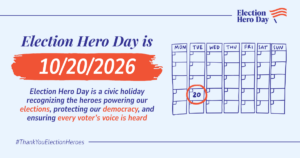 That is why the League of Women Voters is proud to serve as the managing partner of Election Hero Day, a nationwide, nonpartisan civic holiday that will be celebrated on October 20, 2026.
At first glance, Election Hero Day may seem like a simple expression of gratitude. But it represents something much bigger. It is an investment in the future of election administration.
Public confidence in elections doesn’t come from voting equipment or procedures alone. It comes from understanding and trusting the people who administer them.
Election systems and processes can feel abstract. Election workers are clear examples of local public service. They are our neighbors staffing early voting sites, county and municipal employees processing voter registrations, retirees serving as poll workers, and local officials working tirelessly to ensure every eligible voter can make their voice heard. When Americans better understand the people behind the process, elections become less about anonymous systems and more about dedicated public servants committed to their communities.
For more than a century, the League of Women Voters has worked alongside election officials, not administering elections, but helping voters successfully navigate them. Through voter registration drives, voter education efforts, and VOTE411.org, we see every election from two perspectives: the voters seeking to participate and the election professionals working every day to make that participation possible.
We have also stood alongside the election official community as a trusted nonprofit partner, advocating for the funding, staffing, and public support needed to administer safe, secure, and accessible elections. From championing greater investment in election administration to helping recruit poll workers through Power the Polls, the League has long supported the people who make democracy work. Election Hero Day brings those efforts together by celebrating the public servants and volunteers who keep our elections running.
This year, Election Hero Day will take place two weeks before Election Day—a deliberate change that reflects how Americans vote today. With early voting already underway in many states by late October, election offices are operating at full speed well before November. Recognizing election workers before the final sprint gives communities the opportunity to show appreciation when it can have the greatest impact and encourages that support to continue throughout the election season.
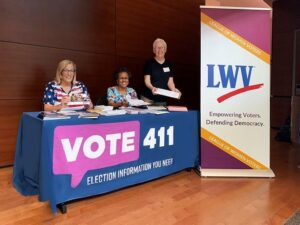 Across the country, League volunteers, businesses, schools, civic organizations, and community leaders will celebrate election heroes through thank-you cards, appreciation events, social media recognition, and other acts of kindness. These gestures may seem small, but together they send a powerful message: your work matters, your service matters, and your community values the role you play in protecting our democracy. We also know that election officials don’t necessarily expect this recognition, or ask for “hero” status—however, given recent attacks on election officials, the need for greater public recognition for this community is all the more important.
Election Hero Day is also part of a broader movement to strengthen civic participation. On August 8, the League and our partners will host Unite & Rise for Voting Rights, a nationwide day of civic action honoring the anniversary of the Voting Rights Act. Through hundreds of community events across the country, Americans will come together to educate voters, expand participation, and strengthen the systems that make our democracy work. Together, Unite & Rise and Election Hero Day reflect the same belief: democracy is strongest when communities don’t simply vote; they actively support the people and institutions that make voting possible.
That commitment is especially important at a moment when the institutions that support our elections are increasingly under pressure. Last week, this presidential administration dismissed the appointed members of the US Election Assistance Commission (EAC), ostensibly because of their efforts to strengthen public confidence in our elections, including the 2020 election. We believe we need to stand up for the independent, nonpartisan institutions that make our election systems strong. We thank the Commissioners, along with the dedicated EAC staff, for their service and for the critical support they have provided to state and local election officials across the country. These firings are one more reason why every community needs to stand firmly behind the nonpartisan administration of elections.
At a time when many Americans are asking how they can strengthen our democracy, Election Hero Day offers a meaningful answer. Whether you thank a poll worker, deliver refreshments to your local election office, encourage someone to serve as a poll worker, or simply share your appreciation publicly, every action helps build a culture that values civic service.
Democracy depends on laws, technology, and sound procedures. But before any of those, it depends on people willing to serve.
On October 20, 2026, let’s celebrate the election heroes who make our democracy possible and remind ourselves that supporting free and fair elections isn’t solely the responsibility of election officials. It’s a responsibility we all share.
Learn more about Election Hero Day, access participation resources, share ideas on how nonprofits can be supportive, or sign up as a partner at electionheroday.org.
Jeanette Senecal serves as Chief of Civic Learning and Impact, and Adam Ambrogi serves as Chief of External Affairs at the League of Women Voters.
Voting System Vulnerabilities FAQ
FAQ
Voting System Vulnerabilities and How They Can Be Weaponized
Geoff Hale, visiting fellow
Center for Democracy & Technology
Vulnerabilities in voting systems are real and worth fixing. At the same time, the manner in which they are used to fearmonger does not reflect the actual security of elections.
 Security researchers do find real weaknesses embedded in the code and operations of U.S. voting systems, just like they do with power grids, banks, and telecommunications, all of which share the same “critical infrastructure” designation as elections. Finding a flaw and fixing it is a sign of a mature system, not a sign it’s broken.
But claiming that vulnerabilities in voting systems exist is different from claiming that vulnerabilities in voting systems have been exploited, and even further distinct from claiming that vulnerabilities in voting systems have been exploited during live election operations in a manner to have rigged past elections, flipped votes, and determined outcomes. Each one of those concepts relies on a distinct body of evidence to be proven true. Public discourse that intentionally conflates the evidence for one to equate the outcomes of another is deceptive and can be disproven. The evidentiary record does not support claims that voting system vulnerabilities have been exploited to rig recent elections such as the 2020 presidential election in the United States.
How do we learn about vulnerabilities in voting systems?
Vulnerabilities in voting systems are tested and disclosed by expert security researchers. Testing voting systems for vulnerabilities has been happening for decades. Proactive testing and disclosure are standard practice and take place in multiple venues. For a long time, the relationship between researchers, vendors, and election officials was contentious; findings were treated as accusations, and disclosure felt adversarial. Over time, that friction has become more productive, as security researchers developed better understanding of election safeguards, and the election community built more mature programs for receiving, disclosing, and fixing the vulnerabilities researchers found.
Security researchers often disclose vulnerabilities through vulnerability reports, which document a weakness in a system. The report typically covers what was tested, what weaknesses were found, and what an attacker could do with them under the right circumstances. When the security researcher is independent from the organization or vendor, the standard practice is to share the findings privately first, giving the vendor or organization time to patch and mitigate before the report goes public.
What happens when vulnerabilities in voting systems are identified?
Following identification of vulnerabilities in a voting system, responsible disclosure and response are the next steps, and have a few important characteristics: independence, technical rigor, and orientation toward remediation rather than political interference. California’s 2007 Top-to-Bottom Review — a comprehensive security assessment of all voting systems then certified for use in the state — is a good model. Teams of computer scientists from the University of California tested machines made by Diebold Election Systems, Sequoia Voting Systems, and Hart InterCivic, systems used at the time by 9 million of the state’s registered voters. The review found that all three systems could be compromised by an attacker with physical access: testers bypassed tamper-resistant seals, accessed memory cards, and demonstrated the ability to install malicious code. Secretary Bowen’s response was targeted and proportionate: decertification of the equipment and imposition of dramatically strengthened security requirements before any system could be returned to use. The review is a model of what responsible security assessment looks like.
Processes for disclosure are becoming more collaborative, marking a significant shift away from the earlier adversarial dynamic between the security research and elections communities. In September 2023, the first Election Security Research Forum brought together cybersecurity researchers, voting technology providers, and election officials to formalize coordinated vulnerability disclosure processes for election technology. Researchers tested not-yet-deployed equipment from ES&S, Hart InterCivic, and Unisyn Voting Solutions under agreed-upon disclosure protocols.
As for response, proportionality is key, as not all vulnerabilities can be easily exploited. This was the case with a 2006 analysis by Princeton University researchers on the security of the Diebold AccuVote-TS Voting Machine. They found that an attacker with physical access could install malicious software, and that malicious software could spread between machines during normal election activity, but the attack relied on conditions that would not hold in a real election. It required prolonged, undetected physical access to machines before and during voting (which every state now restricts through tightly controlled chain-of-custody procedures governing who can handle equipment, when, and under what supervision). It also assumed no paper trail and no independent auditing to catch the manipulation after the fact. Even in jurisdictions that do not use machines producing a paper record (less than 4% of registered voters live in these jurisdictions), the physical access the attack depends on is not feasible under the custody controls that govern election equipment today.
Even for technical weaknesses which are infeasible to exploit undetected, there is value in understanding, assessing, and mitigating those vulnerabilities. The Cybersecurity and Infrastructure Security Agency (CISA) has supported the testing and disclosure of vulnerabilities on voting systems with programs like the Critical Product Evaluation, which was run out of Idaho National Laboratories. This open-ended testing of voting systems worked collaboratively with the vendor to advance the security posture of new systems, prior to submitting for voting system certification with the U.S. Election Assistance Commission.
Additionally, since 2017, the Voting Village at prominent hacker conference DEF CON has brought security researchers together to assess voting equipment in a structured environment conducive to research, and produce an annual report cataloguing their discovered vulnerabilities. While that research does not always reflect the real-world safeguards of an operational election, there is value in addressing the technical weaknesses identified for any systems still in use. In this instance too, researchers are only finding and documenting weaknesses, refraining from making unsupported claims of weaponization in a live election.
Voting system vulnerability disclosure has also become more focused on featuring not only findings, but what those findings mean in practice. As a 2022 formal advisory coordinated by CISA demonstrates. The advisory — based on assessment by University of Michigan’s J. Alex Halderman and Auburn University’s Drew Springall of the Dominion Voting Systems Democracy Suite ImageCast X — identified multiple vulnerabilities that could be exploited under specified conditions to access significant control over the voting system’s operations. CISA’s accompanying statement was unambiguous and effecitve: “CISA has no evidence that these vulnerabilities have been exploited in any elections.” Dominion confirmed that the vulnerabilities had been addressed in subsequent software versions.
Does identification of vulnerabilities validate claims that past elections were stolen?
No, finding a vulnerability in voting software says nothing about what happened in any particular election.
A vulnerability assessment describes a weakness and what an attack could look like; it does not document an attack that occurred. As mentioned earlier, CISA’s 2022 advisory on Dominion systems, one of the most prominent public assessments of voting machine vulnerabilities to be released, was unambiguous: “CISA has no evidence that these vulnerabilities have been exploited in any elections.” Demonstrating the existence of a flaw is one thing; what someone did with it is a separate question. To that question, no credible evidence has been produced to validate claims that past elections were stolen or that votes or vote totals were altered in any way.
This reality has not prevented baseless claims of election fraud. After the 2020 election, Trump and allied plaintiffs filed more than 60 lawsuits across multiple states challenging the results. Every significant challenge failed. Courts found plaintiffs unable to produce “credible and relevant evidence” of manipulation.
A report confirming that vulnerabilities exist in voting machines does not disturb any of those findings. Overturning them would require showing which specific machines were compromised, or which specific tallies were altered. Security research has not established that. Neither has any court, audit, or law enforcement investigation.
How can elections run on vulnerable systems be trusted?
Election administration includes controls designed to catch exactly the kind of manipulation a software compromise would attempt.
Security researchers and election integrity advocates across the political spectrum have pressed for paper ballots: not because they prevent hacking, but because they ensure it cannot go undetected. A voter-verified paper ballot, a physical record of voter intent that exists independently of any software, is a detective control. If software is manipulated to change a recorded vote, the paper ballot remains unaltered and that discrepancy is detectable. As cryptographer and MIT professor Ron Rivest formalized in a 2008 paper, a voting system is software-independent if an undetected change or error in its software cannot cause an undetectable change or error in an election outcome. According to Verified Voting, greater than 95 percent of registered voters live in jurisdictions with a verifiable paper trail. That means that, in the overwhelming majority of American elections, any manipulation of the election through voting systems is detectable.
Risk-limiting audits, which have been recommended by the Senate Intelligence Committee and the National Academies of Sciences, provide statistical confidence that electronically reported outcomes match physical ballots. An initial random sample of ballots is hand-counted and compared against reported results; if the sample supports the outcome at the pre-specified confidence level, the audit concludes. If the software-reported outcome is wrong, the audit is designed to catch it. Colorado became the first state to implement risk-limiting audits statewide in 2017; dozens of states have since adopted some form of post-election audit requirement.
Risk-limiting audits are not the only credible method of post-election audit. Other approaches, such as traditional audits, can also provide meaningful assurance as long as they are conducted properly. This is an important qualifier, because the same trusted role audits play can be weaponized as well. Since 2020, a number of sham reviews have been conducted (such as the Cyberninjas “audit” of the 2020 election in Arizona) that borrow the look and language of a real post-election audit while being designed to undermine legitimate results, mislead the public, and erode confidence in a well-run election. These reviews generate disinformation rather than assurance.
Before certification, election officials also reconcile the number of ballots issued against the number cast and counted. An attacker who altered electronic tallies would still need to explain why the paper records and ballot counts do not match.
Safeguards including audits and paper audit trails do what they are meant to do: validate the outcome and increase public confidence in the accuracy of election outcomes. Research has also found that the confidence an audit generates depends on the credibility of the audit (things like who conducts it and how its results are announced), which further helps to cut against the sham-review problem.
How are voting system vulnerabilities weaponized using the “complexity exploit”?
Vulnerability reports on voting systems are technical documents and therefore their content is typically complex. One tactic to exploit this complexity is to selectively highlight vulnerabilities, map them to existing suspicions and narratives, and present them as proof of a changed election outcome. Rather than relying on evidence that an exploit was used or that it resulted in flipping votes or impacting outcomes, this tactic relies on the complexity of presented evidence to be interpreted as credible. In reality, the conclusion that outcomes of recent U.S. elections have been affected must be proven through independent evidence that, as yet, has not been presented.
Technical complexity may be used to provide the appearance of legitimacy, credibility, and expertise, but it alone is not the same as being credible. Technical complexity can be a tactic to obfuscate and deter questions, and here technically expert security researchers help discern real claims from masked nonsense.
Mike Lindell’s 2021 “cyber symposium” was an example of this “complexity exploit.” Lindell promoted what he described as definitive proof, allegedly derived from voting machine network traffic, that Chinese actors had manipulated the 2020 election through voting systems. When cybersecurity experts analyzed the data, they found it was not voting machine network traffic at all: it was an encoded version of Pennsylvania’s publicly available voter registration file. Election security researcher Harri Hursti described the presented material as “a big fat nothing.” Cybersecurity expert Robert Zeidman proved the data was not what Lindell claimed. The data had no evidentiary value; its point was to pass off technical complexity as proof.
Using technical complexity to suggest that vulnerabilities have been weaponized takes advantage of a gap in public understanding of election technology. The election process is incredibly transparent, and still, the evidence to support claims that election vulnerabilities have been operationally exploited has not been presented.
Isn’t dismissing vulnerability research also a problem?
The election community takes legitimate security research seriously, and the importance of security testing and vulnerability research to voting system security has been recognized, as illustrated by the adoption of the updated federal Voluntary Voting System Guidelines (VVSG 2.0). The VVSG 2.0 process for certifying voting systems explicitly requires penetration testing, a form of security testing which attempts to exploit vulnerabilities and processes to identify security gaps.
In the years following the 2017 designation of election infrastructure as critical infrastructure, the elections community and the security research community built more productive relationships. The Election Security Research Forum and coordinated disclosure processes between researchers and vendors described above all reflect maturation in how election technology vulnerabilities are identified and addressed.
Are states or the federal government responsible for voting system security?
State and local governments run elections. Federal agencies have a mission to support the security of U.S. elections.
Compared to other critical infrastructure, voting systems occupy an unusual regulatory position. These systems are subject to both diverse state-level certification requirements and a federal framework (VVSG) that is advisory rather than mandatory, unlike power grids or financial systems where federal agencies have direct regulatory authority and can mandate security standards. However, some states have implemented laws that require testing and certification to federal standards, thereby making compliance with voluntary federal standards obligatory in those states.
How does the way we govern voting systems shape how vulnerabilities are fixed?
The combination of diverse state requirements and voluntary federal guidelines creates a challenge when vulnerabilities are discovered. Whereas a commercial software vendor discovering a flaw in a widely deployed product can push a patch to millions of devices in days, a voting system vendor discovering the same flaw must navigate state and federal certification processes before the fix is deployed to election jurisdictions. This means that deploying certified patches can be slow.
To address this problem, the U.S. Election Assistance Commission (EAC) has taken steps to expedite security patch approval, and several states have adopted their own interim security requirements. Streamlining patch approval processes, adequately resourcing organizations to build and test to standards, and a certification framework that can respond faster to security updates would also help. While the gap between vulnerability discovery and remediation remains wider than in many other technology sectors, the slowness of deploying certified patches is not evidence of past harms.
electionline Daily News Email
 What’s the best part of waking up? electionline Daily News in your inbox of course so be sure to sign up for your daily dose.
Each morning you’ll receive the top headlines of the day, plus a listing of states featured in that day’s news round up.
To sign up, simply visit our site and provide us with your email and you’ll begin receiving the news in your inbox each morning.
We Google so you don’t have to!
electionline Merch
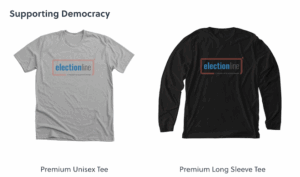 You’ve asked for it, well now you’ve got it! Just in time for all of your holiday gift-giving. We’ve opened up an electionline merch store using Bonfire. Currently we’re offering a couple of different t-shirts, a long-sleeve t-shirt and a hoodie.
Upcoming Schedule Changes
 electionline Daily News: The Daily News will publish by 10am Eastern on the following days: July 23 and from August 18-25.
Election News This Week
 Federal Updates: According to multiple media outlets and the White House, during a prime time address on Thursday, July 16, President Donald J. Trump is expected to renew his focus on election integrity and highlight findings that his administration says show foreign interference in the 2020 election, according to NBC News. Speaking to reporters in the Oval Office, Trump said the address would touch on multiple subjects but include a “very big announcement” about election security. “It’s really, really big news,” he said. “Without free and fair elections, you don’t have a country.” Jay Clayton, Trump’s nominee for director of national intelligence, faced questions about the president’s claims of election fraud at a Senate confirmation hearing July 15. Clayton maintained he was not an “election denier” but wouldn’t directly answer a number of questions about the 2020 race, his predecessor’s appearance at a January election office raid and more. During his confirmation hearing, Acting Attorney General Todd Blanche declined to explicitly rule out deploying federal agents to polling places, saying only that he would “follow the law.” When Sen. Amy Klobuchar (D-Minnesota) asked whether Blanche would “commit to following clear federal law” by not deploying armed federal agents to polling places, Blanche replied that he would “commit to following the law … no matter what it includes.” The Federal Emergency Management Agency’s guidelines to states on how to request funding under counterterrorism grant programs include potentially illegal demands related to election administration, Democrats on the U.S. House Homeland Security Committee said in a letter last week. The Department of Homeland Security, which includes FEMA, sent states notices of available federal funding for non-disaster grants under the Homeland Security Grant Program, the Nonprofit Security Grant Program and the Transit Security Grant Program. Those notices included “blatant attempts to force communities to comply with the Trump administration’s political demands” or risk losing $200 million in federal funds, the letter said. “As we approach the 25th anniversary of September 11th, it is deeply alarming that DHS and FEMA, under Donald Trump, continue to manipulate the very funding born out of a national tragedy,” they wrote. “Playing political games with counterterrorism funding undermines public safety and deprives first responders of the resources they need to do their jobs.” The panel’s 15 Democrats, led by ranking member Bennie Thompson of Mississippi, signed the letter to Homeland Security Secretary Markwayne Mullin and acting FEMA Administrator Robert Fenton.
 News From the EAC: On July 9 President Donald Trump relieved the remaining members of the bipartisan U.S. Election Assistance Commission, a move that drew swift condemnation from Democrats and voting rights advocates. The two Democratic commissioners, Thomas Hicks and Benjamin Hovland, were notified by email. “On behalf of President Donald J. Trump, I am writing to inform you that your position as Commissioner of the Election Assistance Commission is terminated, effective immediately. Thank you for your service,” the email said. It was signed by Morgan DeWitt Snow, deputy director of presidential personnel in the Executive Office of the President. The third commissioner, Republican Christy McCormick, was allowed to resign, according to Votebeat. In a statement, a White House official said the president “reserves the right to remove individuals that may not be totally aligned with the important task of securing America’s elections and ensuring every legal vote is counted. The Slaughter decision gives the President precedence to do so.” If any of the fired EAC commissioners challenge their removals, the case could become the first direct test of whether the Supreme Court’s new removal-power doctrine extends to federal election agencies structured around bipartisan balance. California U.S. Sen. Alex Padilla and New York U.S. Rep. Joe Morelle, the ranking Democrats on committees with jurisdiction over elections, quickly blasted the commissioners’ removals. “President Trump is trying to dismantle yet another independent guardrail of our democracy designed to keep elections fair and secure,” they said in a statement. “Purging commissioners just months before the midterm elections and further gutting support for our state and local elections officials is a blatant part of his plan to politicize our elections and enable more unlawful and dangerous election interference.” Trump cannot simply install replacement EAC commissioners on his own. Commissioners must be nominated by the president and confirmed by the Senate, and no more than two can come from the same party. Former EAC Commissioner Thomas Hicks spoke with PBS News Hour this week. “…I want to ensure that the agency can still function well and get the things done for the American people for November to ensure that they know that they should still be able to have confidence in the process, that they should be able to cast their votes and have those votes counted accurately because of the work of the state and local election officials.” Former Commissioner Ben Hovland echoed Hicks’ sentiments when he spoke with NPR. “…[T]here’s a great team there, there’s a great staff in place, and they’ll continue to do their work. The role of the commissioners was really to set policy and set the agenda for the agency going forward, and so certainly that will be impacted. There are the adoption of things like new voting system standards that can’t happen without a quorum. So there are consequences. But again, much of the work of the agency I’m hopeful will continue because there’s a great team in place that will continue to serve the state and local election officials around the country who actually run our elections.”
 March on Washington: Civil rights leaders announced plans for a Washington march in August to defend voting rights, saying recent court decisions have weakened key federal protections against racial discrimination in voting. The coalition — led by Rev. Al Sharpton’s National Action Network and joined by Martin Luther King III, Arndrea Waters King, and labor and civil rights groups — said they will host the “March on Washington 2026: Defend the Vote” march on August 28. That will mark the 63rd anniversary of the 1963 March on Washington for Jobs and Freedom and Martin Luther King Jr.’s “I Have a Dream” speech. Organizers said they hope to use the event to pressure lawmakers and rally a response to the erosion of voting protections. “Defending the vote means defending the foundation of our democracy,” Martin Luther King III said in a statement. “Sixty-three years after my father stood at the Lincoln Memorial, we are called to march again, not only in remembrance, but in action.”
 Election Administration News from Arizona: The Maricopa County Board of Supervisors and Recorder Justin Heap have agreed to a settlement to resolve their dispute over control of the county’s elections, which has dragged on for over a year. The supervisors approved a deal on Tuesday that largely preserves the status quo when it comes to which office controls different election responsibilities. The deal gives the Recorder’s Office control of early voting operations while keeping the Maricopa County Elections Department, which is overseen by the supervisors, in charge of Election Day and emergency voting. Heap already signed off on the agreement, County Manager Jen Pokorski said. Under the deal, the board and recorder will operate under an interim election plan for the primary approved by the Arizona Supreme Court earlier this month, which included multiple safeguards to avoid disrupting the ongoing election. That plan actually hands more responsibility to the recorder than the settlement, which will govern future elections, including the November general election. Vince Funari, a spokesperson for the Maricopa County Superior Court, told Votebeat on Tuesday that judges would be on standby during the primary to handle urgent election matters. Even if emergency lawsuits aren’t the proper way to handle disagreements during the primary, other election matters could still arise unrelated to the officials’ infighting. Bill Gates, executive director of Arizona State University’s Mechanics of Democracy Laboratory and a former GOP county supervisor, said the deal between election officials is “superior to the alternatives” at this point in the dispute and lays out “a rational framework” for election administration, though he would prefer “a more collaborative environment.”
 A Collaborative Effort: Elections officials from six Central Florida counties answered questions about the upcoming midterm elections posed by reporters from the News Collaborative of Central Florida. According to the Orlando Sentinel, Central Florida supervisors of elections say they’re expecting a smooth season of voting despite ominous rumblings coming from the White House. Lake Supervisor Alan Hays quipped his golf handicap was the only thing keeping him up at night, with about a month to go until the August primary elections. “When you have the processes in place that we have and you have the quality of people that we have working at our offices, we’re able to sleep quite well,” he said. The elections officials said they field many questions and calls from voters with a host of concerns stemming from election misinformation. Seminole County Supervisor Amy Pennock said in gubernatorial primaries, her county’s turnout ranges from 17% to 24%, even as some of the most powerful local seats are up for grabs. “I think the challenge of the national news, or the rhetoric out there talking about how it’s unsafe, or this or that about elections, it really only decreases the turnout in the most important elections,” she said. In other Florida collaborative news, The Florida Election Reporting Partnership is a coalition of news organizations and university journalism programs launched to increase coverage of local elections throughout Florida.
 Vote in Honor of a Vet: U.S. Vote Foundation recently announced the launch of Vote in Honor of a Veteran, the first nationwide program of its kind, available now at us.vote/honor-veteran. For the first time in the program’s history, voters from all 50 states, U.S. territories, and Americans living and serving abroad can post a tribute to a veteran or active service member and pledge their vote in that person’s honor. Previous Vote in Honor of a Veteran programs have not been available to voters across the entire nation. The result: millions of voters had no way to publicly honor their veteran, and countless veterans went unacknowledged simply because a voter happened to live in a state where no program existed. U.S. Vote Foundation’s nationwide Vote in Honor of a Veteran program changes that. The Vote in Honor of a Veteran “Post a Tribute” functionality allows participants to submit a tribute of up to 500 characters, upload an optional photo, and select the veteran’s branch of service, rank, and years served. Tributes are reviewed before going live on the public Honor Wall. The site also features a full FAQ, resources on how to become a poll worker, and a direct path to voter registration and absentee ballot services because recognizing a veteran means nothing without following through and voting in their honor.
 Podcast News: On the June 30th edition of The Voting Booth from the American Enterprise Institute, co-host Don Palmer reflects on his seven years at the U.S. Election Assistance Commission with John Fortier. On the July 14 episode of The Voting Booth, host John Fortier is joined by Alysoun McLaughlin, Director of the Election Resilience Lab at the University of Maryland’s Center for Democracy and Civic Engagement. On the July 9 edition of The Democracy Optimist, host Joshua Douglas talks to Monica Guzman, author of the best-selling book “I Never Thought of It That Way: How to Have Fearlessly Curious Conversations in Dangerously Divided Times.” On the July 1 episode of Terms of Engagement, America’s 250th birthday is both a milestone and a crossroads, so as both a political historian and a theorist, Harvard Kennedy School Professor Danielle Allen is the ideal guest for this special episode of Terms of Engagement. She joins hosts Archon Fung and Stephen Richer to discuss thoughtful and original ideas on the past, present, and future of U.S. democracy. On the July 8 edition of Terms of Engagement, Optimism is in short supply these days in the backlash against AI systems and their potential effects on everything from the economy to the environment to society and democracy. But technologist and security expert Bruce Schneier believes that AI, if deployed in the public interest, can strengthen democracy and help citizens have a stronger voice in how they are governed. Schneier, a Senior Fellow at the Ash Center for Democratic Governance and Innovation, joins Terms of Engagement hosts Archon Fung and Stephen Richer to discuss the risks and opportunities presented by AI systems, including ways to regulate them and recent proposals for the government to take a direct public ownership stake in the tech industry’s most powerful firms. In this installment of the weekly politics series, “If You Can Keep It,” from 1A, the hosts look at the administration’s attacks on the election process. How is it affecting the way that Americans’ perceive their elections — and what that all means for freedom and fairness of our elections.
 Sticker News: Winning Benton County, Washington’s “I Voted” sticker contest once is an accomplishment. A recent River View High School graduate has now done it twice. Neydin Padilla, 18, secured the winning spot in the contest for the second time in a row, earning another opportunity to showcase her artwork to local voters. Her sticker will be mailed out with ballots for the General Election on Nov. 3. “This year, I’ll be receiving my own sticker,” Padilla said. “I’m excited. I want to see how it feels to receive the ballot and get the sticker that I drew.” Padilla said she’s tried to focus on diversity in her winning drawings. Her first sticker represented hands of different races. The current sticker shows different hairstyles and textures. “I hope people feel involved. I hope they feel like they belong and like they’re being heard,” Padilla said. Amanda Hatfield, Benton County’s elections manager, said three students submitted drawings, but Padilla’s stood out. “It was vibrant. It’s very patriotic. It’s just well done,” Hatfield said. Hatfield hopes it will continue to grow and see more engagement from school districts and communities in the county. Tennessee Secretary of State Tre Hargett unveiled a commemorative “I Voted” sticker that celebrates
  America’s 250th anniversary and encourages Tennesseans to participate in the electoral process. The special America 250 sticker, which will be available at polling locations during upcoming elections, features patriotic artwork recognizing the nation’s semiquincentennial and serves as a reminder of the enduring importance of civic engagement. “The ‘I Voted’ sticker is more than a keepsake—it is a badge of honor that proudly shows friends, family, and neighbors that you participated in one of our nation’s most cherished traditions: voting,” said Hargett. “This year’s special edition is especially meaningful as it commemorates America 250, celebrating 250 years of our nation’s history while reminding us that the right to vote remains one of the greatest privileges of American citizenship.” During a Williamsburg, Virginia
  City Council meeting Mayor Douglas G. Pons announced the winning artists and their designs for this year’s “I Voted” sticker contest. Rose van der Veen, a rising eighth-grade student won the “I Voted” contest and Penny Springer, a rising fifth-grade student won the Future Voter sticker contest. The winning designs will be used as official vote stickers during the City of Williamsburg’s 2026 election cycle this fall, allowing residents to celebrate their participation in the democratic process through artwork created by local students. “Rose and Penny created designs that reflect the creativity and pride of Williamsburg’s young people, and we’re excited to share these designs with voters this fall,” Pons said.
Personnel News: Calvin Elison is the new Shutesbury, Massachusetts clerk. Green Bay City Clerk Celestine Jeffreys has been placed on leave. Dallas Woodhouse has resigned from the North Carolina auditor’s office. Nancy Calaway is the new director of elections for Ashtabula County, Ohio.
 In Memoriam: Gary Stoff, the Republican director of elections for the St. Louis, Missouri board of elections has died. He was 81. According to his obituary, Stoff died one month shy of his 82nd birthday following a two-year battle with cancer. Stoff began his tenure at the board of elections 2001. A statement from the board of elections read, “He was known and loved as a personal, familiar face to poll workers and voters alike, and his dedication to the integrity of our elections will be remembered by all who worked alongside him. He was always there to provide guidance and assistance, and he will be greatly missed.”
Ballot Measures, Legislation & Rulemaking
 Federal Legislation: House Republicans unveiled a $95 billion legislative plan focused on boosting defense, aiding farmers and enacting stricter voter registration rules. The 47-page outline, called a budget resolution, is a long-shot undertaking designed to supplement Pentagon funding for the Iran war and address the president’s top priority of changing voter registration requirements. A more ambitious effort was narrowed to address concerns from some conservatives about adding to the deficit. The plan does not seek any offsets to pay for the new spending. House Speaker Mike Johnson pushed ahead after meeting with Trump at the White House this week. “Safeguarding American elections and strengthening our national defense are the most basic responsibilities of Congress,” Johnson said in a statement. Rightwing House Republicans have insisted that their leaders make the bill a priority, and Johnson agreed to a plan to combine the Save America Act with a bill authorizing spending by the state department and related agencies, which the House passed by a 217-209 vote on Wednesday afternoon. The Senate’s top Democrat Chuck Schumer vowed to again block the measure, as his party did when majority leader John Thune earlier this year opened debate on the Save America Act under pressure from Trump and his allies. “I’ll say it as many times as it takes: the [Save America] Act is dead on arrival here in the Senate,” Schumer said ahead of the House vote. “I don’t care how Republicans try to package their plan to resurrect the old ghost of Jim Crow – we will kill it.”
 North Carolina Rulemaking: It could become easier for North Carolina elections officials to throw out people’s ballots during the 2026 midterm elections and beyond, if proposed rule changes are approved by the State Board of Elections. The proposed changes, backed by the Republican majority on the State Board of Elections, would affect mai-in voting, and also make it easier for elections officials to reject people’s excuses for not having required voter identification, in addition to also making it easier to kick people out of polling places. The mail-in voting changes would give county elections officials more freedom to throw out people’s ballots over technicalities such as using the wrong kind of envelope, although the officials would have some discretion. As for voter ID, state law allows people to vote without an acceptable photo ID if they claim an exemption such as a religious objection to being photographed, or having their wallet stolen, or other factors. The proposed rules would lower the bar for county elections officials to decide people who submit those forms are lying.
 Wisconsin Rulemaking: The Wisconsin Elections Commission voted July 9 to limit voters’ ability to spoil their ballots. This means Wisconsin absentee voters who want to change their vote will no longer be able to do so after it’s been returned. “Once you’ve turned your ballot in, that’s it. That’s my view of it. I don’t have a problem changing out, doesn’t matter why you want it back, you just don’t get it back once you’ve validly returned your ballot to the clerk,” WEC Chair Don Millis said. In the past, voters were allowed to cancel a returned ballot and request a new one if they wanted to change their vote. Others on the WEC believe mailed-in votes and in person votes should have the same playing field. “Just because I put it in the mail doesn’t mean I can’t fix my mistake before, because to me returned is when it goes in the machine to get counted, you can’t undo the count… Why are we treating people that mail it in differently than someone that shows up?” WEC Vice Chair Mark Thomsen said. “Once you quote-unquote cast your ballot by placing it in the mail to return to your municipal clerk, you’ve voted. In order to spoil that ballot you would have had to have an accident or mistake, you know a mistake that needs to be corrected,” Shawano County Clerk Raymond Rigsby said. Rigsby added ballots can only be spoiled if issues occur like marking two candidates, checking an oval instead of shading it in, or the ballot gets wet. But, simply changing your mind about a candidate after the ballot has been returned won’t qualify for a spoiled ballot. “In this case, the vote has occurred and it’s not a mistake, so the spoiling is just, it’s not possible because of a candidate dropping out,” Rigsby said.
Legal Updates
 Arizona: U.S. District Judge Michael Liburdi blocked a provision in Arizona’s elections rulebook that prohibits people at polling places from “wearing clothing, uniforms or official-looking apparel intended to deter, intimidate, or harass voters.” Liburdi’s ruling came fewer than two weeks before the Grand Canyon State’s July 21 primary election, with early voting already underway. The elections rulebook, which is revised every two years, was written by Democratic Secretary of State Adrian Fontes and approved by Gov. Katie Hobbs and Attorney General Kris Mayes, also Democrats. The Oversight Project asked the court in May to block multiple provisions of the EPM, arguing that they were unconstitutional. Fontes and Mayes countered that the challenged provisions merely explain existing state law, without expanding upon it. Liburdi handed wins and losses to both parties when he opted to block poll workers from enforcing the intimidating apparel provision, but did not do the same for a provision banning audible electioneering outside the 75-foot perimeter of polling places, if it can be heard at the polling place door. He also chose not to block a provision allowing elections officials to kick political party election observers out of polling places if they raise “repeated frivolous voter challenges to poll workers without any good faith basis.” In his order, the judge noted the conflict in this case between the right to political speech and the government’s authority to maintain order at polling places.
 New Jersey: A GOP congressional candidate and state and national Republican committees are seeking to overturn a 2022 law that allows citizen children born abroad to New Jerseyans to vote in the state’s federal elections. In a lawsuit filed in Mercer County Superior Court, the plaintiffs allege the law runs afoul of provisions in New Jersey’s Constitution that require residents live in their state and county for 30 days to be eligible to vote there. Despite the limit in New Jersey’s Constitution, federal law allows some U.S. citizens living overseas to vote in American elections, and those laws take precedence because the U.S. Constitution gives Congress ultimate oversight of federal U.S. Elections. The Uniformed and Overseas Citizens Absentee Voting Act allows Americans living abroad to vote in federal U.S. elections if they would be eligible to do so in the last state they lived in before departing the country. New Jersey law enacted in 2022 appears to go a little further, allowing U.S. citizens born abroad to vote in federal elections if their parent, guardian, spouse, or partner would have last been eligible to vote in New Jersey before departing the country and has not registered to vote elsewhere. In some cases, that law extends suffrage to citizens who have never been to the state. New Jersey officials signaled they would fight the suit.
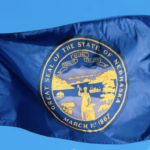 Nebraska: The Democratic National Committee withdrew a request to intervene in a lawsuit from the Republican National Committee against a Nebraska voting law. Omaha attorney Daniel Gutman, representing the DNC, said that as of July 1, it was unclear whether Nebraska Secretary of State Bob Evnen and Nebraska Attorney General Mike Hilgers would defend a law that allows certain U.S. citizens who have not lived in Nebraska or the United States, but whose parents are Nebraska residents and voters, to vote in the state. At a July 14 hearing, which lasted just over five minutes before Lancaster County District Judge Ryan Post, Gutman said officials now pledging to mount a defense changed the DNC’s position. Evnen previously described the lawsuit as “a little baffling” in an interview with the Nebraska Examiner. In a July 9 brief, state attorneys said the DNC’s involvement is neither allowed nor needed. The Nebraska Attorney General’s Office said representation is “adequate” if the parties did not collude, if Nebraska is not adverse to the proposed intervenor and if the state “diligently” prosecutes the case. The office said the state and Evnen have met each point and Hilgers has not determined that the law is “facially unconstitutional.”
 New Mexico: U.S. District Court Judge Judith Herrera dismissed a lawsuit from the United States Department of Justice seeking detailed New Mexico voter information in a ruling the New Mexico Attorney General and Secretary of State’s Office hailed for preserving the integrity of the state’s elections. The USDOJ filed lawsuits in December against New Mexico and five other states for failing to produce statewide voter registration lists. The lawsuit came after Secretary of State Maggie Toulouse Oliver resisted formal requests from federal officials to turn over voter rolls due to concerns about what the data would be used for. The USDOJ sought the state’s full voter list, including Social Security numbers and birth dates. The Secretary of State usually redacts those details for any publicly released list of voters. By the time of the lawsuit, Toulouse Oliver had already given the federal government voter rolls that included years of birth but not Social Security numbers, she told Source NM in December. Herrera ruled that the USDOJ lacked any basis for the lawsuit and failed to adequately argue that the unredacted voter rolls would enable the federal government to evaluate whether New Mexico is complying with federal election law. “Had the DOJ identified as the factual ‘basis’ statistical anomalies within New Mexico’s registration data or conduct associated with the State’s [Voter Registration Logs] maintenance practices, then the outcome may have been different,” Herrera wrote in her ruling.
 Oklahoma: An Oklahoma Supreme Court referee heard arguments in a case which could shape the future of the state’s initiative petition process. Supporters of a state question that would let voters decide if the state’s primaries should be open challenged a determination by the Oklahoma Secretary of State that they failed to garner enough legal signatures to get it on the ballot. Frederic Dorwart, an attorney for the state question, which would place all primary candidates on a single ballot, said the Secretary of State must explain why over 57,000 signatures were rejected. Failure to do so imposes an “extraordinary burden” for supporters to be able to challenge the finding, Dorwart said. Secretary of State Benjamin Lepak found that supporters of State Question 836 gathered 142,567 signatures, short of the 172,993 needed to get the proposed constitutional amendment on the ballot. Supporters said they turned in over 200,000 signatures. Lepak, under a new law passed in 2024, determined 57,841 signatures did not match the required number of data points with the state’s voter registration rolls and tossed them out. But the agency could not provide supporters of the state question with the specific reason each signature was deemed invalid. Supreme Court referee Meredith Wolfe will issue a report to the court. Her report is not binding on the court.
 Pennsylvania: Matthew Laiss, 32, of Bethlehem who was found guilty of voting more than once in a federal election and voter fraud received his sentence this week according to the U.S. Attorney’s Office for the Eastern District of Pennsylvania. Charges were brought against Laiss in Sept. 2025 for election fraud during the 2020 election, prosecutors said. He was convicted in March 2026. According to prosecutors, Laiss resided in Ottsville, Pennsylvania, from at least Oct. 2012 to Aug. 2020 and was lawfully registered to vote there. However, Laiss moved to Frostproof, Florida, in or around Aug. 2020, obtained a driver’s license and registered to vote there. In Oct. 2020, the Bucks County Board of Elections mailed Laiss a ballot at his old address, where his parents still lived, prosecutors said. Prosecutors proved at trial that Laiss filled out his Pennsylvania ballot and submitted it in late October. He then went back to Florida and voted at a polling place there on or around Election Day. Laiss claimed he voted twice for President Donald Trump, but that is unverifiable since he cast secret ballots in both Pennsylvania and Florida, according to court documents. Laiss was sentenced to three years probation, with the first six months being home confinement, prosecutors said. He also received a $6,000 fine and $200 special assessment.
 West Virginia: Nearly five months after the U.S. Department of Justice (DOJ) sued West Virginia in an attempt to force the state to turn over unredacted voter ID data, a district court judge has dismissed the case entirely. According to a Facebook post put out Monday night by West Virginia Secretary of State Kris Warner, the case was dismissed on Monday by the United States District Court for the Southern District of West Virginia. The case was filed just weeks after Warner publicly rejected the DOJ’s request to voluntarily provide personal information about West Virginia’s registered voters, citing that such a move is contrary to state law. Warner said that the decision to dismiss “is an important victory for the rule of law, voter privacy, and the dedicated election officials across West Virginia who work every day to ensure the accuracy of our state’s voter registration system.” In the dismissal order, Warner said that the Court found the DOJ’s demands included “no indication that West Virginia is suspected to be noncompliant with the list maintenance requirements of [federal law], nor does it point to any anomalies in West Virginia’s voter registration data.” Despite the victory in court, Warner made it a point to mention that he shares the DOJ’s goal to ensure that only eligible voters cast ballots in West Virginia’s elections.
Opinions This Week
National Opinions: U.S. Election Assistance Commission, II, III, IV | Midterms | Federal interference, II, III | MLB All-Star voting | Intelligence agencies | Voting rights, II | U.S. Supreme Court | Election vulnerabilities |
Arizona: Counting accuracy | Maricopa County |
California: Ranked choice voting | Voting access |
Colorado: Vote by mail |
Connecticut: Vote by mail |
Georgia: 2020 |
Hawai’i: Election commission |
Maryland: Ranked choice voting |
Nevada: SAVE Act |
New York: Closed primaries |
Ohio: Vote by mail | Voting rights, II, III |
Washington: Federal interference |
Wisconsin: Election fraud |
Call for Papers
Submit a Proposal for the 2026 National Student Vote Summit: The Students Learn Students Vote (SLSV) Coalition is accepting session and poster proposals for the National Student Vote Summit, held November 18-20 at Mesa Community College in Mesa, Arizona. Practitioners, campus staff, faculty, nonprofit partners, local election officials, and students working on nonpartisan student voter engagement are all encouraged to apply. Proposals are due 11:59 PM PT on Tuesday, July 21, 2026. Submit here.
Upcoming Events
2026 NACo Annual Conference & Exposition: The National Association of Counties will hold its 2026 Annual Conference & Exposition on Orleans Parish, Louisiana from July 17-20. When: July 17-20. Where: New Orleans.
NASED 2026 Summer Conference: The National Association of Directors of Elections will hold its summer conference from July 20-22 in Boston. When: July 20-22. Where: Boston.
iGO 9th Annual Conference: The International Association of Government Officials will hold its 9th Annual Conference from July 25-28 in Reston, Virginia. When: July 25-28. Where: Reston, Virginia.
2026 NCSL Legislative Summit: The 2026 NCSL Legislative Summit takes place in Chicago July 27-29, bringing together state legislators and legislative staff from all 50 states and U.S. territories for three days of collaboration, innovation and bipartisan dialogue. When: July 27-29. Where: Chicago.
SCARE 2026 Annual Conference: The South Carolina Association of Registration and Election Officials (SCARE) will hold its annual conference from July 27-30 in Isle of Palms.
Oregon Association of County Clerks: The Oregon Association of County Clerks will hold its annual conference from August 10-13 in Burns.
National Poll Worker Recruitment Day: National Poll Worker Recruitment Day and Help America Vote Day were established by the U.S. Election Assistance Commission (EAC) to inspire civic engagement and encourage people to sign up to become a poll worker. The EAC will recognize August 11, 2026, as National Poll Worker Recruitment Day. These efforts aim to address the continued need for poll workers to sign up to Help America Vote and strengthen our democracy. When: August 11.
WMCA 46th Annual Conference 2026: The Wisconsin Municipal Clerks Association will hold its annual conference from August 18-21 in Green Bay.
Election Center 41st Annual Conference: The National Association of Election Officials (Election Center) will hold its 41st Annual Conference in Kansas City, Missouri from August 19 to 21. CERA classes will be offered August 22 and 23. When: August 19 to 21. Where: Kansas City, Missouri.
UAC Annual Convention: The Utah Association of Counties will hold its annual convention from September 8-10.
National Voter Registration Day: First observed in 2012, over 5 million voters have registered to vote on National Voter Registration Day to date. As many as 1 in 5 eligible Americans are not registered to vote. Help us change that by joining the country’s largest single-day voter registration drive and organizing a registration event in your community! When: September 15.
2026 WACO Conference: The Wyoming Association of County Officers-County Clerks will hold its annual conference from September 22-24 in Laramie.
2026 MACO Annual Conference: The Montana Association of Counties will hold its annual conference from September 27-30 in Helena.
National Voter Education Week: Voters should have the information they need to cast their ballots with confidence. That’s where National Voter Education Week comes in. Help voters find their polling location, understand their ballot, and make a plan to vote by joining our week-long campaign. When: October 5-9.
Election Hero Day: Election Hero Day is a nonpartisan, national celebration recognizing the tremendous contributions that election officials, their staff, and poll workers make to ensure a safe, secure voting experience for all Americans. Taking place on October 20, 2026, nonprofits, business leaders, brands, public officials, and more will unite to honor the election heroes in our communities. With your support, Election Hero Day will help boost election official morale ahead of Election Day and send a clear message to the public that we support our friends and neighbors who play such a vital role in preserving our democracy. When: October 20.
Vote Early Day: When Americans vote early, they ensure last-minute problems, long lines at the polls, confusing election laws, or voter disinformation cannot prevent us from casting our ballot. Vote Early Day is a tentpole moment for partners nationwide to engage with voters and empower them with the tools to cast their ballots early. When: October 27.
Job Postings This Week
electionlineWeekly publishes election administration job postings each week as a free service to our readers. To have your job listed in the newsletter, please send a copy of the job description, including a web link to mmoretti@electionline.org. Job postings must be received by 5pm on Wednesday in order to appear in the Thursday newsletter. Listings will run for three weeks or till the deadline listed in the posting.
Account Executive, VotingWorks– We are looking for a trusted sales leader who understands that election administrators don’t buy voting machines, they buy trust, both in the equipment and in the vendor. All 83 of Michigan’s counties will soon open at once, and we are in the running for the state RFP enabling us to sell our voting machines. Incumbents will have to re-earn their contracts, and we’ll be competing on equal footing for the first time. This opportunity is time bound. Trust matters deeply in this market. Your job is to build relationships and earn credibility quickly with state and local election officials. You will own the full Michigan territory. You’re responsible for the entire sales process: building pipeline, running demos, navigating procurement, and closing deals. We want sustainable sales contracts that are technically sound, politically supported, and set up for a clean handoff to Customer Success. For your first demos, you’ll be paired with our Executive Director and our Head of Customer Success to learn the messaging and the product. Once you take on demos on your own, you should still know when to bring in executive support and when to handle things yourself. This is a competitive market with a real window of opportunity. If you want to sell something that actually matters to Democracy, and you’re energized by moving fast when the timing is right, we’d like to meet you. Application: For the complete job listing and to apply, click here.
Accounts Payable & Payroll Specialist, King County, Washington– This is an amazing opportunity to be engaged in the election process! The Department of Elections is searching for energetic and resourceful professionals who like to “get stuff done”. The Accounts Payable & Payroll Specialist position in the Elections Department combines an exciting, fast paced environment with the opportunity to cultivate talents and apply a variety of skills. The ideal candidate will thrive in an innovative and fast-paced environment and will not hesitate to roll up both sleeves, work hard, have fun, and get the job done. We are seeking a detail-oriented and collaborative professional to support payroll, finance, and human resources operations. The Accounts Payable & Payroll Specialist supports the department’s mission by processing vendor payments and payroll, maintaining accurate financial and employee records, supporting audits and reporting, and contributing to continuous improvement initiatives. Work is performed under limited supervision and requires independent judgment. This position reports directly to the Administrative Services Manager and works closely with both the Finance Administrator I and the Human Resource Analyst. The ideal candidate thrives in a fast-paced environment, values accuracy and confidentiality, and enjoys delivering exceptional customer service to employees and partners throughout the organization. Salary: $32.44 – $41.25 Hourly. Application: For the complete job listing and to apply, click here.
Administrative Specialist (Elections Specialist–Russian), King County, Washington– This is an amazing opportunity to be engaged in the election process! The Department of Elections is searching for energetic and resourceful professionals who like to “get stuff done”. The Administrative Specialist II positions in the Voter Services Department combines an exciting, fast-paced environment with the opportunity to cultivate talents and apply a variety of skills. The ideal candidate will have a desire to help ensure the democratic process through public service. They will thrive in an innovative environment and will not hesitate to roll up both sleeves, work hard, have fun, and get the job done. King County Elections (KCE) manages voter registrations and elections for more than 1.4 million voters in King County, one of the largest vote-by-mail counties in the United States. KCE’s mission is to conduct accessible, secure, and accurate elections. As a leader in providing inclusive elections, KCE is focused on core values of accuracy, equity, integrity, service, teamwork, and transparency. The team at KCE is committed to ensuring all King County voters can get registered, cast their ballot, and make their voices heard. Salary: $29.46 – $37.47 Hourly. Application: For the complete job listing and to apply, click here.
Customer Support Center Consultant Level 1, Hart InterCivic– The Customer Support Center Consultant Level 1 (CSC 1) provides Tier 1–2 support for Hart InterCivic products, helping customers troubleshoot issues and keep election operations running smoothly. The CSC I’s primary responsibilities are to: Resolve and route customer issues via phone, email, and remote tools; Document cases in the CRM and communicate status through resolution; and Use product documentation to deliver clear, customer-friendly solutions. This role researches and resolves issues, supports hardware/software configuration and deployment, and provides training or on-site support as needed. It also documents processes and partners with other departments to improve service delivery. This position follows the Proprietary Information and Intellectual Property Agreement and is responsible for protecting company information, including when working off-site or outside normal hours. Application: For the complete job listing and to apply, click here.
Cybersecurity Assessor (Election Security), Apollo Information Systems: The Technical Assessor conducts in-depth technical and program-level cybersecurity assessments of client environments, identifying risk, measuring control maturity, and producing clear, actionable guidance that advances each client’s security posture. This is an experienced assessor role: the individual independently leads assessments end to end, evaluates complex environments against multiple frameworks, and is a trusted voice in front of both technical teams and executives. The assessor also helps mature Apollo’s assessment method. Salary: $80K – $120K. Application: For the complete job listing and to apply, click here.
Deputy Director, New Hanover County, North Carolina– Are you an experienced elections or public administration professional with a strong commitment to public service? New Hanover County is seeking an Elections Deputy Director to support the Elections Director in overseeing daily operations and ensuring the successful delivery of election services. This role provides staff supervision and assists with procedural and technical improvements, voter education programs, public communications, in-person voting operations, Board of Elections meeting preparation, and election official training. The Deputy Director ensures continuity of operations in the Director’s absence and directly supervises teams responsible for voter registration, outreach, and logistics, maintaining a high level of customer service during large-scale election events and periods of increased demand. Salary: $62,126.00 to $83,870.50. Application: For the complete job listing and to apply, click here.
Deputy Elections Administrator, Tarrant County, Texas – The Deputy Elections Administrator is responsible for assisting with and overseeing the daily operations of the Elections Administration Department, including coordination of Voter Registrar duties and all election management activities for Tarrant County. This position provides executive-level operational and tactical leadership and exercises full authority in the absence of the Elections Administrator. Responsibilities include managing personnel, directing election logistics, ensuring legal compliance, overseeing technology and equipment deployment, coordinating poll worker operations, and maintaining the integrity and security of all election processes. Application: For the complete job listing and to apply, click here.
Elections & Recording Manager, Lane County, Oregon– Every election matters. Every ballot matters. Every voter deserves confidence that the process is accurate, secure, transparent, and fair. Lane County is seeking an experienced election professional to serve as our next Elections & Recording Manager. Reporting directly to the County Clerk, this leadership role oversees the daily operations of one of Oregon’s largest county election and recording offices, serving more than 300,000 registered voters in a 100% vote-by-mail environment. This is more than an operations role—it’s an opportunity to help safeguard one of our community’s most important public institutions while leading a talented team dedicated to exceptional public service. As the Elections & Recording Manager, you will oversee the administration of all federal, state, and local elections while ensuring compliance with Oregon election law and maintaining the integrity, security, and transparency of every step of the election process. In addition, you will lead the County’s Recording program, which maintains official public records and provides a variety of essential services to the public. Salary: $100,360 – $137,363. Deadline: July 20. Application: For the complete job listing and to apply, click here.
Elections Coordinator, Education & Communications, New Hanover County, North Carolina – The New Hanover County Board of Elections is seeking an Elections Coordinator to join a dedicated and collaborative team committed to serving the community. In this role, you will plan, coordinate, and support key Board of Elections programs and operations while helping ensure election activities are conducted accurately, securely, and in compliance with all applicable federal, state, and local laws, regulations, policies, and procedures. Salary: $53,668 – $91,234. Deadline: July 16. Application: For the complete job listing and to apply, click here.
Elections Specialist, Voter Education, Outreach & Precinct Officials, Onslow County, North Carolina– Performs intermediate skilled administrative support work facilitating all aspects of the voter education, outreach, and precinct official processes, and related work as apparent or assigned. Work is performed under the close supervision of the Elections Deputy Director. Our core values—Resilience, Excellence, Accountability, Customer Service, and Honesty—are the foundation of our work and the standard by which we operate. As a member of our team, you are expected to demonstrate these values in every aspect of your role. This means delivering high-quality work, taking responsibility for your actions, providing exceptional service, and maintaining integrity in all interactions. Your commitment to these principles is essential to fostering a positive workplace culture and ensuring the success of our organization and the community we serve. Salary: $21.18 – $27.53 Hourly. Deadline: July 16. Application: For the complete job listing and to apply, click here.
GIS Specialist, Palm Beach County, Florida– Help power accurate, well-run elections through smart mapping and rock-solid data. As a GIS Specialist II with the Palm Beach County Supervisor of Elections, you’ll own core geospatial datasets, turn complex information into clear maps and insights, and improve the workflows teams rely on to plan and execute election operations. Your work helps ensure precinct, polling place, and district data is accurate and easy to use—supporting operational readiness, transparency, and timely decision-making. You’ll maintain and enhance GIS databases, produce print and web-ready map products, perform quality control and spatial analysis, and keep GIS synchronized with the Voter Registration System. You’ll collaborate with both technical and non-technical teams, document standards and changes, and provide training and troubleshooting support. Salary: $72,800 to $87,000. Application: For the complete job listing and to apply, click here.
IT Assistant Manager, Palm Beach County, Florida–The Assistant IT Manager plays a vital and supportive role in ensuring the smooth operation of the IT department, aligning both the technical infrastructure and the team with the organization’s goals. This position involves collaborating closely with the Election Technology Director to oversee the implementation of technology solutions that meet the organization’s needs. The Assistant IT Manager helps maintain an efficient and effective IT environment. The Palm Beach County Supervisor of Elections Office is committed to hiring talented individuals with diverse experiences that will enhance the services we provide to the residents of Palm Beach County. We are always looking for dedicated individuals who do all things with Integrity and Accountability, who excel in Customer Service, and believe in Transparent, Secure Democracy. At the Supervisor of Elections Office, we strive to help our employees find passion and purpose. Join us in being the best place to vote. Salary: $85000 to $125000. Application: For the complete job listing and to apply, click here.
Senior Policy Director & Counsel, Common Cause: We are looking for a Senior Policy Director & Counsel, Voting & Fair Representation, to lead Common Cause’s work to protect voting rights, ensure free and fair elections, and strengthen representative democracy. This leader will set the vision for our voting and fair representation policy pillar, lead our national Election Protection program, and bring together policy, litigation, legislative advocacy, organizing, and communications strategies to meet the challenges facing our democracy. The Senior Policy Director will lead a growing team of experts and work across Common Cause’s national and 22 state teams and coalition partnerships to turn ideas into action. This role requires a strategic leader who brings deep expertise in voting and fair representation, strong judgment in navigating complex political and legal landscapes, and the ability to build programmatic strategies that deliver impact. This is a full-time role reporting to the Vice President, Policy; this role is based in Washington, DC with an expectation to come into our office at least two days per week and travel at least six times per year. We hope our new Senior Policy Director and Counsel, Voting & Fair Representation will start in September. Salary: $132,613 – $148,526 a year. Application: For the complete job listing and to apply, click here.
Marketplace
electionline provides no guarantees as to the quality of the items and the accuracy of the information provided about the items in the Marketplace. Ads are provided directly by sellers and are not verified by electionline. If you have an ad for Marketplace, please email it to: mmoretti@electionline.org