In Focus This Week
Countdown to November 3
Last minute thoughts and resources
By M. Mindy Moretti
electionline.org
We’re at T-11 for Election Day 2026.
 Elections officials nationwide are busy with vote-by-mail and early voting. They are also dealing with the many last minute things they deal with every election cycle and some new ones for this election cycle.
There is a lot of “noise” around this year’s election – we’re posting 100+ stories per day in the Daily – and so we thought it would be good to pull together some last-minute advice and resources for elections officials.
We reached out to nearly 20 elections partners for what they would advise and/or recommend and here’s what they had to say:
National Associations
“As the gatekeepers of democracy, election officials across the United States should continue to be proud of the work they have done in these challenging times. I encourage you to continue this good work and avoid being discouraged by sensational claims and attempts to mislead or misdirect your voters. Your attention to detail and personal strength are what keep our democracy strong. Encourage your voters to come to you with questions. Encourage your team to support one another. We’re all in this together and you are leading the way!” – Kathleen Hale, Executive Director of the National Association of Election Officials (Election Center)
“Continue to promote #TrustedInfo2026 by encouraging voters to go straight to your official channels for reliable, up-to-date information about the midterm elections! Keep this message going throughout the post-election period and through certification, reminding voters that state and local election officials are the trusted sources for information about election processes, vote counting and security measures. Directing voters to official sources helps mitigate confusion and build confidence. Urge your state and national partners to amplify this message as well. We also encourage national organizations to share CanIVote.org, NASS’s nonpartisan website connecting voters to state websites for information on how and where to vote and other official election resources.”– National Association of Secretaries of State (NASS)
“Every ballot carries a citizen’s voice. Election officials ensure that voice is heard by meeting every challenge with professionalism, integrity, and unwavering dedication to the voters they serve. A checklist today beats an apology tomorrow.” – Mark Goins, president of the National Association of State Election Directors (NASED)
“Plan ahead for higher voting volumes. How could longer lines or a surge in mail ballots affect your operations? Bookmark two practical operational planning tools from PLEJ: the Wait-to-Vote Estimator estimates wait times based on ballot length, equipment allocations, and voters in line, while the Mail Ballot Lead Time Estimator helps assess processing times as ballot volumes, resources, and timing change. Use both to explore scenarios and prepare for peak demand.” – Partnership for Large Election Jurisdictions (PLEJ)
Legal Advice
The Bipartisan American Election Project recently published extensive materials on the law covering attempted federal government ballot seizures.
“Call your attorney! Exchange cell phone numbers and share the resources available at GCEON.org.” – Liz Howard, director of partner engagement, Brennan Center for Justice.
“Just tune out all the noise, which is going to get louder and louder, and focus on doing your jobs and following state law. You’re not going to be prosecuted, and everything will be fine, but it’s going to get loud for a while. When the inevitable false claims about widespread noncitizen voting come up, direct people to CEIR’s non-citizen voting tracker, which demonstrates that it is exceedingly rare. And, if you ever find yourself in need of advice or assistance because you, others in your office, or your poll workers are threatened or harassed, the Election Official Legal Defense Network is here to help. You will be paired very quickly with a lawyer who can help you, at no charge.” – Center for Election Innovation & Research.
Elections Partners
Three Little Things you can still do before the election from Advance Elections.
- Establish a relationship with your election or emergency management peer.
- Coordinate public information sharing in case of disruptions.
- Election officials-share the list of voting locations, dropboxes, counting and storage facilities with Emergency Management. Emergency Management review that list and notify election officials of any potential hazards in those locations that may disrupt election operations.
For more “little things” visit, https://electionreadiness.org/notes/its-the-little-things
The Center for Civic Design has put this together an Election Home Stretch page as a super simple, quick way for election officials to find all the tools they might need in the final stretch before Election Day. The resources are divided into categories to make it easy for EOs to find what they need, whether that’s communicating with voters, preparing poll workers, or getting ready for the days after the election. Most of the tools can be put to use in just a few hours or a day and lead to tangible results. We know how busy election officials are right now, so we wanted to make it as easy as possible to find something useful and put it into action. – Center for Civic Design.
“Tell voters now that counting takes time. UC San Diego researchers found that a short message explaining this, and the security measures behind it, helped keep trust steady when results were delayed. In their study of 10,000 Americans, trust dropped 6.5 points for people who heard about a delay without the message, but only 2.6 points for those who saw it. The Elections Group’s Ballot Counts and Election Results Communications Tool Kit has outreach templates ready for your office to adapt for this messaging, including social graphics, talking points, a press release, and a daily count infographic. Update them for your jurisdiction, post something this week, and decide who will share updates on Election Night. – The Elections Group.
“Voters know they can trust election officials for accurate information. However, voters may not always know who their local election officials are or follow them on social media. Understanding your audience matters! Connect and build relationships with trusted local press or nonpartisan voting rights groups like the League of Women Voters to help amplify accurate voting information quickly. If the public hears correct voting information from the press, nonpartisan groups, and election officials, the message is more likely to stick.” – Adam Ambrogi, chief of External Affairs, League of Women Voters (LWV).
“With the midterms around the corner, our biggest message to election officials is simple: you are not alone. A massive network across the elections community is in your corner, ready to help find any resources you need – and cheer you on. Your voters trust you to get the job done, and we’re here to support you in your critical work for democracy. “With Advance Elections and Election Law Program, we recently released The Election Chain of Custody Blueprint – it includes quick operational guidance on chain of custody procedures and incident response plans to communicate clearly with the public over the next ten days and beyond.” – Pamela Smith, president and CEO of Verified Voting.
“Publish a plain-language page on your website that walks through what happens between election night and certification: which ballots are still being counted and why, any deadlines for voters to fix a problem with their ballot, and the dates for your canvass and certification. Link to it from the top of your results page to answer questions before voters have to ask them, or start filling in the blanks themselves.” – Steve Lund, U.S. Digital Response.
Election Security
United in Security: How Every State Protects Your Vote in 2026: In collaboration with the R Street Institute and the Institute for Responsive Government, the Bipartisan Policy Center has detailed the security and integrity protections that make American elections strong, resilient, and trustworthy in every jurisdiction. The one-page, printable document features short, digestible facts that you can use to communicate about the security of your elections to voters.
From the Committee for Safe and Secure Elections (CSSE) Co-Chair Tina Barton recommended that local elections officials make sure 9-1-1 dispatch has a record of all voting locations on Election Day and whom to contact in case of an emergency.
“In law enforcement, partnerships are part of the job. Election officials are also public servants working in the same communities we serve. If you haven’t connected with your local election officials yet, reach out. Know who they are. Make sure they know who to call. Most importantly, let them know you’ve got their back. We’re all in this together.” – CSSE Member and former Michigan State Police Captain, Harold Love.
And lastly, CSEE Co-Chair, Michel Moore, shared the following —
- Make Sure Police Dispatch Knows Your Locations: “One practical step election officials can take right now is to make sure their local police dispatch center has every polling location, ballot drop box, and vote tabulation facility identified in its system. That information helps law enforcement anticipate where resources may be needed and respond more effectively if a problem arises.”
- Establish Relationships Before Election Day: “Election officials should know who their point of contact is with local law enforcement, and that person should know them. Have a conversation now about what assistance may be needed, what concerns exist, and how best to communicate. These relationships and expectations need to be established before Election Day, not in the middle of an incident.”
- Plan Together for Potential Challenges: “My advice to election officials is to take the time now to sit down with their local law enforcement partners and talk through what could go wrong and how they would respond. Be clear about responsibilities, when police assistance should be requested, and who makes those decisions. A little planning and coordination now can prevent confusion when it matters most.”
Stronger Together
Stronger Together
Government Counsel and Election Officials Network (GCEON)
By Christopher Crockett and Kim Trueblood
The work of election officials in conducting trustworthy and transparent elections has always been supported by a myriad of government agencies. In 2026, the number of agencies supporting elections could reach record-breaking levels, with 89% of local election officials reporting they plan to coordinate with at least one other agency in preparation for the midterms. This expansion of intragovernmental partnerships is often reflected in cost estimates, budget requests, and grant requirements that now routinely include information technology (IT) services, cybersecurity programs and resources, law enforcement support, and physical security improvements for elections. However, one critically important partner has been largely overlooked: local government attorneys.
As a current local election official and a chief civil deputy in a county attorney’s office, respectively, we agree with Professor Rebecca Green’s conclusion in her 2024 article, “Legal Support for Election Officials”: “Competent and accessible legal support is a critical component to ensuring local election officials can successfully perform the work of running free and fair elections.” In our jurisdictions, strong relationships between these two offices have strengthened our elections.
In the last decade, we have seen a rise in election administration litigation, which some scholars have tied to a change in campaign finance laws that allow contributors to exceed contribution limits so long as the funds are earmarked for legal services. In the months leading up to the 2024 election, hundreds of election-related lawsuits were filed over issues including mail voting, voter eligibility, election administration, and certification. As election administration has grown increasingly complex, so has complying with election law and navigating litigation, particularly in a rapidly changing legal environment. At the same time, election officials are facing increased scrutiny, which has contributed to a “flood” of open-records requests.
In sum, “assistance of competent legal counsel has never been more crucial.” Yet, this “topic has received little if any study.” What we do know, according to a survey of local election officials, is only 34% of local election officials planned to coordinate with local government counsel ahead of the 2026 election (compared to 80% who planned to coordinate with law enforcement and 54% who planned to coordinate with IT).
We have seen firsthand the value that strong partnerships between election officials and their counsel bring to administering secure elections. On election day in April 2025, one of Kim’s larger polling locations experienced an issue with its e-poll books, causing a significant delay for voters. She was able to quickly work with her attorney to petition the court to extend voting by one hour at this polling location, helping to ensure that voters who may have left earlier in the day could return and cast their ballot. But for the trusted relationship with her county counsel, she may not have been able to timely file a successful petition. Experiences like this underscore the importance of collaboration between election officials and their counsel. By coordinating proactively, we can protect the distinct choices each state has made to ensure robust participation in the democratic process, and voters, even as the legal landscape evolves.
This is why we both joined the Government Counsel and Election Officials Network (GCEON), a peer-to-peer network which brings together current and former election officials and government attorneys who work to help support and build relationships between these two communities by developing practical resources, including free election administration law CLE courses, and convening to collaborate and discuss proven strategies needed to build productive working relationships, share practical knowledge, and help each other prepare for the legal questions that arise before, during, and after an election. Our members span the ideological spectrum — Democrats, Republicans, independents — but we all agree that it’s crucial to build relationships that allow election administrators and legal experts to collaborate.
Election Day is approaching, and election officials and their counsel are prepared. Together, we will do what we continue to do year after year: deliver transparent and trustworthy elections.
Christopher Crockett is the Chief Civil Deputy for the Weber County Attorney’s Office in Utah.
Kim Trueblood is the County Clerk in Marathon County, Wisconsin.
AI Commentary
AI is in the election headlines less. That doesn’t mean it matters less.
By TJ Pyche
Ready 4 Tuesday
2024 was supposed to be the year of AI in elections. Reporters described it as “the first AI election,” and the year opened with a deepfake of President Biden’s voice robocalling New Hampshire primary voters.
I’ve spent a significant part of the last two years flying around the country to talk with election officials about AI, leading trainings and workshops and supporting the AI + Elections Clinic at Arizona State University. AI still comes up constantly in that work: at trainings, at conferences, in questions about what tools are safe to use and what threats to plan for. So with the 2026 midterms two weeks away, I expected AI to show up in the election news about as often as it did in 2024, maybe more. I wanted to check that against the numbers. It turns out AI is in the conversation, but it isn’t in the headlines.
How I counted
The method is simple. Every weekday, electionline publishes a roundup of election news from across the country: national stories first, then stories sorted by state. It’s one of the best single records of what election officials and the people who follow them are reading. If you don’t already get it, sign up for electionline’s daily emails. It’s the easiest way to keep up with election news nationwide.
I collected the headline of every story electionline linked from January 2023 through October 20, 2026. That’s just over 48,000 stories. Then I kept the ones whose headlines mention AI or a closely related term: “artificial intelligence,” “deepfake,” “chatbot,” “generative,” “OpenAI” and a few others. I read the matches by hand and removed ones that weren’t really about AI, like ordinary robocall schemes and a candidate’s claims about “mathematical algorithms.” That left 201 stories.
There are real limits here. This counts AI headlines in electionline’s roundup, not all reporting on AI and elections. electionline links a lot, but not every story, and it doesn’t cover the broader national and tech press. I also only looked at headlines, so a story about AI under a headline like “New law targets election misinformation” doesn’t count. A full-text review of every article would likely add more stories. And some of the calls about what counts as an AI story were judgment calls that another reviewer could make differently.
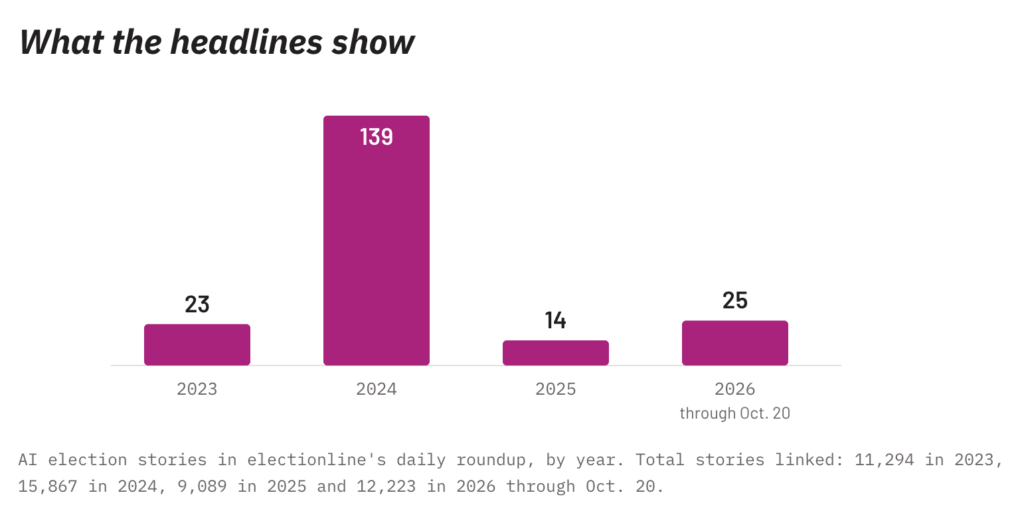
The goal is to show a trend, using a consistent way to measure how often AI shows up in one widely read source over time. The count can’t tell us how much AI is actually being used in elections, or how often it causes problems.
What the headlines show
As a share of everything electionline linked, AI stories were about 2 in every 1,000 in 2023, about 9 in every 1,000 in 2024, and back to about 2 in every 1,000 in 2025 and 2026.
The fairest comparison is 2024 against 2026 over the same stretch of the calendar, since both are federal election years. From January 1 through October 20, electionline linked almost exactly the same number of stories in both years: 12,083 in 2024 and 12,223 in 2026. In 2024, 131 of them were about AI. In 2026, 25 were. Total election coverage held steady while the number of AI stories fell by about four-fifths.
We’re not at Election Day yet, and the final weeks of a cycle bring a lot of election coverage. But that likely won’t close the gap. In 2024, only 8 more AI stories ran between October 21 and the end of the year. And the gap was already wide this fall: from September 1 through October 20, there were 19 AI stories in 2024 and 8 in 2026.
The 2024 stories weren’t one big burst, either. They ran all year: state officials warning about deepfakes in January, the New Hampshire robocall, tech companies pledging action in February, and a steady drumbeat of trainings, tabletop exercises and new state laws in between.
Why 2024 still stands out
Part of the answer is probably that 2024 was the first big test. Generative AI tools had only recently become widely available, the New Hampshire robocall showed what they could do, and election officials, lawmakers and reporters were all trying to get ahead of risks nobody had seen in a presidential election before. A new kind of threat makes news.
But I don’t think the drop means people stopped talking about AI and elections. The bigger conversation is still very much about AI. Election officials are asking about it, training on it and writing policies for it. It just isn’t showing up in this data. A few possible reasons, none of which a headline count can settle:
- AI use is becoming normal, and normal is less newsworthy. In 2024, an election office or candidate trying an AI tool was a story on its own. In 2026, the same thing is less likely to make the news, especially when it builds on something an office or campaign already tried in an earlier year. The neutral and positive uses of AI may be the ones fading from headlines fastest, even as they spread.
- The warnings are familiar now. The AI risks that dominated 2024 coverage have been widely reported. A story about AI risk is less likely to run unless something new happens.
- AI may be part of bigger stories. It can show up inside stories about cybersecurity, misinformation or office operations without making the headline.
- Much of the conversation happens where headlines don’t: in trainings, peer networks, vendor pitches and internal policy discussions.
- The mix of stories in the roundup may have shifted. A daily roundup can only include so much, and what gets linked can change from year to year.
What the data can say is that AI showed up much less often in election headlines in 2026. It can’t say AI matters less.
AI is likely touching elections more, not less
Other evidence points the other way: AI is reaching further into elections and election offices than it did in 2024.
- More election officials are using it. In the Brennan Center’s 2026 survey of local election officials, 16 percent reported using AI in their work, up from 5 percent in 2024. Most use it for routine tasks like drafting social media posts and creating graphics. The share who want guidance from government agencies on using AI rose from 31 percent to 46 percent over the same period.
- More voters are using it. About half of U.S. adults now report using AI chatbots, according to Pew Research Center, up substantially from the summer of 2024. Reporters are finding that voters are turning to AI for election help, and the answers aren’t always right.
- Election offices are putting it in front of voters. Ohio debuted an AI election assistant in late 2025. Arizona’s secretary of state expanded its AI chatbot ahead of the midterms. Montgomery County, Pennsylvania, launched a voter services chatbot this month.
- And it’s already causing problems. Election officials in Maryland pulled AI-generated posts. ProPublica reported that the FBI has looked at using questionable AI tech to review signatures on seized mail ballots.
In 2024, many of the AI headlines were about what might happen. In 2026, more of them are about what election offices, voters and investigators are actually doing with AI.
Less news isn’t less risk
Something being in the news less doesn’t make it any less worrisome or any less important. Election officials haven’t stopped worrying: 63 percent of local election officials in the Brennan Center’s 2026 survey said they are concerned about AI making their jobs more difficult or dangerous. Last week, federal officials told election offices to be on guard against AI-powered tricks ahead of the midterms. And OpenAI has said it is readying defenses against cyber and misinformation threats this election season.
If anything, the most important AI stories in elections may now be the ones that never make headlines: a county quietly using an AI tool to draft voter guidance, a chatbot giving a voter the wrong deadline, a fake video that circulates in a group chat and never reaches a reporter.
For election officials, that means planning for the AI risks that won’t make the news, not just the ones that did in 2024. You don’t have to do it alone:
- Ready for Tuesday offers AI trainings, workshops, tabletop exercises and hands-on help putting AI policies and safeguards in place. We’re happy to work with you. Get in touch.
- The AI + Elections Clinic at Arizona State University trains election officials to use AI tools responsibly and to prepare for AI-driven threats.
- The Election Security Exchange is a nonpartisan hub for cybersecurity and physical security resources built for election offices, including guidance on AI.
A tracker you can use, and help build
I’ve put all 201 stories on a map, by state and year, so you can see where AI has shown up in election news since 2023. I’ll keep it updated as new stories come in.
Headlines only catch part of the picture, so I want your help. If you know of a U.S. news story about AI touching an election, an election office, or voters that isn’t on the tracker, send it in. Local stories are especially welcome, since they’re the easiest to miss.
Information Sharing
Trust is a two-way street
Short social media videos can build—or erode—trust in elections, and sharing credentials adds little.
By Jennifer Gaudette, Assistant Professor at UC Riverside School of Public Policy; and
Mac Lockhart, External Postdoctoral Associate at Yale University’s Institution for Social and Policy Studies
Our team studies when and whether video interventions can increase voters’ trust in elections. Continually, we’ve found that sharing information with voters about how elections are secured makes them more trusting in elections. In December 2025, we ran an experiment to see whether short-form vertical videos could be as persuasive at increasing trust in elections as the formal, professional content from election officials that we had previously tested. Our results were striking: we found that a casual short-form video recorded by Jennifer in her car – never stating her qualifications or job title – was about as persuasive as expensive, professional videos produced by election officials in two different states.
The findings were exciting, but left us with two major questions: would the video be more persuasive if the speaker shared her credentials? And would misinformation shared in the same format (as it often is on platforms like TikTok and Instagram) be equally persuasive? To answer these questions, we ran a second experiment in August 2026. This time, Jennifer recorded three versions, still in her car, so the video setting and her appearance would be identical with only the content changing.
The first video contained the same information as the video we tested in January. We called this the “Basic Information” video. The second video started with Jennifer identifying herself as a professor who studies the subject area before sharing the same information as the Basic Information video. We called this the “Authority” video. In the third video, Jennifer shared the converse of the accurate information shared in the other two videos, stating that voting machines were connected to the internet and that neither party was allowed to oversee vote counting. We called this the “Misinformation” video. This treatment was followed by a debrief after the experiment with accurate information through both text and video, setting the record straight.
Once again, we found that social media-style videos are effective. Both the Basic Information and Authority videos produced similar positive changes in voter trust in elections when compared to the control video (a State Farm ad featuring Caitlin Clark). Notably, sharing her expertise did not lead to a significantly larger increase in trust; the facts themselves appeared to be increasing trust, not the speaker’s credentials. Respondents also did not have a significantly higher level of trust in Jennifer when she shared her qualifications versus provided no credentials. Respondents did, however, rate Jennifer as significantly more knowledgeable in the Authority video versus in the Basic Information video, suggesting the appeal to authority was noticed but wasn’t enough to move trust more than the facts on their own.
The Misinformation video produced equally striking results: those who watched the Misinformation video reported about as much less trust in elections as the increase reported by those who watched the Basic Information or Authority videos. However, respondents also reported significantly lower trust in the video speaker than in either the Basic Information or Authority videos (even though all featured Jennifer in identical settings). These results are likely driven by partisan responses; after watching the Misinformation video, respondents were 15% more likely to view Jennifer as a Republican than respondents who saw the Authority or Basic Information video.
There were also partisan differences in the trust effects. Democrats trusted elections about 0.40 points more on a 1-5 scale after watching the Basic Information or Authority video, while Independents and Republicans had an average increase of about 0.15 points – half the size. Notably, while the differences between the Authority and Basic Information video were not statistically significant, Independents appeared somewhat more persuaded by the Authority video while Republicans appeared somewhat more persuaded by the Basic Information video.
This difference was likely driven by trust in the video speaker. While Democrats who watched the Basic Information and Authority videos reported significantly higher trust in the speaker than those who watched the control video, Independents had somewhat less trust, and Republicans actually trusted Jennifer less in the treatment videos than the speaker in the control video. Democrats, Independents, and Republicans all had less trust in Jennifer when she shared misinformation than in the other videos.
The Misinformation video’s negative effects on trust in elections were also moderated by respondent partisanship. Democratic respondents reported no lower trust in elections after watching the Misinformation video than after watching the control video, while Republicans and Independents had significantly less trust in elections after watching the Misinformation video. The video appears to have been particularly effective at sowing distrust among Independents, which should be particularly noteworthy to election officials.
These results show the power of both accurate and inaccurate information when shared in the relatable format of a social media-style video. They also demonstrate why election officials should be proactive about getting accurate information into the social media space and encouraging others to share accurate information. Our findings show that social media videos do not have to feature people who have authority on the issue to be persuasive, nor do they need expensive or complicated productions; instead, election officials should focus on flooding social media with accurate information to combat misinformation, which we show can be just as persuasive as truth.
Vote411
VOTE411.org Celebrates 20 Years of Empowering Voters with Trusted, Nonpartisan Election Information
By Jeanette Senecal, Chief of Civic Learning and Impact
League of Women Voters
On October 27, the League of Women Voters will celebrate the 20th anniversary of VOTE411.org, its award-winning, nonpartisan election information resource that has helped tens of millions of Americans make informed decisions at the ballot box since 2006.
 What began as a one-stop shop for essential voting information has grown into a comprehensive, nationwide resource helping voters navigate increasingly complex elections. VOTE411 provides personalized ballot information, candidate comparisons, voter registration resources, polling place locations, and state-specific voting rules, all available in English and Spanish.
The platform’s growth reflects the increasing demand for accessible, trustworthy election information. In 2020, more than 6 million people used VOTE411. By the 2024 presidential election cycle, that number had grown to approximately 9.2 million users. With information on more than 55,000 candidates and 29,000 races available on VOTE411 for the 2026 midterms, voters can turn to the platform now to research their candidates, understand what’s on their ballot, and make a plan to vote.
Over the years, VOTE411 has continued to evolve, expanding Spanish-language accessibility and introducing new tools, including campaign finance information that helps voters better understand federal candidates’ financial backers.
As the nation approaches the 2026 midterm elections, VOTE411’s mission remains as important as ever: ensuring every eligible voter can access reliable, nonpartisan information, understand their options, and confidently make their voice heard.
Visit VOTE411.org to learn more and make your plan to vote.
electionline Daily News Email
 What’s the best part of waking up? electionline Daily News in your inbox of course so be sure to sign up for your daily dose.
Each morning you’ll receive the top headlines of the day, plus a listing of states featured in that day’s news round up.
To sign up, simply visit our site and provide us with your email and you’ll begin receiving the news in your inbox each morning.
We Google so you don’t have to!
electionline Merch
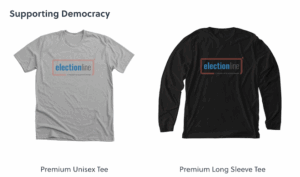 You’ve asked for it, well now you’ve got it! Just in time for all of your holiday gift-giving. We’ve opened up an electionline merch store using Bonfire. Currently we’re offering a couple of different t-shirts, a long-sleeve t-shirt and a hoodie.
Election News This Week
 Federal Update: According to The Washington Post, a small group of U.S. national security officials has been discreetly advising state governments and congressional lawmakers on how to prepare for the possibility that the Trump administration will attempt to interfere in November’s midterm elections, according to people involved in the effort. The group includes about 10 current and former officials with experience in the Defense Department, some of whom have previously focused on countering authoritarianism abroad. Their efforts are motivated not by political bias, they say, but a growing sense of alarm that President Donald Trump will harm American democracy by undermining the integrity of the vote to keep the Republican Party in power. The U.S. Postal Service is advising voters to mail their ballots at least one week before they need to be received by election officials. The USPS also announced that “extraordinary measures” will begin Saturday at postal facilities throughout the country to make sure ballots are quickly processed and transported. “The Postal Service is confident and ready to deliver a successful Election Mail season,” Postmaster General David Steiner said in a statement. He added that the agency’s goal is to instill “confidence in all Americans that their Election Mail will be handled securely — and delivered reliably.” According to original reporting from ProPublica, political appointees at the Department of Homeland Security wanted the Cybersecurity and Infrastructure Security Agency to procure a voting machine, examine it to see how it could be hacked and report back the findings so they could be given to the White House. The CISA employees repeatedly told the political appointees that their request was impossible, in part because the agents capable of pulling off such an operation had just been laid off by Elon Musk’s Department of Government Efficiency initiative. The appointees eventually stopped pressing CISA. According to CNN, Officials from the FBI and the Office of the Director of National Intelligence, with CISA facilitation, had planned to lead a classified briefing for election officials about foreign threats, but the call had to be postponed due to technical difficulties. The briefing was set to be the first time since the 2024 presidential election that state election officials heard from federal agencies in a classified setting about the threat environment from foreign powers like Russia, Iran and China, according to three of the sources. According to NPR, the Department of Justice this week began notifying the counties it wants to monitor on Election Day. Counties in Colorado, Florida, Minnesota, Texas and Washington have received notifications from the Justice Department so far, but the list seems to be growing in real time. In a briefing for reporters, Sen. Mark Warner (D-Virginia) and Rep. Jim Himes (D-Connecticut) said they have made clear to Director of National Intelligence Jay Clayton and other intelligence leaders that they must be immediately reachable by phone on and after Election Day in the event that Trump alleges foreign interference in the election. Or, Himes said, if the president “decides to use allegations of foreign interference as an excuse to seize ballot boxes, question the validity of the election.”
 Early Voting Turnout Updates: Early voting, by mail or in-person is underway nationwide, although some states won’t start in-person until next week. While not universal, turnout for in-person early voting has been high in many places, what that means for in-person voting on Election Day is anyone’s guess (no matter what the news media says). In Georgia, early voting has topped more than one million. Many Texas counties have seen long lines and large number for early voting including Bexar, Harris and Travis. Dallas County voters cast more ballots on the first day of early voting than in any previous election, including presidential contests. In Licking County, Ohio, early voting turnout neared presidential-year levels. Nearly twice as many people are voting early in Johnson County, Kansas compared with the same point in the 2022 midterm election. In Pulaski County, Arkansas, more than 1,300 registered voters cast ballots during the first 90 of early voting. There have been lines to vote early in Anchorage and Wasila, Alaska. Wasilla voter Edward Morris said he arrived early, when the line was shorter, and emphasized the importance of planning ahead. “Early voting was great. The line was short when we got here. But certainly now it’s not. So we come quite early and that’s the thing to do,” Morris said. Early voting numbers so far in Tennessee show a big turnout spike compared to the 2022 election.
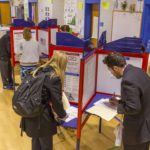 Early Voting Issues Updates: While early voting has been relatively smooth nationwide, that doesn’t mean it’s been without issue. Tennessee has probably seen the most reported issues with the late Dolly Parton’s sister making headlines this week for calling out issues with touchscreen voting machines. Mark Goins, Tennessee’s coordinator of elections, said the machines are designed to ensure the intention of the voter is carried through, and there are several checks and balances in the system. “It’s not a vote flipping situation. It’s normally like an unintended touch that they may not even realize,” Goins said. He compared it to typing on a phone with long fingernails, saying a fingernail positioned near the top of a selection box could touch a neighboring box without the voter realizing it. In Dorchester County, South Carolina about 150 early voters were given incorrect ballots because of a technical issue tied to an “error in the preparation of the electronic poll book file.” Several counties in Texas including Atascosa, Bexar, Collin, and Travis faced issues ranging from downed printers to ballot style issues to power outages to temporary lockdowns. In Surry County, North Carolina, a former commissioner candidate is accused of blocking a woman from entering an early voting site, yelling at her and making a throat-slashing gesture on the first day of early voting, according to court documents. The woman left without voting, the documents say. In Florida, three counties – Lee, Leon and Monroe – reported seeing Department of Homeland Security agents near early voting sites. Leon County Supervisor of Elections Mark Earley filed a complaint with the FBI after two federal Customs and Border Protection vehicles were seen outside an early voting site. Earley said two Customs and Border Patrol vehicles were parked outside the Northeast Branch Library, the county’s busiest early voting site, around 10:15 a.m. Monday, Oct. 19, the first day of early voting. “I will do everything in my power to ensure that our voters can vote in a fair election free from intimidation or implied threats,” Earley said in a statement. Maricopa County, Arizona reported unauthorized after-hours access to an early voting site at Chandler-Gilbert Community College. An election inspector discovered on Oct. 16 that paper trays on three ballot-on-demand printers appeared to have been opened overnight. “Upon notice from the inspector, the Recorder’s Office immediately dispatched replacement equipment to the early voting site and returned the original devices for a full forensic examination. Early voting continued on the replacement equipment without interruption,” the recorder’s office said in a statement.
 Congratulations: Congratulations to the Georgia secretary of state’s office for being named a winner of the 2026 Government Experience Awards from The Center for Digital Government. The office was recognized for the state’s investment in modern, secure, and efficient election administration for Georgia’s Registered Voter Information System (GARViS). “Georgia doesn’t follow the national standard for elections. We set it,” said Secretary of State Brad Raffensperger. The award comes as Georgia continues to demonstrate its commitment to election modernization, balancing innovation with the security, accuracy, and accountability voters expect. “Election security isn’t just about what happens on Election Day. It’s about the infrastructure, the technology, and the people working every day to get it right,” Raffensperger continued. “GARViS is proof that the government can embrace innovation while maintaining its responsibility to protect the integrity of our elections. I’m proud of the team that built this system, the county election officials who use it, and Georgia’s status as a national leader in elections.”
Sticker News: Oooh, we love this! Johnson County, Iowa residents who vote after 5pm will receive a special “I voted after dark” sticker. After-hours voting closes at 6  p.m. or 8 p.m. depending on date or location. Johnson County’s Voting after dark began at the Iowa City Public Library on Oct. 17, with about 30 people taking advantage of the extended hours. Johnson County Auditor Julie Persons said when deciding polling locations for voting after dark, they looked into places people already enjoy being, so that it is convenient to vote while already out. “People really like going to the library,” Persons said. “People like being at the library later in the evenings. So we’re hoping there’s going to be people that are there just for regular library stuff and take the opportunity.” Voting after dark is part of early voting offerings throughout Iowa; early voting includes 20 days when
  people can vote at different polling locations throughout Johnson County. If people wait to vote on election day, they must vote at their designated precinct. Persons said her office tries to make it as convenient as possible for people to vote, but it also helps if they create a plan for themselves. “People really need to actively think about casting a ballot and make their plan,” Persons said. “Are they going to go early? Are they going to vote on Election Day? If they’re gonna vote early, where are they gonna go?” Harris County, Texas early voters may have noticed a new “I voted” sticker as they left a polling location this week. A new astronaut-themed limited-edition sticker was made available at more than 70 early voting centers across Harris County, an homage to Houston’s legacy of space exploration and a way to make voting “a little more fun and memorable,” according to the Harris County Clerk’s Office.
Personnel News: Susan Thomas is the new Clarendon County, South Carolina elections director. Matt Crane has joined the board of directors of Verified Voting. Brooke Schreiner has been fired as the Long County, Georgia interim elections supervisor. Susan Jones as the new Interim Election’s Supervisor in Long County, Georgia. Melanie Bailey is no longer the director of elections for Centre County, Pennsylvania. Letisha Stefanko has been appointed interim director of elections for Centre County, Pennsylvania. Richland Township, Michigan Clerk Tami Penny resigned.
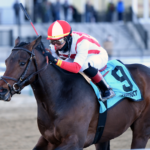 In Memoriam: Preakness winner Early Voting died at the young age of 7 because of colic, his majority owner announced Oct. 20. “After an acute onset of irreversible colic, Early Voting was humanely euthanized,” said Dr. Padraig “Paddy” O’Casaigh, a veterinary reproductive researcher, who bought a 90% interest in the son of Gun Runner in July. Early Voting became the first American classic winner for Gun Runner when he won the 2022 Preakness Stakes. Trainer Chad Brown and owner Seth Klarman bought Early Voting as a yearling for $200,000 under the name Triphammer Farm from the Hill ‘n’ Dale Sales Agency consignment at the 2020 Keeneland September Yearling Sale. He won his racing debut in December of his juvenile year at Aqueduct Racetrack and then launched his 3-year-old campaign with a 4 1/2-length win in the Withers Stakes. While Early Voting qualified to start in the Kentucky Derby (G1), Brown opted to give the lightly raced colt more time and aimed for the Preakness instead. He won the Preakness by 1 1/4 lengths over Epicenter who would later be named the year’s champion 3-year-old male. Early Voting made two more starts that year and then was retired with a 3-1-0 record from six starts and $1,372,500 in earnings.
New Research and Resources
Conflict Resolution: In the run-up to the 2024 general election, Bridging Divides Initiative joined forces with The Elections Group to develop an introductory de-escalation training course designed to help election workers build conflict resolution skills and prepare for periods of risk. Now, ahead of the 2026 midterms, we’ve partnered again to update and expand the module with new resources, guidelines, and interactive exercises. In the high-stress context of elections administration, effective de-escalation techniques are essential for ensuring a safe environment and upholding the integrity of the election process. Research shows that election years are also linked to heightened risks of political violence, including threats against election workers, candidates, and voters. Community safety and de-escalation training provides actionable tools election workers can use to detect early warning signs and respond effectively. Drawing from best practices in emergency management and security, the self-paced online course helps equip election workers and frontline election staff with the resources they need to safely navigate complex challenges throughout the election process.–Bridging Divides Initiative and The Elections Group.
Broad Public Confidence in Elections in the U.S. – but Partisans Differ Over Concerns About Access, Security: A new Pew Research Center survey conducted from Sept. 28 to Oct. 4, 2026, among 5,062 adults, including 3,917 registered voters, finds that about two-thirds of voters are at least somewhat confident that anyone ineligible to vote will be prevented from casting a ballot. But there is a wide partisan gap in these views:
- 90% of those who back Democratic candidates for the House of Representatives in this year’s elections are confident that if noncitizens try to vote they will be stopped.
- A far smaller share of Republican candidate backers – 45% – are confident that noncitizens will be prevented from casting ballots.
- Still, Republican voters express a higher level of confidence that noncitizens will be stopped from voting than President Donald Trump’s voters did in 2024 (35% then).
The partisan gap is reversed – and not as wide – when it comes to confidence that all legally qualified voters who want to vote can do so:
- 90% of Republican voters are at least somewhat confident in this.
- A narrower majority of Democratic voters (72%) express confidence that all qualified voters will be able to vote if they want to.
The survey finds broad bipartisan confidence that votes cast in person will be counted as voters intend.
In contrast, there is considerably less public confidence that absentee and mail-in ballots will be counted as intended.
Just under half of voters are very confident that votes in the upcoming midterms will be counted accurately: A new poll from the Associated Press and NORC found that as the 2026 midterm elections approach, Americans express mixed views about the integrity of the electoral process. About half of registered voters say they are confident votes will be counted accurately, though confidence varies by party. At the same time, voters express concern about a range of election-related issues, including AI-generated misinformation and partisan gerrymandering, while confidence in the Supreme Court’s ability to handle election-related disputes fairly has declined since 2024. Just under half of registered voters have a great deal or quite a bit of confidence that votes in the 2026 midterm elections will be counted accurately. Democratic voters are more confident than Republican voters in the accuracy of the vote count. Compared with the 2022 midterms, when Joe Biden was president, confidence has declined among Democrats and increased among Republicans. The nationwide poll was conducted October 8-12, 2026, using the AmeriSpeak® Panel, the probability-based panel of NORC at the University of Chicago. Online and telephone interviews using landlines and cell phones were conducted with 1,119 adults, of whom 925 say they are registered to vote. The overall margin of sampling error is +/-3.9 percentage points.
Survey: Americans Want Accurate Vote Counts, Even If They Take Time: As Americans prepare to vote in November’s midterm elections, there’s overwhelming agreement on one thing: Getting the vote count right is more important than getting it done quickly. In a new survey, 92% of Americans said counting votes accurately matters more than counting them quickly. And 84% said making sure every legal vote is counted is more important than having their preferred candidates win. Both findings reflect broad agreement across party lines. Some races may be close, and Americans may not know the winners on election night. That’s normal. Election officials take the time needed to count every eligible ballot, and safeguards like audits, recounts, and certification help ensure accurate results. Election night totals are unofficial, and results can change as more ballots are counted. That’s the process working as intended, not evidence that something has gone wrong. States United Democracy Center partnered with YouGov on a national survey of 1,528 adult Americans from Aug. 17 to 21, 2026, to better understand Americans’ views on vote counting and election results.
Ballot Measures, Legislation & Rulemaking
 Culver City, California Ballot Measure: Fed up at the decisions being made about their education without having any real voice on the board, students have been leading a campaign to lower the voting age for local elections in Culver City, an affluent suburb surrounded by the city of Los Angeles. A proposed charter amendment that Culver City students have been pushing for years, which will be on the ballot in November as Measure YV, would allow 16- and 17 year-olds to cast ballots for city council and the school board elections. Mia Moroz, a senior at Culver City High School and president of Vote 16 Culver City, the school club that has been leading the campaign for years, says the school board and city council have “been creating policy that alters the lives of our teenagers without giving them a way to voice their opinion.” Students at Culver City High School have advocated for years through the Vote 16 Culver City club for lowering the voting age. They came close in 2022, the first time they got the city council to put a measure on the ballot, but it failed by just 16 votes out of the more than 16,500 cast. The club tried to run an initiative in 2024, but they couldn’t collect enough signatures to put the item on the ballot, in part due to restrictions that require an adult chaperone to circulate a petition. After students renewed the campaign this year, the Culver City Council voted 3-2 in February to put it in front of the voters again.
 Knoxville, Tennessee Ballot Measure: Knoxville residents will be able to vote on how city elections work in the future this November. A city charter amendment appears on the ballot pertaining to city council elections. It proposes that if a candidate for city council in the August primary race gets 50% or more of the votes, they immediately be declared the winner and do not have to advance to a November runoff election. The amendment would modify Article VII, Sections 707(B) and 707(C) of the Knoxville City Charter, which currently dictates that the two candidates with the most votes advance to compete in the November general election. Voting for the amendment means you support allowing the candidate with the majority of the votes in the primary to be declared elected immediately and issued a certificate of election. Voting against means you want city charter elections to stay the same, and the top two candidates to compete in a runoff election. Knox County Administrator of Elections Chris Davis said that if the amendment passes, it would be in effect for 2027.
 Lehigh County, Pennsylvania Ballot Measure: Lehigh County voters will consider altering the make-up of the Election and Registration Commission. The independent body, better known as the Board of Elections, is tasked with overseeing the administration of elections in Lehigh County. County employees conduct day-to-day operations in the Voter Registration office – filing paperwork, assisting residents, testing machines – but the three-member body sets policy decisions such as selecting which equipment to use, allowing or disallowing drop boxes and certifying election results. Under Lehigh County’s Home Rule Charter, county commissioners appoint one member from each of the two largest parties to the election board while the third and final seat is held by the county executive. While both parties have praised the board for behaving in a non-partisan manner, County Commissioners Sarah Fevig and Rob Beitler argued the set up could allow one party to dictate election policy and shut out independent voices. Their legislation, which commissioners passed by an 8-1 vote in May, would expand the board to five members: two Democrats, two Republicans and a third-party or unaffiliated voter. Local citizens have the final say on the plan via a referendum question this Election Day.
 Wyoming: The Joint Corporations, Elections & Political Subdivisions Committee moved a draft bill forward that would expand the role that poll watchers have in observing local elections. The committee voted 9-4 to sponsor this bill in the next legislative session. Right now, a poll watcher is authorized to observe voter turnout and registration. This bill would change the language to allow poll watchers to observe “every aspect of the election.” “A poll watcher shall have the authority to be located close enough to hear and see the voters as they check in with election judges,” the bill reads. The chairman of each political party that has a candidate on the ballot may certify poll watchers to go out to the polling places. And at polling places serving multiple precincts, there may be one poll watcher for each political party for each precinct served. And after all the votes are cast and the polls are officially declared closed, poll watchers would be permitted in a polling place. Currently, election judges are the only ones allowed in polling places after the polls close. County clerks would have the authority to require poll watchers to wear identification that lets people know they are poll watchers.
Legal Updates
 Federal Litigation: Democratic Party leaders including Sen. Chuck Schumer and Rep. Hakeem Jeffries, are suing in federal court to block President Donald Trump’s administration from usurping states’ authority to administer elections or trying to intimidate state and local election officials into complying with illegal demands. The lawsuit, filed October 20 in Washington, seeks a court order barring the administration from purging legally registered voters from statewide voter registration lists or denying ballots to legally registered voters. The plaintiffs also ask for a ruling that the administration has illegally threatened state election officials with prosecution before the Nov. 3 election. The lawsuit cites the Justice Department’s recent actions in California, where it sued to block state election officials from counting mail-in ballots cast by people whom the federal government has identified as “likely” noncitizens until their immigration status can be confirmed. “For over a decade now, President Donald J. Trump has bombarded the American people with lies and misinformation about American elections and voter fraud,” the suit says. “While these lies have been debunked at every turn, that has never deterred the President from employing them as a pretext to seize control over elections, even as courts overwhelmingly reject that effort.” The Justice Department said in a statement that election integrity is a top priority for the administration and the department’s actions on that front are grounded in law and under court litigation.
U.S. District Judge Araceli Martinez-Olguin ruled October 21 that the U.S. Department of Homeland Security’s practice of knocking on doors and asking people about their immigration status — and whether they have voted in recent elections — likely violates the Voting Rights Act. Martinez-Olguin ordered federal immigration authorities to stop carrying out “elections-related field operations and field interviews” in nine states, including California and New York, if the operations are likely to involve people who government officials “know, suspect, or should reasonably know or suspect are U.S. citizens.” Her order will remain in effect until polls close on Election Day. She stayed the ruling until 5 p.m. on Friday, which will give the government a chance to seek appeal. Martinez-Olguin sided with groups that sued over the noncitizen voting investigation surge, including the California Nurses Association and National Nurses United. She found the policy likely ran afoul of a section of the Voting Rights Act that makes it illegal to “intimidate, threaten, or coerce” those who assist people with voting or engage in voter mobilization efforts. “Plaintiffs do not claim, nor does the Court find, that it is unlawful for federal officials to undertake investigations into unlawful voting in federal elections,” the judge wrote. “Rather, Plaintiffs seek to stop DHS from continuing to investigate U.S. citizens, who have a legal right to vote, in a way that intimidates and threatens the participation of CNA/NNU members from urging or aiding others to vote.”
Arizona: Attorney General Kris Mayes sued the Maricopa County Recorder’s Office on October 21 over its handling of the registration statuses of a group of voters falsely flagged as noncitizens by an error-prone federal data tool earlier this year, demanding that the office restore the voters’ ability to cast a ballot in the upcoming midterm election. According to Votebeat, her lawsuit comes weeks after county detectives found that the voters were U.S. citizens. Mayes alleges that Recorder Justin Heap has nonetheless kept the voters in “not eligible” status on the county’s voter roll, despite investigators’ findings. Voters in that status remain on the rolls but may not receive mail ballots and are required to show proof of their citizenship before being allowed to vote. With voting already underway in the 2026 general election, Mayes is asking a judge to order that the voters be fully reinstated and be mailed ballots immediately.
 California: The federal government sued California on October 15 over the state’s universal mail-in voting system, in which all registered voters receive a mail-in ballot. The Justice Department claims in its complaint that more than 20,000 registered voters are “likely aliens” and asks a federal judge to “enjoin California from presently tabulating vote-by-mail ballots from likely noncitizens in the upcoming federal election until the voter’s citizenship status can be determined.” “State-facilitated voter fraud is unacceptable in the United States of America,” said Attorney General Todd Blanche in a written statement. “If found responsible in a court of law, the State of California will have seriously undermined confidence in our electoral system and violated laws that protect our nation’s representative system of government.” Governor Gavin Newsom (D) lambasted the Department of Justice, calling their lawsuit “a sad, desperate attempt by Trump to use his politicized Justice Department to try to suppress California voters just three weeks before Election Day,” in a written statement. He called the demand for an injunction “a totally unprecedented request that should scare the hell out of every American,” and a play from “the dictator’s playbook.” In court filings on October 21, the state asked the court to dismiss the suit arguing the Trump administration is asking officials to ignore the law and dismiss the lawsuit. California is also asking for the court to expedite the case.
An unknown number of San Mateo County vote-by-mail ballots were reportedly stolen from a Daly City post office, county election officials said. The county’s Registration and Elections Division said October 15 that the U.S. Postal Inspection Service is investigating the incident of mail theft — which was reported to county elections officials on Wednesday — that included the ballots. It’s unclear how many ballots were affected by the theft. Assistant Chief Elections Officer Jim Irizarry told the San Mateo Daily Journal that there didn’t appear to be a reason to assume it was an attempt to intentionally tamper with voting.
The Orange County registrar of voters received three subpoenas in September seeking voter records for 20 people, according to documents provided to the Orange County Register. The U.S. Department of Justice requested voter records from January 2024 to present, including registration information, addresses, history and methods of voting, and the registrant’s claims about their citizenship status. The information was sought in connection with “an official criminal investigation” conducted by the U.S. Department of Homeland Security, a letter from Assistant U.S. Attorney Michael Wheat said. Registrar of Voters Bob Page said he complied with the subpoenas within the timeframe requested. One subpoena requested information about 18 people. The two others listed just one person each.
Laura Lee Yourex, 64 of Costa Mesa, who registered her dog to vote, and cast ballots in the animal’s name in 2021 and 2022, has been sentenced to pay for anti-voter-fraud billboards, prosecutors said last week. Lee was charged in September 2025 with five felonies after posting a photo to social media showing her dog posing with a ballot while wearing an “I voted sticker,” Kimberly Edds, a spokesperson for the Orange County district attorney’s office, wrote in a statement. The dog’s vote was counted in the 2021 recall election against Gov. Gavin Newsom and then rejected in the 2022 primary election. In October 2024, the Orange County registrar of voters office flagged the case to the district attorney. In April 2026, Yourex signed a plea agreement. She was required to pay $1,500 for four billboards along the 55 and 22 freeways in Orange County through the Nov. 3 midterm election. The billboards feature Yourex’s photo of her dog with a ballot, and reads: “Don’t be a dog. Voter Fraud is a Crime. If you can’t legally vote, don’t vote. The Orange County District Attorney’s Office will prosecute.”
 Hawai’i: The state Supreme Court was asked October 16 to intervene after the state Elections Commission went four months without holding a meeting — in the middle of election season. The commission has been marked by contentious meetings. Republican members have tried several times to fire Chief Election Officer Scott Nago and have questioned the integrity of the voting system. In recent months, commissioners have not been able to get five members to agree on a chair. Two Republican commissioners told the Supreme Court that elections staff has not been willing to help set up meetings. Supreme Court Justice Sabrina McKenna asked, “What efforts, if any, has the election office been taking to try to coordinate or facilitate the scheduling of a meeting? Why are we here?” Aaron Schulander, attorney for the Elections Division, responded, “We don’t see that as our place. We see our duties as ministerial. If five of them on the commission want to have a meeting (or) not have a meeting, that’s their prerogative.” Supreme Court Justice Todd Eddins said, “This is just the commission trying to hold a meeting and it seems like the Office of Elections is doing whatever it can to prevent that. This is election season, and let’s try to work together and get something going. Why we can’t set up a meeting here? Why can’t you do that?” The elections staff attorney said the court could order the staff to help, or at least allow them to share contact information. The court recessed without a ruling.
 Indiana: Lincoln Party secretary of state candidate Greg Ballard filed suit October 15 to force the Indiana Election Commission to rule on four pending campaign finance complaints against his opponents before the Nov. 3 election. Two complaints are against Republican Max Engling and two are against Democrat Beau Bayh. “The Commission has consistently met in September, but not this year,” Ballard said in an accompanying letter to commission chair Beth Boyce. “Early voting began October 6. The complaint asks only that the Commission convene and decide, as the statute assigns it to do, whether there is substantial reason to believe a violation occurred — before the election, while it still matters to voters.” Ballard said if Boyce calls a meeting before Oct. 26, “the court’s involvement becomes unnecessary.” One of Ballard’s proposals in the race has been to make the Indiana Election Commission nonpartisan, staffed with administrative law judges. It currently has two Democratic members and two Republicans, with no tiebreaker. The lawsuit says the commission has sent the campaigns letters requesting responses but has no meetings scheduled. The complaints were filed on July 24, Sept. 15 and Sept. 17.
Francisco Romero, 41, of Terre Haute, has been charged with one felony count each of submitting a fraudulent voter registration and perjury and three counts of casting illegal ballots in the 2022, 2023 and 2024 general elections. Court documents filed by prosecutors say Romero was born in Mexico, has been in Indiana since 2006 and has remained in the U.S. under the the Deferred Action for Childhood Arrivals program. Romero told investigators that he simply signed the voter registration forms given to him at the Bureau of Motor Vehicles branch in 2018 and 2023 and did not fill them out himself. “He said that he did not know the box was checked saying he was a U.S. citizen,” the investigator’s affidavit said. “He claims that on both occasions, he advised the BMV employees that he is not a U.S. citizen.” Romero was released on bond from the Vigo County Jail, according to online court records. No defense attorney was listed for him and the Capital Chronicle couldn’t immediately determine a telephone number to contact him for comment.
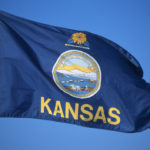 Kansas: The 10th Circuit Court of Appeals, for the second time, reversed a prohibition on a Kansas law that bars organizations from prepopulating applications for mail-in ballots before the applications are sent to voters. A three-judge panel found that a lower court didn’t strike down the law based on its justifications, text or legislative history. “It instead inferred an improper purpose from the national political debate on mail-in voting,” the decision said. The Kansas Legislature passed in 2021 the prohibition on prefilling mail-in ballot applications, which also bars out-of-state organizations and individuals from distributing applications. Two voting rights organizations — VoteAmerica and the Voter Participation Center — challenged the law, suing Secretary of State Scott Schwab, Attorney General Kris Kobach and Stephen Howe, district attorney of Johnson County, arguing the state law infringed upon their free speech rights. The appeals panel rejected the Voter Participation Center’s argument that the law was created with the intent to suppress advocacy for mail-in voting. “While we may reasonably infer that the enjoined distributor ban was enacted to restrict mail-in voting, we cannot infer that the ban was enacted to suppress speech supporting mail-in voting,” the 33-page decision said. “The ban prohibited the mailing of mail ballot applications, not messages supporting mail-in voting.”
 Kentucky: A lawsuit filed in a federal district court October 15 alleges the Department of Homeland Security has systematically collected sensitive data on Kentucky voters, despite the state’s refusal to share it. In the court filing, voting rights and electronic privacy groups cited emails and memos obtained from the DHS through records requests. The lawsuit points to an email attachment dated July 6, 2026, which said the DHS investigative unit had “enriched” something from Kentucky and five other states, and the information was “pending Palantir entry into ELITE.” ELITE is a tool developed by AI-company Palantir which they describe as being used for “identifying the location of known foreign nationals who meet criteria for removal.” The voting rights group paired that memo with a recent federal whistleblower disclosure warning lawmakers that DHS employees are being told to use “voter data of dubious origins, that is being compiled with ‘supplemental magic.’” A spokesperson for the Secretary of State Michael Adams’ office said they are not a party to the suit but offered assurances that Kentucky’s voter rolls have not been improperly accessed or altered. They said they don’t know if the federal government developed its own voter file, but that it wouldn’t impact Kentucky’s elections even if they did.
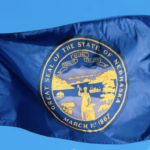 Nebraska: In an unsigned, 6-1 decision, the Nebraska Supreme Court has ended a Republican-led challenge to overturn a state voting law allowing certain overseas voters to vote in Nebraska. The justices said challengers — the Republican National Committee and two Lancaster County voters, Jack Riggins and Pam Dingman — “failed to prove the statute is unconstitutional on its face.” The RNC needed to prove that the statute had no constitutional applications. However, Nebraska Secretary of State Bob Evnen and Attorney General Mike Hilgers offered one: a voter born in South America to Saunders County missionaries who intended to return home. “This and other courts have previously recognized that children acquire their parents’ domicile at birth and that such domicile ‘continues until a new one, a ‘domicile of choice,’ is acquired,” the Friday opinion states. The challenged 2005 law allows U.S. citizens who have never resided in Nebraska but who have a parent registered to vote in one Nebraska county to register in that county. It would be a felony to register or vote in multiple states or counties. In 1895, 20 years after the constitutional provision was adopted, the high court said “residence” and “domicile” were synonymous. On October 16, justices stuck with that interpretation and agreed that a child could adopt a parent’s “domicile” under certain circumstances. Justice William Cassel dissented from the majority’s opinion because he said he would have dismissed the case outright.
 New Hampshire: The New Hampshire Attorney General’s Office is making an emergency request to the U.S. Supreme Court to prevent student IDs from being accepted at polling places in November. The office is asking justices to throw out a 2-1 ruling handed down October 14 by a federal appeals court. That decision allowed a lower court ruling to stand that lets college students use their student IDs to help prove who they are, as long as they have another accepted form of ID, as well. They cannot use a student ID as sole proof of their identity. The legal fight is over a new state law that bans student IDs at the polls. Poll workers have been trained to not accept student IDs for any purpose. The latest ruling means that election officials can take student IDs as part of a process for determining a voter’s identity if that voter does not have an accepted form of identification.
 New Mexico: District Judge T. Glenn Ellington ruled against Santa Fe County Clerk Katharine Clark in a legal dispute concerning training for “election watchers” that has seen Clark and the New Mexico Secretary of State’s Office on opposing sides. Ellington referred to the case as a “turf war” between the two agencies. The judge approved a temporary restraining order that will require the clerk’s office to accept the secretary of state’s training and certification for election watchers and allow those watchers into the county’s polling sites while the case is being litigated. The pending litigation concerns “election watching,” a practice set out in state law that allows for people to observe voting sites to ensure that elections are being conducted in accordance with the law. The Santa Fe-based progressive organization Land of Action has deployed dozens of election watchers throughout the state in this year’s election. The group has cast the project as an effort to guard against voter intimidation and interference and to ensure procedures are followed at the polls during an election with heightened tensions nationwide. In Santa Fe County, however, Clark has denied entry to some of the group’s watchers, maintaining that their training and certification from the New Mexico Secretary of State’s Office was insufficient.
 New York: Marva Cook, 66 of Syracuse, has been charged with “illegal voting by alien” – a misdemeanor that alleges she voted in federal elections without becoming a citizen. Cook’s lawyers have not yet laid out her defense, but it will generally be this: She only recently discovered she was adopted by the family she grew up with in Syracuse. In a search for her birth mother, she also discovered she was born in Germany. She said she now has a green card. She is listed as an active voter in Onondaga County, but has not voted since 2022, election records show. The voting charge carries a maximum penalty of $100,000 and one year in jail.
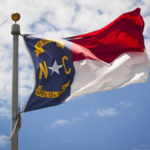 North Carolina: U.S. District Judge Thomas Schroeder ruled this week that voting organizations will not be able to stop mail-in ballot changes from going into effect for the midterm elections in North Carolina. North Carolina Alliance for Retired Americans, North Carolina Asian Americans Together, Down Home North Carolina and two voters sued the state board of elections and two county election boards in September, claiming last-minute changes to the absentee ballot process would disenfranchise voters. The state now requires local election officials to verify signatures and disqualify otherwise valid ballots that are not sealed in an inner envelope, a change that was adopted on Sept. 4, just hours before the state became the first to mail out ballots for the midterm elections. The organizations argued before Schroeder that changes to the ballot acceptance process would place an undue burden on voters and asked him to pause implementation of the changes until after the November election. In a 72-page opinion, the George W. Bush appointee declined to intervene. The plaintiffs waited 18 days after the state elections board adopted the new changes to file suit — a delay Schroeder called “significant.” “At a minimum, the merits are far from ‘clear-cut,’ plaintiffs have delayed in seeking the relief they now seek, and implementing the changes sought is infeasible at this stage in the midst of voting,” Schroeder wrote in his order. Local county boards of elections have already begun sorting through absentee ballots and spoiling those that fail to adhere to the challenged requirements. Any burden from the new requirements is “modest,” Schroeder said, and voters who have their ballots spoiled still have other options to cast a vote.
Judge Craig Croom ruled Oct. 15 that fired New Hanover County elections director DeNay Harris may continue her legal challenge against her termination. Harris was suspended with pay earlier this year and fired in June by the state board’s executive director. She filed suit in July, seeking her job back and back pay. She has claimed the action against her was payback for raising concerns about County Manager Chris Coudriet. Croom denied the boards’ bids to end the main part of the case. However, he permanently dismissed two added claims: one arguing her rights under the state constitution were violated and one asking the court to define the legal rights of each side. Harris cannot refile those claims in this case. Croom also allowed the State Board to file an unedited copy of its dismissal argument under seal. Only the court and lawyers can see it. The order does not explain why the court sealed it.
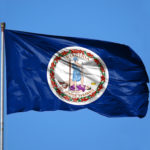 Virginia: Arlington County is suing the Trump administration to block armed federal agents from polling places during the upcoming midterms. The Arlington County Board filed the lawsuit October 20 challenging “policies authorizing armed federal agents, including Immigration and Customs Enforcement (ICE) and FBI officers, to conduct enforcement operations at polling places or other election sites.” Federal law dating to the Civil War prohibits “troops or armed men” from being deployed to places where elections are being held “unless such force be necessary to repel armed enemies of the United States.” Arlington’s lawsuit is asking the court to intervene to ensure federal officials cannot undermine election administration, intimidate voters or interfere with the responsibilities of local election officials and law enforcement. The lawsuit states sending armed federal agents to polls threatens voter safety and forces local officials to divert critical resources to prepare for the agents.
Opinions This Week
National Opinions: Election meddling | Voter fraud | Election integrity | Federal interference, II | Secretary of state races | Noncitizens | Ballot measures | Election security | Election reform | Voter fraud |
Alaska: Ranked choice voting, II |
California: Voting system, II | Justice Department | Voter ID, II, III | Election security | Federal interference, II, III, IV |
Colorado: Rejected ballots |
Florida: Plan to vote | Ex-felon voting rights |
Georgia: Voting plan |
Hawai’i: Voter education | Ranked choice voting |
Iowa: Plan to vote |
Kansas: Election threats |
Ohio: Voter education |
Oregon: Get out the vote | Drop boxes |
Pennsylvania: Primaries |
South Carolina: Charleston County |
Texas: Voter registration |
Virginia: Democracy | Ex-felon voting rights, II |
Wisconsin: Casting doubts |
Upcoming Events
Wikipedia Editing Workshops-Local Election Issues: Have you ever been interested in editing Wikipedia? Join us for some free upcoming live editing sessions. We will provide background on Wikipedia policies (neutrality, sourcing, etc.), teach you how to make meaningful edits, and review your content as it goes live. We will be focusing on articles related to the 2026 midterm elections – local ballot initiatives, individuals running, and articles that can help inform voters. All sessions last two hours. You don’t have to stay for the duration. Whether you have years of editing experience or are starting from scratch, you are welcome to attend. When: October 23, 12pm Eastern; October 28, 2pm Eastern and October 30, 1pm Eastern.
How To Prepare For The Midterms : Is your community ready for Election Day? Get your pressing questions answered. The midterm elections are already underway. Elections in the United States don’t only happen on Election Day. They happen in the weeks ahead as election officials process voter registrations, mail absentee ballots and administer early voting. So, how is mail voting going across the country? Or early voting at the polls? And what should Americans know about potential federal interference ahead of Election Day? Check in with election experts and Votebeat on Oct. 27. Votebeat is a nonprofit newsroom specialized in explaining how elections work. Each of our reporters and editors spend every day covering voting rules, election administration, misinformation, election lawsuits, local officials, and the systems that determine how ballots are cast and counted. Questions for the panelists can be submitted with your event registration. When: October 27, 12pm Eastern. Where: Online.
Vote Early Day: When Americans vote early, they ensure last-minute problems, long lines at the polls, confusing election laws, or voter disinformation cannot prevent us from casting our ballot. Vote Early Day is a tentpole moment for partners nationwide to engage with voters and empower them with the tools to cast their ballots early. When: October 27.
After the Vote: What the 2026 Midterms Tell Us: Three political scientists and one election law expert examine what the 2026 midterms mean for the country and for California. What do the results reveal about the last two years of President Trump’s term, and about the country’s direction in 2028 and beyond? Where are voters divided, and where do they agree? What can November’s vote teach us about California voters? Moderated by Rick Hasen of UCLA Law, with Christian Grose (USC), Sara Sadhwani (Pomona College), and Chris Tausanovitch (UCLA). When: November 7, 2pm Pacific. Where: Los Angeles.
Assessing the Fairness and Integrity of the November Elections: The Safeguarding Democracy Project at UCLA promotes research, collaboration, and advocacy under the leadership of UCLA Law Professor Richard L. Hasen; one of the nation’s leading election scholars. The Safeguarding Democracy Project is built upon the premise that tackling issues of the U.S. election integrity must be collaborative: across ideologies, across scholarly disciplines, and as a bridge between theory and practice. Our events this semester are focused on the 2026 midterm elections. Speakers: Bill Gates, Arizona State University; Guy-Uriel E. Charles, Harvard Law School; Charles Stewart, MEDSL; Susan Stokes, University of Chicago and Tammy Patrick, Election Center. When: November 16, 3:15pm Eastern. Where: Online.
2026 Elections Summit: In a time of rapid change and evolving challenges to our electoral processes, collective reflection and forward-looking strategy are more important than ever. Bipartisan Policy Center’s 2026 Elections Summit will convene a diverse group of election practitioners, policymakers, and thought leaders to debrief the November election and chart a course forward for U.S. election administration. Be part of a defining moment for democracy as we gather in Washington, DC, to shape its future together. When: December 7, 9am to 4pm Eastern. Where: Washington, DC.
Job Postings This Week
electionlineWeekly publishes election administration job postings each week as a free service to our readers. To have your job listed in the newsletter, please send a copy of the job description, including a web link to mmoretti@electionline.org. Job postings must be received by 5pm on Wednesday in order to appear in the Thursday newsletter. Listings will run for three weeks or till the deadline listed in the posting.
Account Executive, VotingWorks– We are looking for a trusted sales leader who understands that election administrators don’t buy voting machines, they buy trust, both in the equipment and in the vendor. All 83 of Michigan’s counties will soon open at once, and we are in the running for the state RFP enabling us to sell our voting machines. Incumbents will have to re-earn their contracts, and we’ll be competing on equal footing for the first time. This opportunity is time bound. Trust matters deeply in this market. Your job is to build relationships and earn credibility quickly with state and local election officials. You will own the full Michigan territory. You’re responsible for the entire sales process: building pipeline, running demos, navigating procurement, and closing deals. We want sustainable sales contracts that are technically sound, politically supported, and set up for a clean handoff to Customer Success. For your first demos, you’ll be paired with our Executive Director and our Head of Customer Success to learn the messaging and the product. Once you take on demos on your own, you should still know when to bring in executive support and when to handle things yourself. This is a competitive market with a real window of opportunity. If you want to sell something that actually matters to Democracy, and you’re energized by moving fast when the timing is right, we’d like to meet you. Application: For the complete job listing and to apply, click here.
Administrative Services Director, Seminole County, Florida– Seminole County Supervisor of Elections is a constitutional office which prides itself on ensuring the accuracy and integrity of elections in Seminole County, Florida. The office exists to serve people, facilitate the electoral process, and ensure successful, secure and transparent election administration. The Administrative Services Director is a senior leadership position serving as a strategic advisor to the Supervisor of Elections and a key member of the executive leadership team. The position provides office-wide leadership across administration, finance, budgeting, human resources, organizational development, employee engagement, and executive initiatives. Requirements include a Bachelor’s degree in Accounting, Finance, Business Administration, Human Resources, Public Administration, or a related field; advanced degree, CPA, CFE, SHRM/SCP or comparable professional credential preferred. Additionally, seven (7) years of progressively responsible leadership experience in administration, finance, budgeting, human resources, organizational operations or public-sector management, including experience advising executive leadership, is required. Demonstrated experience managing budgets, financial reporting, organizational initiatives and employee engagement; government or election administration experience is preferred. A comparable amount of education, training, or experience may be substituted for the minimum qualifications. Application: For the complete job listing and to apply, click here.
Assistant Executive Director, Chicago Board of Election Commissioners–This full-time exempt position reports directly to the Board’s Executive Director and is responsible for overseeing the Board’s daily administrative operations, including Human Resources, Finance, and Purchasing. Working closely with the Executive Director, the Assistant Executive Director will also oversee general office functions, including but not limited to the mailroom, the copy room, and receptionists. Essential Duties and Responsibilities: Direct supervision of the human resources, finance and procurement functions of the Board. Assess Board policies and develop business strategies to ensure coordination across the various administrative functions in the Board’s downtown and warehouse offices. Monitor performance and provide feedback to senior administrative management, including teaching, supporting and modeling logistics in line with Board policies and procedures. Advise the Executive Director on matters impacting administrative operations. Participate in Board of Election Commissioners meetings, providing updates on current and long-term projects impacting the administration of the Board. Oversee Board financial matters, ensuring best practices for procurement, contracts, grants, and staffing. Direct supervision of ADA and Communication staff. Attend external meetings at the request of the Executive Director, including City/County budget hearings, civic events, intergovernmental matters, conferences, etc. Oversee the operation and selection of staffing of Election Central for Election Day support. Execute other duties as directed by the Executive Director. Salary: $144,000 – 154,000. Application: For the complete job listing and to apply, click here.
Customer Support Center Consultant Level 1, Hart InterCivic– The Customer Support Center Consultant Level 1 (CSC 1) provides Tier 1–2 support for Hart InterCivic products, helping customers troubleshoot issues and keep election operations running smoothly. The CSC I’s primary responsibilities are to: Resolve and route customer issues via phone, email, and remote tools; Document cases in the CRM and communicate status through resolution; and Use product documentation to deliver clear, customer-friendly solutions. This role researches and resolves issues, supports hardware/software configuration and deployment, and provides training or on-site support as needed. It also documents processes and partners with other departments to improve service delivery. This position follows the Proprietary Information and Intellectual Property Agreement and is responsible for protecting company information, including when working off-site or outside normal hours. Application: For the complete job listing and to apply, click here.
Cybersecurity Assessor (Election Security), Apollo Information Systems: The Technical Assessor conducts in-depth technical and program-level cybersecurity assessments of client environments, identifying risk, measuring control maturity, and producing clear, actionable guidance that advances each client’s security posture. This is an experienced assessor role: the individual independently leads assessments end to end, evaluates complex environments against multiple frameworks, and is a trusted voice in front of both technical teams and executives. The assessor also helps mature Apollo’s assessment method. Salary: $80K – $120K. Application: For the complete job listing and to apply, click here.
Election Night Stringer, USAToday – USA Today is looking for stringers to work on election night as election results reporters. This is a contractor position for one night on November 3rd, 2026, and pays a flat fee equal to $125. The assignment is expected to last approximately 3-4 hours, but may extend longer depending on election-night reporting needs. There is potential to become a regular stringer in our election night operations, so long as the job is done well. We are hiring locations in nearly every state in the country, so please send an email and we’ll be happy to let you know what is closest to you. USA Today Stringers are a valuable part of our election results collection operation. As a stringer, your main responsibility is to report results to USA Today on Election Night, on 11/3/26. Results will be released by election officials periodically, and stringers will upload the new results as quickly and accurately as possible after receiving the update. They will also remain on site to answer any questions USA Today may have about when or how results are being released. This position typically takes around 3-4 hours but could go longer, and stringers should be prepared to stay until the election official indicates that no more results will be released this evening. There will be a short training prior to election day that will cover how to report results, how to interact with officials, and how to get paid. If interested, please email kmartin@usatodayco.com with your name, phone number, and zip code. Candidates who also send a sentence or two about why they are interested and a good fit for the role will receive priority consideration.
Election Specialist I, Illinois State Board of elections– Under general supervision of the Election Operations Team Lead, assists with certification of ballots and handling inquires; acts as contributor to Board publications; provides general interpretations of various election laws to election authorities, election judges, and the general public; provides oral and written answers related to questions regarding various statutes; conducts election judge training classes for election authorities. Essential Functions: Assists in providing general interpretation of various election laws; advises local election authorities and officials concerning necessary implementation, abolishment or revision of procedures resulting from changes in statutes and/or rules and regulations. Assists in the preparation and writing of various agency publications to be used for in-house reference and election authority distribution; conducts training sessions for various election authorities as assigned. Assists in providing written answers related to questions arising out of the Illinois Election Code to election officials and authorities, legislative staff and members of the general public; refers obscure or novel inquiries to senior personnel. At the request of the director/operations lead, assists in all activities of candidate nomination filing. This includes, but is not limited to, the following: petition filing, objection filing, service of notice for objections, electoral board meeting support, candidate withdrawals, and ballot certification. Performs other duties as assigned or required which are reasonably within the scope of duties enumerated above. Salary: $4,334 – $6,500. Application: For the complete job listing and to apply, click here.
Election Worker – Office Assistant (Extra Help, Seasonal), San Mateo County, California– The Elections Division is an exciting, fast-paced environment, especially as elections approach. This is an excellent opportunity to work with a group of dynamic, well-organized, and highly efficient individuals committed to the democratic process. The San Mateo County Registration & Elections Division is seeking full-time, seasonal Election Worker – Office Assistants to assist in the upcoming November 3, 2026, Statewide General Election. This is an excellent opportunity to be involved in the election process! We are currently seeking dedicated, enthusiastic and hard-working individuals for temporary, full-time positions to be hired into one of the following areas: Ballot retrieval, vote by mail, voter registration/clerical support, voter helpdesk support, supplies, field techs/warehouse. This is an extra-help, at-will assignment, paid on an hourly basis. Extra-help hours are dependent on the business needs of the department and therefore work hours may vary from week to week. Extra-help employees shall not exceed 1,040 hours of work per fiscal year. Some extra help positions are eligible for benefits under the Affordable Care Act. Extra-help employees are not guaranteed permanent status at the end of the assignment. Salary: $24.91/hour. Application: For the complete job listing and to apply, click here.
Elections Data and Analytics Manager, Tennessee Secretary of State’s Office – Responsible for statewide election data governance, voter registration data integrity, business intelligence, reporting, analytics, data integration, and performance measurement. This position serves as the Division’s subject matter expert on election data and ensures accuracy, security, compliance, and accessibility of election information. This position assists ballot review and approval, producing and analyzing election-related state and federal reports, maintaining and assisting in updating elections mobile app. Assist in planning and coordinating the computer functions and responsibilities for the Elections Division which includes, but is not limited to: data processing, integrating the statewide voter registration system with county voter registration systems, improve election reporting capabilities; analyzing and resolving technical software issues (25%) for the Division of Elections and 95 county election commission offices, which includes, but is not limited to cybersecurity practices, and performing other duties as assigned. Salary: Commensurate with experience and State of Tennessee benefits package. Application: For the complete job listing and to apply, click here.
Elections Finance Administrator, King County, Washington: This is an amazing opportunity to be engaged in the election process! The Department of Elections is searching for energetic and resourceful professionals who like to “get stuff done”. The Elections Finance Administrator position in the Elections Department combines an exciting, fast paced environment with the opportunity to cultivate talents and apply a variety of skills. The ideal candidate will thrive in an innovative and fast-paced environment and will not hesitate to roll up both sleeves, work hard, have fun, and get the job done. We are seeking an Elections Finance Administrator to join a mission-driven team that supports essential department operations. The Elections Finance Administrator is a self-motivated administrative professional with strong judgment, accuracy, and a customer-focused approach. In this role, you will support a wide range of core administrative functions including accounts payable, purchasing, payroll, process improvement, and records management. Salary: $38.38 – $48.79 Hourly. Application: For the complete job listing and to apply, click here.
GIS Specialist, Palm Beach County, Florida– Help power accurate, well-run elections through smart mapping and rock-solid data. As a GIS Specialist II with the Palm Beach County Supervisor of Elections, you’ll own core geospatial datasets, turn complex information into clear maps and insights, and improve the workflows teams rely on to plan and execute election operations. Your work helps ensure precinct, polling place, and district data is accurate and easy to use—supporting operational readiness, transparency, and timely decision-making. You’ll maintain and enhance GIS databases, produce print and web-ready map products, perform quality control and spatial analysis, and keep GIS synchronized with the Voter Registration System. You’ll collaborate with both technical and non-technical teams, document standards and changes, and provide training and troubleshooting support. Salary: $72,800 to $87,000. Application: For the complete job listing and to apply, click here.
IT Assistant Manager, Palm Beach County, Florida–The Assistant IT Manager plays a vital and supportive role in ensuring the smooth operation of the IT department, aligning both the technical infrastructure and the team with the organization’s goals. This position involves collaborating closely with the Election Technology Director to oversee the implementation of technology solutions that meet the organization’s needs. The Assistant IT Manager helps maintain an efficient and effective IT environment. The Palm Beach County Supervisor of Elections Office is committed to hiring talented individuals with diverse experiences that will enhance the services we provide to the residents of Palm Beach County. We are always looking for dedicated individuals who do all things with Integrity and Accountability, who excel in Customer Service, and believe in Transparent, Secure Democracy. At the Supervisor of Elections Office, we strive to help our employees find passion and purpose. Join us in being the best place to vote. Salary: $85000 to $125000. Application: For the complete job listing and to apply, click here.
Marketplace
electionline provides no guarantees as to the quality of the items and the accuracy of the information provided about the items in the Marketplace. Ads are provided directly by sellers and are not verified by electionline. If you have an ad for Marketplace, please email it to: mmoretti@electionline.org