In Focus This Week
Working Together to Strengthen US Elections
Harvard Kennedy School Executive Session on Elections and Election Administration
By the Members of the Executive Session on Elections and Election Administration, Ash Center, Harvard Kennedy School (list below)
Over the last several years, state and local election officials have been under enormous pressure and confronted challenges nobody could have fully anticipated. Recognizing that the people best equipped to develop ideas and strategies for navigating this new world are the election officials themselves, in 2023 the Ash Center at Harvard Kennedy School launched an “Executive Session on Elections and Election Administration.”
Over the course of three years, two times every year, the Ash Center has been assembling a small, bipartisan group of local and state election officials from across the country, along with a handful of academics and experts, to meet for three days and talk through the complex problems facing them now and in the future. We gathered to think through the medium and long-term challenges to modern elections as a group. We aimed to develop creative solutions and paths forward for improving the foundation of our representative democracy: elections.
The Kennedy School has a long history of holding these executive sessions, including one about confronting problems in policing that helped police chiefs and other law enforcement leaders develop the concept of community policing. We thought that model might help election officials advance the state of their art as well.
Over the course of these three years, together we have tackled issues that election officials are dealing with now and will likely be dealing with in the future. In addition, we undertook group exercises to develop the skill sets and thinking processes needed to work effectively in the rapidly changing work of election administration. Election officials must excel at the technical work of selecting equipment, managing staff and volunteers, distributing ballots, and tabulating them – as they always have. But in many places, the job demands new skills of public communication, persuasion, and coordination with public and non-governmental organizations to manage challenges of security, public distrust, and technological change.
For example, the group identified mis- and dis-information as major problems that the profession continues to try to effectively address. This led to a study of how to improve relationships and communication with the media – traditional press and even more so social media — to ensure effective dissemination of voting information. We had numerous discussions about how to increase trust in the elections process, sharing innovative efforts to be more transparent and accessible to the voting public. The group pointed to the problem of extreme low voter turnout in local elections and, in partnership with academics, some members of the group are conducting research on whether providing voters with information about the impact of their vote in local races empowers them to participate.
In addition, the group shared their concerns about the threats and dangers they and voters now face in the course of their jobs. As a result, we explored the new role law enforcement is playing in elections, and how election officials can ensure law enforcement can perform their duties well, and that the role they play is a positive one for themselves and the voters. Moreover, we discussed the need to educate the field and the public about the role state and local election officials play in implementing our elections, especially vis-à-vis the federal government. We developed an educational resource to provide that information in a straightforward, accessible manner.
A third issue the group raised was the need to build and expand upon the profession of election administration and ensure that election workers are equipped to undertake the numerous and varied tasks that now come with the job. As a result, we are now partnering on research papers that identify creative new ways to strengthen the election worker “pipeline” through different kinds of training, recruitment, and retention strategies. We are also developing a paper on the role that state associations should play now and, in the future, to support and advocate for the field. We continue to work together to think through changes that need to be made in the face of new technologies and how the machinery that makes elections run is paid for.
As successful as we were at identifying the complex problems they face in their efforts to run effective elections and coming up with innovative solutions, a less expected but significant outcome came through the very process of coming together regularly over the course of three years. The small size of the group, our varied experiences and backgrounds, and the ability to talk in a focused way over the course of time, allowed for a level of honesty, candor and openness we rarely see in bipartisan settings these days. We developed a level of trust and camaraderie that could not have happened without meeting in person, on a regular and ongoing basis, over a long period of time. The importance of developing relationships through human interaction to solve the problems our country confronts could not have been more apparent.
We are excited to share with you here the first in a series of papers describing the concepts and strategies the group has devised. These papers offer some recommendations and many suggestions. Some are intended to advance the field more by provoking thought than providing answers. And our work is not ending. We welcome your thoughts or ideas from the election community as we continue our efforts alongside the intrepid and dedicated Americans who work at the frontlines of our democracy.
Members of the Executive Session on Elections and Election Administration
Cisco Aguilar, Secretary of State, State of Nevada
Tina Barton, Vice President, Ready for Tuesday, former clerk City of Rochester Hills, Michigan
Shenna Bellows, Secretary of State, State of Maine
Kate Brown, Former Governor and Secretary of State, State of Oregon
Judd Choate, Director of Elections, State of Colorado
Christine Cole, Safety and Justice Policy Advisory and Executive Session Advisor
Justin de Benedictis-Kessner, Associate Professor of Public Policy, Harvard Kennedy School
Jacqueline De León, Senior Staff Attorney, Native American Rights Fund
Jared Dearing, Center for Internet Security & Former Director for the State Board of Elections, Commonwealth of Kentucky
Jordan Fuchs, Former Deputy Secretary of State & Chief of Staff, State of Georgia
Archon Fung, Professor and Director, Ash Center for Democratic Governance and Innovation, Harvard Kennedy School
Tommy Gong, County Clerk, Lane County, Oregon
Trey Grayson, Former Secretary of State, Commonwealth of Kentucky
Ruth Greenwood, Election Law Clinic Director, Harvard Law School
Thomas Hicks, Commissioner, U.S. Election Assistance Commission
Elizabeth Linos, Professor and Faculty Director of The People Lab, Harvard Kennedy School
Tammy Patrick, Chief Program Officer, Election Center & Former Maricopa County, Arizona Election Official
Stephen Richer, Former County Recorder, Maricopa County, Arizona
Christopher Robichaud, Senior Lecturer, Harvard Kennedy School
Rob Rock, Deputy Secretary of State & Director of Administration, State of Rhode Island
Al Schmidt, Secretary of the Commonwealth, Commonwealth of Pennsylvania
Stephanie Thomas, Secretary of the State, State of Connecticut
Maggie Toulouse Oliver, Secretary of State, State of New Mexico
Tova Wang, Director of Research Projects in Democratic Practice, Ash Center for Democratic Governance and Innovation, Harvard Kennedy School
Tahesha Way, Former Lieutenant Governor and Secretary of State, State of New Jersey
Wesley Wilcox, Supervisor of Elections, Marion County, Florida
Kim Wyman, Former Secretary of State, State of Washington
electionline Daily News Email
 What’s the best part of waking up? electionline Daily News in your inbox of course so be sure to sign up for your daily dose.
Each morning you’ll receive the top headlines of the day, plus a listing of states featured in that day’s news round up.
To sign up, simply visit our site and provide us with your email and you’ll begin receiving the news in your inbox each morning.
We Google so you don’t have to!
electionline Merch
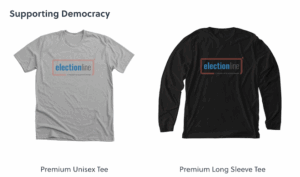 You’ve asked for it, well now you’ve got it! Just in time for all of your holiday gift-giving. We’ve opened up an electionline merch store using Bonfire. Currently we’re offering a couple of different t-shirts, a long-sleeve t-shirt and a hoodie.
Upcoming Schedule Changes
 electionline Daily News: The Daily News will not publish on July 3 due to the federal holiday. The Daily News will publish by 10am Eastern on the following days: July 13, 14, 23 and from August 18-25.
electionlineWeekly: The Weekly newsletter will not publish on Thursday, July 2.
Election News This Week
 Federal Update: Postmaster General David Steiner testified during a Senate hearing this week that the U.S. Postal Service won’t deliver mail ballots in states that refuse to turn over lists of voters under a proposed rule. Steiner defended the rule and dismissed accusations that the Postal Service was acting politically after President Donald Trump signed an executive order in March restricting voting by mail. “If a state refuses to turn their absentee voter list over to the federal government, will the Postal Service still mail their ballots under this proposed rule?” Sen. Gary Peters, a Michigan Democrat, asked Steiner. “Under our proposed regulation, no,” Steiner replied. Steiner’s testimony, before the Senate Homeland Security & Governmental Affairs Committee, marked the clearest acknowledgment yet by a federal official that the rule threatens to upend voting by mail across the country. Trump derailed a housing overhaul that he was set to sign into law this week, canceling a signing ceremony for the broadly popular bipartisan bill until Congress passes the SAVE Act. Trump had been scheduled to sign the bill, which passed the Senate Monday and House Tuesday with wide margins, during a Capitol ceremony. But in a pair of social media posts prior to the event, he derided the overhaul aimed at lowering housing costs as “minor” before refusing to sign it entirely. “Today’s Housing News Conference and Signing is hereby cancelled until such time as we pass the desperately needed SAVE AMERICA ACT, which I consider to be a National Emergency,” Trump wrote on his social media platform, Truth Social. According to Reuters, White House officials have for months delayed the release of a U.S. government report that outlines what it describes as significant vulnerabilities in the nation’s voting machines ahead of the November midterms, according to three sources familiar with the matter. The report, produced by the Office of the Director of National Intelligence, concludes that voting machines could be further safeguarded by, for example, updating their software, the sources said. It does not say the vulnerabilities have led to votes flipping, but examines security gaps in how the machines are used during U.S. elections.
 2026 Elections: Three more states–Maryland, New York and Utah held primaries this week and South Carolina held its primary runoff. California is finishing up its ballot counting and the District of Columbia started using ranked choice voting for the first time. Election Day in all four states went off largely without a hitch. Maryland, of course, experienced a number of problems prior to the primary with a ballot error by the vendor forcing the state to not only resend all mail ballots but also the state board of elections to come up with emergency rulemaking on how counties were to handle returned mail ballots. “Overall, it was smooth and boring, which is two words election administrators love,” said Jared DeMarinis, the state administrator of elections. DeMarinis said Wednesday that the misprinted mail-in ballots should not have a significant effect on the time it takes to finish the count. Local boards of elections can begin officially certifying the election results July 6. A person in a crisis situation affected roads near one Prince George’s County polling place. The board of elections provided alternate route information and made it possible for voters to come to the county election’s office and cast a provisional ballot. In Onondaga County, New York two U.S. Immigration and Customs Enforcement agents issued a warning to a Syracuse woman to remove a social media account they said threatens federal agents. Paigelynne Gonyea was working as a poll worker at the Central Library on Salina Street in Syracuse when agents called to meet with her. She said she invited them into the polling place. She said she did not want to meet them outside alone. “I’ve seen the news, especially in Minnesota,” she said. “And I didn’t want anything to happen to me at all.” Elections Commissioner Dustin Czarny got calls and texts that ICE was inside a voting site. He said he rushed to the polling place and spoke with Gonyea and connected her with the staff for the state Board of Elections and the attorney general’s civil rights office. Czarny said election law authorizes only specific people to be inside a polling place: Poll workers, elections inspectors, voters eligible to vote at the site and someone a voter brought to assist them in voting. “There’s no role for law enforcement officials to be inside a polling place unless they are responding to an emergency of some kind,” he said. “There is no indication of that here.” There were no voters in the polling place when ICE agents arrived, Gonyea said. David Brody, one of the two agents, said he could not answer questions from a reporter. Voting was delayed by at least 30 minutes at one Bronx polling place when a worker at the community center showed up late to let elections workers in.
 Election Monitoring: According to NBC News, the American Civil Liberties Union will spend more than $50 million on the 2026 midterms, with half going toward efforts to ensure smooth administration of elections as President Donald Trump seeks to exert more control over the process. ACLU officials said they will train and deploy more than 100 paid staff members and more than 3,000 volunteer leaders to encourage people to vote and to ensure voter access while monitoring ballot counting and certification. Those people will coordinate thousands of other volunteers. The ACLU said it has already trained 5,000 people on election work and plans to train 5,000 more. Arizona, Georgia, Michigan, Nevada, North Carolina, Pennsylvania and Wisconsin — all critical battleground states — are expected to receive the bulk of the investment. “We are in a really unprecedented situation here with this administration’s abuses of power and concerted attempts to suppress voters, to gerrymander, to basically co-opt our democratic system,” Deidre Schifeling, the ACLU’s chief political and advocacy officer said. “Where it is clear that the administration is undermining the legitimacy of our democratic process and trying to co-opt it or sabotage it, we will be ready to react to that in a variety of ways,” she added, noting that they could include litigation, protests or public information campaigns.
 Youth Registration: A report from States Newsroom this week takes a look at how the decreasing number of teens getting their driver’s license has also led to a decrease in youth voter registration and what some states and advocates are doing about it. More than 7.5 million people ages 16 to 18 don’t have a driver’s license, according to data compiled by The Civics Center, a nonpartisan group focused on boosting youth voter registration. Three million of those youth will be old enough to vote this year and all will be eligible by 2028, the organization said in a June research report on how declines in teen driving, spurred in part by the rising cost of obtaining a license, could affect voting. Young people represent a large pool of potential voters for candidates ahead of the midterm elections this November and the presidential election in 2028. Still, voting advocates worry barriers to registration will keep many of them from the polls. “Our goal is to help people debunk these myths that it’s somehow young people’s fault that these systems aren’t working well for them,” said Laura Brill, founder and CEO of The Civics Center. Some civic groups are pushing for more in-person voter registration drives, including in high schools, which may help offset the effects of fewer trips to the DMV. Without significant action, they fear registration rates will dip even lower. The League of Women Voters announced a partnership with The Civics Center in April to promote high school voter registration. The groups are offering state-specific training and toolkits to help members of the League, which has hundreds of chapters across the country, help students, teachers and school administrators hold registration drives. They also want states to provide teens more time to register before they can vote. About half of teens currently live in states that allow voter pre-registration at 16 or earlier, according to The Civics Center.
 Civic Education: A new poll from NBC News and More Perfect, a nonpartisan nonprofit dedicated to advancing democracy found that Americans largely feel that the country has achieved the ideals set forth by the Founding Fathers despite expressing doubt and pessimism about the future. While the survey revealed deep divisions, particularly around class and party politics, Americans found rare consensus in their dissatisfaction with the country’s commitment to teaching how those founding principles apply today. The poll of 3,000 adults nationwide found that 80% think the United States puts too little emphasis on civic education, or the teaching of government and democracy. A majority (51%) said the country’s focus on civic education is much too little. This sentiment cuts across ideological and generational lines: 87% of progressives and 84% of MAGA Republicans say there is too little educational focus on civics. And though the poll exposed enormous gaps between how older and younger Americans feel about nearly every issue, Americans of all age groups were united in the belief that civic education was lacking. The people who felt most strongly that teaching in this area was insufficient were those who most closely follow public affairs — 84% of those highly-engaged Americans said the nation’s focus on civic education was too little, versus 69% of those who do not follow public affairs. At the same time, Americans showed a distrust in institutions, including their government. Just 12% of adults nationwide said they have confidence in Congress, and only 18% said they have confidence in the federal government. Views of local government were slightly higher, but only 27% expressed confidence. The national news media also received poor marks, with only 11% citing confidence.
 Podcast Updates: On a recent episode of 1A from NPR entitled ‘If You Can Keep It’: Donald Trump And Election Interference: How would lawmakers respond to election interference – both foreign and domestic – ahead of the midterm elections? That was the central question of a summit held earlier this month between top Senate Democrats and election experts. The meeting came weeks after President Donald Trump signed an executive order that gave the U.S. postal service control over who gets to vote by mail. That order is being challenged in court. Meanwhile, the president continues to spread unfounded claims about the insecurity of U.S. elections. And he’s characterizing his executive orders as a means to shore up trust in voting. How is the president using his power to undermine the midterms and the electoral process? And what’s at stake for our democracy if election interference succeeds? On a recent episode of Purplish from Colorado Public Radio, Colorado released former Mesa County clerk Tina Peters on parole June 1 from a women’s state correctional facility in Pueblo. She was less than two years into a nearly nine-year sentence for her role in tampering with county voting machines months after the 2020 presidential election, part of an effort to search for election rigging. Peters, who has become a hero among some MAGA voters, wasted no time repeating claims that Democrats are using technology to steal elections. The decision to free Peters early has potentially upended Gov. Jared Polis’ final months in office, enraging his political allies and disheartening defenders of the election system. CPR’s Bente Birkeland and Tom Hesse dig into this long and complicated tale, from the original plot to access Mesa County’s election equipment, to the pressure campaign President Donald Trump launched to free her and Polis’ recent clemency decision. They also discuss what her early release could mean for elections and politics in the state, and elsewhere, going forward.
Personnel News: Indiana Republicans picked Max Engling as their secretary of state. Engling finished ahead of Knox County Clerk David Shelton as incumbent Secretary of State Diego Morales came in a distant third. His victory puts him on the November election ballot against Democrat Beau Bayh, Libertarian Lauri Shillings and a likely independent bid by former Republican Indianapolis Mayor Greg Ballard. After winning the Democratic nomination to be New Mexico’s next lieutenant governor in a landslide primary election on June 2, incumbent Secretary of State Maggie Toulouse Oliver announced she was dropping out of the race. Theresa Bunce is retiring as town clerk for Dennis, Massachusetts. Taunton, Massachusetts Elections Director Mark Pacheco has been reappointed. Wake County, Board of Elections members Gerry Cohen and Gregg Flynn have been censured by the North Carolina State Board of Elections. The North Carolina State Board of Elections has voted to dismiss a complaint against Cumberland County Board of Elections Chair Linda DeVore.
New Research & Resources
What Comes After Watson?: The countdown to the 2026 midterms has already begun — but for hundreds of thousands of Americans, the fundamental rules of how to return a mail ballot hang in the balance before the U.S. Supreme Court. In the case Watson v. RNC, the Republican National Committee is challenging a Mississippi law that allows ballots received a few days after Election Day to be counted — as long as they are postmarked on or before Election Day. Mississippi is one of 30 states with grace periods allowing at least some voters’ mail ballots to be counted if they are sent by Election Day but received afterward. Specifically: Fourteen states and Washington, D.C., currently have postmark deadlines with grace periods for all mail ballots. In these states, many voters — especially rural voters, voters without access to drop boxes or early voting sites, and voters who experience unexpected mail-delivery delays — often rely on grace periods to ensure their ballots are counted. Sixteen additional states provide a grace period specifically for military and overseas voters. This report from the Voting Rights Lab lays out state-specific policy prescriptions for the 14 states with grace periods for all mail ballots: Alaska, California, Illinois, Maryland, Massachusetts, Mississippi, Nevada, New Jersey, New York, Oregon, Texas, Virginia, Washington, and West Virginia, along with Washington, D.C.
California’s Long Count: Examining Efficiencies in Ballot Processing for Earlier Election Results: A new report released by the California Voter Foundation (CVF) finds that California’s long vote count is not inevitable, but driven by fixable operational challenges, outdated processes, and uneven county resources. Released ahead of county certification deadlines on July 2nd, California’s Long Count: Examining Efficiencies in Ballot Processing for Earlier Election Results identifies proven strategies already working in counties including Orange, Placer, and San Joaquin that could be scaled statewide. “California has one of the most accessible voting systems in the world, but our long count overshadows our strengths,” said Kim Alexander, president of the California Voter Foundation. “When results take weeks, it creates space for confusion and misinformation. Counties are already showing us what works, and now is the moment for California to invest in solutions that deliver timely, trusted results.”
Ballot Measures, Legislation & Rulemaking
 Federal Legislation: A group of Democratic senators introduced a bill Thursday that would prevent President Donald Trump from sending uniformed military or federal law enforcement to the polls to intervene with elections. The Protect Our Polls Act would require the president to get congressional approval before deploying uniformed military to voting places and would cut off funding for uniformed military to seize ballots or voting machines. Federal law already prohibits the military from polling places unless it is necessary to repel armed enemies of the United States, according to 18 U.S. Code Section 592. It is also illegal for uniformed military to interfere with elections by touching or seizing ballots and voting machines, according to 18 U.S. Code Section 593. While the federal government has never sent uniformed military to the polls during an election, the Protect our Polls Act would require congressional approval to do so and cut off any funding for uniformed military or federal law enforcement to seize ballots and voting machines. It also would protect service members from prosecution if the president illegally sends uniformed military to the polls. “In the last six months alone, the president has said that the 2020 elections were rigged over 100 times, including just this week,” Sen. Elissa Slotkin, D-Mich., said at an event where she was joined by many of the bill’s co-sponsors. “In the State of the Union, where we were all sitting on the House floor, he said again, ‘If my side doesn’t win in November of ’26, then the elections were rigged.’” The bill’s introduction comes after Slotkin led three separate amendments to address the issue through the National Defense Authorization Act, all of which failed. It also comes as the president continues to pressure GOP senators to pass the SAVE America Act, which would require documentary proof of citizenship to register to vote and an ID when casting a ballot. The measure has stalled in the Senate because it lacks the 60 votes needed to pass.
 Arizona Ballot Measure: When Arizona voters go to the polls in November to decide who will be the next governor and hold the other statewide offices, they’ll also get to weigh in directly on some of the policy priorities of the Republicans who currently run the state legislature. HCR 2001 (2026)— “Fast Election Results Act”: Amends the Arizona Constitution to include a series of election reforms: only citizens may vote; foreign nationals may not contribute anything of value to influence an Arizona election; and every voter must show government-issued ID before casting a ballot “whether voting in person or by any other method.” The provisions limiting voting to citizens and requiring voter ID at polling places are already in state law; it is unclear how voters would show their ID if they vote by mail, as more than 70% of voters do.
 Los Angeles: Voters in Los Angeles will decide this November whether noncitizens should be allowed to vote in city elections after the City Council took the first formal step toward placing the issue before voters. The council voted 10-5 to adopt a measure that would amend the city charter and ask voters whether eligible noncitizen residents should be permitted to participate in municipal elections. Councilmember Hugo Soto-Martinez, who led the effort, said local government decisions affect all residents regardless of citizenship status. “It’s about the people whose lives are shaped by the decisions made in the city every single day,” Soto-Martinez said. “People who work here. People who pay their taxes. People who raise their families here.” If approved by voters, the measure could extend voting rights in city elections to more than one million noncitizen residents across Los Angeles. Federal law prohibits noncitizens from voting in federal elections, but states and local governments can set their own rules for certain local contests. San Francisco currently allows some noncitizens to vote in school board elections, but a similar proposal in Santa Ana was rejected by voters in 2024.
 San Jose, California: The San Jose City Council has punted on a proposal that could have introduced ranked choice voting to certain city elections. Councilmembers voted 8-2 to advance a ballot measure that would allow the city to use the ranked choice model to fill unexpected council or mayoral vacancies. However, while the original proposal would have put the question before voters this November, the final measure sets the ballot contest for the March 2028 primary election. The year-and-a-half delay comes in response to an estimate from county election officials that found holding the vote this November would cost the city $2 million more than waiting until 2028, when the ballot measure could piggyback on the citywide mayoral election taking place that year. The ranked choice reform push has been energized by concern about San Jose’s recent spending on special elections. Supporters argue that granting city leaders the option to use ranked choice voting in such elections could save the city millions of dollars by eliminating costly runoffs. However, the proposal has been met with fierce opposition. At various points during public comments, angry residents described the voting method as “bad public policy,” a “scam” and an “abomination.” Several argued it undermines elections by adding unnecessary complexity.
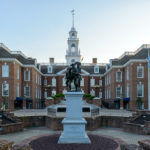 Delaware: Delaware’s version of the John Lewis Voting Rights Act makes it through the House chamber. The bill’s sponsor State Rep. Larry Lambert said dismantling of the federal voting rights act means Delaware needs to pass its own laws against voter intimidation, dilution, and obstruction. And since the Supreme Court Callais v. Louisiana decision, multiple states have moved to redistrict. “This bill does not enable additional people to vote,” Lambert said. “It doesn’t change who’s eligible. It provides additional civil protections for the department of justice. It also provides language assistance so all voters can make informed decisions in the voting booth.” It grants new powers to the state Attorney General to bring lawsuits for policies and actions that cause voter suppression. Lambert said 9 other states have passed similar legislation. But Delaware is the first to introduce the state level voter rights act since the Supreme Court’s Callais decision last month. It passed in the House along party lines and heads to the senate. If it becomes law, it would go into effect in July 2027.
 District of Columbia: Independents will be able to vote in District primaries soon, as the D.C. Council passed an amendment to fund the part of Initiative 83 that calls for semi-open primaries. But the move only comes a week after the 2026 primaries, featuring races for major offices in the District, had already happened. Voters passed Initiative 83, a ballot initiative that implements ranked-choice voting and semi-open primaries, in 2024. Last Tuesday, voters got to see the first part of that initiative with the District’s first ever ranked-choice primaries. But despite it being part of the same ballot initiative, independents in the District were not able to vote in partisan primaries. That’s because the D.C. Council only funded the ranked-choice part. Now, that’s about to change. The council passed an amendment to the 2027 budget that would put $1.1 million over the next four years toward semi-open primaries. The amendment was brought by At-Large Councilmember Christina Henderson. Semi-open primaries means that D.C.’s 88,000 independent voters will be allowed to choose to participate in either Democratic or Republican primaries. In a city like D.C. where voters are overwhelmingly Democratic, it gives independents a voice in the elections that more often than not indicative of the November general. According to the D.C. Board of Elections, there were around 365,000 registered Democrats ahead of last week’s election.
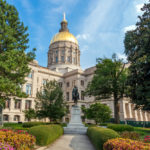 Georgia: Lawmakers dialed back a controversial change that would have mandated hand recounts of the two top-ticket races in every election before local officials could certify the results. The hand-count provision was added by Senate Republicans over the weekend to a measure extending the state’s self-imposed deadline to stop using ballot QR codes to tally votes, prompting outcry from Democrats, local election officials and other advocacy groups. The revised measure, which passed out of both chambers largely along party lines, limits the use of hand recounts to only the governor’s or lieutenant governor’s race, and implements them only when the leading candidate’s margin of victory falls within half a percent of the candidate in second place. The state will reimburse counties for the cost of conducting a hand recount. An amendment added by Covington Rep. Tim Fleming, the Republican nominee for secretary of state, instructs the committee to narrow their focus to hand-marked paper ballot systems, which would represent a shift away from Georgia’s current system that uses voting machines to mark ballots. Sen. Max Burns, a Sylvania Republican who is sponsoring the bill in the Senate, told lawmakers the language “ensures that Georgia moves forward, that our elections are safe and secure, that we are prepared for not only 2026 elections but also for ’27 and ’28 and beyond.” Speaking to reporters after the bill passed, Burns added that the hand count provision was aimed at boosting voter confidence in the machine-tallied election results, despite the fact that studies have shown hand-counts of ballots are less accurate than ballots counted by machines. The bill also allows the state to continue using QR codes to tally votes until 2028, meaning they will still be in place for this year’s midterms, and mandates additional post-election audits on certain statewide contests and establishes a special committee to help select the state’s next voting system.
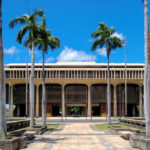 Hawai’i: Gov. Josh Green signed Senate Bill 2239 into law as Act 67, establishing Automatic Voter Registration (AVR) statewide beginning Jan. 1, 2027. The measure was introduced by Senate Housing Committee Chair Stanley Chang. Advocates say this marks a major step toward modernizing Hawaiʻi’s voter registration system and expanding access to the democratic process. Act 67 modernizes Hawaiʻi’s voter registration system by automatically registering eligible residents to vote when they apply for or renew a Hawaiʻi driver’s license or state identification card, unless they choose to opt out. Previously, residents were required to affirmatively check a box to register to vote. The law also streamlines the voter registration process by automatically updating voter registration records when residents update their address through driver’s license or state ID renewals. The new system is designed to improve the accuracy of voter rolls, reduce administrative costs, and make voter registration more accessible for Hawaiʻi residents. By integrating voter registration into existing government services, the law helps ensure that more eligible voters can participate in the democratic process.
 Michigan: Gov. Gretchen Whitmer signed a bipartisan package of bills that her office says is aimed at enhancing the state’s election security and ensuring that all votes are counted. The four bills amend local elected officials’ terms of office to ensure effective implementation of Proposal 2 of 2022 by “creating uniform term start dates and ensuring that elected officials are not sworn in until voting results are certified. The governor’s office says the bills are “particularly important to ensuring overseas voters and service members’ votes are properly counted before local elected officials take their oath of office.” “Michigan elections are safe and secure,” Whitmer said, per a press release. “I’m proud to sign these bills that will protect ballots sent by mail from our service members and voters overseas. Every Michigan voter deserves the chance to make their voice heard in our elections. Let’s keep working together to make sure that every vote counts.” Senate Bills 240 and 241, sponsored by state Sen. Jeremy Moss (D-Bloomfield), require township and village local elected officials’ terms of office start dates to begin no earlier than Dec. 1 to allow enough time after election day for all votes to be processed and counted. House Bill 4358, sponsored by state Rep. Mike Hoadley (R-Au Gres), and House Bill 4359, sponsored by state Rep. Pat Outman (R-Six Rivers), modify the start dates for the terms of city and village officers to ensure that all votes are counted. “These bills strengthen two essential foundations of our secure, fair elections – ensuring every eligible citizen can cast their ballot and that every vote is counted,” said Secretary of State Jocelyn Benson. “Military servicemembers and their families make sacrifices to keep us safe and free. They deserve to have their voices heard in every election.”
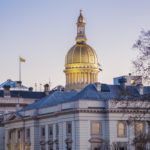 New Jersey: According to the New Jersey Monitor, new legislation that would allow county clerks to rotate political candidates’ names on primary ballots faced a chilly reception from voting advocates and wariness from election officials during an Assembly hearing this week. The bill, which did not get a vote before the Assembly State and Local Government Committee Tuesday, is intended to allow candidates to have equal time in the top spot on a ballot. But some critics noted that the measure would allow name rotations only after a ballot draw, and then only at the request of political party leaders. “If the goal is to have a fair election outcome, then why would we once again take a good governance reform meant to be uniformly applied statewide and instead hand it over to the control and discretion of political parties?” said Antoinette Miles, state director for the New Jersey Working Families Party. The bill seeks to denude the effect ballot draws have on results by allowing clerks to rotate candidates’ names in a given office block so that, across a voting jurisdiction, each candidate’s name appears an equal number of times in the No. 1 spot. Under the bill, a request for rotation would also have to be approved by members of a county’s elections board who belong to the party that made the request, but only if there was no rotation the year prior. “We do not think this should be optional,” said Heather Richner, associate counsel with the New Jersey Institute for Social Justice. “Randomization and rotation are best practices which should be implemented across the state. All counties should be required to conduct a mechanic or electronic randomized draw and then utilize the rotation procedures.”
 North Carolina: A sweeping bill to revamp North Carolina’s election laws passed a key state House committee this week, but the Senate could make further alterations to the bill. The 37-page bill would make changes to general election administration, voter registration, how elections are conducted and campaign finance laws. It passed the House Rules Committee on June 23, typically a final stop before a vote among the full chamber. The committee vote was 14-9 and at least one Republican member voted against it. The committee adopted additional amendments to the bill, marking at least the sixth different version of the legislation that was originally filed in April 2025. Among the election changes in the bill: State Board of Elections and county board members would be barred from supporting or opposing candidates and encouraging or influencing voter turnout. People would have to belong to a political party for at least a year, up from 90 days, in order to run for office with that party designation. Political appointees to election boards would be paid more. Elections in all 100 counties would be audited over a six-year period by the state auditor. The exemption for reporting campaign finance contributions would increase making fewer contributions, loans and expenditures public So-called “never residents” would be removed from the definition of a covered voter
 Ohio: Gov. Mike DeWine has vetoed legislation that would have required the vast majority of voters to provide their photo ID to cast a mail-in ballot. “H.B. 472 is all burden for so little benefit,” DeWine said in his veto message. Currently, to get an absentee ballot, a voter must provide their generic personal information, a signature and either the last four digits of their Social Security number or their full driver’s license number. They also could provide a photo ID, but it isn’t required. Under House Bill 472, an applicant would need to complete all prior work, plus upload a live-capture photo ID and an electronic signature to an online portal — one that would need to be created by the state. Individuals could also mail a photocopy to their board of elections. “House Bill 472 would not discourage fraud, would not add any real security, and would create an additional and significant burden for Ohioans who vote by mail,” DeWine said. “This bill is not needed,” he added, because Ohio does an excellent job running elections.
Legal Updates
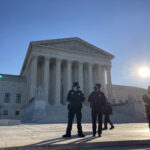 U.S. Supreme Court: The U.S. Supreme Court announced June 22 that it will not review an Arkansas-based lawsuit, leaving in place a 2025 appeals panel ruling that ends a long-used tool for protecting minority voters from discrimination under the landmark law in seven mainly Midwestern states. That ruling found that in the states covered by the 8th U.S. Circuit Court of Appeals — Arkansas, Iowa, Minnesota, Missouri, Nebraska, North Dakota and South Dakota — private individuals and groups do not have the right to sue to enforce what’s known as Section 208 of the Voting Rights Act, which generally allows voters with a disability or inability to read or write to get help with voting from a person of their choice. For decades, enforcement of these sections of the Voting Rights Act has mainly been driven by lawsuits by private individuals and groups. But after conservative Justice Neil Gorsuch issued a single-paragraph opinion in 2021 questioning a private right of action, Republican officials in multiple states have raised a novel legal argument: Only the U.S. attorney general, they contend, has the right to bring lawsuits under these parts of the Voting Rights Act. Such an interpretation of the law is likely to lead to a dramatic decline in voting rights lawsuits because of the Justice Department’s limited resources and shifting priorities under different presidential administrations. The case that the justices decided not to take up was brought by the immigrant advocacy group Arkansas United, which has provided Spanish-language interpreters at polling sites to assist voters with limited English proficiency.
 Federal Litigation: U.S. District Judge Indira Talwani blocked key pillars of President Donald Trump’s efforts to overhaul the 2026 elections, declaring unconstitutional his attempts to create centralized lists of adult citizens and giving the U.S. Postal Service unprecedented authority over who can vote by mail. The 37-page ruling concluded that the president did not have the constitutional authority to regulate state elections as he tried to do in a March executive order. The executive order directed the U.S. Department of Homeland Security and Social Security Administration to create a nationwide list of verified U.S. citizens over 18, and thus presumably eligible to vote in federal elections. It also called on the U.S. Postal Service to create a system to handle and accept mail-in ballots only from voters on preapproved lists. Tawani’s decision came one day after the head of the Postal Service said the agency would refuse to deliver mail-in ballots to voters that were not on lists approved by the federal government, making explicit what the agency’s proposed new rules had previously implied. In her ruling, Talwani said that the federal government could not use the postal system to regulate who gets ballots. “No law enacted by Congress delegates authority to control mail-in voting to USPS,” Talwani wrote. Talwani issued an injunction specifically preventing the federal government from enforcing those provisions of the order against the 24 jurisdictions (23 states and the District of Columbia) whose attorneys general and governors brought the lawsuit. The list includes most Democratic-led and swing states, including Arizona, California, Michigan, Nevada, New York, North Carolina, Pennsylvania, and Wisconsin. However, the injunction applies only to this year’s elections. Talwani granted the Trump administration’s motion to dismiss the plaintiffs’ legal challenges to the executive order as not yet ripe when it comes to future elections.
U.S. District Court Judge Sparkle L. Sooknanan ruled this week that a recently revamped version of a federal tool central to the Administration’s efforts to nationalize elections can no longer be used. Sooknanan sided with advocacy groups that argued the recent upgrades to the program, called Systematic Alien Verification for Entitlements, or SAVE, aggregated Americans’ sensitive personal data in a way that could result in voters being wrongly purged from voter rolls. “All in all, the federal government has knowingly trampled on the privacy rights of American citizens in a manner that threatens the sacred right to vote,” Sooknanan said in an order explaining the decision. “This Court cannot stand idly by while that happens.” She said Congress had expressly prohibited the government from centralizing Americans’ personal identifying information and that the federal agencies that created the SAVE program “knew that the database violates those statutory protections.”
U.S. District Court Judge Denise Casper permanently barred President Donald Trump’s administration from implementing most of his first executive order on elections, part of which sought to require people to show documentary proof of citizenship when they register to vote. Casper effectively converts a preliminary injunction she issued a year ago, in which she temporarily blocked many of Trump’s efforts to overhaul elections, into a permanent ban. Casper rejected the Republican administration’s argument that the lawsuit to block the changes brought by Democratic state attorneys general was premature because the rules had yet to be put in place. Instead, she agreed that the Constitution gives states and Congress the authority to regulate elections, and that Trump’s requirements violated the separation of powers. The Constitution “does not grant the President any specific powers over elections,” wrote Casper. Among other proposed changes, Trump’s order would have required people to provide documentary proof of citizenship when registering to vote, prevented mail ballots from being counted if they arrive after Election Day, even if they were postmarked by then, and punished states that failed to comply by withholding certain federal grants, including those intended to beef up election security. California Attorney General Rob Bonta, whose state was the lead plaintiff in the case, said the ruling reaffirmed the constitutional principle that it’s up to the states and Congress to set election rules. “While we are proud of this result, we are clear-eyed that President Trump’s attacks on voting rights and our elections show no signs of slowing down,” Bonta, a Democrat, said in a statement. “So let me be clear: we will keep fighting back every step of the way.”
The company formerly known as Dominion Voting Systems is ending its $1.3 billion defamation lawsuit against MyPillow and its CEO, Mike Lindell. The voting machine company, which was sold last year to a former GOP election official and is now called Liberty Vote, agreed to dismiss the long-running lawsuit in a federal court filing this week. “The parties have agreed to a confidential settlement to this matter,” a Liberty Vote spokesperson said in a statement. The agreement reached this week stated that all parties in the lawsuit will bear their own legal fees and costs. Lindell estimated his legal fight with Dominion cost him about $20 million. Dominion Voting Systems filed the defamation lawsuit against Lindell and MyPillow in 2021 over Lindell’s discredited claims that the company rigged the 2020 election for Joe Biden. The company also accused Lindell, a longtime ally of President Donald Trump, of waging his election fraud crusade to boost MyPillow sales and to raise his political profile.
 Alaska: With a deadline to print voting ballots just days away, an Alaska judge must come to a decision before then on whether a Petersburg man with the same name as Alaska’s sitting U.S. senator should be placed on the primary ballot. The case between Dan J. Sullivan of Petersburg and incumbent Sen. Dan S. Sullivan has been much-publicized this month after the Petersburg candidate threw his name into the race earlier this year. The argument centers around the state’s Division of Elections decision to take the Petersburg Sullivan off the ballot and whether it had the legal authority to do so. Election Director Carol Beecher announced June 15 that the Petersburg candidate would be taken off the ballot, claiming that his candidacy was “not filed in good faith,” and his choice of filing as a Republican “strongly suggests an intent to confuse” voters with two candidates of the same name. The Division of Elections argues that three main points: That the Petersburg Sullivan filed under a name “Dan Sullivan,” instead of Daniel J. Sullivan Jr.” as he has previously registered as; He changed party affiliation from “undeclared” to Republican” just two days before filing his candidacy; and His campaign website bears a striking resemblance to that of the current sitting senator’s website. A brief filed by Sullivan and his attorneys calls the division’s decision against historical precedent “dangerous and constitutionally infirm,” citing past cases where candidates have been allowed on the ballot even when they don’t live in the state.
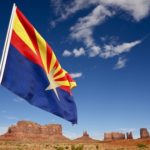 Arizona: The Arizona Court of Appeals paused a lower court order that gave Maricopa County Recorder Justin Heap a legal victory over the Board of Supervisors in their ongoing election fight due to concerns the ruling would cause confusion ahead of this year’s fast-approaching elections. Back in April, Maricopa County Superior Court Judge Scott Blaney found the supervisors acted illegally when they took away the recorder’s IT staff and systems. He also interpreted the state’s complicated web of election laws — which divide responsibilities between boards and recorders — in an attempt to resolve disputes between Heap and the supervisors over who controls what. But that ruling did little to resolve the conflict, as Heap and the board continue to spar over election drop boxes, ballot replacement sites and an array of other election administration issues ahead of the upcoming July 21 primary. The Board of Supervisors argued the order violated the so-called Purcell Principle. That’s U.S. Supreme Court precedent named after former Maricopa County Recorder Helen Purcell that essentially states courts should avoid making significant changes immediately before upcoming elections. Heap’s attorney had argued that the Purcell Principle only applied to federal cases. But two out of three judges on an appeals court panel disagreed and granted the supervisors’ request to pause Blaney’s decision as they appeal the ruling, citing Arizona Supreme Court cases that also invoked the Purcell Principle. “That principle is that courts are reluctant to order last-minute changes in election rules and procedures because they can burden election workers and complicate and create confusion in the voting experience,” Presiding Judge Andrew Jacobs wrote. The court determined that, without the stay, the order could create that confusion this year.
The 9th U.S. Circuit Court of Appeals paused the U.S. Department of Justice’s appeal of a lower court ruling that the Trump administration has no right to Arizona’s voter registration database until two other cases are resolved. The court issued an order in the lawsuit, granting a request from DOJ that the Arizona case be put on hold until the same court rules on appeals stemming from court rulings in California and Oregon in which judges also ruled that the Trump administration cannot demand that states surrender voting lists.
 Indiana: Two Republican primary races in Knightstown are headed for a special election after a ballot error allowed people to vote despite not living in Knightstown. A Henry County judge made the decision June 24 after the problem with two Republican primary races in Knightstown. “We are aware and want to have on record that we are aware that an error occurred in our system that allowed people that lived in an outside area of Knightstown to vote in an inside election,” said Kirsten Cronk, election board chair. Knightstown sits in three precincts in Wayne County, but the town limits do not cover the entire precincts. “We can confirm that people outside the town limits had the opportunity to vote in town elections,” said Joel Harvey, Henry County attorney. “We don’t know how many actually voted in the town election, and from what I understand, there’s no way to make that determination.” The county clerk now has 10 days to come up with a plan for the special election, which will likely happen in late July or August.
 Maryland: U.S. District Judge Stephanie Gallagher has dismissed a Justice Department lawsuit demanding Maryland voter registration records, what state officials derided as a “fishing expedition” for sensitive personal information on voters. The order noted that eight courts have ruled against the government in every ruling so far in other states. Her order said she “joins every court to have addressed this issue in concluding that an SVRL [statewide voter registration list] is not a record or paper that a state must produce to the United States” under the Civil Rights Act. “The State Board of Elections is transparent and open about its processes and voter registration,” Maryland State Administrator of Elections Jared DeMarinis said in an interview. “This fishing expedition by the DOJ, courts saw through it and they [DOJ] were not forthright as to what their reasons behind asking for over 4.3 million records on voters that include sensitive information. I feel vindicated in my decisions.” The Justice Department argued that federal law allows it the right to demand the records under the Civil Rights Act of 1960. Gallagher disagreed. She noted that the Civil Rights Act carried penalties for anyone who altered records, but the other two acts the federal government cited specifically requires states to constantly update their records. “The United States’s proposed interpretation of the CRA would therefore criminalize the same conduct that the NVRA and HAVA require,” Gallagher’s decision reads. Interpreting the law as the Justice Department proposed would produce “an absurd result,” she wrote.
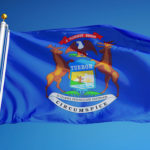 Michigan: The Sixth Circuit Court of Appeals has ruled that Michigan does not have to turn over its unredacted voter roll to the Department of Justice, dealing the Trump administration its highest-profile loss yet in its quest to obtain voter data from states ahead of the 2026 midterms. Michigan’s case is the first to be heard, and be ruled on, at the appellate level. The next step up would be to appeal to the U.S. Supreme Court, but Department of Justice officials did not immediately respond to requests for comment. Even if the case is taken up by the country’s highest court, a resolution — particularly one that could be meaningfully implemented — before the midterm elections is unlikely. Absentee ballots for the Michigan primary election start going out June 25.
 Minnesota: Timothy Scouton, 65, of Badoura Township in Hubbard County, pleaded guilty to accepting ballots from 11 unregistered voters in the 2024 general election.Scouton pleaded guilty in March to one count of accepting ballots from unregistered voters. Scouton was serving as an election judge during the general election on Nov. 5, 2024. Scouton was initially charged with accepting votes of unregistered voters and a neglect of duty after swearing an oath as an election judge, both felonies. Scouton’s attorney sought a gross misdemeanor-level conviction for accepting the ballots from unregistered voters as part of the plea agreement. “Any felony-level conviction likely will tear down everything he has worked so hard to achieve in his life, and anything that he seeks to achieve in the future for trying to best serve his country as a volunteer head election judge.” Hubbard County Judge Kathryn Lorsbach sentenced Scouton to a stayed one-year prison sentence June 15 with a felony conviction. He is ordered to serve local time in the Hubbard County Jail for 30 days, with credit for four days already served, plus spend five years on supervised probation. He must also pay a $200 fine. Among conditions of the sentencing, Scouton is prohibited from serving as an election judge again.
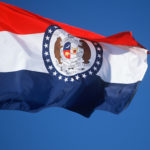 Missouri: Secretary of State Denny Hoskins wants the courts to shield him from disclosing how his office is reviewing a disputed batch of signatures on a referendum petition challenging the state’s new congressional map. In a lawsuit filed this week, Hoskins is suing People Not Politicians, the political action committee pushing for a referendum. Hoskins is asking the court to declare that he does not have to fulfill a Sunshine Law request from Emily Gerber, deputy director of the PAC, because the records being sought are protected from disclosure as public records because there is ongoing litigation over the information they contain. “The secretary’s determination that the records were closed at the time of Ms. Gerber’s request was based on the nature of the records as being related directly to pending litigation, not on the identity of the requester,” Assistant Attorney General Kate Walker wrote. The lawsuit was filed, she wrote, because the Sunshine Law allows government entities to ask the courts whether a decision to withhold records was correct.
 Nebraska: The Republican National Committee and two Nebraska voters have filed a lawsuit against Nebraska over a part of state election law that was meant to implement a 2009 federal election law. The lawsuit, which names Secretary of State Bob Evnen as the defendant, was filed in Lancaster District Court on Monday. It alleges that part of the state election law violates the state constitution because it allows U.S. citizens who have never resided in the state or country to vote in Nebraska elections. The law was passed during the Nebraska 101st legislative session in 2010, according to the state legislature website. The law aimed to “implement the requirements of the federal Military and Overseas Voter Empowerment Act,” which was signed into law in 2009 by former President Barack Obama. It also “streamlines and reorganizes the current provisions in law dealing with ballots for members of the armed forces and overseas citizens.” The bill passed by the U.S. Congress aimed to expand the Uniformed and Overseas Citizens Absentee Voting Act of 1986 by providing greater protections for service members, their families, and other overseas citizens, according to a U.S. Department of Justice fact sheet. The eight-page complaint cites a provision of the state constitution that defines who can vote in Nebraska. RNC Chairman Joe Gruters said in a statement that “Nebraska’s Constitution is clear, voters must live in Nebraska.” “This law tries to get around that requirement by allowing people who have never lived in the state to vote,” Gruters said. “The RNC is fighting to stop it and ensure Nebraska elections are decided by Nebraska voters only.”
 New Hampshire: A month after Judge Samantha Elliott of the U.S. District Court of New Hampshire struck down a law requiring hard proof of citizenship to register to vote in New Hampshire; the state Attorney General’s Office has requested a stay of the decision while it appeals. Because of that ruling, first-time voters do not currently need hard proof of citizenship to register for the September state primary and November general elections, though they will need proof of identity, age, and domicile. The state’s motion, if successful, would allow the new proof-of-citizenship law to take effect this fall. The frozen law, which was passed via House Bill 1569 and took effect just after the 2024 presidential election, required people registering to vote for the first time in New Hampshire to produce documentary evidence, such as a passport, birth certificate, naturalization certificate, or other document, that they are U.S. citizens or be denied registration, with no exceptions. It eliminated the previous option for a voter to sign a “qualified voter affidavit” in which they testified on penalty of voter fraud charges that they were a U.S. citizen in order to register to vote without presenting those documents.After a group of voting rights organizations and voters sued to block the law, Elliott ruled that requiring proof of citizenship violated the First and 14th Amendments because it could disenfranchise voters. She ordered the Secretary of State’s Office to restore the qualified voter affidavits for citizenship. Now, with the state’s Sept. 8 primary less than 11 weeks away, attorneys for the state are asking Elliott to stay her ruling while they appeal to the 1st Circuit Court of Appeals in Boston. To succeed, they’ll need to prove that they are likely to defeat the ruling on appeal, that allowing the new law to stay in effect is in the public interest, and that Elliott’s blocking of the law will cause irreparable injury to the state and other parties.
 New York: Artist Courtney Francis Fallon says she has been charged with criminal tampering in the 3rd degree placing a wheat paste installation outside a Tonawanda polling place that said “Zell No.” Wheat paste installations include graphics printed on paper and attached to surfaces with a combination of water and glue, meant to dissolve fairly easily and not designed to be permanent. Fallon says that she installed the artwork outside the 100ft electioneering zone setup near polling stations early Sunday morning. Five installations were placed outside of polling places in Buffalo, Amherst, Tonawanda and Williamsville. Fallon says that she was contacted by Amy Kobler on Monday, asking what vehicle she drove. Fallon was then contacted by Tonawanda police shortly thereafter. She was asked to come to the station and when she did, she was handcuffed and processed, she says. Fallon has a hearing in Tonawanda city court scheduled for July 7. Criminal tampering in the 3rd degree carries a maximum penalty of 90 days in jail.
 Pennsylvania: Miya Pack, 40, of Philadelphia, pleaded guilty in an election fraud case concerning the 2024 presidential race. Pack admitted to casting two ballots. First, she voted at an early polling location in Teaneck, New Jersey, on Oct. 26, 2024. Ten days later, she voted again at the Christy Recreation Center in Cobbs Creek on Election Day. According to a plea memorandum, Pack grew up in New Jersey and registered to vote in Bergen County in 2004. But she never actually cast a ballot in the state until 2024. She registered to vote in Philadelphia County in 2016 and participated in every subsequent general election, as well as the 2019 municipal election. Pack was indicted in September after an FBI agent contacted her on the phone. During the June 23 interview, she confirmed she was on the ballot rolls of New Jersey and Pennsylvania and admitted to voting twice in the 2024 presidential election. Initially, however, she claimed she had done so because she cast a mail-in ballot late in New Jersey and never received a confirmation of receipt. This was not true, since records confirmed she voted in person on a machine in the Richard Rodda Center in Bergen County.
 South Dakota: State Senator Tom Pischke of Dell Rapids is charged with two counts of Offering a False or Forged Instrument for Filing, according to the Minnehaha County Sheriff’s Office. The charges relate to potentially fraudulent election forms submitted to the Minnehaha County Auditor’s office. If convicted on both counts of offering a false or forged instrument for filing, Pischke faces up to four years in prison. The charges relate to alleged behavior that took place more than two months before the June 2 primary. Pischke was unopposed in the primary, and faces an independent candidate in the general election. The charges filed against Pischke on Tuesday are linked to 16 fraudulent nominating forms for precinct committeeman and precinct committeewoman, according to a Minnehaha County Sheriff’s office report in Pischke’s criminal case file.
 Texas: The Supreme Court of Texas announced June 19 that it would not hear an appeal on behalf of conservative activist and Republican megadonor Steven Hotze, in a suit in which he and three other plaintiffs accused the Harris County Tax Assessor-Collector’s Office of failing to uphold election integrity by properly maintaining the county’s voter registration roll. An appeals court had earlier ruled in favor of Tax Assessor-Collector Annette Ramirez, on the grounds that Hotze and his fellow plaintiffs lacked standing to sue. The lawsuit asserted that the registration roll includes voters “who have moved out of Harris County, voters who have died, voters who are felons, voters who have registered at post office or private mail boxes with commercial mail receiving agencies, scores of voters who are not related to each other but have registered at the same address, voters who have registered at a commercial address and do not reside there and voters who claim to live on vacant [properties].” Hotze’s proposed remedy was to force the Harris County voter registrar to monitor the accuracy of the county’s voter registration roll, to review the National Change of Address database on a monthly basis, and to promptly review and determine challenges to the registration status of a voter.
 Virginia: Virginia’s chapter of the American Civil Liberties Union filed a motion on June 18 seeking an expedited remedy to restoring voting rights to those formerly incarcerated. The group accused election officials of violating a voting rights lawsuit previously won earlier this year.Virginia’s chapter of the American Civil Liberties Union argued in King v. O’Bannon that Virginians with a variety of felony convictions should have never lost their right to vote in the first place. A judge ruled in their favor earlier this year and ordered the state to comply by May. Attorney General Jay Jones then successfully sought an extension to June 1 so that the state could compile guidance for registrars and ascertain which modern-day felonies might bar someone from registering to vote. While the legal organization “has serious questions” about how the lists were determined and whether eligible people will be able to vote this year, the group has tried for months to glean a better understanding from Jones’ office. Since June, registrars have been instructed to not fully process new voter registrations of people with felony convictions, according to documents obtained by The Mercury that are now exhibited in the new motion. In May, ACLU Virginia wrote a letter to Jones and Solicitor General Tillman Breckenridge asking why revisions to registration forms were not feasible for registrars, and for more details on challenges preventing the state from fully complying with the court order. The organization also asked for more clarity on conviction types that may require individualized review by Jones’ office.
Opinions This Week
National Opinions: Youth voter registration | Voting system, II | U.S. Postal Service | Vote by mail | Court rulings |
Alaska: Ranked choice voting |
California: Ballot counting, II, III |
Hawai’i: Election process | Election Commission |
Maine: Democracy |
New York: Jail voting |
North Carolina: Campus voting sites |
Ohio: FBI raids |
Upcoming Events
Recipes for Success: Join The Elections Group as we welcome Matt Masterson and Tiana Epps-Johnson for the inaugural episode of Recipe for Success, a new monthly webinar series. This series is designed to give the elections community a chance to get to know the people behind the work. Each episode brings together two election leaders for a relaxed conversation about their professional journeys, lessons they’ve learned, the people who have influenced them, and what leadership looks like in our field today. Matt Masterson is Senior Director of Elections and Societal Resilience at Microsoft, bringing decades of experience across the Ohio Secretary of State’s office, the U.S. Election Assistance Commission, and CISA. Tiana Epps-Johnson is Founder and CEO of the Center for Tech and Civic Life, where she leads a team working to make U.S. elections more professional, inclusive, and secure. In this first episode, Jennifer Morrell will sit down with Matt and Tiana to discuss how they found their way into elections administration, the people and experiences that shaped their careers, and what they’re working on today. Because food has a unique way of bringing election officials together, each guest will also share a favorite recipe and the story behind it. We’ll feature those recipes throughout the year and include them in a community recipe book at the end of the year. When: June 26, 1pm. Where: Online.
CERA Courses (Milwaukee): The Certified Elections Registration Administrator (CERA) certification is the original professional certification for election administrators in the United States. The following courses will be offered in Milwaukee in July: Course 5 – Ethics in Election Administration and Voter Registration; Course 6 – Communications and Public Relations in Election Administration and Voter Registration; Course 7 – Enhancing Voter Registration and Participation in Election Administration and Voter Registration; Course 8 – Implementation of New Programs in Election Administration and Voter Registration; and Course 9 – History in Elections Part 3: 1960 to Modern Era. When: July 11-18. Where: Milwaukee, Wisconsin.
Will the midterms happen? Your election questions, answered: Will the 2026 midterms happen? Short answer: Yes. Long answer: Elections happen because thousands of local officials follow state and local laws requiring them to happen — and history shows they’ve done so before, even under immense pressure. The greater danger isn’t no election, but one that’s chaotic, unfairly challenged, or deliberately cast as illegitimate after the fact. Got more questions about the midterms? Submit them to Votebeat reporters with your RSVP on Eventbrite, and they’ll give you the long answer live on July 13 at 5 p.m EDT. Votebeat is a nonprofit newsroom specialized in explaining how elections work. Each of our reporters and editors spend every day covering voting rules, election administration, misinformation, election lawsuits, local officials, and the systems that determine how ballots are cast and counted. Ask them anything! When: July 13, 5pm Eastern. Where: Online.
2026 NACo Annual Conference & Exposition: The National Association of Counties will hold its 2026 Annual Conference & Exposition on Orleans Parish, Louisiana from July 17-20. When: July 17-20. Where: New Orleans.
NASED 2026 Summer Conference: The National Association of Directors of Elections will hold its summer conference from July 20-22 in Boston. When: July 20-22. Where: Boston.
iGO 9th Annual Conference: The International Association of Government Officials will hold its 9th Annual Conference from July 25-28 in Reston, Virginia. When: July 25-28. Where: Reston, Virginia.
2026 NCSL Legislative Summit: The 2026 NCSL Legislative Summit takes place in Chicago July 27-29, bringing together state legislators and legislative staff from all 50 states and U.S. territories for three days of collaboration, innovation and bipartisan dialogue. When: July 27-29. Where: Chicago.
SCARE 2026 Annual Conference: The South Carolina Association of Registration and Election Officials (SCARE) will hold its annual conference from July 27-30 in Isle of Palms.
Oregon Association of County Clerks: The Oregon Association of County Clerks will hold its annual conference from August 10-13 in Burns.
WMCA 46th Annual Conference 2026: The Wisconsin Municipal Clerks Association will hold its annual conference from August 18-21 in Green Bay.
Election Center 41st Annual Conference: The National Association of Election Officials (Election Center) will hold its 41st Annual Conference in Kansas City, Missouri from August 19 to 21. CERA classes will be offered August 22 and 23. When: August 19 to 21. Where: Kansas City, Missouri.
UAC Annual Convention: The Utah Association of Counties will hold its annual convention from September 8-10.
2026 WACO Conference: The Wyoming Association of County Officers-County Clerks will hold its annual conference from September 22-24 in Laramie.
2026 MACO Annual Conference: The Montana Association of Counties will hold its annual conference from September 27-30 in Helena.
Job Postings This Week
electionlineWeekly publishes election administration job postings each week as a free service to our readers. To have your job listed in the newsletter, please send a copy of the job description, including a web link to mmoretti@electionline.org. Job postings must be received by 5pm on Wednesday in order to appear in the Thursday newsletter. Listings will run for three weeks or till the deadline listed in the posting.
Account Executive, VotingWorks– We are looking for a trusted sales leader who understands that election administrators don’t buy voting machines, they buy trust, both in the equipment and in the vendor. All 83 of Michigan’s counties will soon open at once, and we are in the running for the state RFP enabling us to sell our voting machines. Incumbents will have to re-earn their contracts, and we’ll be competing on equal footing for the first time. This opportunity is time bound. Trust matters deeply in this market. Your job is to build relationships and earn credibility quickly with state and local election officials. You will own the full Michigan territory. You’re responsible for the entire sales process: building pipeline, running demos, navigating procurement, and closing deals. We want sustainable sales contracts that are technically sound, politically supported, and set up for a clean handoff to Customer Success. For your first demos, you’ll be paired with our Executive Director and our Head of Customer Success to learn the messaging and the product. Once you take on demos on your own, you should still know when to bring in executive support and when to handle things yourself. This is a competitive market with a real window of opportunity. If you want to sell something that actually matters to Democracy, and you’re energized by moving fast when the timing is right, we’d like to meet you. Application: For the complete job listing and to apply, click here.
Administrative Specialist (Elections Specialist–Russian), King County, Washington– This is an amazing opportunity to be engaged in the election process! The Department of Elections is searching for energetic and resourceful professionals who like to “get stuff done”. The Administrative Specialist II positions in the Voter Services Department combines an exciting, fast-paced environment with the opportunity to cultivate talents and apply a variety of skills. The ideal candidate will have a desire to help ensure the democratic process through public service. They will thrive in an innovative environment and will not hesitate to roll up both sleeves, work hard, have fun, and get the job done. King County Elections (KCE) manages voter registrations and elections for more than 1.4 million voters in King County, one of the largest vote-by-mail counties in the United States. KCE’s mission is to conduct accessible, secure, and accurate elections. As a leader in providing inclusive elections, KCE is focused on core values of accuracy, equity, integrity, service, teamwork, and transparency. The team at KCE is committed to ensuring all King County voters can get registered, cast their ballot, and make their voices heard. Salary: $29.46 – $37.47 Hourly. Application: For the complete job listing and to apply, click here.
Assistant Director, Peoria County, Illinois–The Assistant Executive Director is responsible for assisting the Executive Director in all aspects of the administration of the Election Commission. Duties include the application of all statutory requirements in maintaining the permanent registry of voters and in planning, organizing and conducting of local, state, and federal elections in the County of Peoria. A Bachelor’s degree in Political Science, Public Policy, Public Administration, or related field required. Master’s degree preferred. A minimum of two years office experience with election experience preferred and/or combination of education and experience. Must possess a strong technical aptitude. Knowledge of Microsoft Windows based software including Microsoft Word, Excel and Access required. Must be detail oriented and able to work under the pressure of deadlines. Must remain nonpartisan when acting in a professional capacity. Must have strong public relations skills including good oral and written communication skills and be comfortable with public speaking and interactions with the media. Ability to maintain confidentiality. Must have valid Illinois driver’s license. Salary: $60,000-$80,000. Deadline: July 1. Application: For the complete job listing and to apply, click here.
Candidate Coordinator, Buncombe County, North Carolina– Buncombe County Election Services is hiring for a Candidate Coordinator position that will be responsible for campaign finance duties, assisting candidates with candidate filing and petitions, conducting outreach and public information efforts, overseeing the provisional voting process, and providing support to the department’s front desk and finance division when needed. The Candidate Coordinator position will serve as an informational resource and point of contact for potential candidates and currently elected officials by overseeing campaign finance and candidate filing responsibilities, including auditing campaign finance reports, creating campaign finance and candidate filing materials, assisting candidates and treasurers with compiling campaign finance reports, and processing petitions. This position also serves as an educational resource by creating materials, coordinating training opportunities, and conducting outreach and informational sessions related to candidate filing and campaign finance for candidates, treasurers, and the general public. In addition, the Candidate Coordinator leads the provisional voting process, including training seasonal staff and conducting related review procedures. Salary: Hiring Range: $29.51 – $34.96. Deadline: July 8. Application: For the complete job listing and to apply, click here.
Commissioner of Elections Department, Boston–Under general policy direction from and at the will of the Mayor, the Commissioner of the Elections is responsible for municipal, state, and federal elections within the City of Boston. This position also oversees the annual census of residents aged 17 and older. The Commissioner of the Elections serves as chair of the Board of Election Commissioners, which ensures compliance with election laws and the equitable delivery of services. As a public and senior official responsible for a key government function, the Commissioner will embody character and impartiality as an election administrator. The Commissioner is responsible for managing, directing, and integrating the functions, programs, and activities of the Elections Commission. The Commissioner communicates effectively to senior City management, community partners, regulatory authorities, and other department stakeholders to ensure City elections are accessible, fair, and administered effectively in accordance with all applicable laws. The Elections Commissioner is responsible for managing the 30+ full-time employees of the Election Department, part-time seasonal employees, and approximately 2,000 part-time poll workers. The Commissioner will work with staff to document policies, practices, and procedures. The Commissioner will practice continuous improvement related to the complex operations of the Department. Salary: $145,000. Deadline: June 30. Application: For the complete job listing and to apply, click here.
Customer Success Manager, VotingWorks: VotingWorks currently supports risk-limiting and post-election audits in 12 states with our software, Arlo. Support varies greatly from state to state and is a combination of general risk-limiting audit education, software training, and support of both during the conduct of audits. Risk-limiting audits vary by state and are constantly evolving, requiring updates to the software. The Arlo/RLA Customer Success Manager is responsible for the strategic oversight and successful delivery of services for Arlo, our post-election audit product. This role will optimize and maintain the systems, tools, and processes for managing auditing projects and support. They act as the primary liaison for Product and Engineering alignment for customer success. Application: For the complete job listing and to apply, click here.
Deputy Elections Administrator, Tarrant County, Texas – The Deputy Elections Administrator is responsible for assisting with and overseeing the daily operations of the Elections Administration Department, including coordination of Voter Registrar duties and all election management activities for Tarrant County. This position provides executive-level operational and tactical leadership and exercises full authority in the absence of the Elections Administrator. Responsibilities include managing personnel, directing election logistics, ensuring legal compliance, overseeing technology and equipment deployment, coordinating poll worker operations, and maintaining the integrity and security of all election processes. Application: For the complete job listing and to apply, click here.
Director of Product Certification, Clear Ballot–Our certification department is seeking an organized, process-oriented program manager to join the team as Director of Product Certification. In this leadership role, you will oversee certification strategy, execution, and compliance across multiple jurisdictions. You will act as the primary liaison with regulatory bodies while managing internal teams and ensuring all certification efforts are completed efficiently and successfully. Application: For the complete job listing and to apply, click here.
Elections Specialist, Palm Beach County, Florida– The Vote-by-Mail Specialist position involves, but is not limited to, the daily processing of applications and other VBM related paperwork and customer service. Election period duties would include signature verification, supervised voting, ballot processing, signature cure applications, and monitoring secure ballot intake stations (SBIS). Responsibilities include: Data entry of vote by mail requests received via phone, email, and website; Customer service with voters in office for VBM related issues; and Coordination of election specific programs such as Supervised Voting and SBIS boxes. Application: For the complete job listing and to apply, click here.
Elections Warehouse Manager, Dallas County, Texas– Manages warehouse staff and functions, to include, equipment maintenance and repair, and supply inventory. Management Scope: Manages approximately twenty (20) warehouse personnel. Responsibilities 1. Supervises all personnel assigned to the elections warehouse, to include hiring, directing, evaluating, disciplining and terminating employees. 2. Provides systems training to warehouse personnel and governmental entities that rent equipment from Dallas County. 3. Manages the maintenance of current systems and schedules maintenance calls for election day. 4. Coordinates the early voting process, ensuring equipment is assigned to appropriate locations. 5. Assist with budget preparation. 6. Performs other duties as assigned. Salary: $4806-$5997/month. Deadline: June 30. Application: For the complete job listing and to apply, click here.
Field Services Engineer, Clear Ballot–Join our Professional Services team as a Field Service Engineer, where you will provide on-site technical support and services to clients across the country. In this role, you will help ensure that election technology operates reliably and securely, supporting the integrity of the voting process. This position requires frequent travel—up to 70%—especially during election cycles, to deliver hands-on support and expertise. Application: For a complete job listing and to apply, click here.
GIS Specialist, Palm Beach County, Florida– Help power accurate, well-run elections through smart mapping and rock-solid data. As a GIS Specialist II with the Palm Beach County Supervisor of Elections, you’ll own core geospatial datasets, turn complex information into clear maps and insights, and improve the workflows teams rely on to plan and execute election operations. Your work helps ensure precinct, polling place, and district data is accurate and easy to use—supporting operational readiness, transparency, and timely decision-making. You’ll maintain and enhance GIS databases, produce print and web-ready map products, perform quality control and spatial analysis, and keep GIS synchronized with the Voter Registration System. You’ll collaborate with both technical and non-technical teams, document standards and changes, and provide training and troubleshooting support. Salary: $72,800 to $87,000. Application: For the complete job listing and to apply, click here.
IT Assistant Manager, Palm Beach County, Florida–The Assistant IT Manager plays a vital and supportive role in ensuring the smooth operation of the IT department, aligning both the technical infrastructure and the team with the organization’s goals. This position involves collaborating closely with the Election Technology Director to oversee the implementation of technology solutions that meet the organization’s needs. The Assistant IT Manager helps maintain an efficient and effective IT environment. The Palm Beach County Supervisor of Elections Office is committed to hiring talented individuals with diverse experiences that will enhance the services we provide to the residents of Palm Beach County. We are always looking for dedicated individuals who do all things with Integrity and Accountability, who excel in Customer Service, and believe in Transparent, Secure Democracy. At the Supervisor of Elections Office, we strive to help our employees find passion and purpose. Join us in being the best place to vote. Salary: $85000 to $125000. Application: For the complete job listing and to apply, click here.
Outreach Coordinator, Palm Beach County, Florida–This role is part of the Communications Team. This role’s primary focus is on community engagement, internal engagement, and providing clerical and administrative support to Managers, Directors, and the Supervisor of Elections. This role is under the supervisor of the Communications and Community Engagement Manager and works closely with the Office Manager. Requirements include being highly collaborative and flexible supporting office-wide initiatives, assisting the communications team with outreach tasks, and stepping in to help the office and all departments as needs arise. The individual must be friendly, proactive, organized, adaptable, communicate well, and comfortable working on multiple projects at once. They must demonstrate discretion, judgment, and professionalism, while ensuring courteous, responsive, and accurate communication and service. The Palm Beach County Supervisor of Elections Office is committed to hiring talented individuals with diverse experiences that will enhance the services we provide to the residents of Palm Beach County. We are always looking for dedicated individuals who do all things with Integrity and Accountability, who excel in Customer Service, and believe in Transparent, Secure Democracy. At the Supervisor of Elections Office, we strive to help our employees find passion and purpose. Join us in being the best place to vote. Salary: $24.00 – $26.44 per hour. Application: For the complete job listing and to apply, click here.
Senior Program Officer, Election Trust Initiative –The senior program officer is part of a small project team that works to advance evidence-based and nonpartisan solutions that improve the accessibility, integrity, and trustworthiness of the U.S. election administration system. This position will work with the team and our partners to develop and oversee strategies to strengthen the field of election administration, identify and vet grantees, provide business planning and capacity building support to key organizations in the field, develop metrics to assess and monitor the portfolio’s progress in attaining its objectives, and coordinate strategies with allied philanthropic partners also investing in the elections sector. This work will involve building relationships with elections officials, researchers, policymakers, non-profit organizations, donors, and other key stakeholders. The position is based in Washington, D.C. and will participate in core office days on Tuesdays, Wednesdays, and Thursdays and will have flexibility to work from home for the remainder of each week. Remote candidates may be considered on a case-by-case basis. The position will report to the executive director of the Election Trust Initiative. Application: For the complete job listing and to apply, click here.
Voter Registration Supervisor: Under general supervision of the Director/Deputy Director the Voter Registration Supervisor performs a variety of duties in order to successfully prepare for all elections. Other duties: Assist in all necessary daily activities of the election process, including but not limited to absentee voting, campaign finance, ballot proofing, ballot language, posting the mail and the care for the overall appearance and maintenance of the office. Adhere to all office procedures adopted by the Geauga County Board of Elections. Deadline: July 14. Application: Please email resume to tplants@geauga.oh.gov
Marketplace
electionline provides no guarantees as to the quality of the items and the accuracy of the information provided about the items in the Marketplace. Ads are provided directly by sellers and are not verified by electionline. If you have an ad for Marketplace, please email it to: mmoretti@electionline.org