In Focus This Week
Ready for List Maintenance
Closing the Communications Gap
By Lia Merivaki, John Lindback, Ryan Chew and TJ Pyche
Keeping voter rolls current is one of the most complex, high-stakes balancing acts in election administration. It requires election officials to maintain accurate lists while ensuring that no eligible voter is disenfranchised by administrative error.
Recently, this work has moved from the back office to the center of a heated national conversation. Increased scrutiny has raised questions about how officials keep ineligible individuals off the rolls and protect their personal information. A clean list is perceived as a sign of a tightly run operation, while a list with outdated records can give the impression of porous security. Any evidence that our processes are not working well can erode public trust in the integrity of our elections.
Even if you perform list maintenance perfectly, explaining it effectively to a skeptical public is critical, but challenging.
We recognize that, while list maintenance is required by federal and state law, there has been a significant gap in understanding how to communicate this work without causing further confusion. To bridge this gap, we drew on the Election Officials Communications Tracker, a database of state and local election officials’ voter-centric communications on social media, to identify best practices in voter list maintenance communications, as well as gaps.
We include these findings in Ready for List Maintenance: Explaining the Work You’re Already Doing, a guide which pairs operational considerations with a communications toolkit for election officials.
The First Step is To Do the Job, and Do It Well
The first step in effective communication about list cleanliness is to clean your list well. Nothing undercuts public trust like instances where the process fails. Even isolated cases, like a single voter casting a ballot for a deceased relative, can be used to discredit an entire system.
To do the job well, your office must be comprehensive in addressing every category of change that makes a registration outdated:
- Address and Name Changes: Systematic, well-designed mailings help capture changes in need of update, to ensure that voters are reaching the correct polling place and receiving the right ballot. Handling returned mail facilitates removal of outdated records.
- Eliminating Duplicate Registrations: Duplicates are viewed as a potential fraud problem, and in some cases can be. They also increase printing and mailing costs.
- Death Master Lists: Comprehensive maintenance means finding not only those who pass away locally, but also those who pass away in another state.
- Data Partnerships: Resources like the Electronic Registration Information Center (ERIC) have allowed members to cancel nearly 700,000 deceased voter records using sophisticated matching. Even states that are not members have found success with federal matches, such as one state that cancelled 34,000 deceased voters after a single federal data match.
- Security of PII: Maintaining voter data security is inextricably linked to list maintenance; protecting Personally Identifiable Information (PII) is a core component of high-quality administrative work.
Transparency Is a Core Security Feature
Transparency is necessary for public trust. Voters need to know how their information is secured and what procedures exist to ensure only eligible citizens vote. Furthermore, voters play a functional role in list hygiene: whether it is returning mail for a previous resident or updating their own records after a move.
What The Data Show
Our analysis of over 6,300 social media posts shared by state and local election officials on social media between 2024 and 2026 related to registration and list maintenance reveals clear patterns in how communications are shared online and how the public engages with that content:
- Platform Reach: Facebook remains the heavyweight for broad reach, accounting for 54% of EO communications. However, Instagram generates higher median engagement per post, suggesting it is a better tool for visual storytelling.
- The Deadline Surge: The communications that drive higher engagement are timed around registration deadlines. These posts see high engagement because they provide a clear, urgent call to action that users can amplify to their own contacts.
- Quality vs. Volume: High engagement is not always “good” engagement. Posts that enter politically charged national debates – such as those involving federal data requests or data-sharing partnerships – often trigger negative attention. In contrast, neutral, service-oriented messaging achieved substantial reach without toxic blowback.
A Toolkit for List Maintenance Messaging
Drawing from the Election Officials Communication Tracker and our network of election officials, we developed a toolkit to help you talk about “cleaning the list” in a way that builds confidence. This toolkit includes:
- Sample Website Page: We provide a sample website page that offices can use as a model for similar pages on their websites.
- Examples: We provide examples of the highest-performing posts in the database. For instance, one state’s 2024 registration post achieved record engagement by being practical for voters: deadline-focused with direct links to registration portals.
- Video Explainer Scripts: Based on effective models like the Hillsborough County Vimeo series, we offer scripts for short-form videos that explain complex processes, such as how a name is removed from the rolls, in simple language with easy visuals.
- The “Failsafe” Framework: We include specific language to frame provisional voting as a safety net. This allows you to reassure those who are concerned about being removed improperly that there are safeguards to make sure people are still able to vote.
- Plain-language Explainers for Data Sharing Partnerships: Our data shows that explaining the why and how of the cross-state data sharing systems helps build credibility. We provide messaging that frames partnerships like ERIC as a technical tool that ensures accuracy when voters move across state lines or pass away in other jurisdictions.
A Path Forward
List maintenance will keep drawing scrutiny, and that is not going to change. What can change is how prepared election officials are to talk about the work while they are doing it.
Good list maintenance and good communication about list maintenance are the same project, and both are within reach.
Lia Merivaki is a faculty member at Georgetown University, where she is an associate teaching professor at the McCourt School of Public Policy and an associate research professor at the Massive Data Institute. John Lindback is a fellow at the Institute for Responsive Government. Ryan Chew and TJ Pyche both work at Ready for Tuesday, a nonpartisan election administration consulting firm.
electionline Daily News Email
 What’s the best part of waking up? electionline Daily News in your inbox of course so be sure to sign up for your daily dose.
Each morning you’ll receive the top headlines of the day, plus a listing of states featured in that day’s news round up.
To sign up, simply visit our site and provide us with your email and you’ll begin receiving the news in your inbox each morning.
We Google so you don’t have to!
electionline Merch
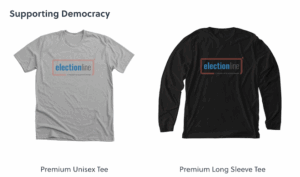 You’ve asked for it, well now you’ve got it! Just in time for all of your holiday gift-giving. We’ve opened up an electionline merch store using Bonfire. Currently we’re offering a couple of different t-shirts, a long-sleeve t-shirt and a hoodie.
Election News This Week
 Federal Update: A group of Democratic senators are demanding that the White House fire its election security director, citing the time constraints of his temporary appointment to this role. “The public record is clear that Mr. Kurt Olsen’s service as a special government employee (SGE) … has exceeded the legal limits for such appointments and, therefore, should come to an end immediately,” the lawmakers wrote in a letter to White House officials. President Trump appointed Olsen to oversee election security and integrity at the White House last October. The Democratic lawmakers noted that Olsen has now served in this role for over 200 days, exceeding the 130-day annual limit for SGEs. “Thus, it is past time to end this temporary appointment or provide a full explanation of how his continued service is legally justified, including Mr. Olsen’s exact dates of service,” the senators wrote. The letter, led by California Sen. Alex Padilla (D), was addressed to White House Chief of Staff Susie Wiles, White House Presidential Personnel Office Director Dan Scavino and White House Counsel David Warrington. Democratic district attorneys in major cities around the country are promising to prosecute federal agents suspected of attempting to intimidate people at polls during the midterms. A coalition of 10 district attorneys — including prosecutors in Philadelphia, Minneapolis, and Dallas — are vowing in an announcement to investigate incidents of suspected voter intimidation by federal agents deployed at the behest of President Donald Trump. “A federal badge is not a license to violate the Constitution, and it is not a shield from state criminal law,” said Larry Krasner, district attorney of Philadelphia. “We will prosecute ICE agents who break the law. There is no category of American who gets to operate above it.” The Office of the Director of National Intelligence recently named two officials to a role coordinating with the nation’s spy agencies on threats against the 2026 midterm elections, according to a congressional source and a second person familiar with the matter. Dave Mastro and James Cangialosi will jointly oversee the intelligence community’s election threat mission, serving in the role of election threats executive. Both sources requested anonymity to communicate the appointments.
 2026 Elections: Six states – Alabama, Georgia, Kentucky, Louisiana, Oregon and Pennsylvania – held primary elections this week. On Saturday, Louisianans muddled through a changed primary process, not only in who could vote due to new laws around closed primaries, but also who they could vote for after Gov. Jeff Landry suspended federal House primaries after the U.S. Supreme Court ruling in Louisiana v. Callais. “I’m really frustrated,” New Orleans voter Diana Masters told WWNO. “It just feels like the state is making a concerted effort to disenfranchise voters. It just feels like they’re trying to rip away people’s voice.” In Alabama, there were voting machine issues in Jefferson County. Shayla Mitchell, the Alabama Election Protection State Coordinator and an organizer for Defend the Ballot, said her team has spent the morning responding to statewide concerns involving voter rolls. She said voters in several counties are arriving at polling places and are finding out that they were ruled “invalid.” In the secretary of state race, Republican Caroleen Dobson will face Democrat Wayne Rogers in the fall. While overall voting went smoothly in Georgia, there were some issues. Results were delayed in Butts County. Nearby police activity shut down one Fulton County polling place. Judge Ural Glanville voided an earlier order that briefly sided with a group of Republican officials who were pushing for access to the secretary of state’s election night hub during the primary. Eleven precincts in Cobb County remained open late after technical problems earlier in the day. There will be runoffs in both the Republican and Democratic secretary of state primaries. In Kentucky, results were late arriving in at least two counties–Fayette and Lexington. Power issues affected one Daviess County vote center, but not the 13 others. About five voters in Campbell County received the wrong ballots at the polls. While it wasn’t without incident, the primary went smoothly in Pennsylvania. Two men are accused of throwing an explosive device near a church that was serving as a polling place in Lehigh County during the primary on Tuesday. Luzerne County successfully debuted its newly leased voting equipment from Hart InterCivic during the primary election, marking a major structural shift in how local residents cast their ballots.
 Podcast News: On a recent edition of the Expand Democracy Podcast, Co-host Eveline Dowling sits down with Kevin Johnson, co-founder and executive director of the Election Reformers Network (ERN), to discuss the past, present, and future problem of partisan election officials in America. They dive into the reasons why the U.S. is the only modern democracy with this set-up, and what that means for how groups like the ERN advocate for change. On a recent episode of The Voting Booth from the American Enterprise Institute, co-hosts John Fortier and Don Palmer were joined by Rebecca Green, Professor of Law and Director of the Election Law Program at William and Mary Law School to discuss the role of the courts in resolving election disputes. On The Democracy Optimist, host Joshua Douglas speaks to Joyce Vance, a New York Times bestselling author, former United States Attorney, professor at the University of Alabama School of Law, and legal analyst for MS Now. On the most recent episode of Terms of Engagement, what’s happening on the ground during an already-busy Congressional primary season? How much change and uncertainty has been the result of the U.S. Supreme Court’s decision in Louisiana v. Callais? Are more voters registering, and what does it take to turn a civic bystander into a participant? The 2026 midterms seem to prompt a nearly endless array of questions. Andrea Hailey, who leads Vote.org, one of the nation’s largest nonpartisan voter engagement platforms, joins hosts Archon Fung and Stephen Richer on Terms of Engagement to answer some of them.
 Sticker News: Congratulations to Zane, a sixth-grader at Hayden Middle School, for winning the 2026 Routt County, Colorado “I Voted” sticker contest. The Routt County Clerk and Recorder’s Office invited middle school and high school students to submit designs in early April, narrowing entries to three finalists before opening voting to the public. The winning design features agricultural landscapes, livestock and mountain scenery, paired with elements inspired by the Colorado state flag. “Thank you to all of our sticker artists, we had great submissions to choose from,” said Clerk & Recorder Jenny Thomas in the statement. “This year’s winning ‘I Voted’ sticker brings our community to life. I know every voter will wear it with pride.” The sticker will be included in mail ballot packets sent to active registered voters for the 2026 general election and will also be available at the Voter Service and Polling Center for in-person voters.
Personnel News: Brandy Wynn is the new Martin County, North Carolina elections director. Samuel R. Gedman has been named the interim Grand Traverse, Michigan clerk. Jenna Persons-Mulicka has been appointed as Lee County, Florida Supervisor of Elections by Governor Ron DeSantis. Max Engling, a staffer to U.S. Sen. Jim Banks joined the Republican Indiana secretary of state race. The newly formed United Kansas Party nominated Lawrence resident Scott Morgan to mount a campaign for secretary of state.
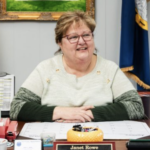 In Memoriam: Janet Rowe, who retired as Lynn City Clerk at the end of February, passed away over the weekend after a brief illness. Rowe was highly respected and adored in Lynn and spent 27 years working in the city. After a four-year stint working at the Lynn Police Station, the Lynn native served as an assistant city clerk for 14 years before being appointed as City Clerk in 2017. Rowe, who also served as the elections chief, was deeply committed to her role and brought a sense of deep compassion and thoughtfulness to the job. “I think you have to be a people person for this job,” she told the Daily Item in February. “You absolutely have to be… because there are a million stories that come across the counter, and we try to help so many people.” Rowe will be missed by the Lynn community, as well as those within City Hall who knew her well. “I am deeply saddened about the passing of Janet Rowe and share my condolences with her family, friends, and colleagues,” Mayor Jared C. Nicholson said. “She was a highly valued leader in City Hall and in this community, and her kindness will be sorely missed by us all.”
New Research and Resources
Federal Interference: The Brennan Center and Protect Democracy have released A Quick Reference Guide for Election Officials, what elections officials can do now to prepare for the risk of external interference by federal actors. The law is clear: State and local election offices are responsible for administering American elections, and the federal government’s role is a narrow, supporting one. Indeed, the law specifies that federal actors cannot use their official authority to interfere with federal elections: 18 U.S.C. § 595 makes it a crime for “a person employed in any administrative position by the United States, or by any department or agency thereof,” to use their “official authority for the purpose of interfering with, or affecting” a federal election. This guide is designed to help election officials prepare for and respond to possible scenarios involving interference by federal actors. Keep in mind, each state’s laws governing elections, privacy, and public records vary, and guidance may need to be calibrated accordingly.
Election Protection Toolkit: A one stop shop from Issue One detailing eight ways the public can help protect free and fair elections, including related links to take action and to partners’ resources. This page will continue to be updated.
Vote-by-Mail Survey: The Engineering for Democracy Institute is currently researching the noise level in the vote-by-mail tabulation process and needs your support. We aim to understand the awareness about noise and the use of personal protective equipment (PPE) in the vote-by-mail tabulation process. The survey will take approximately 8 minutes to complete and includes questions about your election jurisdiction or county you are working in, use of personal protective equipment (PPE) in your workplace, perception of noise, training, and the location of the machines in the vote-by-mail facility. Your responses will be strictly anonymous. Here is the survey link: https://uri.co1.qualtrics.com/jfe/form/SV_4JyIGTIk3sXnRPM The Engineering for Democracy Institute appreciates your time in considering participation in this survey.
Intelligent Mail Barcodes: U.S. Digital Response and the Center for Civic Design are seeking election offices to help shape a free, open-source tool that will generate Intelligent Mail Barcodes for absentee ballot mailings. Designed for offices that handle their own printing and mail prep in-house, the browser-based tool would produce print-ready IMb output with no software to install and no voter data leaving your computer. With new federal and state IMb requirements on the horizon, we’re looking for partners at any level of involvement, from a single discovery call to participating in design sessions. If this sounds like your office, contact slund@usdigitalresponse.org.
Ballot Measures, Legislation & Rulemaking
 Los Angeles, California: Los Angeles County supervisors approved a motion aimed at strengthening election resiliency and protecting election workers — a move with implications for those administering voting in Pasadena — as the county prepares for the June 2 Primary Election and the Nov. 3 General Election. The action, authored by Board Chair and First District Supervisor Hilda L. Solis and Third District Supervisor Lindsey P. Horvath, affirms that Los Angeles County will provide for the legal defense of County election employees, in accordance with California Government Code Section 995.8, if they face federal criminal charges arising from the good-faith performance of their official election duties within the scope of their employment. The motion responds to threats of federal interference by the Trump administration ahead of the 2026 elections, according to the county’s press release. It also establishes clear authority for the County to take timely legal action should federal interference threaten the integrity or administration of the 2026 elections. The motion also authorizes County Counsel and the Los Angeles County Registrar-Recorder/County Clerk to initiate, join, participate in or support litigation, including amicus filings, in defense of free and fair elections and in response to any federal interference or disruption affecting the June and November 2026 elections.
 Colorado: House Bill 26-1113 makes a handful of changes to Colorado’s elections — there’s typically an election cleanup bill every year — including lengthening the time voters have with their mail-in ballots. It would let county clerks send out ballots up to 29 days before Election Day, a reaction to worries that the Trump administration could delay postal delivery of ballots. Polis has not signed the bill. “This bill was in process long before President Trump’s illegal executive order threatening mail-in voting — but recent events make it all the more urgent,” bill sponsor Sen. Katie Wallace said in a statement after its passage. “Colorado’s elections are safe, secure, and accurate, and we have some of the highest voter participation in the nation.
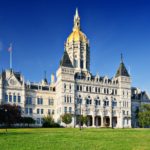 Connecticut: Gov. Ned Lamont has given his approval for absentee ballots to be made available to all eligible voters in future elections statewide. Connecticut residents voting in upcoming elections and primaries will be able to use absentee ballots. The governor says no-excuse absentee ballots make voting more accessible for people who are impaired or have mobility limitations. In a statement, Lamont expressed his belief that this major change will benefit the community as a whole. “We should be doing everything we can to encourage qualified voters to participate in elections and have their voices heard,” Lamont said. “This is a responsible step forward in that direction.” Public Act 26-42 removes restrictions that prohibited people from using absentee voting unless they had specific reasons such as active military service, absence from their town, sickness, physical disability, a religious conflict or service as an elections worker. Connecticut residents voted in favor of modifying the law as a constitutional amendment during the election on Nov. 5, 2024. Upon receiving Lamont’s signature, the change became effective immediately.
 Chicago, Illinois: By a 42-8 vote, alders approved a scaled-back ordinance to protect voting rights in Chicago, in honor of the legacy of the late Rev. Jesse Jackson. The so-called “Reverend Jesse L. Jackson Sr. Fair Access to Democracy Ordinance” would effectively ban the “doxing” of government employees, in particular election workers. The ordinance would make it a crime to “publish any personally identifiable information of a government worker without the consent of the government worker, knowing that such information could be used to locate, contact, or target the government worker, if the person acts with the intent to cause death, bodily injury, stalking, harassment, or intimidation.” The measure would also strengthen requirements for landlords to provide tenants with secure mailboxes in an effort to protect mail voting in Chicago. The original ordinance also would have prohibited federal immigration agents from entering so-called “democracy zones” outside polling places, but that provision was removed from the measure that passed this week. Instead, the ordinance now creates an advisory panel tasked with recommending new policies to “promote safe, fair, and accessible participation in elections within the jurisdiction of the City of Chicago. Among other potential policies, the advisory council would be asked to look into “the potential impacts of federal law enforcement activities or other governmental actions occurring near polling places that could interfere with or intimidate voters.”
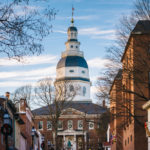 Maryland: The Maryland General Assembly passed an array of election reforms this year to try and curb election interference and increase voter access ahead of the General Election this November. Under SB0029, Maryland will become the twenty-fourth state to enact a law requiring that ballot language be written in a way that is easy to understand and is digestible for voters. Any ballot question — like a request for voters to change the Maryland Constitution — must be written in compliance with the Federal Plain Writing Act of 2010 and exclude passive voice, legal jargon and double negatives. SB0237 squashes the concept of the faithless elector in Maryland, prohibiting the state administrator of elections from accepting a presidential elector’s ballot if they vote in violation of their pledge. If an elector refuses to vote in alignment with the candidate they pledged to support, the elector automatically vacates the position and an alternate elector will step in. In Maryland, mail-in or absentee ballots are counted as long as they are postmarked on or before Election Day and received by 10 a.m., 10 days after Election Day. Maryland would not be able to supersede a decision from the Supreme Court to ban the practice for federal elections, but SB0949 would preserve extended ballot counting for state and local elections. SB0670 gives the state administrator of elections or local election director the ability to keep the peace at polling places, order the arrest of anyone who interferes with the election and protect designated challengers or watchers, individuals that have been given access to observe voting activities. SB0141 criminalizes the use of AI-generated deepfakes — highly realistic synthetic media — to distribute election misinformation. The bill allows the state administrator of elections to seek an injunction for the removal of any election misinformation from online platforms and then require the administrator to release the correct information to the public.
 North Carolina: This week, Republicans filed a bill to reduce the state’s early voting period from 17 days to 10. If passed this session, the bill, Senate Bill 1084, would apply to the upcoming midterm elections in November. Legislative leaders have not yet given the bill a committee hearing, but Senate leader Phil Berger has recently expressed interest in cutting the early voting period for primary elections, which have much lower turnout. Asked on Tuesday if he’d support SB 1084, which cuts the number of early voting days for primary and general elections, Berger told reporters “we’ll see what happens.” “I hear a lot of complaints from both Republicans and Democrats about the number, particularly those that have to work the elections,” he said. “Hopefully we can get some consensus around that for the primaries. I think we need to reduce the number of days in the general as well, but obviously it’s likely to face even more opposition.” SB 1084 is sponsored by Sen. Warren Daniel of Morganton, who chairs the Senate Elections Committee. House Speaker Destin Hall has also expressed support for reducing the early voting period for primary elections.
 Ohio: A 2023 state law requires Ohioans to show an unexpired photo ID to vote. Some Republican state lawmakers want it in the state Constitution, too, and they want Ohioans to decide on that this fall. Some Republican representatives and senators have introduced a joint resolution to put the issue on the November ballot. A driver’s license, passport, military ID, or state photo ID is required to cast a ballot in Ohio. But Rep. Adam Bird (R-New Richmond) said future legislatures could change that, so he and other Republicans want it in the constitution. “The constitution is obviously our governing document and it’s harder to change than state law and we want to make sure that the protections given to Ohioans around photo ID will be there for many years to come,” Bird said in an interview. The resolution to put the issue before voters in November is sponsored by Reps. Bird and Heidi Workman (R-Rootstown), and Sens. Theresa Gavarone (R-Bowling Green) and Jane Timken (R-Canton). A three-fifths vote in each chamber would be required by Aug. 5 to put the amendment before voters in November. That means 60 votes in the House and 20 in the Senate. There are 65 Republicans in the House and 24 Republican senators.
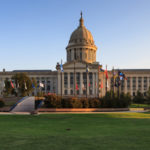 Oklahoma: A measure that would have barred Oklahomans from being registered to vote if they don’t select a party affiliation did not make it to the governor’s desk. While House Bill 3722 passed off the House floor along party lines, it was never heard in the Senate. The measure would have made selecting a party affiliation or independent designation a requirement when registering to vote. Voters who failed to make a selection would have been ineligible to vote. Because the bill failed, Oklahomans who do not select any party affiliation will continue to be designated as independents as required by existing state law. House Democrats, who opposed the plan, said over 4,000 Oklahomans have registered to vote without choosing an affiliation and this would have made future applications like these ineligible for registration. The bill would not have impacted those already registered. Oklahomans are already required to provide their birthdate, address, driver’s license number and partial Social Security number to register to vote.
 South Carolina: Senators will begin debate at press time on a bill redrawing the state’s congressional districts, a day after South Carolina’s election chief told them a second set of primaries will cost between $5 million and $6 million. The Senate Judiciary Committee voted 15-7 to send to the floor a new congressional map aimed at flipping South Carolina’s lone congressional seat held by a Democrat. Sen. Chip Campsen, of Isle of Palms, was the lone Republican “no.” Judiciary Chairman Luke Rankin, R-Myrtle Beach, said he wanted to move the bill to the floor for debate by the full Senate. The vote on May 20 followed about seven hours of testimony, which included an updated price tag presented by state elections director Conway Belangia. The estimates were more than double projections Belangia gave earlier this month after House Republicans launched the push for mid-decade redistricting ahead of November midterms. Belangia said initial estimates were presented off-the-cuff. The numbers went up after the state Elections Commission had time to dig deeper into past election spending, especially related to poll worker pay. The update still doesn’t include additional costs to counties.
 Weston County, Wyoming: In a split vote, the Board of Weston County Commissioners voted against a proposal to implement hand-counted elections for the 2026 primary and general elections after a lengthy discussion focused on election integrity, staffing concerns and the current instability within the county clerk’s office. Members of the Weston County Republican Party’s election integrity committee returned to the commissioners’ chambers this month seeking a final decision on their proposal to eliminate voting machines in favor of hand-counting ballots. The committee first approached the board on April 21. Committee members argued that the county had the legal authority to move away from electronic tabulators and urged commissioners to act quickly in order to recruit and train election judges before statutory deadlines. Supporters again cited cost savings, public distrust of voting machines and recent election issues in Weston County as reasons to adopt a hand-count system. The committee also submitted a May 3 letter from Wyoming Secretary of State Chuck Gray, which members said supported the county’s authority to move to hand-counted elections. Commissioners, however, expressed reservations about making such a major operational change while the county clerk’s office remains in transition after the resignation of former clerk Becky Hadlock. Commission Chairman Nathan Todd said he likely would have supported the proposal under different circumstances but worried the county was already facing too much uncertainty.
Legal Updates
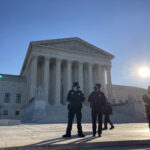 U.S. Supreme Court: Weeks after further weakening the Voting Rights Act, the U.S. Supreme Court sidestepped weighing in on a legal question that could severely limit enforcement of the law’s remaining protections for minority voters. In a brief, unsigned order on Monday, the high court announced it is sending cases about Mississippi and North Dakota state legislative maps back to lower courts to be reconsidered in light of its recent ruling in Louisiana v. Callais. Monday’s move by the court effectively allows the justices to take an off-ramp from hearing what could have been the next major Supreme Court fight over the landmark 1965 law. But in the Mississippi and North Dakota redistricting cases, Republican officials have raised a novel argument — that private individuals and groups do not have a right to sue under Section 2, and only the U.S. attorney general does. Such an interpretation would lead to far fewer Section 2 lawsuits, legal experts say. The Supreme Court’s decision not to take up the question of what the legal world refers to as a “private right of action” under Section 2 drew pushback from liberal Justice Ketanji Brown Jackson. In dissents from Monday’s order, Jackson pointed out the high court’s ruling in the Callais case did not address the legal question of Section 2’s enforceability by private individuals and groups. “Thus I see no basis for vacating the lower court’s judgment,” Jackson said, criticizing the move to throw out earlier lower court rulings in both the Mississippi and North Dakota cases.
 Federal Litigation: President Donald Trump exceeded his authority when he issued an executive order to restrict voters’ ability to cast ballots by mail, attorneys for Democrats and civil rights groups told a federal judge on May 14. U.S. District Judge Carl Nichols didn’t rule from the bench on the plaintiffs’ request for an order blocking officials from implementing Trump’s March 31 order, his second related to elections since winning his second term in the White House. The case is one of multiple lawsuits filed to block the order on the grounds that only states and Congress, and not the president, are given power under the Constitution to decide how elections are run. Trump’s initial executive order to revamp elections by requiring documentary proof of citizenship, issued last year, was largely halted by multiple federal judges on similar grounds. He issued his latest order only after the voting bill he backed stalled in Congress. The current legal fight comes as the country is in the midst of primary elections and election officials are preparing for the intricacies of holding the fall’s midterm elections. “I understand the time pressure here,” said Nichols, who questioned both sides but gave no clear indication of which way he’s leaning.
 Alabama: A federal three-judge panel is moving quickly in Alabama’s long-running congressional redistricting case. The court has set a hearing for May 22nd in Birmingham to consider requests for preliminary injunctive relief filed by plaintiffs. Judges also ordered Alabama Elections Director Jeff Elrod to appear in person and testify about a declaration filed Friday. The case centers on legal challenges to Alabama’s congressional maps under the Voting Rights Act. The hearing could help determine what happens next with Alabama’s congressional maps ahead of future elections.
U.S. District Judge Anna Manasco denied the state’s request to revert to Alabama’s 2021 state Senate map, citing a lack of jurisdiction. Responding to an emergency motion from Alabama Secretary of State Wes Allen, who sought to reverse the order after the U.S. Supreme Court significantly weakened Section 2 of the Voting Rights Act in Louisiana v. Callais, Manasco wrote that she had to “preserve the status quo” after Allen filed a separate appeal to the U.S. 11th Circuit Court of Appeals. “Under these precedents, the Court has no authority to vacate or stay its injunction,” Manasco, a Trump appointee, wrote. “The secretary has appealed the permanent injunction that he now asks this court to stay, and his appeal is pending in the Eleventh Circuit. As things now stand, only the Eleventh Circuit can address the merits of the secretary’s arguments for vacatur or stay, and that court has indicated that it intends to do so—on an expedited basis.” As of early Monday afternoon, the 11th Circuit had not addressed Allen’s motion.
 Arizona: In April, Maricopa County Superior Court Judge Scott Blaney ruled in favor of Republican Recorder Justin Heap in the lawsuit he filed against the board of supervisors over control of different parts of the county’s elections. The order seemingly resolved many issues the recorder and supervisors have fought over for more than a year since Heap took office in January 2025. Blaney ordered the board to give Heap back control of his own information technology systems after the supervisors consolidated the recorder’s staff under its own supervision. The judge also provided some clarity on Arizona’s complicated election laws, which divide administrative duties between recorders and the supervisors. But the supervisors asked the judge to stay the ruling, arguing that making drastic changes ahead of the upcoming election season — such as splitting apart the intertwined IT system — will cause confusion for election workers and voters. Blaney didn’t buy that argument, saying the board has had plenty of time to prepare. “But the Court finds it inexplicable that the Board of Supervisors — in the nine months since Recorder Heap filed the present lawsuit — would not have considered and planned for the possibility that the Court would rule in favor of Recorder Heap,” Blaney wrote. Over the course of the case, Blaney regularly encouraged both sides to find a compromise outside of the courtroom, saying judges are loath to play referee between quarreling elected officials. He reiterated that call in his most recent order. Blaney wrote he is “encouraging the parties to immediately negotiate a reasonable, mutually acceptable resolution of this dispute. If the parties are unable to resolve the entirety of this dispute, the Court encourages the parties to at least negotiate a temporary resolution that avoids any interference with the upcoming elections.” Before Blaney’s ruling in the case, the supervisors actually voted to hand back Heap control over most of the disrupted duties and staff addressed by the judge. But the fight continued as the two sides then sparred over the specifics of how they would split up those tasks.
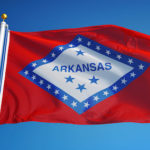 Arkansas: The Arkansas Supreme Court dismissed Gov. Sarah Huckabee Sanders’ appeals of rulings that forced her to move up special elections for two legislative seats, days after attorneys raised questions about a special justice appointed to hear the cases. The dismissals mark the end of a legal fight that began last September when Republican Sen. Gary Stubblefield of Branch died, leaving his seat representing a large swath of the River Valley region vacant. The one-page order noted that Chief Justice Karen Baker and Justice Shawn Womack would have reversed the lower courts’ decision and dismissed both cases for sovereign immunity. Sovereign immunity is a legal doctrine that a state cannot be sued in its own court without its permission. The Republican governor called a special election to select someone to serve out the duration of Stubblefield’s term, but set the special general election for June 2026 — after the fiscal session. When Carlton Wing resigned his seat in the House a few weeks later to become the CEO of Arkansas TV, she set the special election for his district for the same date. Circuit court judges in Pulaski County quickly ruled against the schedule set by Sanders and ordered her to hold the special elections earlier. Sanders ultimately moved the elections after the Arkansas Supreme Court declined to put the rulings on pause while she appealed them.
Secretary of state hopeful Bryan Norris is taking his challenge of a recount in the Republican runoff election to trial later this month. Norris and State Sen. Kim Hammer faced off in the March 3 primary, and then again just weeks later in the runoff. While Hammer walked away the presumptive winner, he did so by less than 1,000 votes. Norris requested multiple recounts, including one in Saline County. The recount was conducted and found no change in the vote, but Norris said he had concerns about how it was conducted and if election laws were followed. An election challenge was filed by Norris in early April and dismissed hours later after a judge said there was a filing error. On April 27, the challenge was refiled. The lawsuit pinpointed a handful of issues Norris’ campaign had with the recount, claiming that his legal representative was not allowed to monitor the recount, that ballot boxes were not properly sealed, and that there were failures in the chain of custody. According to court documents in the case, the matter is set for a bench trial on May 29, 2026, in Pulaski County.
 California: A Fifth Appellate District Court ruling late May 13 denied the the City of Avenal appeal to stop the recall election of its mayor and three council members. The dispute centers on whether Kings County had the authority to conduct the recall election. The city has argued the election was not properly sanctioned, while the county has maintained it had the legal authority to proceed. Voters cast ballots in late April, but the process was halted amid ongoing litigation. At this point, both of the city’s appeals have been denied in court. Because of the legal challenges, the ballots were ordered to be sequestered and not counted. With the appellate court’s latest decision, the county’s registrar of voters can now move forward with processing the ballots and certifying the results.
Brenda Lee Brown Armstrong, 64, of Marina del Rey will plead guilty to paying homeless people on Skid Row to help get initiatives on the ballot, federal prosecutors said this week, part of an effort to crack down on what they claim is widespread voter fraud across the state. Armstrong agreed to plead guilty to one felony count of paying a person to register to vote. She faces up to five years in prison. Armstrong, who worked for 20 years gathering signatures for ballot initiatives, would give people on Skid Row $2 to $3 — or, sometimes, a cigarette or a phone cord — in exchange for their signature to help qualify a measure for the ballot, according to her plea agreement.
 Colorado: Colorado Gov. Jared Polis (D) commuted the sentence of former Mesa County Clerk Tina Peters, an election denier who was convicted and sentenced for her role in a breach of her office’s election system. Polis cut Peters’ sentence from nine years to four years and four and a half months, making her eligible to be released on parole June 1. “The crimes you were convicted of are very serious and you deserve to spend time in prison for these offenses,” Polis said in his letter granting Peters’ commutation. “However, this is an extremely unusual and lengthy sentence for a first time offender who committed nonviolent crimes.” A Mesa County jury convicted Peters on multiple felony counts, including three counts of attempting to influence a public servant. During her 2024 trial, Peters, a staunch supporter of President Donald Trump, spread conspiracy theories about voting machines, as she had previously done after the 2020 presidential election. Colorado Secretary of State Jena Griswold (D) said Polis’ decision will “validate and embolden the election denial movement, and leave a dark, dangerous imprint on American democracy for years to come.” Judge Matthew Barrett of the 21st Judicial District sentenced Peters to nine years in state prison in October 2024. The sentence included three and a half years for each felony count. In his commutation letter, Polis wrote that Peters’ application for clemency “demonstrates taking responsibility” for her crimes and showed a “commitment to follow the law going forward.” He did not mention remorse, a common criteria for clemency.
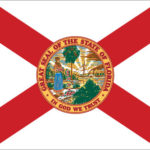 Florida: Up against looming deadlines ahead of the 2026 midterm elections, a coalition of civil rights and voting groups pleaded with a Florida judge May 15 to block a new congressional map that could net Republicans four extra seats in the Sunshine State. Circuit Judge Joshua Hawkes, who was appointed to the bench by Gov. Ron DeSantis, held a two-hour hearing where lawyers representing the governor and the GOP-controlled Legislature argued over whether the map adopted last month violates voter-approved anti-gerrymandering standards. Hawkes, who only spoke a handful of times, did not rule at the end of the hearing and said he would issue a written decision after he got a hearing transcript.
 Georgia: A group of news organizations has filed a motion to unseal filings and subpoenas in the Department of Justice’s ongoing investigation into the 2020 election in Fulton County, Georgia. In January, the FBI seized ballots and other materials from the 2020 election from an elections hub in Fulton County. Last month, the DOJ also sought to compel the county to hand over the names, home addresses, telephone numbers and email addresses of workers and volunteers who served during that election. County officials have so far refused, calling it an effort to “target, harass, and punish the President’s perceived political opponents” in a filing to quash the subpoena. They also note that the statute of limitations for any election crimes in 2020 has run out. Fulton County’s response justifies unsealing the filings, the news organizations argued. “The grand jury witness — Fulton County — has disclosed the existence of the Subpoena, publicized the fact that it moved to quash the Subpoena, and even filed the Motion to Quash on the public docket. Thus, any grand jury secrecy has been lost, and the subsequent sealing of the Motion to Quash, the Subpoena, and the docket is not necessary or appropriate,” an attorney for the media groups wrote in a motion.
 Louisiana: Two days before the primary, the Louisiana Supreme Court barred interim Orleans Parish Clerk of Court Calvin Johnson from performing any clerk duties while it considers legal challenges to a state law that merged the parish’s civil and criminal courts. Civil Clerk of Court Chelsey Napoleon will handle the election process. The dispute centers on who has the legal authority to serve as clerk of court in Orleans Parish after a state law merged the parish’s civil and criminal courts. Napoleon sued New Orleans city leaders earlier this week after the City Council passed a resolution appointing Johnson as interim clerk. She is due in court in Baton Rouge next week. The Louisiana Supreme Court’s order bars Johnson from performing clerk duties while the court considers legal challenges tied to the court merger law. The court had issued a stay in the matter earlier this week. Louisiana Attorney General Liz Murrill said no public official should try to displace Napoleon or recognize a competing claim to the office until the court rules. Murrill praised the state Supreme Court’s order Thursday. “There is no “interim appointee” – There is only one clerk. Chelsey Napoleon has always had full control of the office. Im glad the Supreme Court has stepped in to ensure the continuity of those continuing operations,” Murrill said. Murrill sent letters May 13 to New Orleans officials demanding they reverse course on the council’s resolution and a related special election for the clerk’s office.
 Missouri: Richard von Glahn, Executive Director of People Not Politicians, sued Secretary of State Denny Hoskins and Attorney General Catherine Hanaway over Hoskins’ refusal to make a ruling on the sufficiency of a referendum campaign challenging new voting maps, and of announcements from both officials that said the new map, which could give Republicans an additional seat in Congress, was the “law of the land”. Last week the Missouri Supreme Court upheld a lower court ruling that said the new maps were constitutionally compact, and also said the mere submission of People Not Politicians’ referendum campaign petitions challenging the new map was not enough to automatically put the new maps on hold pending a public vote. The process had to wait for Hoskins to decide if the referendum petitions were sufficient, the Supreme Court ruled last Tuesday. Under the law, he doesn’t have to do that until Aug. 4, the same day as the primary involving the new maps. A ruling of insufficiency would simply trigger a court appeal. Over the past week, a number of county election officials, including at least one who supports the so-called 7-1 map, have said they can’t move forward with the new map until they know for certain that it won’t be overturned. “We need the secretary of state to make a decision so the courts would give us a decision on which map is in effect,” St. Charles County Election Authority Kurt Bahr, a Republican, told The Missouri Independent. “We don’t want to have confusion as well as a potential lawsuit if we are going from one election to another election with a different map.” The lawsuit filed this week asks the court to order Hoskins to immediately rule on sufficiency, and prevent Hoskins and Hanaway from taking further steps to implement or mandate the use of the new maps until there is a final verdict on the maps’ status.
 North Carolina: Wake County Superior Court Judge Jennifer Bedford has accepted a deal ending a Republican Party lawsuit against the State Board of Elections over removing noncitizens from voting rolls after they are identified through jury questionnaires. Bedford accepted the agreement after a 19-minute online hearing. Activist groups had intervened in the case. They opposed the deal between GOP groups and the state elections board.They objected to a provision that calls for election officials to post information about the noncitizen voters on the State Board of Elections website. “I do agree that consent of the parties is required, that the intervenor-defendants do not have to consent,” Bedford said after hearing from lawyers on all sides of the dispute. “I’m glad that there are groups that are paying attention. I’m glad that it seems that everyone is moving toward more transparency and the availability of information — with an eye to … protect privacy when necessary.” “Defendant State Board has and will continue to comply with its statutory obligations under N.C. Gen. Stat. § 163-82.14(cl) to perform list-maintenance efforts regarding those persons who have self-identified in response to a jury summons that they are not United States citizens (‘Self-Identified Non-Citizens’),” according to the proposed consent judgment. The agreement also spells out schedules through 2028 for the board to receive information from clerks of Superior Court across North Carolina. Within 30 days of receiving the information from court clerks, the elections board would “[r]eview the voter-registration and citizenship status of each person identified,” “[d]istribute to each county board of elections a report of the persons identified who are registered to vote in that county, including information provided under N.C. Gen. Stat. § 9-6.2, the voter registration number of the person, and the result of the NCSBE’s review of the person’s voter registration and citizenship status,” and “[f]urnish to the State Bureau of Investigation and the district attorney a copy of its investigation for prosecution if the prospective juror voted prior to becoming a U.S. citizen.”
 Ohio: Maria Dearaujo, 63 was found not guilty of illegally voting in the 2018 election when she was a lawful permanent resident of the United States. A guilty verdict would have led to up to 18 months in prison for Dearaujo. But Franklin County Common Pleas Judge Chris Brown sided with the defense’s argument of entrapment. This generally entails a government actor leading a person into committing a crime they wouldn’t have otherwise committed. Brown, a Democrat, said Dearaujo’s trial testimony lines up with the documentary evidence. She admitted to “inconvenient” facts like having voted when she knew she was not a citizen. But she got the idea from and relied on the advice of a Bureau of Motor Vehicles clerk. “The defendant testified she never thought about voting or intended to vote until a BMV clerk, a government official, told her to register,” Brown said. “The court finds that Ms. Dearaujo has proven, by a preponderance of the evidence, an affirmative defense of entrapment.”
 Virginia: The U.S. Supreme Court on May 15 turned down a request by Virginia’s attorney general and other Virginia Democrats to allow the state to use a new congressional map, which would have been expected to strongly favor Democrats, in the 2026 elections. The denial came in a brief, unsigned order sent to reporters at 6:30 p.m. EDT on Friday – just 15 minutes after the court’s Public Information Office distributed the reply filed by Jay Jones, the Virginia attorney general, and Democratic legislators. There were no public dissents from the order. The effects of the court’s order are likely relatively minimal, because Virginia Gov. Abigail Spanberger had already indicated earlier this week that the state would not use the 2026 map in the upcoming elections. Jones and the other Virginia Democrats came to the Supreme Court on May 11, asking the justices to block a May 8 ruling by the Virginia Supreme Court that invalidated an amendment to the Virginia Constitution allowing the state’s Legislature to enact a new congressional map. In their filing on Monday asking the justices to step in, Jay and the Virginia Democrats argued that the Virginia Supreme Court’s ruling “overthrows [a] democratic outcome just days before the Commonwealth must begin its preparations to administer the 2026 midterm election.” Moreover, they contended, the dispute implicates “two critical issues of federal law” – the meaning of the term “election” under federal law, and the idea that the state court so “impermissibly transgressed the ordinary bounds of judicial review” that its ruling should be reversed. In a filing on Friday afternoon, Jones and the Democrats told the justices (among other things) that “Spanberger’s candid acknowledgment of where things presently stand, which is not part of the record, does not foreclose this Court from acting.” Instead, they argued, her comments merely indicated that “the Commonwealth will conduct its elections in the manner the law requires, and this Court’s intervention will inform that conduct.” Soon after the filing was submitted on Friday, the court denied the request by Jones and the Virginia Democrats without comment.
 Washington: U.S. District Court Judge Robert Lasnik has rejected a request to ditch political maps for Washington’s Legislature that he approved two years ago. Now, opponents are waiting to see if the U.S. Supreme Court will weigh in on whether the maps comply with an April ruling from the high court in the case Louisiana v. Callais, which significantly curtailed the use of race in drawing districts. Lasnik approved the redrawing of legislative district boundaries in 2024 to enhance the political voice of Latino voters in the Yakima Valley. This came in response to a lawsuit over the map the state’s bipartisan redistricting commission came up with in 2021. Lasnik on May 15 denied opponents’ motion to undo his changes and restore the commission-drawn boundaries. In a 10-page order, Lasnik said Jose Trevino and state Rep. Alex Ybarra, R-Quincy, didn’t have standing to file their motion for the revised map to be tossed out. Trevino and Ybarra, who intervened in 2022 in the dispute, argued Lasnik’s earlier ruling doesn’t comply with the Callais decision. Absent relief from the court, Washington’s elections will take place under a map that is impermissible based on the Callais ruling, they argue.
 West Virginia: In a legal filing, the U.S. Department of Justice said that it has the right to access unredacted voter registration files held by the West Virginia Secretary of State’s Office. Attorneys for the Department of Justice (DOJ) filed a memorandum May 14 with the U.S. District Court for the Southern District of West Virginia in response to a motion filed at the end of April by attorneys for Secretary of State Kris Warner, which sought to dismiss a lawsuit filed by the DOJ seeking unredacted voter registration files. Harmeet K. Dhillon, a U.S. assistant attorney general with the DOJ’s Civil Rights Division, filed a lawsuit against the Secretary of State’s Office on Feb. 26 after Warner sent a written response to the DOJ denying its request. The federal government wants to compel the production of unredacted statewide voter registration lists to investigate compliance with federal election laws, such as the National Voter Registration Act (NVRA) and the Help America Vote Act (HAVA). While attorneys for the Secretary of State’s office argue that such a demand violates state privacy laws and exceeds federal authority, the DOJ argues that Title III of the Civil Rights Act of 1960 (CRA) provides a broad mandate to inspect all election records. The government contends that this investigative tool is essential for verifying the accuracy of voter rolls and identifying potential violations.
 Wisconsin: Dane County Judge Everett Mitchell has ruled that the Wisconsin Elections Commission was wrong to order Madison to remove 23 late-arriving absentee ballots from its count and has ordered the city to count them in the soon-to-be-certified Wisconsin Supreme Court race. The ruling comes in response to a lawsuit brought by two of those 23 voters, who alleged that the Wisconsin Elections Commission unconstitutionally ordered Madison not to count the ballots. The absentee ballots at issue arrived at the polls after 8 p.m., a delay city officials say was caused by election administrator error. State law requires that absentee ballots be “delivered to the polling place no later than 8 p.m.” on Election Day, but the lawsuit alleged that it would be illegal to disenfranchise properly cast votes over election officials’ errors. “Voters who comply with every element that is required for them to vote a special absentee vote, and then not being allowed to have the votes count, is contrary to what good law in Wisconsin has been,” Mitchell said from the bench according to Votebeat. The ruling came after an hour-long back-and-forth between attorneys for the Wisconsin Elections Commission and the plaintiffs over the rights of voters when election officials commit errors.
A new lawsuit from the League of Women Voters of Wisconsin argues allowing clerks to decide whether or not to offer absentee voters a chance to correct information on their mail-in ballots violates the state Constitution. The group is asking a Dane County judge to order a uniform and mandatory process for addressing defective ballots and notifying those who mail them. The suit, filed Tuesday in Dane County Circuit Court, claims giving local clerks the discretion to create their own procedures for telling voters about how to fix missing or incomplete information on absentee ballot envelopes violates state Due Process provisions. The League of Women Voters of Wisconsin argues that’s because clerks in some communities can decide not to notify voters, who then won’t know their ballots weren’t counted until after the election.
“Accordingly, municipal clerks may arbitrarily determine whether and which defective ballots cast by mail-in absentee voters will ultimately be counted,” said League attorney Jon Sherman.
Opinions This Week
National Opinions: Voter ID | Noncitizens | Public opinion | Voting Rights Act, II | SAVE Act | Primary system | Voting rights, II | Redistricting | Vote by mail | Tina Peters | U.S. Supreme Court, II
Alaska: Ballot counting
California: Ranked choice voting | Voter guide
Florida: Poll workers
Georgia: 2020 Election | Turnout
Indiana: Vote centers
Kentucky: Voting rights
Louisiana: List maintenance
Maryland: Ballot errors
Ohio: Voter ID
South Carolina: Election laws
Wyoming: Secretary of state
Upcoming Events
NCSL Town Hall: The State of Elections: Join the National Conference of State Legislatures (NCSL) for a timely discussion on the latest developments shaping elections and redistricting across the country. NCSL’s elections director Katy Owens Huber will break down what’s happening in the elections world, including map changes, major court rulings and the potential impact on the 2026 elections. The discussion will also cover other top election policy issues making headlines in state legislatures. When: May 26, 1pm Eastern. Where: Online.
Reimagining Elections Through Location: Election offices are expected to deliver transparency, efficiency, and confidence across every election cycle. This executive webinar from Esri introduces a clear modernization framework built on three pillars: Election planning: address data management, precincting, voting location suitability; Election operations: election management, operational awareness, chain of custody; and Stakeholder engagement: public outreach, election workforce, results reporting. Leave with practical takeaways you can apply across the election life cycle. When: May 27, 1pm Eastern. Where: Online
Building Disaster Resilience for Community Leaders: Disaster Preparedness for Election Offices: Join Ready for Tuesday for this Natural Disaster Awareness for Community Leaders course and increase your understanding of disasters, risk assessment in the context of disaster management, prevailing emergency management procedures and operations, and the different vulnerability factors that exist within your local community. Become familiar with the available resources for natural disaster preparedness and planning. Learn how to recognize and define the roles and responsibilities that may be expected to be assumed by a community leader and understand the roles that first responders and other support personnel are likely to assume to ensure assistance in the response and recovery phase of an emergency event. This course will use election office events as a series of case studies to help connect emergency management challenges to election administration. Feel free to invite your local emergency management partners to join this no-cost training. This course is hosted by Ready for Tuesday, Advance Elections and Portland State University’s Elections & Voting Information Center. The four-hour course is offered at no-cost to participants, and upon successful completion of the course a certificate will also be issued. When: May 28, 12pm Eastern. Where: Online.
What Comes After Callais: Join The Center for Election Innovation & Research for the next installment of our “Trust Elections” webinar series, “What Comes After Callais.” Justin Levitt, former Deputy Assistant Attorney General in the DOJ Civil Rights Division, will join CEIR Executive Director David Becker and CEIR Legal Program Director Tamar Hagler to discuss the ramifications of the Supreme Court’s decision in Louisiana v. Callais. The discussion will cover the ruling’s significant impact on the Voting Rights Act and states’ last-minute efforts to redraw their congressional maps ahead of the midterm elections. Justin, David, and Tamar will also touch on the Court’s expected decision in Watson v. RNC, which centers on whether states should be allowed to accept mail ballots that arrive after Election Day. This event is part of CEIR’s “Trust Elections” project, a webinar series exploring the state of US democracy and offering insight on how voters can help protect free and fair elections. It is open to anyone. When: May 28, 3pm Eastern. Where: Online.
ESRA Summer 2026: The Election Science, Reform, & Administration Conference (ESRA) features insightful and cutting-edge research, as well as networking opportunities between academics, election administrators, practitioners, and other experts. The 10th Annual Summer Conference will take place from Monday, June 1 through Thursday, June 4 2026 at Arizona State University in Phoenix, Arizona. The conference will be held at the Beus Center for Law and Society in downtown Phoenix. A notional agenda is available on our website; more detailed information about this year’s program will be available to registered attendees closer to the date of the conference. When: June 1-4. Where: Phoenix.
CERA Courses (Austin): The Certified Elections Registration Administrator (CERA) certification is the original professional certification for election administrators in the United States. The following courses will be offered in Austin in June: Course 1 -Election Administration and Voter Registration as a System; Course 4 – Contingency and Continuity of Operations Planning; Course 5 – Ethics in Election Administration and Voter Registration; Course 11 – History of Elections Part 1: Antiquity to 1781; and Course 12 – History of Elections Part 2: 1781 to Civil Rights Era 1960. When: June 8-13. Where: Austin, Texas.
NMC Annual Conference: New Mexico Association of Counties- Clerks Affiliate will hold its annual conference from June 15-18 in McKinley County.
AAMCA Summer Conference: The Alabama Association of Municipal Clerks and Administrators will hold its summer conference from June 24-26 in Fairhope.
CERA Courses (Milwaukee): The Certified Elections Registration Administrator (CERA) certification is the original professional certification for election administrators in the United States. The following courses will be offered in Milwaukee in July: Course 5 – Ethics in Election Administration and Voter Registration; Course 6 – Communications and Public Relations in Election Administration and Voter Registration; Course 7 – Enhancing Voter Registration and Participation in Election Administration and Voter Registration; Course 8 – Implementation of New Programs in Election Administration and Voter Registration; and Course 9 – History in Elections Part 3: 1960 to Modern Era. When: July 11-18. Where: Milwaukee, Wisconsin.
2026 NACo Annual Conference & Exposition: The National Association of Counties will hold its 2026 Annual Conference & Exposition on Orleans Parish, Louisiana from July 17-20. When: July 17-20. Where: New Orleans.
NASED 2026 Summer Conference: The National Association of Directors of Elections will hold its summer conference from July 20-22 in Boston. When: July 20-22. Where: Boston.
iGO 9th Annual Conference: The International Association of Government Officials will hold its 9th Annual Conference from July 25-28 in Reston, Virginia. When: July 25-28. Where: Reston, Virginia.
2026 NCSL Legislative Summit: The 2026 NCSL Legislative Summit takes place in Chicago July 27-29, bringing together state legislators and legislative staff from all 50 states and U.S. territories for three days of collaboration, innovation and bipartisan dialogue. When: July 27-29. Where: Chicago.
SCARE 2026 Annual Conference: The South Carolina Association of Registration and Election Officials (SCARE) will hold its annual conference from July 27-30 in Isle of Palms.
Oregon Association of County Clerks: The Oregon Association of County Clerks will hold its annual conference from August 10-13 in Burns.
WMCA 46th Annual Conference 2026: The Wisconsin Municipal Clerks Association will hold its annual conference from August 18-21 in Green Bay.
Election Center 41st Annual Conference: The National Association of Election Officials (Election Center) will hold its 41st Annual Conference in Kansas City, Missouri from August 19 to 21. CERA classes will be offered August 22 and 23. When: August 19 to 21. Where: Kansas City, Missouri.
UAC Annual Convention: The Utah Association of Counties will hold its annual convention from September 8-10.
2026 WACO Conference: The Wyoming Association of County Officers-County Clerks will hold its annual conference from September 22-24 in Laramie.
2026 MACO Annual Conference: The Montana Association of Counties will hold its annual conference from September 27-30 in Helena.
Job Postings This Week
electionlineWeekly publishes election administration job postings each week as a free service to our readers. To have your job listed in the newsletter, please send a copy of the job description, including a web link to mmoretti@electionline.org. Job postings must be received by 5pm on Wednesday in order to appear in the Thursday newsletter. Listings will run for three weeks or till the deadline listed in the posting.
Account Executive, VotingWorks– We are looking for a trusted sales leader who understands that election administrators don’t buy voting machines, they buy trust, both in the equipment and in the vendor. All 83 of Michigan’s counties will soon open at once, and we are in the running for the state RFP enabling us to sell our voting machines. Incumbents will have to re-earn their contracts, and we’ll be competing on equal footing for the first time. This opportunity is time bound. Trust matters deeply in this market. Your job is to build relationships and earn credibility quickly with state and local election officials. You will own the full Michigan territory. You’re responsible for the entire sales process: building pipeline, running demos, navigating procurement, and closing deals. We want sustainable sales contracts that are technically sound, politically supported, and set up for a clean handoff to Customer Success. For your first demos, you’ll be paired with our Executive Director and our Head of Customer Success to learn the messaging and the product. Once you take on demos on your own, you should still know when to bring in executive support and when to handle things yourself. This is a competitive market with a real window of opportunity. If you want to sell something that actually matters to Democracy, and you’re energized by moving fast when the timing is right, we’d like to meet you. Application: For the complete job listing and to apply, click here.
Administrative Specialist (Elections Specialist–Russian), King County, Washington– This is an amazing opportunity to be engaged in the election process! The Department of Elections is searching for energetic and resourceful professionals who like to “get stuff done”. The Administrative Specialist II positions in the Voter Services Department combines an exciting, fast-paced environment with the opportunity to cultivate talents and apply a variety of skills. The ideal candidate will have a desire to help ensure the democratic process through public service. They will thrive in an innovative environment and will not hesitate to roll up both sleeves, work hard, have fun, and get the job done. King County Elections (KCE) manages voter registrations and elections for more than 1.4 million voters in King County, one of the largest vote-by-mail counties in the United States. KCE’s mission is to conduct accessible, secure, and accurate elections. As a leader in providing inclusive elections, KCE is focused on core values of accuracy, equity, integrity, service, teamwork, and transparency. The team at KCE is committed to ensuring all King County voters can get registered, cast their ballot, and make their voices heard. Salary: $29.46 – $37.47 Hourly. Application: For the complete job listing and to apply, click here.
Commissioner of Elections Department, Boston–Under general policy direction from and at the will of the Mayor, the Commissioner of the Elections is responsible for municipal, state, and federal elections within the City of Boston. This position also oversees the annual census of residents aged 17 and older. The Commissioner of the Elections serves as chair of the Board of Election Commissioners, which ensures compliance with election laws and the equitable delivery of services. As a public and senior official responsible for a key government function, the Commissioner will embody character and impartiality as an election administrator. The Commissioner is responsible for managing, directing, and integrating the functions, programs, and activities of the Elections Commission. The Commissioner communicates effectively to senior City management, community partners, regulatory authorities, and other department stakeholders to ensure City elections are accessible, fair, and administered effectively in accordance with all applicable laws. The Elections Commissioner is responsible for managing the 30+ full-time employees of the Election Department, part-time seasonal employees, and approximately 2,000 part-time poll workers. The Commissioner will work with staff to document policies, practices, and procedures. The Commissioner will practice continuous improvement related to the complex operations of the Department. Salary: $145,000. Deadline: June 30. Application: For the complete job listing and to apply, click here.
Customer Success Manager, VotingWorks: VotingWorks currently supports risk-limiting and post-election audits in 12 states with our software, Arlo. Support varies greatly from state to state and is a combination of general risk-limiting audit education, software training, and support of both during the conduct of audits. Risk-limiting audits vary by state and are constantly evolving, requiring updates to the software. The Arlo/RLA Customer Success Manager is responsible for the strategic oversight and successful delivery of services for Arlo, our post-election audit product. This role will optimize and maintain the systems, tools, and processes for managing auditing projects and support. They act as the primary liaison for Product and Engineering alignment for customer success. Application: For the complete job listing and to apply, click here.
Director of Product Certification, Clear Ballot–Our certification department is seeking an organized, process-oriented program manager to join the team as Director of Product Certification. In this leadership role, you will oversee certification strategy, execution, and compliance across multiple jurisdictions. You will act as the primary liaison with regulatory bodies while managing internal teams and ensuring all certification efforts are completed efficiently and successfully. Application: For the complete job listing and to apply, click here.
Director of Voter Services, Chester County, Pennsylvania– The Director of Voter Services plans, organizes, supervises, and manages the activities of voter registration, campaign finance, and elections for the County of Chester in compliance with all federal, state, county, and local laws. Essential Duties: Election operations, Department leadership and administration, Communications and public engagement and other. Salary: $119,043.06 Annually. Application: For the complete job listing and to apply, click here.
Election Assistant, Olmsted County, Minnesota–Under supervision, assists with Olmsted County’s election process. Provides customer service to voters in person and via mail. Answers phone calls, directs the public to polling places, monitors supplies, and answers questions. Supports a diverse, respectful, and inclusive workplace. Examples of Work: Assists voters with the absentee voting process; Performs clerical duties including customer service, filing, answering phone calls and data entry to support the election process; Assists on Election Day by answering questions, monitoring supplies, and directing traffic; Processes absentee records on a statewide system; Prepares equipment and supplies for Election Day; Assists with election judge training; and Performs other related job duties as assigned. Salary: $21.30 – $35.59 Hourly. Application: For the complete job listing and to apply, click here.
Elections Specialist, Palm Beach County, Florida– The Vote-by-Mail Specialist position involves, but is not limited to, the daily processing of applications and other VBM related paperwork and customer service. Election period duties would include signature verification, supervised voting, ballot processing, signature cure applications, and monitoring secure ballot intake stations (SBIS). Responsibilities include: Data entry of vote by mail requests received via phone, email, and website; Customer service with voters in office for VBM related issues; and Coordination of election specific programs such as Supervised Voting and SBIS boxes. Application: For the complete job listing and to apply, click here.
Elections Supervisor, San Bernardino County, California– Under general direction, performs supervisory duties of elections staff responsible for specific programs related to the Registrar of Voters; ensures quality of work and adherence to established policies and procedures and performs the more complex tasks relative to the elections process. Position perform related duties as required. Duties may include, but are not limited to, the following: Supervises the work of assigned staff; evaluates work performance, prepares, and signs performance evaluations. Participates in personnel decisions, including hiring and disciplinary actions and assists in resolving employee grievances; approves leave requests. Plans, organizes, schedules, and assigns work and related support duties; develops process workflow, priorities, deadlines, and work standards; makes recommendations on staffing needs; supplies and equipment. Assists in developing, revising, and implementing new or revised procedures, forms and office systems, coordinates services and work products with other departmental operations. Review and interprets legislation to determine the impact on division and makes recommendations to management to address impacts. Identifies training needs and plans training programs; may develop training curricula and prepare training materials. Provides supervision of election support staff, performing necessary duties related to the department. Collaborates with other departments to coordinate logistical, operational, administrative, and/or technical matters. Monitors assigned division(s) to ensure safety principles/protocols and procedures are being followed to regulations.Prepares a variety of reports, records, and other documents related to assigned division(s) within the department. Provide vacation and temporary relief as required. Salary: $68,536.00 – $94,203.20 Annually. Application: For the complete job listing and to apply, click here.
Field Services Engineer, Clear Ballot–Join our Professional Services team as a Field Service Engineer, where you will provide on-site technical support and services to clients across the country. In this role, you will help ensure that election technology operates reliably and securely, supporting the integrity of the voting process. This position requires frequent travel—up to 70%—especially during election cycles, to deliver hands-on support and expertise. Application: For a complete job listing and to apply, click here.
General Registrar, Hanover County, Virginia–Executive-level position serving as the County’s General Registrar/Director of Elections. Under the authority of the County Electoral Board and in accordance with Title 24.2, State Board of Elections guidance, and the General Registrar and Electoral Board (GREB) Handbook, administers voter registration and directs the conduct of all federal, state, and local elections in the locality. Appointed by the Electoral Board for a four-year term. Appointed by and reports to the Electoral Board; leads the Voter Registration Office and supervises permanent and temporary staff. Performs duties required by law and duties delegated by the Electoral Board under Va. Code § 24.2-114.18. Works with the Electoral Board, Department of Elections/State Board, election officers, and county departments (e.g., finance, IT, facilities, HR, public safety) to deliver lawful, accessible, and secure elections. Salary: $91,791 – $156,044. Application: For the complete job listing and to apply, click here.
GIS Specialist, Palm Beach County, Florida– Help power accurate, well-run elections through smart mapping and rock-solid data. As a GIS Specialist II with the Palm Beach County Supervisor of Elections, you’ll own core geospatial datasets, turn complex information into clear maps and insights, and improve the workflows teams rely on to plan and execute election operations. Your work helps ensure precinct, polling place, and district data is accurate and easy to use—supporting operational readiness, transparency, and timely decision-making. You’ll maintain and enhance GIS databases, produce print and web-ready map products, perform quality control and spatial analysis, and keep GIS synchronized with the Voter Registration System. You’ll collaborate with both technical and non-technical teams, document standards and changes, and provide training and troubleshooting support. Salary: $72,800 to $87,000. Application: For the complete job listing and to apply, click here.
Poll Worker Assistant Department Manager, Palm Beach County, Florida– The primary responsibility of the Poll Worker Department Manager is to oversee the planning and the completion of various projects, administrative functions, operations, and specialized tasks in the Poll Worker Department. The work involves knowledge and application of departmental operations, planning, assigning responsibilities, monitoring election worker classes, maintaining records, evaluating performance, and the ability to review work for accuracy. This position requires initiative and sound independent judgement in the application of office policies, election laws, and procedures. Application: For the complete job listing and to apply, click here.
Program Coordinator, Dallas County, Texas– Plans and coordinates the fiscal, administrative and operational activities for programs, projects, services or contracts to ensure that goals and objectives are accomplished in accordance with established priorities, time limitations, funding limitations or other specifications. May supervise staff. Responsibilities: 1. Assesses program needs; and develops, implements and facilitates daily program activities in accordance with established priorities, time limitations, funding limitations and other specifications. 2. Ensures the service delivery network meets the needs of the intended population, reflects the objectives and intent of the program or project, and meets applicable federal guidelines. 3. Coordinates program activities with staff, other departments and public/private resources to ensure optimum efficiency and compliance with appropriate policies, procedures and specifications. 4. Assists in evaluating program effectiveness and developing/implementing improvement and evaluation methodology; analyzes results; and recommends and takes appropriate action. 5. Provides consultation and technical assistance to supervisory and line staff through meetings, training and daily troubleshooting; and recruits and supervises volunteers. 6. Develops and edits grants, proposals, promotional materials, newsletters, brochures and other training materials. 7. Collects and analyzes data; prepares schedules and special reports; and maintains program/project records and statistical information. 8. Performs other duties as assigned. Salary: $4806.34-$5997.58. Deadline: May 22. Application: For the complete job listing and to apply, click here.
Program Manager, California Voter Foundation– CVF seeks an experienced and accomplished program manager who is passionate about voting rights and advocacy, election reform, support for election officials, and is able to work in a nonpartisan manner. This position will be instrumental in supporting the day-to-day operations of CVF, assisting with communications, and supporting important programmatic initiatives. Candidates must be eager to work in a fast-paced, collaborative environment and be able to balance and prioritize competing demands. This is a remote, part-time position, with the potential to transition to a full-time position, who reports to the president of CVF. Responsibilities: Manage and coordinate projects and research related to election funding, the vote-by-mail process and improving California ballot processing; Assist with communications and management of a nationwide network of election administration leaders and stakeholders; Assist with grant writing, funder reports, and identifying funding opportunities; Write news releases, web page copy, meeting agendas, and compile meeting notes; Respond to emails in a timely and professional manner; Help manage and expand CVF social media accounts: (LinkedIn, Instagram, Facebook); Assist with meeting scheduling and event planning; Attend webinars and monitor election news and events; Assist with legislative and budget work advancing CVF’s program goals; and Support other CVF projects and administration as needed. Application: For the complete job listing and to apply, click here.
Sales Engineer I, Hart InterCivic–The Sales Engineer I is responsible for assisting the Sales Team in generating sales of Hart’s products and services, focusing on expanding existing accounts and developing new accounts, while partnered with other Sales or Hart team members. The Sales Engineer I will have an assigned territory(ies) and/or sales team member(s) and an assigned team quota. Application: For the complete job listing and to apply, click here.
Vote-by-Mail Manager, Sarasota County, Florida– This position is responsible for the supervision, management and coordination of vote-by-mail personnel and activities in accordance with Florida Statutes. Primary focus is the management of staff, the oversight of all vote-by-mail functions, promoting excellent customer service, and assisting to facilitate successful elections. Key Responsibilities: Manages all vote-by-mail activities including but not limited to petition processing, mailing ballots, correspondence with voters, supervised voting, phone bank operations, records management and all vote-by-mail procedures related to the VBM drop box program during early voting and VBM election day activities; Supervises vote-by-mail personnel including regular and temporary employees; Works to plan, organize, and implement effective programs and projects for the vote-by-mail aspect of the department; Communicates vote-by-mail information, policies and procedures to employees and the entire organization; Maintains a working knowledge of all election laws, districts and precinct boundaries; Responds to inquiries by the public in person, by phone and/or by email in a courteous manner; Communicates changes and updates in procedures or laws to office staff; Works in concert with the Public Information Officer to process applicable public records requests; and Generates letters, forms, lists and reports as needed or assigned. Salary: $61,734 – $104,978 a year. Application: For the complete job listing and to apply, click here.
Voter Services Manager, King County, Washington–The Voter Services Manager (Elections Program Manager) provides leadership to a dynamic, highly skilled team of supervisors and staff who manage the voter records of over 1.4 million registered voters in King County. This position works closely with their team and department leadership to develop and deliver on the workgroup’s goals, priorities, and the department’s vision. The ideal candidate will articulate a compelling vision for voter services that inspires the team, emphasize collaboration, clear communication, and thoughtful problem-solving in compliance with election laws, and play a vital role in election planning and operational coordination. Salary: $138,964.18 – $176,145.84. Application: For the complete job listing and to apply, click here.
Marketplace
electionline provides no guarantees as to the quality of the items and the accuracy of the information provided about the items in the Marketplace. Ads are provided directly by sellers and are not verified by electionline. If you have an ad for Marketplace, please email it to: mmoretti@electionline.org