In Focus This Week
PENS system keeps county poll workers in communication
Cabell County, WV program created with partnership with other agencies
By M. Mindy Moretti
electionline.org
Communication, be it with the public, the media or the army of permanent and temporary election workers, is one of the most critical components of a chief election official’s job.
This is especially the case with poll workers who don’t have county-issued emails or access to the election office’s Slack channel.
 The need to quickly and effectively communicate with poll workers got Cabell County, West Virginia Clerk Scott Caserta to thinking, and brainstorming, with his staff.
Enter the Pollworker Emergency Notification System (PENS) which allows election officials to send messages and notifications to poll workers in real time.
According to Caserta, the idea for the PENS system came after reviewing what worked and what didn’t during the most recent election.
“This idea came to fruition after I performed our after-care review of the last election with my Chief Deputy Clerk Grace Taylor and Assistant Chief Deputy Clerk Samantha McCollins,” Caserta explained.
He said after reviewing options and costs, he reached out to Nazim Abbess, the 911/OEM director to investigate utilizing their existing alert and safety system.
“We needed a process that would ensure communications with our poll workers and have a security layer that would not otherwise be available,” Caserta said. “Communication is everything when it comes to daily operations, especially on Election Day.”
The system provides the flexibility of text, email and voice notifications. Caserta said if there’s an issue, based on the scale of importance, a decision can be made for individual, group or location notification.
According to Caserta, the system is currently in use by Cabell County 911/OEM so it required little modification to adapt it to the elections division’s needs.
“After only a few meetings, we were able to implement a plan of operations and test the system,” Caserta said. “Director Abbess has been fully supportive of our efforts and has worked diligently with my office to make this a success.”
Caserta said working with the 911/OEM office was able to save the county approximately $7,000 to $10,000 for programs and setup.
Given that the poll worker population is aging, Caserta noted that the system won’t require iPhones or any special skills to set up. There’s no app to download and the system will also let the county send voice alerts via landlines.
“No special training will be necessary, but everyone will be made aware of the system,” Caserta said. “There won’t be any set up needed. Our office will do all the uploading of contact information.”
And the system isn’t just for election day communications.
“We have the flexibility to use the system well before Election Day for class/training reminders,” Casterta said. “Election Day will be the true test as this will allow our office to communicate specific needs at a polling location or all polling locations,” Caserta said.
Emergency notifications can also be sent out for a variety of reasons and will include law enforcement in the loop if necessary.
Besides being a useful tool for the clerk’s office to keep in touch with poll workers, Caserta said this program has shown how important it is to think outside of the box when working to solve a problem and provide better services to residents. Also, how critical it is for different agencies to work together.
“I’m very proud of my team here and was excited to have the chance to work with Director Abbess and Ted Grant with his emergency management team,” Caserta said. “This is an example of two county agencies working together, for the people.”
electionline Daily News Email
 What’s the best part of waking up? electionline Daily News in your inbox of course so be sure to sign up for your daily dose.
Each morning you’ll receive the top headlines of the day, plus a listing of states featured in that day’s news round up.
To sign up, simply visit our site and provide us with your email and you’ll begin receiving the news in your inbox each morning.
We Google so you don’t have to!
electionline Merch
 You’ve asked for it, well now you’ve got it! Just in time for all of your holiday gift-giving. We’ve opened up an electionline merch store using Bonfire. Currently we’re offering a couple of different t-shirts, a long-sleeve t-shirt and a hoodie.
Election News This Week
 Federal Update: According to published reports from NPR and Stateline, the Department of Justice acknowledged in court last that it plans to share voter registration data it gets from states with the Department of Homeland Security, so that the data can be run through a U.S. citizenship check housed at DHS. During a hearing in the Justice Department’s lawsuit seeking Rhode Island’s voter data, DOJ attorney Eric Neff said the information would be shared with Homeland Security. U.S. District Court Judge Mary McElroy had asked whether the Justice Department could send the list to Homeland Security with instructions to search for noncitizens. “Yes, and we intend to do so,” Neff said according to Stateline. He added that the Justice Department and Homeland Security already have a “use agreement” in place for such sharing. “DOJ’s revelation in the Rhode Island hearing seem to confirm what CLC and others have argued in courts across the country – that the federal government’s efforts to obtain voter rolls is part of a larger project to supplant the states’ constitutional authority to administer elections and maintain voter rolls,” Dan Lenz, senior legal counsel for strategic litigation at the Campaign Legal Center, a voting rights group, said in a statement. One part of the proposed SAVE Act would require people to present documents in person to an “appropriate elections official” to register to vote. While states could come up with locations other than a local election official’s office for this, Axios took a look at what that would mean for voters nationwide. The average American lives about 20 minutes by car from their nearest election office for rural voters, that’s about 49 minutes and at the extreme end in the continental U.S., Apache County, Arizona, residents have an average drive of 2 hours and 30 minutes. Deputy Attorney General Todd Blanche appeared to back the idea of sending Immigration and Customs Enforcement (ICE) officers to polling places. “Why is there an objection to sending ICE to polling stations?” Blanche said March 26 during a conversation at the Conservative Political Action Conference. “Illegals can’t vote. It doesn’t make any sense.”
 Executive Order: This week, President Donald Trump signed a new elections-related executive order. The Ensuring Citizenship Verification and Integrity in Federal Elections EO was signed on March 31. Per the White House Fact Sheet, the EO directs the Secretary of Homeland Security, in coordination with the Social Security Administration, to compile and transmit to each State a State Citizenship List of confirmed U.S. citizens who will be 18 or older at the time of the next upcoming Federal election and reside in that State. The lists will be updated and transmitted no fewer than 60 days before each regularly scheduled Federal election and individuals and States will be allowed to access, update, or correct records. The Order directs the Postmaster General to initiate rulemaking to require all mail-in and absentee ballots transmitted by USPS to be placed in secure ballot envelopes marked as Official Election Mail with unique Intelligent Mail barcodes that facilitate tracking. The Order requires the USPS to transmit ballots only to individuals enrolled on a State-specific Mail-in and Absentee Participation List, ensuring that only eligible absentee or mail-in voters receive absentee or mail-in ballots. The Order directs the Attorney General to: (1) prioritize the investigation and prosecution, under applicable Federal statutes, of election officials, individuals, and other entities that violate the law by issuing or distributing Federal ballots to ineligible voters; and (2) in coordination with other relevant agencies, withhold Federal funds from noncompliant States and localities, as appropriate. The EO was quickly met with backlash from throughout the elections community and beyond. “This Executive Order is a disgusting overreach from the federal government and shows how little the Trump Administration understands about election administration,” Adrian Fontes, the Democratic secretary of state of Arizona, said in a statement. “We will not let this order stand without a fight and will meet the federal government in court,” he added. Officials in other states, including California, Colorado, Illinois, Maine, Massachusetts, Michigan, Nebraska, Nevada, New Hampshire, New Jersey, North Carolina, Oregon, Pennsylvania, Utah, Vermont and Washington and Wyoming have weighed in as well. The U.S. Postal Service, which would play an outsized role in elections under the EO is “reviewing the Executive Order,” USPS spokesperson Cathy Purcell said in a statement to NPR. “The Postal Service is not an election enforcement agency. It is not a substitute for state election administrators, and it is not equipped or authorized to decide who is or is not entitled to vote,” The National Rural Letter Carriers’ Association President Don Maston said in a statement to NPR. “Any effort to push USPS into that role risks politicizing one of the nation’s most trusted public institutions and threatening public confidence in both the mail and the electoral process.” Democratic Party leaders filed suit April 1 to block the EO arguing that the executive order is an unconstitutional interference in the power of states to regulate elections.
 Fire Damage: A fire damaged the building housing the Cumberland County, Tennessee Election Commission late last week destroying voting machines and election supplies. According to WVLT, more than 60 firefighters battled the fire for 45 minutes. Crossville Fire said 40% of the building has fire damage. Jill Davis, the administrator of elections in Cumberland County, said the fire destroyed election supplies, election machines and electronic poll pads. “We had all of our election supplies, our election machines, our electronic pull pads,” Davis said. Davis said the fire ruined voting equipment worth more than $400,000. “All of those are being replaced,” Davis said. Hard copies of voter registration were not destroyed, however. Davis said all voter information is safe. Davis said the community is helping the election commission recover. “Everyone in the community is kind of coming together to make this work and keep everything on track,” Davis said. Crossville Fire Department worked with the TBI to determine the cause of the fire. Due to the damage, a cause was listed as unknown. They do not believe it was criminal.
 Election Office Updates: In better election office news, here’s a look at some of the moves local elections have been making in recent months. The Boone County, Missouri clerk’s office is about to get a $200,000+ renovation that will be focused on improving customer service while adapting to changing trends in how people vote. The Tulsa County, Oklahoma Election Board has completed a move to a new building that will be the only site for early voting in the April election. The Kendall County, Texas Elections Office could be on the move when new digs eventually open in The Burdick Center. The Louisiana Secretary of State’s Election Division is renting a former furniture store in Baton Rouge to store election machines once they are acquired. Deputy Secretary of State Trey Williams said the lease will cost $40,000 a month and runs through Jan. 31, 2028. The Virginia Beach, Virginia voter registration and elections office has moved to a new location. The Rapides Parish, Louisiana Registrar of Voters’ Office has moved back to the Rapides Parish Courthouse in Alexandria. The Troup County, Georgia Elections Office has moved to a new location. The Shelby County, Tennessee elections office got a security makeover. The Carroll County, Ohio board of elections has put off moving to a new location until after the primary. Rensselaer County, New York intends to fully renovate the old Susan Odell Taylor School for Children by mid-2026 to accommodate the county Board of Elections. The Walker County, Georgia Election Commission has moved to a new location. Elections operations in Monroe County, Indiana have moved to a new location. The Sonoma County, California Registrar of Voters has officially left the main county campus, opening its doors this week at a brand-new, remodeled headquarters near the airport. The Marshall County, West Virginia Commission has purchased the former State Food Stores building for $115,000 to serve as a dedicated workspace and storage for the county clerk’s office, which previously had cramped conditions in the courthouse. Flushing Township, Michigan’s offices were renovated to enhance election security. The Washoe County, Nevada registrar of voter’s office has moved to a new home. The Richland County, South Carolina voter registration and elections office has moved to a new location. Late last year, the Porter County, Indiana Elections & Voter Registration Office moved to a new location. And finally, at press time, the Mahoning County, Ohio board of elections was still fighting with the county to move out of its current location. At the last reporting, the board of elections was considering hiring legal representation.
 Podcast News: In this episode of High Turnout Wide Margins, hosts Brianna Lennon and Eric Fey speak with Lauren Prather and Thad Kousser, the co-directors of the Center for Transparent and Trusted Elections based at the University of California-San Diego. They spoke about some of the research they have done, which shows simple and effective ways for election administrators to connect with their constituents and grow trust in elections. This includes office tours, video office tours, simple and “authentic” social media videos and more. On two recent episodes of the Democracy Optimist, host Joshua Douglas speaks to Eric Liu, author of Become America: Civic Sermons on Love, Responsibility, and Democracy and Civic Lex founder Richard Young. On episode 33 of Election Science Office Hours, host R. Michael Alvarez talks to Natalie Adona, the Marin County, California Registrar of Voters, about how her office is preparing for the upcoming primary in June – and the general election in November. We also discuss misconceptions about voting by mail in California and other important election topics! On Books & Ballots, the podcast/webinar series hosted in partnership with Ready for Tuesday, the Center for Election Innovation & Research (CEIR), and MIT Election Data + Science Lab (MEDSL), Dr. Cameron Wimpy is the director of the Institute for Rural Initiatives (IRI) at Arkansas State University talks about the unique challenges of rural election administration and the research behind it. On the latest episode of the Priorities Podcast from StateScoop, the cyber experts helping local officials prepare for 2026, 2028 elections. On a recent episode of Party Politics from Houston Public Radio, co-hosts Brandon Rottinghaus and Jeronimo Cortina take a look at why Texans don’t vote — and what could change that.
Personnel News: Terry Burton is the new Democratic elections commissioner for Schoharie County, New York. Chester County, Pennsylvania Election Director Karen Barsoum announced she will resign effective June 12. Jefferson County clerk Amanda Gonzalez and state Sen. Jessie Danielson will compete in the Democratic Party primary for Colorado secretary of state after earning enough votes at the party assembly. Michigan Republicans have selected Macomb County Clerk Anthony Forlini to be their secretary of state candidate. Pamela Long has been named elections director in Athens-Clarke County, Georgia. State Sen. Kim Hammer has won the Republican runoff election for Arkansas secretary of state.
New Research and Resources
Universal Mail Ballot Delivery Boosts Turnout: The Causal Effects of Sending Mail Ballots to All Registered Voters, By R. Michael Alvarez and Yimeng Li: Prior to the COVID-19 pandemic, some American states had transitioned to universal voting by mail, where all registered voters receive a mail ballot. But due to the pandemic, universal voting by mail was suddenly used in a larger number of states in 2020. Here we study a unique situation in which registered voters in some legislative districts in Los Angeles County were subjected to universal voting by mail in the March 2020 primary. Using difference in-differences and geographic boundary-based designs on individual-level records, we take advantage of this within-jurisdiction situation to estimate the causal effects of universal voting by mail on voter turnout and on who votes. Our results indicate that voter turnout increased by 3 to 4 percentage points for voters who do not automatically receive a mail ballot, and the increase is generally larger for registered partisan voters than those without a party affiliation.
Ballot Measures, Legislation & Rulemaking
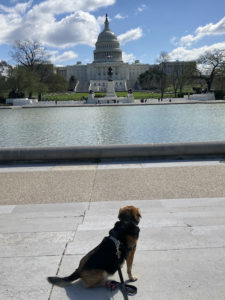 Federal Legislation: An amendment that would require voters to show photo identification to cast a ballot failed to advance in the Senate last week. The amendment to the elections bill needed 60 votes to advance. It was defeated in a 53 to 47 vote. The vote came during the second week of a marathon debate over the SAVE America Act. Senate Minority Leader Chuck Schumer condemned the amendment before the vote, arguing it would “impose the single strictest voter ID law in America.” “This radical amendment would toss out every single voter ID requirement in all 50 states for federal elections and put in an overly restrictive, one-size-fits-all approach,” the New York Democrat said. GOP Sen. Jon Husted of Ohio offered the amendment, which lists valid forms of photo ID as a driver’s license, state-issued identification, passport, military ID or tribal ID. Ahead of the vote, Husted called the amendment “clean, simple, straightforward,” adding that there are “no additional restrictions, no tricks, no games, no prohibition on absentee voting.” Schumer said it would require people who vote by mail to include a photocopy of their ID with their ballot, which would eliminate the secrecy of how someone voted. Husted accused Schumer of misrepresenting how the mail-in ballot process would work. He said voters would include a photo of their ID or the last four digits of their Social Security number on the outside of the secrecy envelope containing the ballot. The information would be validated to ensure that it’s from a registered voter before separating it from the ballot, which would be counted separately, he said.
 Navajo Nation: The Navajo Nation Council has unanimously passed legislation opposing the SAVE America Act. Navajo leaders say the SAVE Act would disproportionately impact tribal members as many elders weren’t born in hospitals and often lack the documentation. “For many Navajo people, this is not a Democrat or Republican issue,” says Navajo Speaker Crystalyne Curley, the tribal legislation’s sponsor. “We are thinking about our elders and grandparents, many of whom were not born in hospitals and do not have birth certificates. Under the SAVE Act, they would be required to travel long distances, multiple times, just to register to vote and cast their ballots.” Curley says some voters could be forced to travel more than 100 miles to comply with the proposed requirements with multiple trips for registration, primary elections and general elections. Those trips could prove financially difficult for many amid rising gas prices.
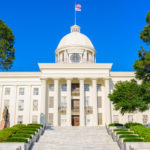 Alabama: A bill to require some precincts to undergo post-election audits passed Alabama’s House this week. House Bill 95 would require every county probate judge to randomly pick at least one precinct to have a post-election audit. Each county would be reimbursed by the state costs of the audits, which would happen around a month after a statewide general election. State Republicans have said the bill is about making sure election results reflect the will of the voters. “House Bill 95 begins the process of a formal post-election audit in Alabama for the very first time,” said Sen. Jay Hovey (R-Auburn). “This bill requires the probate judge of each county to conduct a post-election audit after every county and statewide general election to determine the accuracy of the originally reported results.” Secretary of State Wes Allen (R-Alabama) and current candidate for lieutenant governor, provided the following statement after the senate’s passage of House Bill 95: “Today, the Alabama Legislature passed HB 95, a bill that requires audits after state and county elections. I have always supported election transparency. I voted for post-election audits when I was a member of the Alabama House of Representatives. I am glad to see the Alabama Legislature take this step to ensure voter confidence in our elections and look forward to this legislation being signed into Alabama law.” House Bill 95 will now reach Gov. Kay Ivey’s desk, where she is expected to sign it into law.
A House committee has approved House Bill 486, a sweeping elections proposal that would create an Alabama Voting Rights Act and establish a commission to enforce it. The bill would expand access to voting by allowing early, in-person voting ahead of Election Day and removing current restrictions on who can vote absentee. It would also automatically restore voting rights for some people with felony convictions if they meet certain requirements, including completing their sentence and paying fines and fees, while excluding those convicted of certain violent crimes.
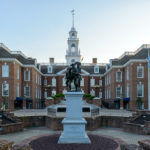 Delaware: Amended legislation was approved in the House of Representatives last week to enshrine early voting. Senate Substitute 1 for Senate Bill 2 would place in the Constitution the current practice of early voting, which for several years has been permitted for 10 calendar days before an election. Additionally, legislation aimed at changing voter status rules in Delaware has passed the state House, moving one step closer to becoming law. The measure, known as House Amendment 1 to Senate Substitute 1 for Senate Bill 3, would prevent permanent absentee voting in the state. Under the broader bill, Delaware voters would still be allowed to request an absentee ballot for each election without providing a reason. However, the amendment clarifies that voters cannot remain on a permanent absentee list. The legislation comes as absentee voting laws in Delaware have faced legal scrutiny in recent years. In October 2022, the Delaware Supreme Court ruled that a vote-by-mail statute violated the state constitution, finding it expanded absentee voting beyond what is permitted. The updated legislation now heads back to the Delaware Senate for further review and consideration.
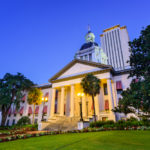 Florida: Gov. Ron DeSantis has signed the latest “voting integrity ” legislation into law. The governor signed the bill (HB 991) into law this week following its approval by the Florida Legislature last month. The law requires people who are registering to vote to produce evidence of citizenship, such as a valid passport or birth certificate. It will take effect Jan. 1, 2027. Floridians approved a constitutional amendment in 2020 requiring that only U.S. citizens are qualified to vote in state elections. In addition to requiring proof of citizenship, the bill: Requires all voting to be done using paper ballots; Requires the Department of Highway Safety and Motor Vehicles to include legal status on any new, replacement, or renewal driver’s license or identification card; Requires candidates to disclose dual citizenship they may possess; Requires new and returning candidates for Congress to disclose their intentions regarding stock trading while in office; and Removes student IDs from being an acceptable form of identification to show at the polls. Minutes after he signed the bill, a coalition of voting rights advocates filed a federal lawsuit challenging the new law, arguing it would disenfranchise eligible voters and create unnecessary barriers to the franchise. They noted that thousands of Floridians lack ready access to those documents.
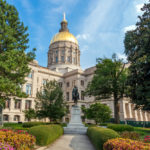 Georgia: The Senate is pushing to require hand-marked paper ballots by the midterms, racing to meet a self-imposed deadline while setting up a clash with House lawmakers who want to delay the switch. Senate Republicans doubled down on their plan late last week in the final days of the legislative session, sparking confusion as competing elections proposals advance during the frenetic closing days of the 40-day session. The standoff over the bill, which passed 32-21, has put lawmakers and elections officials in a bind as they grapple with how to meet a mandate they set two years ago to eliminate QR codes from ballots by July. According to The Atlanta Journal-Constitution, the bill is on a collision course with a House-backed bill that would keep Georgia’s voting touchscreens for the midterms and call for a switch by 2028. That would allow whoever succeeds Secretary of State Brad Raffensperger, who is running for governor, to refine the policy. “We’ll push the deadline,” House Speaker Jon Burns said in an interview this week. “But then let the next secretary of state kind of help hash out the details.” The measure that cleared the Senate on March 27 calls for preprinted, hand-marked paper ballots scanned by machines as the primary method of voting. Voting touchscreens would still be available for voters with disabilities. Using preprinted ballots would require stacks of ballots to accommodate every configuration of districts and races at each early voting site in a county. With the House advancing a competing plan and the session set to end Thursday, the two chambers are either headed toward a last-minute compromise or a stalemate that could force courts to intervene.
 Kansas: Kansas Republicans passed a package of legislation that purports to bolster election integrity but evoked warnings from Democrats of potential voter suppression. HB 2569 could eliminate no-excuse mail-in voting if any judge in the state deems the state’s ballot signature verification law to be invalid. It also mandates all voting rights challenges in Kansas be heard in Shawnee County, where a judge who handles civil cases has leaned to the right. HB 2569 initially only contained the provision requiring all voting challenges to be heard in Shawnee County District Court in Topeka. House Elections Committee chairman Rep. Pat Proctor (R-Leavenworth) inserted another proposal during legislative negotiations. It requires the secretary of state to monitor signature verification lawsuits in Kansas, and if any judge decides to invalidate or enjoin a signature requirement, Kansas voters without an excuse — such as temporarily living out of state, sickness, disability or religious belief — would be forbidden from voting in advance by mail.
HB 2437 deputizes the Secretary of State to twice a year cross-reference driver’s license records and state voter rolls against the federal Systematic Alien Verification for Entitlements, or SAVE, database. It also restricts voter registration websites to .gov domains or state-approved sites and requires county elections officials to remove people from their voter rolls when a funeral home publishes a person’s obituary. It mandates state agencies that register people to vote, including departments that maintain driver’s license information and public assistance data, share personal information, including Social Security numbers, with the Secretary of State’s Office. The bill contains provisions requiring SAVE data and voter information to be processed securely in a way that adheres to state and federal protection standards. Haskins maintained the SAVE database was not designed as a voter registration verification tool. The House voted 80-43 to pass HB 2437 on March 26.
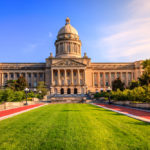 Kentucky: A routine “elections cleanup bill” that morphed into omnibus legislation making significant changes — like having county clerks verify U.S. citizenship and raising political donations limits — is nearing final passage in the Republican-controlled Kentucky General Assembly. The Senate approved House Bill 139 by a 31-6 party line vote a day after the Senate State and Local Government Committee forwarded the 121-page bill to the full chamber. The bill now needs House consent to the Senate’s changes before the bill can head to the governor’s desk. The bill now has chunks of other election bills that had been moving in the General Assembly, such as eliminating Social Security and public benefits cards as proof of identification to vote and allowing judicial candidates to publicly disclose their political party affiliation. HB 139 would go into effect at the start of 2028, which is the next presidential election year and after the next round of Kentucky’s state elections, including the 2027 governor’s race. Another HB 534 addition would authorize the State Board of Elections to enter agreements with federal agencies to identify deceased people and non-U.S. citizens who are registered to vote in the state. Kentucky election officials are currently facing a lawsuit from the U.S. Department of Justice, which is seeking access to sensitive voter data. The bill requires that someone flagged by the federal data base as a noncitizen could not vote until presenting their county clerk with proof of citizenship, such as a birth certificate, a U.S. passport or Certificate of Naturalization. The county clerk would have to alert the State Board of Elections to the proof. The second bill added into HB 139’s pot is Senate Bill 154, from Sen. Lindsey Tichenor, R-Smithfield, mainly saying that Social Security and public benefits cards cannot be used as proof of a voter’s identity. The original bill passed the Senate in February with a 31-7 vote. The House agreed with the changes this week by a 76-17 vote.
 Mississippi: Gov. Tate Reeves (R) signed a bill that adds new citizenship verification requirements to Mississippi’s voter registration process. Senate Bill 2588, also known as the SHIELD Act, would verify citizenship through a federal immigration database. County registrars would check each applicant’s information through the U.S. Citizenship and Immigration Service’s Systematic Alien Verification for Entitlements (SAVE) Program, if it’s not available through the Mississippi Department of Public Safety’s (MDPS) driver’s license and identification information. The SHIELD Act would take effect after July 1, 2026.
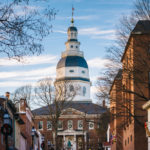 Maryland: The House Government, Labor and Elections Committee heard a slate of voting and election reform bills this week with less than two weeks before the legislative session concludes. SB0697 – Social media algorithms and foreign bot interference: This bill would prohibit a social media platform from altering its algorithm to amplify political content that boosts a particular candidate or influences an election without proper disclosure. SB0100 – Requiring buses to stop at early voting centers If signed into law, any public buses with fixed local routes would be required to stop at early voting centers located within one-half mile of the route. The requirement would not apply to buses run by the Maryland Transit Administration or the Washington Metropolitan Area Transit Authority. SB0241 – Restoring voter registration for formerly incarcerated individuals It would require the Department of Public Safety and Correctional Services to promptly send a list of qualified individuals released from prison with their new addresses to the State Board of Elections. This new electronic transmission process would have to be developed and implemented by Jan. 1, 2028. SB0029 – Requiring ballot questions to be written with plain language. At the present, 23 states have some type of law requiring that ballot language be written in a way that is easy to understand and is digestible for voters. Sen. Cheryl Kagan (D-Montgomery County) wants to bring that same requirement to Maryland and read past ballot propositions during the committee hearing to showcase just how convoluted they can appear. SB0141 – Penalizing the use of AI-generated deepfakes to distribute election misinformation. Sen. Katie Fry Hester’s bill (D-Howard and Montgomery) would criminalize the use of artificial intelligence (AI) to spread election misinformation. The bill would allow the state administrator of elections to seek an injunction for the removal of any election misinformation from online platforms and then require the administrator to release the correct information to the public. SB0255 – Maryland Voting Rights Act of 2026 Sen. Charles Sydnor’s (D-Baltimore County) legislation is inspired by the federal Voting Rights Act of 1965, which is currently facing a significant legal challenge in the U.S. Supreme Court. It would prohibit counties and municipalities from weakening the voting power of members of a “protected class,” referring to voters who are part of a racial or language minority. All of the bills await a committee vote, and if released, would then require two votes on the House floor to make it to the governor’s desk for signature.
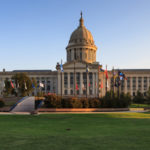 Oklahoma: A measure seeking to enshrine into the state Constitution a requirement that voters provide identification at the polls is a political stunt, critics said. But supporters of Senate Joint Resolution 47, which easily passed through the Senate last week, said it’s necessary to add the nearly 16-year-old law into the state Constitution to ensure the continued integrity of Oklahoma’s election system in future years. Senate President Pro Tem Lonnie Paxton, R-Tuttle, said the measure is needed to make sure future legislatures don’t remove the voter identification requirement without first holding a public vote. Paxton’s measure asks Oklahoma voters to approve the addition during a special election set for Aug. 25, which is also the runoff date for partisan primaries. Runoff primaries traditionally have the lowest voter turnout. “It’s very clear this is a political bill,” said Senate Minority Leader Julia Kirt, D-Oklahoma City. Kirt said the measure could have been placed on the June primary or November general election ballot. Both elections traditionally see higher turnout. Holding this election three months before November’s general election is designed to undermine trust in Oklahoma’s elections and to raise fears, she said.
 South Dakota: Republican Gov. Larry Rhoden signed legislation into law last week that will require people to prove their citizenship when they register to vote in South Dakota state and local elections.. An emergency clause puts the law into effect immediately, before the June 2 primary election, rather than the usual July 1 effective date of new laws. The voter registration deadline for the primary election is May 18. “In South Dakota, we do things right, especially when running our state elections,” Rhoden said in a news release. “This bill ensures only citizens vote in state elections, keeping our elections safe and secure.” The legislation passed South Dakota’s Republican-dominated Legislature earlier this year by votes of 28-6 in the Senate and 64-3 in the House. People already registered to vote don’t need to take any action. Nor do they need to provide proof of citizenship if they’re updating registration information like their address or political party affiliation. Someone who has changed their name and is already registered to vote also won’t need to provide proof of citizenship, according to the South Dakota Secretary of State’s Office. New voters will be required to provide documentation of their U.S. citizenship. One of the acceptable forms of documentation is a driver’s license or nondriver identification card, if the card indicates the person is a citizen. Last year, South Dakota lawmakers adopted a law requiring driver’s licenses to reflect citizenship status.
Legal Updates
 Federal Litigation: Democratic Party leaders filed suit April 1 to block President Donald Trump’s attempt to limit voting by mail ahead of the midterm elections. Democrats argue that an executive order, which creates an approved list of absentee voters among other actions, is an unconstitutional interference in the power of states to regulate elections. Senate Minority Leader Chuck Schumer and House Minority Leader Hakeem Jeffries joined the Democratic National Committee, the Democratic Senatorial Campaign Committee, the Democratic Congressional Campaign Committee and the Democratic Governors Association in suing to challenge the order. The White House did not immediately respond to a request for a comment on the lawsuit, but Trump dismissed the possibility of legal challenges to his order at the signing ceremony for the order. “I don’t know how it can be challenged. … You may find a rogue judge,” he told reporters in the Oval Office. “You get a lot of rogue judges, very bad, bad people, very bad judges. But that’s the only way that can be changed, and hopefully we’ll win an appeal.”
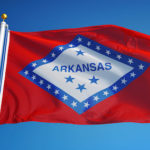 Arkansas: A federal appeals court this week upheld an injunction prohibiting Arkansas from enforcing a requirement that all voter registrations be signed in ink. The plaintiffs, Get Loud Arkansas, filed a lawsuit after the State Board of Election Commissioners issued an emergency rule prohibiting digital signatures on voter registrations in the lead up to the 2024 general election. The commission later approved a permanent rule. Voter advocacy group Get Loud Arkansas argued the change violated a provision of the Civil Rights Act of 1964 that prevents states from denying a person their right to vote based on errors or omissions that are immaterial to the person’s voting eligibility. Get Loud said the “wet signature” requirement affected its work by effectively prohibiting the use of an online voter registration tool it had developed. U.S. District Judge Timothy Brooks found that the plaintiffs were likely to succeed with their challenge and issued an injunction, which was later paused while the State Board of Election Commissioners and the secretary of state pursued an appeal to the 8th U.S. Circuit Court of Appeals. The lawsuit on the merits of Get Loud’s complaint is still ongoing. The divided three-judge panel from the 8th Circuit found Brooks had not abused his discretion when he issued the injunction, and agreed that requiring “wet signatures” on all voter registration forms was “immaterial in determining whether an individual is qualified under state law to vote.” “Ample evidence supports this finding,” wrote Chief U.S. Circuit Judge Steven Colloton, who was appointed to the bench by former President George W. Bush. “As the district court explained, the Board did not ‘present argument or evidence as to how a wet signature—as compared to a digital signature—aids in determining whether a person’ is qualified to vote under Arkansas law.”
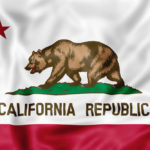 California: Shasta County Superior Court Judge Benjamin Hanna declined to block an overhaul of the county’s election system from the June primary ballot. Local resident Jennifer Katske filed a lawsuit seeking to keep the measure off the ballot, arguing several provisions would violate state and federal laws. The proposed charter amendment would make sweeping changes to how elections are conducted, including requiring voter identification at polling places, mandating hand counts of ballots and banning universal vote-by-mail. Following a hearing last week, Hanna ruled that Katske’s petition was invalid because it could not point to a specific law that requires a county clerk to pull a ballot measure based on its substance. Hanna did not rule on whether the measure itself is legal. Instead, he said pre-election challenges are an extraordinary step and that any legal review would be more appropriate after voters weigh in. “That litigation would have the benefit of full and complete briefing and analysis without the severe time constraints that this case has involved,” Hanna said in his ruling.
A California appellate court denied the state attorney general’s appeal to halt the Riverside County Sheriff’s election fraud investigation. In a statement, California Attorney General Rob Bonta’s office said the appellate court denied their request “based solely on where we filed the case and is not a ruling on the underlying of the petition.” “The facts have not changed. The Riverside County Sheriff continues to directly defy the Attorney General’s instructions, in violation of the California Constitution and state law,” Bonta’s office wrote. “We are evaluating next steps to ensure a swift and appropriate resolution to this matter.”
CalMatters and a national consortium of news organizations filed a motion in Riverside County court seeking public access to the warrants a judge approved allowing Sheriff Chad Bianco to seize hundreds of thousands of ballots for an unprecedented investigation into the outcome of the November 2025 special election. The groups are also filing a separate petition with the California Supreme Court that also seeks to have the records unsealed.
 Florida: John D. Panicci, 59, of Lake Worth was arrested on allegations of theft at the Palm Beach County supervisor of elections office. The sheriff’s office said on March 27, it responded to the Palm Beach County Supervisor of Elections Office on a report of stolen sensitive computer equipment. Sheriff’s office detectives determined that on March 19, the Supervisor of Elections Office conducted a training session for volunteers assisting with the election scheduled for March 24. During the session, Panicci stole an encrypted access key from a voter registration terminal. The sheriff’s office said the key was configured only for training databases. There was concern that a knowledgeable person could potentially reverse engineer the encryption and reintroduce the key into a voter registration kiosk for malicious purposes. On Saturday, March 28, deputies executed a search warrant at Panicci’s home. During the search, detectives recovered the stolen items along with a substantial amount of electronic and digital storage devices. During a court appearance on Sunday morning, Panicci was told not to have contact with the Palm Beach County Supervisor of Elections Office. He is being held in the Palm Beach County Jail on $6,000 bail.
A coalition of voting rights groups filed the suit against HB 991 the same day Governor Ron DeSantis signed it into law. The newly signed law requires proof that someone is a legal resident, like a birth certificate or passport, when registering as a new voter. The League of Women Voters of Florida, Florida Immigrant Coalition, Florida Rising and others are arguing the measure violates the first and fourteenth amendments. They think it places an unneeded strain on voter registration and makes it more likely eligible voters will be blocked. The bill is modeled after the SAVE America act, which the Trump Administration is currently pushing at the federal level. It’s the latest in a host of election law changes passed since 2020 in the state.
 Georgia: U.S. District Judge J.P. Boulee will not force the Federal Bureau of Investigation agent who submitted the sworn affidavit in support of the federal agency’s search of Fulton County election hub to testify at an evidentiary hearing. Fulton County had been attempting to get FBI Special Agent Hugh Raymond Evans to speak about the affidavit, arguing that he had “omitted numerous pertinent facts” as part of the basis of the search and seizure of the county’s 2020 election records. In the ruling Boulee said that, while Fulton County disagreed with the Department of Justice’s decision to refuse their attempt to get the FBI agent to testify, that decision was not “arbitrary and capricious.” “While Petitioners note that the contents of SA Evans’s affidavit are already a matter of public record, it does not necessarily follow that the information surrounding the ‘scope of material omissions and erroneous statements’ and SA Evans’s ‘state of mind with respect’ to those matters would remain unprivileged,” Boulee wrote. “In short, given the breadth of the law enforcement privilege and the testimony sought by Petitioners, the Court cannot conclude that DOJ’s decision to prohibit this type of testimony was a clear error of judgment.”
 Idaho: The U.S. Justice Department sued Idaho Secretary of State Phil McGrane, and asked a federal judge to force him to turn over the full voter data, which includes partial Social Security numbers and driver’s license numbers. More than a month ago, McGrane declined the Justice Department’s demands for the voter data — even after the Justice Department has sued other states. In December, a Justice Department attorney threatened to sue Idaho if it didn’t turn over the data, according to a voicemail that the Idaho Capital Sun obtained in a public records request. McGrane told the Justice Department in a February letter that he doesn’t believe his office is required under “a clear legal duty” to share Idaho’s full voter roll with the federal government. “Idaho law strictly governs the disclosure of voter information. In the absence of a clear legal requirement that Idaho provide a copy of its complete, unredacted voter list, and in light of my responsibility to protect Idahoans’ personal information, my office will not provide the requested data,” McGrane wrote to the Justice Department in February. In a statement, McGrane said he’s confident “in Idaho’s elections and the efforts we’ve led to ensure secure and accessible elections.” “Idahoans have confidence in how we run our elections,” McGrane told the Sun. “The county clerks and I are committed to ensuring that confidence continues into this year’s mid-term elections.”
 Maine: Maine’s highest court is considering whether it is constitutional to expand ranked choice voting to general elections for governor, state representative and state senator. The Supreme Judicial Court heard oral arguments Wednesday in Portland, after the Maine Legislature last month asked for an advisory opinion on LD 1666, which would expand the use of ranked choice voting. Chief Justice Valerie Stanfill and a panel of five associate justices heard arguments that centered on the intentions behind the state’s original Constitution and what constitutes a complete vote. The ruling from the court is not legally binding, but it could still determine if lawmakers send the bill to Gov. Janet Mills, and what she will do with it. At the close of the hearing, Stanfill said the panel of justices are aware of the approaching end of the legislative session, slated for April 15, and will issue a response in due course. But there is a wide assortment of arguments for the court to consider.
 Massachusetts: According to WGBH, federal prosecutors launched a new team they said would “actively and aggressively” go after benefit as well as voter fraud in the state. Teasing dozens of investigations already underway, U.S. Attorney Leah Foley said she sees “insufficient guardrails in place in Massachusetts to address the rampant benefit fraud across the state.” Her office has charged 15 people with nearly $9 million in public benefits fraud since December. A pair of assistant U.S. attorneys, Philip Mallard and Mark Grady, will lead the new Benefit and Voter Fraud Team as it investigates cases involving MassHealth, the SNAP food stamp program, childcare subsidies and voting. The press release from the U.S. Attorney’s Office announcing the Benefit and Voter Fraud Team highlighted the recent benefits cases but did not mention specific instances of voter fraud in Massachusetts.
 Michigan: The Michigan Court of Appeals has ruled that 37 disputed ballots in the Hamtramck mayoral contest should be counted, potentially reversing the outcome of the election almost three months into the new mayor’s term. Adam Alharbi narrowly won the November 2025 election for mayor of the small Detroit suburb by just 11 votes and has been serving as the city’s mayor since January. He beat Muhith Mahmood, a former council member, in the nonpartisan race. Three days after the election, 37 uncounted absentee ballots were discovered, opened but still in their envelopes, in the city clerk’s office. The clerk delivered the ballots to the county, but it was later revealed that unauthorized city officials had entered the clerk’s office while the ballots were there. This broke the ballots’ chain of custody, raising questions about whether they should be counted. The Wayne County Board of Canvassers deadlocked on whether to count the ballots, leaving the election results as they stood without the ballots’ inclusion. Mahmood sued over that decision on behalf of himself and the 37 disenfranchised voters, whose identities remain unknown. A lower court ruled in December that the board of canvassers was within its rights to exclude the ballots. But in a 2-1 decision last week, Court of Appeals judges said that excluding the ballots “effectively denied 37 voters their fundamental right to vote” under the state constitution and that, under state law, “mistakes made by election officials must not result in the rejection of a ballot cast by an eligible voter.”
 Nebraska: The Nebraska Supreme Court heard oral arguments this week in a lawsuit that had tried and failed to stop the state from handing over potentially sensitive parts of its voter data to the U.S. Department of Justice. Daniel Gutman, one of the attorneys for voting advocacy group Common Cause and Omaha voter Dawn Essink, asked the high court to reverse a Lancaster County District Court ruling that Common Cause lacked standing to sue because the alleged harm was speculative and not imminent. The Nebraska Supreme Court agreed to hear the case but had already denied an injunction request that would have prevented Evnen from handing the voter data to the Justice Department. Evnen gave the feds the data in February. This was touched on during oral arguments, as some justices asked if the case mattered anymore since the data had been handed over. Gutman argued it still matters because, “if the federal government comes knocking,” there isn’t anything the state’s top election official could do to protect voters’ information based on the lower courts’ ruling. Nebraska Solicitor General Cody Barnett, arguing on behalf of Secretary of State Bob Evnen, the state’s top elections official, asked the court to affirm the lower court decision, saying it was too late to stop the data from being shared.
 New York: Kevin Sweet, 42 of Hudson was arraigned on a sealed indictment this week that alleges he attempted to obtain a mail-in ballot for the 2024 fall election in the name of a deceased person. Sweet faces eight counts – four felonies and four misdemeanors – in connection with the incident brought to light when the Columbia County Board of Elections discovered the attempted illegal act and presented its findings to law enforcement. faces eight counts – four felonies and four misdemeanors – in connection with the incident brought to light when the Columbia County Board of Elections discovered the attempted illegal act and presented its findings to law enforcement. The indictment, issued by a Columbia County Grand Jury March 24 and unsealed March 25 in front of Judge Brian Herman, charges Sweet with Procuring Fraudulent Documents in Order to Vote, an unclassified felony; Falsifying Business Records in the First Degree, a Class E felony; Perjury in the Second Degree, a Class E felony; Offering a False Instrument for Filing in the First Degree, a Class E felony; Falsifying Business Records in the Second Degree, a Class A misdemeanor; Perjury in the Third Degree, a Class A misdemeanor; Offering a False Instrument for Filing in the Second Degree, a Class A misdemeanor; and Illegal Voting, a Class A misdemeanor. Each Class E felony carries a maximum sentence of between one-and-a-third to four years in prison while the Class A misdemeanors carry a maximum sentence of one year in jail. Sweet is set to return to court April 29, 2026.
 North Carolina: Middle District of North Carolina Judge Loretta Copeland Biggs struck down a challenge to North Carolina’s long-contested voter ID law last week, finding that the North Carolina NAACP failed to establish that the law was an unconstitutional infringement of Black and Latino voters’ rights in light of recent higher court rulings. The challenge concerned North Carolina Senate Bill 824, passed in December 2018 over Gov. Roy Cooper’s veto, which requires voters to present photo identification before casting their ballots. The lawsuit alleged that the bill is racially discriminatory against Black and Latino voters, who disproportionately lack access to qualifying photo identification. In her ruling, Biggs made clear that she felt recent appellate and Supreme Court precedent prevented her from finding sufficient evidence of discrimination from voter ID laws, despite an unequal burden placed on voters of different races and historic voting discrimination against non-white voters. “The record before this Court makes clear that it is simply much more difficult for racial minorities to vote and to have their vote counted,” Biggs wrote. “Even in the shadow of significant evidence of disparate impact, the law of the case doctrine compels the conclusion that the record before this Court does not establish discriminatory intent.” The case, Biggs said, was not to determine whether North Carolina would require voter ID, as a 2018 constitutional amendment had already enshrined that in state law, but whether the subsequent bill implementing that requirement was racially discriminatory. “In making this determination, the Court must follow the law of the United States Supreme Court and the Fourth Circuit,” Biggs wrote.
U.S. District Judge Thomas Schroeder upheld a 2023 North Carolina law allowing voter registrations to be denied after just one address verification card is returned as undeliverable, marking a second victory for the General Assembly’s ballot restrictions in just one day. Previously, voters would receive two mailed address verification requests from the State Board of Elections before their registration would be denied and their ballot canceled. The provision was blocked from going into effect for the 2024 election by Schroeder, who ultimately upheld the law March 26, and so it will first apply to the upcoming 2026 election. A trio of civil rights groups — Democracy North Carolina, the North Carolina Black Alliance, and the League of Women Voters of North Carolina — challenged the law, known as Senate Bill 747, in 2023, a week after it passed over Gov. Roy Cooper’s veto. Schroeder ruled that the civil rights groups failed to demonstrate that the legislature passed S.B. 747 with intent to discriminate against any group of voters. “A legislature is entitled to make such policy choices and is not precluded from improving its electoral system because of its inability to perfect it,” Schroeder wrote. “Nor should election changes become a one-way ratchet, incapable of alteration merely because some voters may be affected.” He also noted that the State Board of Elections sends a “Notice to Verify Your Address” by mail and email if the county board receives the undeliverable verification card at least two days before the election canvass, providing voters a second opportunity to cure their ballots.
 Pennsylvania: The U.S. Supreme Court declined to take up an appeal by Fulton County accusing a voting systems company of breach of contract following the 2020 election. Fulton County appealed to the highest court of the land after its lawsuit against the former Dominion Voting Systems was dismissed by lower courts. The county, through the Fulton County Board of Elections, current county commissioner Randy Bunch, and former county commissioner Stuart Ulsh, filed suit against the company, now known as Liberty Vote, in September 2022. At issue was the agreement between Fulton County and Dominion to provide voting systems and a dispute stemming from an allegation that there were “severe anomalies” in voter data generated following the Nov. 2020 election. Originally filed in Fulton County Court, the case was removed to federal court and dismissed in August of 2024. On March 23, the court denied certiorari, effectively dismissing the case.
John Pollard, 63 of Philadelphia has been sentenced to 10 months in federal prison for threatening to kill a western Pennsylvania poll worker, including saying he would skin them alive. Pollard was also ordered by Chief U.S. District Judge Cathy Bissoon in Pittsburgh to serve one year of supervised release after he serves his sentence and was fined $5,000. The judge rejected Pollard’s request for probation noting that “political violence is real” and that death threats are unacceptable, U.S. Attorney Tony Rivetti said. Rivetti said the sentence “sends a clear and unmistakable message that threats against election workers and other public servants will be met with swift, certain and just punishment.”
 Texas: The Campaign Legal Center filed a lawsuit on behalf of multiple voting rights and advocacy organizations against the Texas Secretary of State’s Office and some county election officials to prevent the removal of voters from the state’s voter roll based on use of a federal database to verify citizenship. They also claim the state failed to crosscheck its own records for proof of citizenship it already possessed before seeking to remove voters. In the lawsuit, filed in a federal district court in Austin Thursday, the plaintiffs said the database, known as SAVE, is unreliable, and that Texas’ use of it to remove people from the rolls, including some who are naturalized U.S. citizens, is a violation of the National Voter Registration Act. The plaintiffs said in the filing, which cited reporting by Votebeat and other news outlets, that the Secretary of State’s Office “did not consult Department of Public Safety data—a known source that could confirm citizenship for many registered voters—before placing the burden on the voter to provide documentary proof.” The plaintiffs want the court to declare that the state’s removal of voters from the rolls using the SAVE database violates the National Voter Registration Act, and want the court to prohibit the Texas Secretary of State’s Office from sending lists of potential noncitizens to the counties without “further, uniform investigation,” the lawsuit says. They also asked the court to prohibit the state and county election officials from removing people from the voter roll “solely because they have been flagged as noncitizens by the SAVE system” and to order that anyone who was removed be placed back on the voter roll until “it can be conclusively proved that such voters are not currently U.S. citizens”.
Opinions This Week
National Opinions: SAVE Act, II, III, IV | Election deniers | Vote by mail | Federal interference, II, III, IV | Election policy | Vote by mail, II, III | Threat to elections
Alaska: Voter access
California: Riverside County, II | Secretary of state | Vote by mail
Colorado: Voting access | Vote by mail
Connecticut: Voting rights
Florida: Voting integrity | Democracy
Illinois: Ranked choice voting
Maryland: SAVE Act | Vote by mail
Massachusetts: Vote by mail
Michigan: Election reform
Missouri: Voting rights
Montana: Secretary of state
Ohio: Voter data
Washington: Election system
Upcoming Events
Mapping AI Risk: Applying the NIST AI RMF “Map” Function: This conversation with Ready for Tuesday helps election practitioners understand where AI is already showing up in their work, what risks it may introduce, and who could be affected. It offers a practical, jargon-free approach to identifying AI use across your office and building a clear picture of your environment before making decisions. When: April 3, 1pm Eastern. Where: Online.
Elections à la Carte: An Online Conversation on Elections over Lunch: The Journal of Election Administration Research & Practice invites you to join us over Zoom for another lunchtime conversation on innovative funding solutions for election administration. Thanks to the wonderful response from our March Elections à la Carte webinar, we are bringing it back for April. This funding solution will be brought to us by Gideon Cohn-Postar, with the Institute for Responsive Government, and Caleb Hays, with Section 4 Strategies. Gideon’s and Caleb’s solution is a three-pronged plan that focuses on resources available at the federal level. Following Gideon’s and Caleb’s brief presentation, there will be a discussion on how to move forward with turning potential avenues for federal funding into realized and reliable funding sources. This conversation will feature the presenters and a terrific group of panelists, which will include: EAC Commissioner Ben Hovland, R Street Institute Governance Program Director Matt Germer, Arizona Assistant Secretary of State Keely Varvel, and BPC Governance Program Vice President Matthew Weil. When: April 8, 12pm Eastern. Where: Online.
Lessons learned from democratic countries abroad: Join the Center for Election Innovation & Research for the first installment of our new “Trust Elections” webinar series. In the webinar, Paige Alexander, chief executive officer of The Carter Center, will join CEIR Executive Director David Becker to discuss where the US election system stands as the country approaches the midterms and what Americans might learn from other nations’ efforts to protect democratic institutions. The discussion will cover the first primary elections of 2026 and the Trump administration’s handling of election matters – including the Justice Department’s ongoing campaign to obtain states’ sensitive voter data, the FBI search of Fulton County, Georgia’s central elections facility, and the subpoena of 2020 election records in Maricopa County, Arizona. Paige and David will analyze the current state of our election system and explore how voters can help protect free and fair elections. When: April 9, 12pm Eastern. Where: Online.
Protecting Voters at Risk: Address Confidentiality & Safe at Home Programs: Confidential address programs – often called “safe at home” programs – help protect survivors of domestic violence and other crimes by issuing a substitute address that others must accept thereby keeping their residential addresses out of public record. These programs may also serve people in public safety and government roles, such as judges, law enforcement officers, and other public servants who may face threats because of their work – including, in some states, election officials themselves. But how do these programs interact with voter registration and election administration, and what do election officials need to know? Join Ready for Tuesday on Thursday, April 9, at 12 p.m. ET for a conversation with administrators and experts from across the country who manage confidential address programs and work at the intersection of participant safety and election access. Whether you’re already coordinating with your state’s confidential address program or just learning it exists, this conversation offers a clearer picture of how to support some of your most vulnerable voters. When: April 9, 12pm Eastern. Where: Online.
2026 EAC Local Leadership Council Annual Meeting: The U.S. Election Assistance Commission (EAC)’s Local Leadership Council (LLC) will host an in-person public meeting on April 14-15, 2026, at The Drake Hotel in Chicago, Illinois. During the meeting, members will conduct regular business and discuss EAC updates and upcoming programs. The LLC consists of 100 members. The EAC appoints two members from each state after soliciting nominations from each state’s election official professional association. If you are a member of the public and you are interested in attending, please register below. Information on how to submit written comments is forthcoming. When: April 14-15. Where: Chicago.
Connecticut Town Clerks Association (CTCA): The 2026 Spring CTCA conference will be held April 15-17 at Mystic Marriott in Mystic – hosted by New London County. When: April 15-17. Where: Mystic.
Election Center April Workshop: In April, the focus is on state associations and state trainings both by modeling conference formats, facilitation techniques, and potential content resources. The Coalition of Election Association Leaders (CEAL) guides state groups in their maturation process with mentorship and networking opportunities. When: April 22-24. Where: Chicago.
Request for Comment: Election Audit Standards: The U.S. Election Assistance Commission (EAC) is requesting public comment on the Voluntary National Election Audit Standards. Election audits are used to evaluate and improve the accuracy, security, and administration of elections. Because election administration in the United States is highly decentralized, audit practices vary across states and local jurisdictions. The proposed standards provide voluntary, principle-based guidance intended to be adaptable across differing legal frameworks, election systems, and resource environments. When: April 27. Where: Online.
Kansas County Clerks and Election Officials Association: The 2026 Annual KCCEOA Conference will be April 28-May 1 at the Refinery in Garden City. When: April 28-May 1. Where: Garden City.
2026 EAC Board of Advisors Annual Meeting: The U.S. Election Assistance Commission (EAC)’s Board of Advisors will host an in-person public meeting on April 28-29, 2026, in the agency’s hearing room. During the meeting, members will conduct regular business and discuss EAC updates and upcoming programs. The Board of Advisors is a 35-member board composed of representatives from various EAC stakeholder associations, federal government agencies, and Congress. If you are a member of the public and you are interested in attending, please register below. Information on how to submit written comments is forthcoming. When: April 28 & 29. Where: Washington, D.C.
Beat Academy: Midterm Prep: Great Lakes journalists! Work on coverage strategies, gain reporting tools and spark regional connections in our free election coverage workshop in Detroit (May 5) or Indianapolis (May 7), 9 a.m. to 4 p.m. Learn to respond to misinformation, do candidate research, report on key election drivers like immigration and affordability, and produce salient coverage that puts voter interests first. By the end of this workshop, you will: Learn how to respond to misinformation and efforts to undermine fair elections. Verify candidate backgrounds via tools and databases. Explore regional factors shaping Great Lakes midterm races. Develop coverage strategies for key election drivers like immigration and affordability. Generate story ideas and prioritize voter interests in your reporting. When and Where: May 5 (Detroit) and May 7 (Indianapolis).
2026 IIMC Annual Conference: The International Institute of Municipal Clerks will be holding its Annual Conference from May 17-21 in Reno, Nevada. When: May 17-21. Where: Reno.
2026 NACo Annual Conference & Exposition: The National Association of Counties will hold its 2026 Annual Conference & Exposition on Orleans Parish, Louisiana from July 17-20. When: July 17-20. Where: New Orleans.
NASED 2026 Summer Conference: The National Association of Directors of Elections will hold its summer conference from July 20-22 in Boston. When: July 20-22. Where: Boston.
iGO 9th Annual Conference: The International Association of Government Officials will hold its 9th Annual Conference from July 25-28 in Reston, Virginia. When: July 25-28. Where: Reston, Virginia.
2026 NCSL Legislative Summit: The 2026 NCSL Legislative Summit takes place in Chicago July 27-29, bringing together state legislators and legislative staff from all 50 states and U.S. territories for three days of collaboration, innovation and bipartisan dialogue. When: July 27-29. Where: Chicago.
Election Center 41st Annual Conference: The National Association of Election Officials (Election Center) will hold its 41st Annual Conference in Kansas City, Missouri from August 19 to 21. CERA classes will be offered August 22 and 23. When: August 19 to 21. Where: Kansas City, Missouri.
Job Postings This Week
electionlineWeekly publishes election administration job postings each week as a free service to our readers. To have your job listed in the newsletter, please send a copy of the job description, including a web link to mmoretti@electionline.org. Job postings must be received by 5pm on Wednesday in order to appear in the Thursday newsletter. Listings will run for three weeks or till the deadline listed in the posting.
Assistant Elections Manager, Alexandria, Virginia– The City of Alexandria is looking for an Assistant Elections Manager to support election operations and election officer staffing within the City. The Assistant Elections Manager’s primary responsibility is to manage elections officer recruitment, placement and training, and help coordinate election day preparation. Responsibilities also include assisting with the management of voting equipment, polling place activities, and the daily operations of absentee voting. The work is performed under the general direction of the Elections Manager. Salary: $52,115 – $91,711. Application: For the complete job listing and to apply, click here.
Assistant Secretary of State, Mississippi–The Elections Division has many roles in assuring that Mississippians’ voices are heard clearly through the election process. These roles include training election officials, collecting campaign finance and lobbying reports, managing the statewide voter registry, collecting election returns, and assisting local election officials in carrying out their election-related responsibilities. Application: For the complete job listing and to apply, click here.
Chief Deputy of Elections, Lubbock County, Texas– The Chief Deputy assists in managing day-to-day election operations, ensuring compliance with all applicable laws, policies, and regulations. This role schedules, coordinates, and oversees temporary and permanent staff while supporting all phases of elections and voter registration. The position provides operational and administrative leadership, including acting on behalf of the Elections Administrator when required. Responsibilities also include coordinating voter registration functions, monitoring resources, and supporting the development and implementation of departmental procedures. Salary: $77,000 – $83,000. Deadline: April 9. Application: For the complete job listing and to apply, click here.
Deputy Registrar, Richmond, Virginia–The Office of Elections is seeking to hire a candidate for the Deputy Registrar position. This position assists citizens register to vote and assists in the election process by providing clerical assistance and customer service. Incumbent will be responsible for maintaining accurate voter registration records and for providing election information and services to candidates and the general public. Incumbents may also train Elections officials on voting practices/eligibility. Incumbents may serve as lead workers, assigning work and monitoring work completion, especially to temporary or contract workers. Salary: $46,342 – $64,064. Deadline: April 12. Application: For the complete job listing and to apply, click here.
Director of Election Security, Apollo Information Systems–The Director of Election Security is a seasoned election expert who is passionate about protecting our Nation’s democratic infrastructure and ready to own a high impact area of the business. This is a strategic leadership position and responsible for shaping and growing our election security offerings. The Director will serve as the architect of our program portfolio and its external face. This person will be engaged in sales conversations, speak at industry conferences, and build credibility while driving revenue. The Director will be a decision maker around service offerings and lead client engagements to ensure our solutions are tailored and scalable. The ideal candidate brings deep election security experience and a hunger to build something that matters. Salary: $135K – $155K. Application: For the complete job listing and to apply, click here.
Director of Voter Services, Chester County, Pennsylvania– The Director of Voter Services plans, organizes, supervises, and manages the activities of voter registration, campaign finance, and elections for the County of Chester in compliance with all federal, state, county, and local laws. Essential Duties: Election operations, Department leadership and administration, Communications and public engagement and other. Salary: $119,043.06 Annually. Application: For the complete job listing and to apply, click here.
Election Protection Hotline Specialist, Lawyer’s Committee for Civil Rights Under Law– The Hotline Specialist position is part of our hotline team, which oversees the day-to-day functions of the 866-OUR-VOTE Hotline, as well as providing support to state-based contact centers. This position will work to support thousands of legal volunteers who respond to voter questions. The Election Protection Hotline Specialist works under the supervision of the Election Protection Senior Technical Hotline Specialist and Election Protection Infrastructure Manager. This job is directly related to elections and is fast paced, requires multi-tasking, and includes early morning, evening and weekend work. This position requires comfort with learning and using new technology and platforms. Candidates with previous campaign experience or previous Election Protection experience are encouraged to apply. Application: For the complete job listing and to apply, click here.
Election Software Specialist, Printelect– Printelect is a dynamic and well-established regional election technology & services company with a proven track record in ballot printing, mail services, and a diverse portfolio of election products. With over fifty employees and one hundred twenty years of industry-leading experience, we take pride in our commitment to excellence and customer satisfaction. We partner with local governments throughout Virginia, North Carolina, South Carolina, and Georgia to provide products, services, and support for the conduct and administration of Federal, State, and local elections. Job Duties and Responsibilities: Work with our county and city official customers to translate their jurisdictional requirements and candidate data into formats used by voting equipment software. Utilize proprietary election management software, Microsoft Office, and Adobe Suite to build jurisdiction-specific databases, format paper and electronic ballots, and configure voting equipment to utilize those datasets. Provide phone and on-site support for our customers and troubleshoot any issues that arise. Communicate and cross-train with internal departments to facilitate accurate election preparation and good customer service. Develop a comprehensive understanding of all manufacturer hardware and software manuals, and be able to effectively communicate that information to team members and customers. Stay up to date on all new software updates and hardware offerings. Participate in on-site customer training and election day support. Salary: $55,000-60,000. Application: For the complete job listing and to apply, click here.
Election Support Aide On-Call, Olmsted County, Minnesota–Recognized as one of the best places to work in Southeast Minnesota for three consecutive years, at Olmsted County every role helps to foster a vibrant community where everyone thrives. Our employees are at the heart of everything we do, driving public service excellence and community well-being. We don’t just offer a job, we offer a career filled with purpose, growth, and fulfillment. Our benefits package ensures your wellbeing, while career advancement opportunities and professional development empower you to reach your full potential. Join us, and you’ll be part of a purpose-driven team where your work truly makes a difference. Together, we build a sustainable, healthy, and welcoming community. Under supervision, assists with Olmsted County’s election process on an on-call basis. Provides customer service to voters and assists the election administration staff with ballot processing. Supports a diverse, respectful, and inclusive workplace. Salary: $19.00 – $30.00 Hourly. Application: For the complete job listing and to apply, click here.
Elections Administrator, Lubbock County, Texas– Appointed by the Lubbock County Election Commission and reporting to the County Judge, the Elections Administrator is responsible for leading and managing all operations of the Lubbock County Elections Department. This includes oversight of budget, personnel, election systems, and departmental resources, as well as ensuring efficient and secure election processes. The role ensures full compliance with all applicable state and federal election laws, regulations, policies, and procedures, while fostering transparency, integrity, and public trust in the electoral process. Salary: $95,000 – $105,000. Deadline: April 8. Application: For the complete job listing and to apply, click here.
Elections Specialist, Richmond, Virginia–The Office of Elections is seeking to hire two Elections Specialists. Incumbents will certify voting machines and ballot machines/scanners, train Officers of Elections on the use of voting machines and ballot machines, serve as rovers on election day, maintain the inventory and supplies of election operations, and act as a point of contact for outside vendors. Incumbents may serve as lead workers, assigning work and monitoring work completion for coworkers and temporary/contracted workers. Salary: $51,667 – $75,483. Deadline: April 12. Application: For the complete job listing and to apply, click here.
Executive Director, Peoria County, Illinois: The Executive Director is responsible for all aspects of the administration of the Election Commission. Duties include the application of all statutory requirements in maintaining the permanent registry of voters and in the planning, organizing and conducting of local, state and federal elections in the County of Peoria. The Executive Director is the liaison to the community, other government agencies and members of the press for the Board of Election Commissioners. Minimum Bachelor’s degree in Public Administration, Business Administration, or related field with a minimum of two years of both management and election administration experience. Must possess a strong technical aptitude and strong knowledge of Microsoft Windows-based software. Must be detail-oriented and able to work under the pressure of deadlines. Use personal judgment and initiative to develop effective solutions to challenges. Strong public relations skills. Must have a valid Illinois driver’s license. Salary: $85,000.00-$100,000. Deadline: April 17. Application: For the complete job listing and to apply, click here.
Sales Engineer I, Hart InterCivic–The Sales Engineer I is responsible for assisting the Sales Team in generating sales of Hart’s products and services, focusing on expanding existing accounts and developing new accounts, while partnered with other Sales or Hart team members. The Sales Engineer I will have an assigned territory(ies) and/or sales team member(s) and an assigned team quota. Application: For the complete job listing and to apply, click here.
Senior Policy Analyst, Bipartisan Policy Center– BPC is currently seeking a Senior Policy Analyst to support the work of the Elections Project, which is housed within BPC’s Democracy Program. The Elections Project develops and advances durable bipartisan policy solutions to create secure, accessible, and trustworthy elections. We envision broad public trust in election outcomes where election administration is fully funded and continually improved with the input of election practitioners. Our work is guided by the idea that election policy must be resilient to shifting political winds and crafted with the input of election officials. The Senior Policy Analyst will play a central role in the development and implementation of the Election Project’s research and advocacy priorities. This analyst role will focus on existing priorities of the Elections Project, including election administration workforce (recruitment, retention, and training), election infrastructure and technology, and supporting the needs of local election official associations. The analyst will also have the flexibility to explore research topics of their choice if those topics are in alignment with the needs of the project and of BPC. Because the Elections Project takes an evidence-based approach and employs rigorous research methods, applicants must be experienced policy researchers and writers. Applicant experience might include leading white papers, blogs, research memos, or legislation. Applicants must also have strong oral communication skills and extensive experience communicating their research to a variety of audiences. The position will report to the Senior Associate Director of the Elections Project and work closely with others on BPC’s elections team. Salary: $70,000 – $95,000. Application: For the complete job listing and to apply, click here.
Senior Project Manager, Elections Project, Bipartisan Policy Center– BPC is currently seeking a Project Manager to support the work of the Elections Project, which is housed within BPC’s Governance Program. In the role, you will be primarily responsible for day-to-day coordination and project management of the Elections team’s activities. The Elections Project develops and advances durable bipartisan policy solutions to create secure, accessible, and trustworthy elections. We envision broad public trust in election outcomes where election administration is fully funded and continually improved with the input of election practitioners. Our work is guided by the idea that election policy must be resilient to shifting political winds and crafted with the input of election officials. Salary: $80,000 to $85,000. Application: For the complete job listing and to apply, click here.
Voter Services Manager, Richmond, Virginia–The City of Richmond Office of Elections is seeking a highly organized and knowledgeable Voter Services Manager. The purpose of the position is to provide management of and administrative assistance for all aspects of voter registration, and absentee services to the Office of the General Registrar. This includes voter registration procedures and the sequence of absentee ballot processes during an election cycle. The incumbent must be able to multi-task and demonstrate sound, independent judgement. The incumbent must have the ability to prioritize, organize and evaluate work; determine appropriate action and adjust workloads according to deadlines and other program requirements. Experience in dealing effectively with a broad range of people in a business environment, with members of the community and with the public is essential. The incumbent in this position will be required to work within, adhere to, interpret, apply and explain federal and state regulations, policies and procedures and respond in writing and verbally. Salary: $55,825 – $86,306. Deadline: April 12. Application: For the complete job listing and to apply, click here.
Voter Services Manager, King County, Washington–The Voter Services Manager (Elections Program Manager) provides leadership to a dynamic, highly skilled team of supervisors and staff who manage the voter records of over 1.4 million registered voters in King County. This position works closely with their team and department leadership to develop and deliver on the workgroup’s goals, priorities, and the department’s vision. The ideal candidate will articulate a compelling vision for voter services that inspires the team, emphasize collaboration, clear communication, and thoughtful problem-solving in compliance with election laws, and play a vital role in election planning and operational coordination. Salary: $138,964.18 – $176,145.84. Application: For the complete job listing and to apply, click here.
Marketplace
electionline provides no guarantees as to the quality of the items and the accuracy of the information provided about the items in the Marketplace. Ads are provided directly by sellers and are not verified by electionline. If you have an ad for Marketplace, please email it to: mmoretti@electionline.org
 Free Election Supplies: Larimer County, Colorado, Elections just purchased some new Election Supplies. This resulted in a surplus of old supplies that are still in good condition. As they changed some of their processes, they will no longer be using these items. They are looking for anyone across the country who could use these for their operations. All they ask is that you arrange shipping or pick them up. Who doesn’t want a nice road trip to lovely Fort Collins, Colorado? These items include: ballot boxes (small, medium, and large), voting booths (standard and accessible), I Voted Stickers, and Election Judge Aprons (small and large). If you are interested in any of these items, please reach out to Dirk (dirk.bruley@larimer.gov) or Eric (eric.busse@larimer.gov), who can also be reached at 970-498-7820.