In Focus This Week
Headlights, camera, action
Recording a video in your car builds as much trust as a professionally produced video
By Jennifer Gaudette, Assistant Professor at UC Riverside School of Public Policy; and
Mac Lockhart, External Postdoctoral Associate at Yale University’s Institution for Social and Policy Studies
Short-form vertical video (like Instagram Reels or TikTok) now dominates American social media. Many election officials seek to produce content that provides information about election security to social media users, often through well produced informational videos.
Our research has previously shown these videos can be effective at increasing trust by providing the basics of election security. However, producing a professional video for the public can be expensive and time-consuming. Even more concerning, the modern media environment moves fast, so election officials are increasingly confronted by misinformation in viral videos that need a quick response. So we asked: what if election officials don’t need to produce professional content at all?
To answer this, our team from across University of California and USC campuses tested whether an organic-seeming, face-to-camera, vertical-orientation video sharing facts about election security could build trust in elections as well as professionally produced videos.
Jennifer, a Millennial member of our team, recorded a front-facing video in her car where she spoke direct-to-camera. Jennifer gave no indication of her expertise; nowhere did she say “I’m a professor” or “I study elections” or give any reason for viewers to trust her. The video just started with her saying, “I was talking to a friend, and I realized a lot of people don’t know…” before launching into (true) facts about election administration.
The study went out to a representative sample of over 8,000 Americans. A quarter of them saw this vertical video, a quarter saw a Dane County video that used comedy to provide information, a quarter saw a straightforward informational video from Maricopa County, and a quarter saw a State Farm ad (the “control” or comparison group). Both official videos had election official insignia on them, signaling they came from a knowledgeable authority. All three informational videos contained the same two facts: voting machines are not connected to the internet and ballot counting oversight is bipartisan. We measured how people’s trust changed after watching the video they saw and compared those effects to respondents who just saw the State Farm ad.
While we (the younger members of our team) thought the organic video content would be persuasive, we were still surprised by the results: survey respondents who watched the vertical video showed similar increases in trust to those who watched professional videos from election officials. In fact, respondents aged 18-24 showed the largest increases in trust from the vertical video, though the differences between the three videos were not statistically significant.
We tested a few other dimensions to help us understand what’s going on. First, we asked respondents questions measuring trust in the speaker and retention of the video’s content, and we tracked whether respondents clicked to receive more information from the source. Respondents trusted our researcher in the vertical video less than the election officials in the official videos, likely because of the lack of identified authority on the subject. But despite trusting the speaker less, respondents retained significantly more information. Those who viewed the vertical video were 8-9 percentage points more likely than those who viewed the election official videos to correctly identify that voting machines are never connected to the internet and that ballot counting oversight is bipartisan. Additionally, respondents who viewed the vertical video were less likely to want to learn more about election protections from the video’s source, suggesting the information itself was absorbed even without strong speaker credibility.
We also found age cohort differences in trust in the video speaker. Just 3% of 18–24-year-olds rated the vertical video as misleading, but 15% of respondents aged 55+ did. That age difference was unique to the vertical format, suggesting that younger voters are more trusting of organic social media video content than older voters.
It’s also worth noting that the treatment effects on election trust were not driven by partisanship. While Republicans have lower baseline trust in elections, all three videos still significantly increased their trust. Effect sizes were somewhat smaller for Republicans, but none of the videos had a differential effect based on partisanship.
Our research shows that simple, organic-seeming video content can match the persuasive impact of professionally-produced messaging from trusted officials, with particularly strong effects on younger voters. For election officials who invest considerable time and resources in producing professional content, our findings suggest that low-cost, authentic-feeling videos conveying basic facts can be just as effective.
However, we also caution that our results raise the concern that information shared in social media videos may be persuasive regardless of its truthfulness. It took our research team member just a few minutes to record a video in her car, but that low barrier to entry also exists for those sharing misinformation. The speed and ease of production for viral content cuts both ways.
Given our findings here, election officials should know that producing content in this format can effectively deliver accurate and persuasive information to voters that can balance out misinformation on such platforms. An election official could record and post a similar video on their phone in five minutes – we encourage them to do so.
electionline Daily News Email
 What’s the best part of waking up? electionline Daily News in your inbox of course so be sure to sign up for your daily dose.
Each morning you’ll receive the top headlines of the day, plus a listing of states featured in that day’s news round up.
To sign up, simply visit our site and provide us with your email and you’ll begin receiving the news in your inbox each morning.
We Google so you don’t have to!
electionline Merch
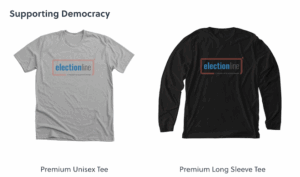 You’ve asked for it, well now you’ve got it! Just in time for all of your holiday gift-giving. We’ve opened up an electionline merch store using Bonfire. Currently we’re offering a couple of different t-shirts, a long-sleeve t-shirt and a hoodie.
Election News This Week
 Federal Update: Nine attorneys general across the United States signed a letter to Department of Homeland Security nominee Markwayne Mullin this week regarding ICE agents at polling locations. Attorneys general from Colorado, Connecticut, Illinois, Maine, Minnesota, New Mexico, Oregon, Rhode Island and Washington asked Mullin to confirm in writing “the policy of DHS that ICE and other immigration enforcement personnel will not have a presence at voting and election administration locations during the 2026 elections.” The letter from the attorneys general went on to say, “We have heard concerns from many of our constituents about potential voter intimidation that would arise from an armed law enforcement presence at polling locations. As such, we believe it is in the public interest to have a clear understanding of this policy from your office.” In Arizona, Attorney General Kris Mayes and Secretary of State Adrian Fontes are warning county officials not to hand over full, unredacted voter files to the federal government amid probes by the Federal Bureau of Investigation and the U.S. Department of Homeland Security into the state’s 2020 election. According to Votebeat, they wrote in a joint letter to county recorders that disclosure of such materials to the U.S Department of Justice would “violate both federal and state law.” They urged the recorders, who control voter registration data, to “fulfill your oath by declining any such illegal demands.” Mayes and Fontes stopped short of promising litigation against anyone who gave voter information to the federal agencies, though they hinted at it. On social media on Sunday, President Trump threatened to not sign any bills into law until the Safeguard American Voter Eligibility (SAVE) America Act is approved by the Senate, doubling down on his push to change voting requirements ahead of the midterm elections. However, on Capitol Hill, Senate Majority Leader John Thune (R-South Dakota) cast major doubt on the prospect of using a procedural maneuver to get a package of voting reforms passed despite a fresh threat from President Donald Trump. “It is way more complicated, I think, than what a lot of people believe,” Thune told reporters Monday about a proposal to reimagine Senate rules for the voting bill, the SAVE America Act. He said Republicans continue to have conversations about it.
 2026 Primaries: Voters headed to the polls in Mississippi for federal primaries this week and according to a poll worker in Natchez County, it was slow going. There were a few issues reported at polling places on primary election day. In Jackson County, in one split precinct, there were no Republican ballots on hand to start the day. Geanette Perkins told WAPT, “She gave me a ballot. I said, ‘Ma’am, everybody on here is a Democrat. There are no Republican names on here.’ Oh, so she made a phone call, and they told her that they were going to have somebody come out. So she said, ‘Come back.’ So I had to come back, which I mean, it’s not a really big inconvenience, but it was an inconvenience, because I came in early, tried to get it done, because I have other things to do today.” The Republican ballots arrived a couple of hours later. In Washington County, voters reported that their addresses were incorrectly entered into the state system. This caused some issues with voters finding their correct polling location.
 Public Opinion: Americans’ confidence that their elections will be run fairly has dropped to its lowest point in years, according to a new PBS News/NPR/Marist poll. Ahead of the 2026 midterms, two-thirds of Americans say they are confident their state or local government will run a fair and accurate election, a drop of 10 percentage points from the month before the 2024 presidential election. The percentage who expressed confidence is at the lowest it’s been since Marist first asked this question in 2020. The drop has been driven largely by Democrats and independents, whose confidence has dropped 16 and 11 percentage points respectively. Republicans, however, are 3 percentage points more confident in how elections will be run this November, within the poll’s margin of error. According to PBS, one third of Americans say voter fraud is the single biggest threat to keeping elections safe and accurate, according to the new poll. But the public’s anxieties about voting are more complicated and more divided than the president would suggest. Another 26% cite misleading information as the biggest threat, while 24% say voter suppression. Foreign interference was named by just 8 percent, despite a recent renewed assertion from Trump, as part of his shifting justification for strikes on Iran, that Tehran tried to meddle in recent presidential elections. According to this latest poll, 58% of Americans are concerned that people will show up to the polls in November only to be told they are not eligible, a striking 16 percentage point jump from January 2020. The poll also reveals a sharp disparity between younger and older voters. Three-quarters of Americans under 30 years old are concerned about voters being told they are not eligible; while just 43% of Americans 60 years old and above share the concern. Close to half of Americans support the idea of the National Guard at polling places to monitor this November’s midterm elections. The poll found 46% of Americans support the idea, compared to 54% who say they oppose it.
 Bloody Sunday Anniversary: This week marked the 61st anniversary of a civil rights march in Selma, Alabama that became known as Bloody Sunday. On March 7, 1965, Alabama state troopers violently attacked civil rights marchers as they crossed the Edmund Pettis Bridge. The violence that day shocked the nation and is credited with helping ensure passage of the Voting Rights Act. According to the Associated Press, this year’s anniversary celebrations came as the U.S. Supreme Court considers a case that could limit a provision of the Voting Rights Act that has helped ensure some congressional and local districts are drawn so minority voters have a chance to elect their candidate of choice. “I’m concerned that all of the advances that we made for the last 61 years are going to be eradicated,” said Charles Mauldin, 78, one of the marchers who was beaten that day. Former state Sen. Hank Sanders, who helped start the annual commemoration, said the 1965 events in Selma marked a turning point in the nation and helped push the United States closer to becoming a true democracy. “The feeling is a profound fear that we will be taken back — a greater fear than at any time since 1965,” Sanders said. The annual commemoration in Selma is a mix of a civil rights remembrances, church services and a street festival filled with vendors and food trucks. It is also part political rally with an eye on November’s midterm elections and a longer view to the 2028 presidential race.
 Stickers News: Our cup runneth over this week! West Virginia Secretary of State Kris Warner’s office organized a contest for eighth grade students to design a new “I Voted” sticker. Overall, there were more than 1,100 entries from 42 counties. Each county chose a winning design, and then the contest was narrowed to four regional winners. “We gather here in this beautiful chamber to recognize the winners of West Virginia’s first ever ‘I Voted’ sticker contest,” Warner said. “This sticker contest has been an exciting new way to engage our young people, our schools, our parents, our teachers, our county clerks and our communities. And what better time to honor their work than this year, as we look towards America’s 250th anniversary.” The contest saw slightly fewer than 16,000 votes, which Warner noted was more votes than were cast in 54 of the 55 counties for the last non-
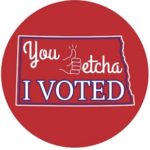 presidential primary in 2022. Reese Childers, a student at Shady Spring Middle School in Raleigh County was the winner. “It’s very important to vote,” she said. “You really need to get out there and do it, even if you don’t feel like it. You probably should, because then you’ll have your sticker on your chest. My sticker on your chest.” North Dakota may not have voter registration, but they will have a statewide “I Voted” sticker this year! The new stickers were designed by Haylee Senger, deputy auditor of Bottineau County. Senger said her “You betcha, I voted” design was inspired by a Midwestern-themed sticker that said “Ope.” “Then I got designing, and it kind of came to life,” Senger said. “I just thought it would be fun.” Howe’s office received 478 sticker entries from 72 North Dakota communities. Designers ranged in age from kindergarten students to grandparents. Five finalists were selected, and North Dakotans were able to vote for their favorite design in January, Howe said. The new “You betcha, I voted” stickers will be available during the 2026 primary and general elections with the leftover stickers being used in future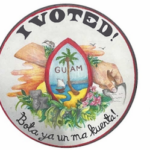
 elections until the supplies run out. Election 2026 voters will walk away with one of three new “I Voted” stickers, with the Guam Election Commission adopting new sticker designs submitted by elementary, middle, and high school students from around the island. Young artists from every level “used their art to bridge the gap between the classroom and the ballot box,” engaging family and friends along the way, GEC stated. Besides their artwork appearing on thousands of lapels, first-place winners also got an Apple iPad and $50 Apple gift card from GEC “These designs are more than just stickers; they are symbols of our island’s future,” said GEC’s Paciano Gumataotao, instructor for the University of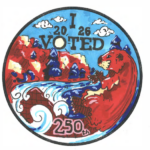
 Guam PD894 class that helped host the contest. “By involving our youth in the spirit of democracy today, we are ensuring a stronger, more engaged Guam tomorrow,” Gumataotao said in a statement. And finally, congratulations to Bodhi Andrews, Kindergartener from Buckingham Elementary School, and to Rowan Lundy, 11th grader from Mountain View High School for winning the 2026 “I Voted” sticker contest in Deschutes County, Oregon. Bodhi’s “I Voted” sticker will be featured on the May 19, 2026 Primary Election Voters’ Pamphlet cover and Rowan’s “I Voted” sticker will be featured on the November 3, 2026 General Election Voters’ Pamphlet cover.
Personnel News: Bob Rucho, a former state senator, has resigned his seat on the North Carolina State Board of Elections. U.S. Virgin Islands Board of Elections member Florine Audain-Hassell announced her resignation on March 4. Rhode Island Secretary of State Greg Amore is running for re-election. Angela Hawkins has joined the North Carolina State Board of Elections. Yolo County, California Clerk/Recorder/Assessor Jesse Salinas announced that he will seek re-election. Hamtramck, Michigan City Clerk Rana Faraj who had been on paid administrative leave since Nov. 10 has been fired. Jenny Wooten, who has been chosen by the South Carolina Elections Commission to lead the agency, has withdrawn from consideration. Nevada Secretary of State Cisco Aguilar has filed for re-election. Following a nearly four-decade career with the Robertson County, Tennessee Election Commission, including 23 years spent as Administrator of Elections, Cathy Hamsley has retired. Democrat Bryan McCarty announced his candidacy for Wyoming Secretary of State. Boston Election Commissioner Eneida Tavares has stepped down. Paul Chong, Commissioner of City Records, will oversee the operations of the election department while the city searches for a permanent commissioner. Congratulations to Karen Brinson Bell, former director of the North Carolina State Board of Elections and Kimberly Wellborn, director of the McDowell County board of elections for being inducted into the Order of the Long Leaf Pine for their contributions to the state. The award recognizes exemplary service to the state of North Carolina.
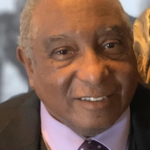 In Memoriam: Rev. Bernard Lafayette, who led the 1965 voting rights campaign in Selma, Alabama died March 4 at age 85. A Florida native, LaFayette became involved in the Civil Rights Movement while a student at Nashville’s American Baptist College, where he roomed with another future civil rights leader, the late U.S. Rep. John Lewis. The pair, joined by fellow student James Bevel, attended nonviolence training with Rev. James Lawson, who had studied nonviolent resistance techniques in India with Mahatma Gandhi. In his 2013 memoir about the Selma campaign, “In Peace and Freedom,” LaFayette wrote that he volunteered to serve as director of the Alabama Voter Registration Campaign for the Student Nonviolent Coordinating Committee, or SNCC, despite being told he would not be successful in registering Black residents to vote. Prior to the Selma campaign, Lafayette participated in Freedom Rides, part of an effort to desegregate interstate bus travel. He was arrested with other Freedom riders in Jackson, Mississippi and jailed at Parchman State Prison Farm in June 1961, one of 27 times he would be arrested. LaFayette returned to American Baptist College to serve as the school’s president from 1992 to 1999. At the time of his death, LaFayette served as chairman of the board of the Southern Christian Leadership Conference, an Atlanta-based civil rights organization founded in 1957 by the Rev. Martin Luther King, Jr. He is survived by his wife, Kate Bulls Lafayette, and two sons, Bernard, III, and James.
New Research & Resources
“How Research–Practice Partnerships Can Strengthen Experiments Designed to Build Trust in American Elections” by Cheryl Boudreau, Jennifer Gaudette, Thad Kousser, Seth J. Hill, Mackenzie Lockhart, & Laura Uribe: To address the challenge of declining trust in American democracy in the wake of the 2020 presidential contest, election officials across the nation have undertaken innovative public information campaigns. Academic studies demonstrate that exposure to these messages can increase public confidence but do not show which types of messages are most effective. We report a set of three experimental studies that harness research–practice partnerships with these officials to vary one key aspect of an informational message while holding other features constant. The pre-registered experiments (accessible at: https://osf.io/y38sp; https://osf.io/fya69): (a) compare the impact of messages conveyed through earned versus paid media; (b) ask whether Americans are more responsive to messages from federal or from state election officials; (c) explore the impact of videos and static visuals. Taken together, this set of collaborative experiments demonstrates the unique opportunity that research–practice partnerships allow to test real-world messages through strong causal inference techniques, providing rigorous evidence that can inform practice on the front lines of American democracy. Now published in Politics and Governance, available on open access at: https://doi.org/10.17645/pag.11692
 Ballot Cure Template: Ballot cure is one of those processes that sounds simple. A voter missed a signature, you reach out, and they fix it. When the mailing does its job well, it turns a potential lost vote into a successful one. Over the years, the Center for Civic Design partnered with election offices across the country to redesign their cure forms. They’ve seen what works and what doesn’t. CDC has seen where voters get confused, where legal text buries the action, and where a form asks for information the office already has. CDC has taken everything they’ve learned from that work and turned it into a template any office can use. The cure mailer template is now available to download as part of their new voter response mailing toolkit. It’s designed to be adaptable to any jurisdiction size, and you can customize it to meet your state’s specific requirements. The template is part of a broader toolkit CDC is building with more voter response mailing types coming Spring 2026, but the cure form is ready to use right now. CDC is building this toolkit in the open, and they want to hear from you. Have feedback on the template? A use case they haven’t covered? Reach out at hello@civicdesign.org.
Ballot Measures, Legislation & Rulemaking
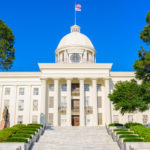 Alabama: Straight-ticket voting could be a thing of the past in Alabama. HB 575, sponsored by Rep. Mary Moore, D-Birmingham, would eliminate an option on Alabama ballots that allows voters to choose a party’s entire slate of candidates with a single ballot mark. Alabama is one of five states that uses the voting system, according to the National Conference of State Legislatures. As of March 9, the bill was not scheduled to be in committee this week, and its prospects of passage are slim. Democrats are a superminority in the Alabama Legislature, and there are about 10 days left in the 2026 legislative session.
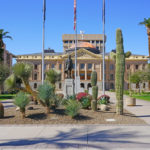 Arizona: For months, Secretary of State Adrian Fontes has asked lawmakers to let him use millions in leftover funds from last year’s Congressional District 7 special election to supplement election funding this year. The Republican-led Joint Legislative Budget Committee at first declined to consider most of that request, only approving $650,000 for cybersecurity after the state’s candidate portal fell victim to a cyberattack last year. But, on March 4, the committee approved most of the remaining funds Fontes had asked for. The $2.5 million approved by lawmakers includes $1.7 million for election expenses incurred by the state’s 15 counties; $500,000 for general and primary election costs; and $240,000 for security for the office through June. The committee declined to consider requests for $200,000 for voter registration database planning and $160,000 for past security costs. In a statement, Fontes said the new money will address “the most pressing issues” heading into the 2026 election cycle.
Republicans in the Senate have passed legislation that would make getting citizen initiatives on the ballot more difficult and revert all counties to precinct-based voting. House Bill 4115 would require paid petition circulators to follow a specific script when approaching potential signers, including disclosing the state where they live and that they are a paid petition circulator. The bill, sponsored by House Speaker Steve Montenegro, would also require signature gatherers to wear a badge saying they’re a paid circulator and disclosing the state where they live. HB4115 passed the Senate by a party-line vote and heads now to Hobbs. The governor has regularly vetoed legislation that restricts voting.
Republicans are also once again pushing to bring back neighborhood voting locations. Senate Bill 1746 would force all counties to go back to precinct-based voting, a change that election deniers in the legislature have been championing for years. Sponsored by Sen. Jake Hoffman, a Queen Creek Republican and founder of the far-right Arizona Freedom Caucus, the bill would still allow counties to use voting centers, like most counties currently do — but only in addition to precincts. Voting centers allow any registered voter to show up and cast a ballot at any polling site in the county. But only voters assigned to a precinct can vote at that precinct, and if they vote at the wrong location, their ballot won’t be counted. All Arizona counties used to use precincts, but began switching to voting centers more than 10 years ago. Now, only three counties use precincts exclusively and four more use a hybrid system with both vote centers and precincts. Eight counties — including Maricopa and Pima, where 75% of voters live — use only vote centers. Hoffman’s proposal would also close public schools to students on Election Day and require schools to serve as polling locations if the county requests it. But it would also require teachers to work that day, and would ban them from taking the day off. SB1746 passed the Senate Monday by a vote of 16-13, along party lines. It will next head to the House for consideration.
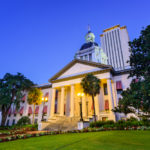 Florida: The Senate has rewritten a House election bill with a sweeping amendment that folds in much of the Senate’s approach to voter citizenship verification and broader election administration changes. Lawmakers adopted a delete-all amendment to HB 991 replacing the bill’s original language with provisions drawn largely from SB 1334, sponsored by Vero Beach Republican Sen. Erin Grall, effectively making HB 991 the vehicle for the Senate’s election proposal. The Senate’s delete-all amendment replaced a voter framework that would have been created by HB 991 for voters whose citizenship has not been verified. The original House proposal would have created a new category of “unverified voters” for people whose citizenship could not be confirmed through existing records during the registration process. Those voters could still be registered but would be required to cast a provisional ballot if their citizenship had not been verified by Election Day, with the ballot counting only if proof of citizenship was provided by 5 p.m. on the second day after the election. The Senate rewrite removes that classification and instead focuses on expanding the use of government databases to verify citizenship during the registration process. Provisional ballots would still be available to citizens under existing Florida election law when their eligibility cannot be immediately confirmed. Vote validation and post-election audit provisions were also fully removed from the House bill. The Senate language — largely drawn from SB 1334 — defines documents acceptable as evidence of U.S. citizenship, including records such as a certified birth certificate, valid U.S. passport, certificate of naturalization, Consular Report of Birth Abroad, or a federal court order granting citizenship. If a voter’s current legal name differs from the name listed on the citizenship document, the bill would require additional documentation demonstrating the name change. The measure would also revise Florida’s voter registration system to collect more detailed citizenship information and add stronger warnings to the registration form. Applicants would be required to acknowledge that falsely affirming citizenship status constitutes a third-degree felony under both state and federal law. Under the proposal, Florida’s online voter registration system would compare identifying information from applicants against Department of Highway Safety and Motor Vehicles (DHSMV) records and record citizenship status in the statewide voter registration system. If DHSMV records indicate the person is not a U.S. citizen or that acceptable documentation is not on file, the system would transmit the application to the local Supervisor of Elections for further review using available state and federal governmental sources. The Florida Department of State would likewise be required to review information from various governmental sources to identify potentially ineligible voters and notify county Supervisors when further action may be warranted. Beyond voter registration, the Senate language includes several broader election policy changes. The bill would require DHSMV to place an applicant’s legal citizenship status on Florida driver licenses and identification cards issued to qualified individuals by January 1, 2027.
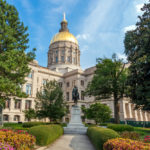 Georgia: Senators shot down a bill March 5 that would have switched the state’s voting method to paper ballots filled out by hand before this November’s elections. The bill’s defeat sets up a scramble for Georgia lawmakers to find a way to remove computer QR codes from ballots this year, as required by a state law passed two years ago. The Senate voted 27-21 on the bill, two votes short of the majority needed for legislation to pass in the 56-member Senate. Seven senators skipped the vote following warnings of election “chaos” if it passed. “We’re at an impasse,” said Sen. Max Burns, R-Sylvania. “If we ignore it again, we’re just going to kick the can. Sooner or later, folks, you have to pay the piper, and it’s time to remove the QR codes.” The legislation, Senate Bill 568, also would have limited early voting locations. Currently, Georgians can vote in advance of an election at any location in their county, but the bill would have assigned voters to one site to ensure the correct ballots are pre-printed for each jurisdiction. According to WBAE, because SB 568 failed before the deadline for bills to pass at least one legislative chamber, either the state Senate or House, it’s likely dead this legislative session. But it could be revived by amending a different elections bill that has advanced. One candidate is Senate Bill 214, a measure that cleared the Senate last year that would also require almost all Georgia voters to bubble in their choices instead of using touchscreen computers.
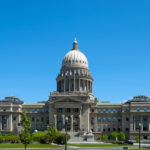 Idaho: Potential jurors may have the option to instead work the election polls under a bill advancing in the Legislature. The Senate State Affairs Committee on Monday approved House Bill 560, which would allow county clerks to request from the jury commission that prospective jurors be given the choice to be excused from jury duty to serve as poll workers. Those who accept and volunteer as poll workers in an upcoming election would be excused from jury service for the next two years. The bill now goes to the Senate floor for consideration. It passed the House 68-0 with two members absent, and if approved by the Senate, would go to the governor for a signature or veto. Senate bill sponsor Sen. Phil Hart, R-Kellogg, said county clerks were in favor of the bill, which would allow them the option to seek more poll workers if they’ve determined there’s a shortage.
 Chicago, Illinois: Chicago Mayor Brandon Johnson wants to honor the late Rev. Jesse Jackson and vote on an ordinance aimed at providing “security measures for the protection of poll workers, the electorate, and election-related activities.” The “Reverend Jesse L. Jackson Sr. Fair Access to Democracy Ordinance” would prohibit federal immigration agents from entering so-called “democracy zones” outside polling places, require landlords to provide secure mailboxes for tenants, and protect election judges against doxing, according to a draft of the ordinance obtained by CBS News Chicago. The ordinance named after him would create so-called “democracy zones” that would extend 100 feet outside existing campaign-free zones around Chicago polling places, where people are prohibited from soliciting votes. Federal immigration agents would be prohibited from entering those “democracy zones” for civil enforcement operations. The measure also aims to protect election judges and other government workers from doxing by establishing new penalties for intentionally publishing sensitive personal information without their consent “with the intent to cause harm,” or knowing that it could be used to harass, intimidate, or threaten injury to that person. The measure also would require landlords to provide secure mailboxes for every apartment in their buildings. Violations of the new restrictions could result in fines of $500 to $5,000. Government employees whose “personal identifying information is disclosed or who is subjected to harassment or intimidation” in violation of the ordinance also would be entitled to file lawsuits for damages. The city council was set to consider the resolution on Wednesday, but Johnson postponed the special meeting indefinitely and without explanation.
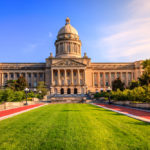 Kentucky: An omnibus elections bill that among other changes would allow Republican U.S. Sen. Rand Paul to run for reelection and president at the same time cleared the House in a narrow vote March 4. Forty lawmakers from both parties voted against House Bill 534, splitting the usually unified GOP caucus. But 53 GOP lawmakers approved the bill, which sends it to the Senate for more consideration. The bill allows the Kentucky State Board of Elections to enter agreements with federal agencies to identify noncitizens who have registered to vote in Kentucky. Voters in the state passed a constitutional amendment to bar noncitizens from voting in elections in Kentucky in 2024. After drawing opposition from county clerks, the bill had been sent back to committee for revisions. HB 534 passed out of the committee Thursday morning with 12 Republicans voting for it, and one Republican and three Democrats opposing it. The new version removed an emergency clause that would have put the bill into effect shortly before the primary election in May, which county clerks had said would not give them enough time to prepare for the changes. The bill would require the Administrative Office of the Courts to send the State Board of Elections a list of persons convicted of a felony, including those who are appealing their cases, who under Kentucky’s Constitution are disqualified from voting. Previously, some voting rights have been restored to people who have served sentences for non-violent offenses under the Beshear administration.
A Republican and a Democrat are behind bills in the House that would give the state’s two major political parties a chance to open their primaries to the fastest-growing group of Kentucky voters — independents. While any such change won’t come in time for this year’s May 19 primary when voters will nominate candidates for local, state and federal offices, Republican Rep. Vanessa Grossl, of Georgetown, told the Lantern it’s a discussion worth having for the future. About 11% of Kentucky’s voters are registered as independent or with a third party, making them ineligible under current law to vote in the state’s partisan primary elections.
 Louisiana: With a potentially landmark Supreme Court ruling looming, 29 Louisiana Democratic lawmakers have introduced legislation that would establish state-level protections for voters if the nation’s federal voting rights law is weakened or overturned. Senate Bill 365, dubbed the Louisiana Voting Rights Act, was authored by Sen. Royce Duplessis and 28 co-authors in both chambers of the Louisiana Legislature. The bill spans roughly 20 pages and is modeled after the federal Voting Rights Act. The legislation would create the Louisiana Voting Rights Commission, establish a preclearance system requiring certain political subdivisions to seek approval before making changes to voting rules, and prohibit any election policy or practice that suppresses the voting power of protected class members. The bill comes as the U.S. Supreme Court prepares to issue a decision in Louisiana v. Callais, a case centered on the state’s second majority-Black congressional district, which could carry sweeping consequences for the future of the federal Voting Rights Act. Duplessis said the legislation is a direct response to that uncertainty. “The whole thinking behind it is that we don’t know how the Supreme Court is going to rule, but that doesn’t take away our rights and responsibilities as a state to say where we stand,” Duplessis said, “because the Supreme Court can say we’re going to leave it up to the states to decide. Well in that case, Louisiana can decide.”
Three bills part of the Louisiana Department of State’s legislative package aim to strengthen election security laws, Secretary of State Nancy Landry announced this week. House Bill 691: This bill, authored by State Rep. Gerald “Beau” Beaullieu IV (R-New Iberia), proposes checking Louisiana voter rolls against the federal Systematic Alien Verification for Entitlements (SAVE) program. The secretary of state would be required to “submit the name of every potential noncitizen registrant to the division of election integrity for investigation.” House Bill 547: This bill, authored by State Rep. Polly Thomas (R-Metairie), aims to amend current law related to election offenses to keep people from photographing, recording or reproducing voter registration information in precinct registers. Senate Bill 319: This bill, authored by State Sen. Thomas Pressly (R-Shreveport), is related to identity verification for voters, proposing adding other methods of identification. Specific methods proposed include U.S. passports and certificates.
 Minnesota: Minnesota is one of 23 states along with Washington D.C. that allows same-day voter registration. Rep. Duane Quam (R-Byron) wants to add a step to ensure the ballot of freshly registered voters is cast properly via HF3845. It would require same-day registrants who are unable to provide a Minnesota driver’s license, Minnesota state identification number or Social Security number on Election Day cast a provisional ballot. Quam said the change would improve election integrity and ensure no one’s denied a ballot. The bill calls for completed provisional ballots to be set aside in “a secure, sealed ballot box” and later counted if the voter returns to the city clerk’s or county auditor’s office in the seven days following the election to present a Minnesota driver’s license, Minnesota state identification number or Social Security number, or after voter eligibility is verified by county auditor or city clerk using other data. All other ballots would be rejected and the voter would receive written notice with an explanation within 6-10 weeks following the election. Nicole Freeman, government relations director with the Office of the Secretary of State, said that although the law would apply to a small subset of votes, providing training and setting up a way to track provisional ballots requires a big system change that would be challenging to implement this close to an election. The House Elections Finance and Government Operations Committee failed to advance the bill this week on a 6-6 party-line vote.
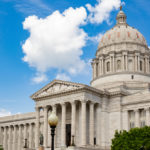 Missouri: The secretary of state may be given subpoena power to investigate complaints of election fraud under terms of legislation passed March 4 in the House. With subpoena power, the secretary of state could call for records or witnesses related to an election investigation. If someone refuses to present materials or be interviewed, they could be held in contempt of court. Bill sponsor Rep. Brad Banderman, R-St. Clair, said the materials and witness interviews subpoenaed would just give the secretary of state more information to determine fraud. The bill would also give the secretary of state’s office access to records the Department of Revenue maintains on the citizenship status of licensed drivers.
The House moved March 4 to restore voting rights to people on probation and parole. Rep. Melanie Stinnett, R-Springfield, sponsored the bipartisan bill (HB 2592), which passed 107 to 36. “These individuals are living in our neighborhoods, they’re working alongside of us, they’re paying their taxes, and we trust them to care for their children,” Stinnett said during first-round approval earlier this week. “I believe that we should trust them with a ballot.” More than 53,000 Missourians were under state supervision at the end of February, according to a statement provided to STLPR by the Department of Corrections. Many of them would have their voting rights restored, likely in August, if the Senate approves the bill. People who have committed suffrage-related offenses would be excluded from the legislation.
A bill to protect ballot summaries written by politicians from judicial revision passed the House this week, as lawmakers moved to restore a law struck down earlier this year by the state Supreme Court. The legislation would give the secretary of state three chances to revise ballot summaries found to be insufficient or unfair before a judge could take over the job. And if the trial court judgment is overturned on appeal, the measure would require the appeals court to send it back to the trial court for revisions rather than make any changes. State Rep. John Simmons, a Republican from Washington, said revising ballot summaries is a political job and “the courts for recent history have been actually circumventing the will of the General Assembly, the elected people in writing a lot of these statements on their own.” The House voted 90-55 to approve the legislation, with all Democrats and nine Republicans opposed. It now moves to the Senate.
 New Hampshire: Senate Republicans passed a bill last week to bar high school and college students from using their institution’s identification cards to vote, sending the measure to Gov. Kelly Ayotte’s desk. House Bill 323 would remove a voter’s ability to use a “valid student identification card” to prove their identity to obtain a ballot. Currently, state statute allows a student identification card as one of several options for proving identity, along with a driver’s license from any U.S. state, a state-issued non-driver’s identification card, a U.S. armed services identification card, or a U.S. passport or passport card. The bill passed the House, 190-148, with five Democrats joining all Republicans in voting for it. On March 4, the Senate passed it, 16-8, along party lines. The bill is the latest high-profile attempt to tighten requirements for voting in the state, and it presents Ayotte with a major decision. Republicans argue the state’s voting laws have allowed too many opportunities for fraud. HB 323 takes away the chance that a person could use a fake high school or college identification card to vote when they are not eligible, supporters say. But Democrats have slammed the legislation, arguing it is an attempt to suppress the vote of college students who may not have a driver’s license.
 Oklahoma Ballot Measure: The Oklahoma Secretary of State’s Office announced that State Question 836, which aimed to put a proposal for an open primary election system before Oklahoma voters this year, failed to meet the required number of valid signatures to qualify for the ballot. The Vote Yes 836 campaign turned in more than 200,000 signatures on Jan. 26. The required threshold of valid signatures to qualify for the ballot was 172,993. However, following weeks of review, the Secretary of State’s office reported that fewer than the required number of signatures were deemed valid. Organizers said the campaign will now evaluate available procedures to confirm all lawful petition signatures have been included. Former Republican State Senator and State Question 836 advocate, A.J. Griffin, shared the following statement. “Oklahomans, especially our young people, are ready to lead, not languish, and the voices and needs of all lawfully registered voters should drive policies funded by taxpayers. I view this citizen petition as a great success already: opening the eyes of many thousands of voters about how our election system has brought us disappointing results, and why we have to change it if we want to make the most of our statewide resources and talent. This conversation has made a big impact, and the issue will be made even more real when our closed June primary elections come,” Griffin said.
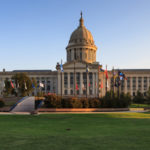 Oklahoma: Meanwhile at the Legislature, lawmakers advanced their own resolution that asks voters to overhaul state, federal and partisan county elections. House Joint Resolution 1019, authored by Rep. Eric Roberts, R-Oklahoma City, would require every recognized political party in Oklahoma be given the opportunity to nominate a candidate for every general election. The candidate must win the party’s primary or runoff election, or be unopposed. The measure carves out exceptions for unopposed candidates. The legislative effort cleared the House Rules Committee with an 8-2 party line vote last week. Oklahoma currently has a closed primary system, though state law lets recognized political parties choose to allow unaffiliated voters to participate. All partisan primary elections will be closed to independent voters for the next two years after no party notified the state they wanted to open them.
Legislation making changes to early voting in Oklahoma was advanced by the Senate this week. Senate Bill 1362 seeks to add a Saturday to every early voting period before elections. Rep. Mike Osburn, R-Edmond, is the House principal author. Presently early voting is set from 8:00 a.m. to 6:00 p.m. on the Thursday and Friday prior to an election and partial Saturdays before general elections. According to this change, SB 1362 would enact polls opening those same hours Thursday through Saturday. The option to vote from 8:00 a.m. to 6:00 p.m. the Wednesday before general elections remains unchanged.
 South Dakota: Voters in South Dakota will soon be able to challenge other voters’ citizenship. Republican Gov. Larry Rhoden signed legislation into law last week that authorizes challenges by individuals and election officials. The new law will not affect the June 2 primary election, because it won’t take effect until July 1, which is the regular effective date for new laws in the state. State law already allows challenges to a voter’s registration up to the 90th day before an election, if a person is suspected of lacking South Dakota residency, voting in another state or being registered to vote in another state. The new law adds citizenship as a justification for a challenge. Challenges may be filed by the South Dakota Secretary of State’s Office, the auditor in the county where the voter is registered, or a voter in the same county. The challenge must be in the form of a signed, sworn statement and must include what the law describes as “documented evidence.” If a county auditor deems the challenge valid, registrants are given a chance to produce documentation verifying their registration is valid. If the auditor ultimately cancels the registration, the person may appeal to a court or their local county commission. The Secretary of State’s Office, which oversees elections, requested the bill and testified in favor of it.
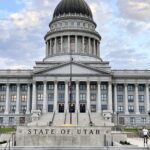 Utah: Lawmakers amended the state’s vote-by-mail system for the second year in a row, strengthening voter identification requirements, but once again rejected efforts to overhaul universal mail-in ballots and election oversight. In a repeat of 2025, Senate Republicans shut down a major proposal approved by their House counterparts to require voters to opt in to receive or return a ballot by mail and another to create a new secretary of state office. Ultimately, the Legislature approved small changes through SB194, requiring county clerks to verify both a signature and an ID number on every ballot and formalizing a conflict of interest avoidance plan for the lieutenant governor. The bill would clean up last year’s election compromise by clarifying clerks must continue to verify signatures even after the final four digits of government ID on ballots is phased in. The bill also requires the lieutenant governor, who runs Utah’s elections office, to write a conflict of interest risk avoidance plan, specifying when the lieutenant governor should be recused and who should be the replacement.
Through HB209, which requires county clerks to prohibit individuals from registering to vote for a state election unless they can provide documentary proof of citizenship, similar to Sen. Mike Lee’s SAVE America Act. Both chambers approved HB209 mostly along party lines. The bill would create a “bifurcated ballot system,” similar to that used for military service members. If a prospective voter cannot provide proof of citizenship clerks must notify the individual they cannot vote in state elections.
The Legislature also passed SB153, which would align Utah with most other states by making voter registration records public unless a voter is the victim of domestic violence, a public figure, a law enforcement or military member.
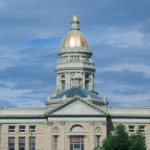 Wyoming: A joint conference committee has adopted the Senate’s position on a bill to allow public viewing during voting machine testing prior to elections. Senate File 28, “Elections-voting machine and voting system tests,” stipulates that testing of electronic voting machines before an election be open to the public, done in advance and with prior notice. As the bill came out of the Senate, prior notice was stipulated to mean two days. The House amended that to four, and also deleted a Senate provision that, at the county clerk’s discretion, no fewer than three members of the public, “but not more than a number that will ensure the orderly testing of machines” be allowed to witness the tests. Mary Lankford, speaking on behalf of the Wyoming County Clerks Association, said that she had concerns over security of the machines, especially if a lot of people show up for the testing, as well as the notification requirements. “I’ve testified in front of both of your committees about the space of the room, and the size of the room, and how many people we can get in there,” Lankford said. “We’re really talking about security versus transparency, and security for our equipment, for our testing and our election, is paramount. That’s the job.” Weather, equipment issues and delivery delays can also affect the date of testing, and sometimes four days notice is not practical, she continued. The Senate approved the JCC report in a 29-2 vote. The House also approved it by a 53-4 vote, with five representatives excused. The bill now heads to the governor’s desk.
Gov. Mark Gordon has signed legislation into law that requires county clerks to audit some ballots by hand in this year’s elections. Senate File 113, 2026 election hand count comparison, requires county clerks to audit by hand about 5% of all the ballots cast in their county during the 2026 general and primary elections. Then, county clerks will need to compare the results of the hand count to the results of the county’s electronic voting machines. The audits will include the results from one federal and one statewide race in each county, and will be conducted via audit boards made up of at least three county residents. The bill was drafted in consultation with county clerks, according to Fremont County Clerk Julie Freese.
Legal Updates
 Federal Litigation: The Democratic National Committee sued the Trump Administration this week to try to compel the government to say whether it was planning to put armed federal agents or military personnel at polling places or election offices this year. The lawsuit, filed in federal court in Washington, D.C., says that 11 separate Freedom of Information Act requests filed in October to the Department of Justice, the Department of Homeland Security and the Department of Defense have prompted no meaningful response, a violation of the law. “To ensure that the American people obtain timely knowledge of potential threats to free and fair elections and to enable the DNC to take appropriate action to ensure voting rights are protected, the DNC now seeks this Court’s aid to enforce” Freedom of Information Act requirements, the lawsuit states. According to The New York Times, it is possible that no such records exist within the Trump administration; the lawsuit is simply accusing the agencies of failing to respond to the information requests. There are no current reported plans for the administration to use armed agents or troops in the upcoming elections. United States federal law bans military personnel or other “armed” agents from being “at any place where a general or special election is held.”
 Alaska: Repeal Now, working to repeal Alaska’s current voting system, has sued state election officials, alleging that language adopted by the state for a repeal ballot measure is not “true” and “impartial” as required under state law. It is the second lawsuit filed this year challenging the wording of the ballot measure. The group is seeking to undo laws enacted through a 2020 ballot initiative that implemented nonpartisan open primaries, top-four ranked choice general elections, and new campaign finance reporting requirements. Repeal Now gathered signatures for its ballot initiative and submitted them to the state in November. The Division of Elections certified the initiative in December. The division approved ballot language titled “An Act Restoring Political Party Primaries, Single-Choice General Elections, and Campaign Finance Rules.” The wording drafted by the division was challenged in January by proponents of the 2020 ballot measure and the state’s current voting system. They said that this year’s initiative would not “restore campaign finance laws” — “rather (it) would fully repeal a litany of campaign finance disclosure requirements,” according to the complaint. The state initially defended the original ballot language. But early last month, the Division of Elections altered the wording. A new title amends the later part of the headline to read, ”repealing recent campaign finance laws.” The initial lawsuit was dropped after the change. Several days later, the Repeal Now group filed its lawsuit, challenging several aspects of the ballot language, including wording that existed in the Division of Elections’ initial version. The group is asking the Division of Elections to adopt different ballot language, under the title “An Act Ending Ranked-Choice Voting, Mandatory Open Primaries, and Recent Campaign Disclosure Laws.”
 Colorado: Elizabeth Davis was sentenced to three years in prison for committing voter fraud during the 2022 midterm election, according to a spokesperson for the 23rd Judicial District Attorney’s Office. Davis was found guilty of forgery and personating an elector by a jury after investigators determined that she had filled out two ballots in the names of her deceased ex-husband and her son during the 2022 midterm election. Davis faced a sentence between probation and a maximum of three years; she received the max sentencing of three years.
 Kentucky: The Kentucky State Board of Elections is asking a federal court to dismiss a lawsuit filed by the U.S. Department of Justice, which is seeking access to sensitive voter data. In a motion filed this week in the U.S. District Court of Eastern Kentucky, the board argues that the federal Civil Rights Act of 1960 does not allow the DOJ unfettered access to data on millions of Kentuckians who are registered to vote. It also says the board attempted to cooperate with the DOJ by providing a redacted list to avoid privacy violations. “The State Board of Elections is committed to complying with state and federal law. The Board works diligently to maintain clean voter rolls while also protecting the sensitive personal information of Kentucky’s voters,” said Executive Director Karen Sellers in a Tuesday statement. “We have worked with federal partners for many years to strengthen election integrity, and we remain committed to that cooperation. At the same time, the Board believes the courts should resolve the legal questions presented in this case so that election officials across the country have clear guidance about the scope of federal authority.” The State Board of Election’s motion to dismiss was filed by attorney Carmine G. Iaccarino. Additionally, two Kentucky voters who are naturalized citizens and voting rights groups represented by the American Civil Liberties Union of Kentucky hope to intervene in a case between the state and the U.S. Department of Justice over sharing sensitive voter data. ACLU-KY filed a motion to intervene in the DOJ’s case against state election officials on behalf of the League of Women Voters of Kentucky, the New Americans Initiative and the voters Monday. Last week, the DOJ sued Kentucky and four other states in federal court to gain access to voter registration data, including sensitive information such as driver’s license and Social Security numbers. “The Department of Justice’s demand for unredacted voter files has no legal basis and would put Kentuckians’ private data at risk,” said Corey Shapiro, legal director for ACLU-KY in a press release. “This is a blatant attempt to disenfranchise certain voters and hoard sensitive data for partisan purposes. The ACLU of Kentucky will continue to fight for the privacy and voting rights of all Kentuckians.” The motion to intervene highlights public reporting about the citizenship verification program and argues that the voters and voting rights advocates have standing to intervene in the case. It says that “the data DOJ seeks is likely to be used to challenge the voter registration of certain Kentuckians,” including voters who are naturalized citizens, have previous felony convictions, have moved out of state or who have moved back to Kentucky.
 North Carolina: U.S. District Judge Louise Flanagan shot down a First Amendment lawsuit by a North Carolina woman after she posted a photo of her voting and was instructed to take it down or face prosecution. Susan Hogarth filed suit in 2024, after posting a selfie of herself on X holding up her ballot while voting in the Libertarian primary. The state board of elections contacted her and asked her to take the post down, notifying her it was a Class 1 misdemeanor. She sued, claiming the state’s laws prohibiting ballot photography violate the First Amendment. Flanagan found in favor of the defendants, who included members of the state and Raleigh board of elections, along with Raleigh District Attorney Lorrin Freeman. Polling places are a nonpublic forum, Flanagan said in her 15-page order dismissing the case, and are held to a more lenient standard in First Amendment challenges. The government is allowed to have content-based restrictions on speech as long as they are reasonable restrictions, and not because public officials oppose the speaker’s view. The statutes Hogarth challenged do not discriminate based on viewpoint, Flanagan wrote, and banning photographs prevents voters being paid or coerced to vote a certain way. “This prohibition prevents the use of the voted ballot or a person in a voting booth as proof of compliance in a vote-buying scheme, and protects voters from compulsion to disclose photographs of their ballot or themselves to ensure submission to a would-be vote intimidator’s demands,” she wrote. “Defendants’ interests in preventing bribed and forced votes are connected to maintaining the integrity of the voting booth.”
 Virginia: This week a federal court reaffirmed a January ruling that found that Virginia’s current practice of disenfranchising all people with felony convictions violates post-Civil War laws that required former Confederate states to guarantee voting rights for newly emancipated Black residents. The series of laws, called the Readmission Acts, also barred states from constitutionally disenfranchising people other than those convicted of crimes that were considered common law at the time. Under current law, all ex-felons’ voting rights are automatically revoked and formerly incarcerated people must petition the governor to have them restored. The American Civil Liberties Union of Virginia is the plaintiff in the case, which was originally filed in 2023 and last heard in January. Attorney General Jay Jones then filed a motion that sought to modify a list of applicable felonies under the Readmission Acts, which blocked states from automatically and permanently stripping the voting rights of people convicted of crimes besides murder, manslaughter, arson, burglary, robbery, sodomy, mayhem and larceny. When the suit returned to courts on March 9, the ACLU floated the possibility of allowing incarcerated people the ability to vote, so long as their felonies were not common law. Judge John Gibney ordered the state to uphold the January ruling and to not address the question of voting in prison. “It is apparent that the parties are jockeying for relief not granted earlier. The plaintiffs now ask the Court to tell the electoral officials how and when to allow prisoners to vote; during the litigation of the merits of this case, they sought only an end to automatic disenfranchisement,” he wrote.
Opinions This Week
National Opinions: SAVE Act, II, III | Federal election interference, II | Voting Rights Act | Voting rights, II | 2026 primaries | Department of Justice lawsuits
Colorado: Tina Peters | Audits
Hawai’i: Open primaries | Wait times
Indiana: Secretary of state, II | Early voting
Kansas: Election legislation
Maine: Ranked choice voting | Federal interference
Michigan: Voting reforms
Missouri: Election integrity
New Hampshire: Election fraud
New York: Election fraud | Election legislation
North Carolina: SAVE Act | Voter registration
Ohio: Ranked choice voting, II, III
Oklahoma: Voting rights
Call For Papers
 ESRA 2026: The Election Science, Reform, and Administration (ESRA) Conference invites proposals for its upcoming conference focused on pressing issues in U.S. elections. The purpose of the conference is to engage both election practitioners and scholars by providing a forum for collaboration and exchange that can stimulate policy evaluation and innovation in election administration. Unlike traditional academic conferences, ESRA is intentionally designed as a shared space where academics, election officials, policymakers, advocates, and other election professionals can learn from one another. The conference emphasizes the practical application of scholarly research and the integration of practitioner experience into research agendas, with the goal of improving the administration, integrity, accessibility, and resilience of U.S. elections.
We welcome proposals that address current and emerging challenges in U.S. elections, including but not limited to:
- Election administration and management
- Voter registration, turnout, and participation
- Election technology, security, and infrastructure
- Election law, policy, and reform
- Accessibility, equity, and inclusion in elections
- Misinformation, disinformation, and voter confidence
- Poll worker recruitment, training, and retention
- Elections communications
- Evaluation of election policies, programs, and innovations
Interdisciplinary, applied, and collaborative proposals are especially encouraged.
This call for proposals is open through March 20, 2026. Click here to learn more
Upcoming Events
Voting Machines, Risk-Limiting Audits, and Faith in U.S. Election Results: Join UCLA’s Safeguarding Democracy for a discussion on Voting Machines, Risk-Limiting Audits, and Faith in U.S. Election Results. Andrew Appel, Eugene Higgins Professor Emeritus and Senior Scholar in the Department of Computer Science at Princeton University and Visiting Professor at Cornell University will be the featured speaker and Richard l. Hasen, Director, Safeguarding Democracy Project, UCLA School of Law will moderate. When: March 19, 12:15pm Eastern. Where: Online.
Rhode Island Town and City Clerks Association (RITCCA): RITCCA’s Annual Conference will be held March 19 in Warwick. When: March 19. Where: Warwick.
Georgia Association of Voter Registrars and Election Officials (GAVREO): The Georgia Association of Voter Registrars and Election Officials will hold its 2026 conference at the Classics Center in Athens. When: March 22-25. Where: Athens.
Virginia Electoral Board Association (VEBA): The VEBA Annual Conference will be held March 23-25 at the Omni Homestead Resort in Hot Springs. When: March 23-25. Where: The Homestead.
Municipal Clerks and Finance Officers Association of Minnesota (MCFOA): MCFOA will hold its 2026 Annual Conference at the Heritage Center in Brooklyn Center. This year’s theme, Adventures in Clerking, honors the dedication and professionalism you bring to your communities each day. Our hope is that this conference sparks inspiration, provides practical tools, and creates meaningful opportunities to connect with colleagues from across Minnesota. When: March 24-27. Where: Brooklyn Center.
How the Trump administration could impact the 2026 midterms: Join Votebeat to hear what’s at stake as the Trump administration pushes for increased federal oversight of elections. From mid-decade redistricting to the SAVE America Act to suing for voter roll data and calling to nationalize voting, the Trump administration is moving vigorously to intervene in elections, even though the Constitution gives authority over them to the states and Congress. Minnesota Secretary of State Steve Simon, a Democrat, and former Alabama Secretary of State John Merrill, a Republican, will discuss the many implications of the Trump administration’s push for increased federal oversight of elections, including how this affects the 2026 midterm elections and beyond. When: March 25, 12pm Eastern. Where: Online.
Voting Rights: Protecting the Franchise and Defending Democracy: Election Official Legal Defense Network Project Lead Angie Pitha will join a virtual panel on “Voting Rights: Protecting the Franchise and Defending Democracy,” as part of the American Bar Association’s upcoming Civil Rights Boot Camp 2.0. Speakers will discuss challenges to this year’s critical midterm elections and opportunities to support election officials, protect the vote, and counter disinformation. The Boot Camp is free and open to everyone. You can join us by clicking here to register on the ABA website. Please note that you may be prompted to create a free account to register. When: March 27, 11:10am Eastern. Where: Online.
Myths and Facts About Contesting the 2026 Midterm Elections: Join Edward B. Foley, Ohio State University, Mortiz College of Law, Rebecca Green, William & Mary Law School, and Derek Muller, Notre Dame Law School in a conversation with Richard L. Hasen, Director, Safeguarding Democracy Project, UCLA about the 2026 Midterm Elections. When: March 31, 12:15pm Eastern. Where: Online.
Lessons learned from democratic countries abroad: Join the Center for Election Innovation & Research for the first installment of our new “Trust Elections” webinar series. In the webinar, Paige Alexander, chief executive officer of The Carter Center, will join CEIR Executive Director David Becker to discuss where the US election system stands as the country approaches the midterms and what Americans might learn from other nations’ efforts to protect democratic institutions. The discussion will cover the first primary elections of 2026 and the Trump administration’s handling of election matters – including the Justice Department’s ongoing campaign to obtain states’ sensitive voter data, the FBI search of Fulton County, Georgia’s central elections facility, and the subpoena of 2020 election records in Maricopa County, Arizona. Paige and David will analyze the current state of our election system and explore how voters can help protect free and fair elections. When: April 9, 12pm Eastern. Where: Online.
Connecticut Town Clerks Association (CTCA): The 2026 Spring CTCA conference will be held April 15-17 at Mystic Marriott in Mystic – hosted by New London County. When: April 15-17. Where: Mystic.
Election Center April Workshop: In April, the focus is on state associations and state trainings both by modeling conference formats, facilitation techniques, and potential content resources. The Coalition of Election Association Leaders (CEAL) guides state groups in their maturation process with mentorship and networking opportunities. When: April 22-24. Where: Chicago.
Kansas County Clerks and Election Officials Association: The 2026 Annual KCCEOA Conference will be April 28-May 1 at the Refinery in Garden City. When: April 28-May 1. Where: Garden City.
Beat Academy: Midterm Prep: Great Lakes journalists! Work on coverage strategies, gain reporting tools and spark regional connections in our free election coverage workshop in Detroit (May 5) or Indianapolis (May 7), 9 a.m. to 4 p.m. Learn to respond to misinformation, do candidate research, report on key election drivers like immigration and affordability, and produce salient coverage that puts voter interests first. By the end of this workshop, you will: Learn how to respond to misinformation and efforts to undermine fair elections. Verify candidate backgrounds via tools and databases. Explore regional factors shaping Great Lakes midterm races. Develop coverage strategies for key election drivers like immigration and affordability. Generate story ideas and prioritize voter interests in your reporting. When and Where: May 5 (Detroit) and May 7 (Indianapolis).
2026 IIMC Annual Conference: The International Institute of Municipal Clerks will be holding its Annual Conference from May 17-21 in Reno, Nevada. When: May 17-21. Where: Reno.
2026 NACo Annual Conference & Exposition: The National Association of Counties will hold its 2026 Annual Conference & Exposition on Orleans Parish, Louisiana from July 17-20. When: July 17-20. Where: New Orleans.
NASED 2026 Summer Conference: The National Association of Directors of Elections will hold its summer conference from July 20-22 in Boston. When: July 20-22. Where: Boston.
iGO 9th Annual Conference: The International Association of Government Officials will hold its 9th Annual Conference from July 25-28 in Reston, Virginia. When: July 25-28. Where: Reston, Virginia.
2026 NCSL Legislative Summit: The 2026 NCSL Legislative Summit takes place in Chicago July 27-29, bringing together state legislators and legislative staff from all 50 states and U.S. territories for three days of collaboration, innovation and bipartisan dialogue. When: July 27-29. Where: Chicago.
Election Center 41st Annual Conference: The National Association of Election Officials (Election Center) will hold its 41st Annual Conference in Kansas City, Missouri from August 19 to 21. CERA classes will be offered August 22 and 23. When: August 19 to 21. Where: Kansas City, Missouri.
Job Postings This Week
electionlineWeekly publishes election administration job postings each week as a free service to our readers. To have your job listed in the newsletter, please send a copy of the job description, including a web link to mmoretti@electionline.org. Job postings must be received by 5pm on Wednesday in order to appear in the Thursday newsletter. Listings will run for three weeks or till the deadline listed in the posting.
Assistant Registrar of Voters, San Diego County, California– The Assistant Registrar of Voters is an executive management position reporting to the Registrar of Voters (Director). The Assistant Registrar assists the Director in managing the overall responsibilities and activities of the Department to include providing eligible citizens of San Diego County with widespread and ongoing opportunities to register and vote in fair and accurate elections for all federal, state and local offices and measures; and providing access to the information needed to utilize the initiative, referendum, and recall petition processes. Duties include the following: Assists in planning, implementing, and evaluating policies and programs as well as advises the Director on policy and program development; Identifies problems to formulate effective solutions, including implementing innovative efficiencies and process improvements to streamline election operations; Leads the procurement and implementation of new IT systems designed to enhance voting systems and election management; Collaborates with the region’s political jurisdictions, elected officials, County departments, community-based organizations, business, and/or election advocacy groups, as well as a myriad of stakeholders regarding the administration of elections; Provides leadership and works with supervisors to develop and retain highly competent, service-oriented staff through selection, training and day-to-day management practices that support the department’s mission, objectives, and service expectations; participates in programs and activities that promote workplace diversity and a positive employee relations environment; Presents reports, recommendations, and information to the Board of Supervisors and other citizen/community groups; Assists in developing the department’s annual budget, and monitors revenue and expenditure transactions; and Serves as the liaison with public and private agencies, and provides information to County departments, the public, and agency representatives on departmental initiative activities. Salary: $190,000 to $210,000. Deadline: March 21. Application: For the complete job listing and to apply, click here.
Assistant Secretary of State, Mississippi–The Elections Division has many roles in assuring that Mississippians’ voices are heard clearly through the election process. These roles include training election officials, collecting campaign finance and lobbying reports, managing the statewide voter registry, collecting election returns, and assisting local election officials in carrying out their election-related responsibilities. Application: For the complete job listing and to apply, click here.
Community Outreach Coordinator, Dallas County, Texas – Develops outreach programs, coordinates social media accounts to improve the reach and engagement of the office. Conducts research on a target audience, develops key performance indicators, and designs social media campaigns and strategies. Responsibilities: 1. Develops outreach programs to serve people in the communities and schedules regular outreach opportunities; researches the preferences of the target audience to discover current trends that may be applicable; executes a results-driven community strategy; solicits ideas from the community and develops program goals. 2. Communicates and coordinates with representatives of Dallas County’s political subdivisions regarding planning and execution of local, state, and national elections in Dallas County. Facilitates the review and finalization of elections services contracts between Dallas County and political subdivisions within Dallas County. 3. Assists in the creating and editing of written, video, and photo content; monitors social media channels for indigent defense, social justice, and community trends. Salary: $5883-47343. Deadline: March 24. Application: For the complete job listing and to apply, click here.
Election Protection Hotline Specialist, Lawyer’s Committee for Civil Rights Under Law– The Hotline Specialist position is part of our hotline team, which oversees the day-to-day functions of the 866-OUR-VOTE Hotline, as well as providing support to state-based contact centers. This position will work to support thousands of legal volunteers who respond to voter questions. The Election Protection Hotline Specialist works under the supervision of the Election Protection Senior Technical Hotline Specialist and Election Protection Infrastructure Manager. This job is directly related to elections and is fast paced, requires multi-tasking, and includes early morning, evening and weekend work. This position requires comfort with learning and using new technology and platforms. Candidates with previous campaign experience or previous Election Protection experience are encouraged to apply. Application: For the complete job listing and to apply, click here.
Election Services Manager, Virginia Dept. of Elections– The Election Services Manager will oversee and direct the work of the Election Services (ES) Division of the agency to include Election and Registration Services (ERS) (elections administration and liaisons to the local GRs), Training, and Campaign Finance (CF). Ensures compliance with state and federal laws related to the administration of elections and campaign finance. Ensures development and maintenance of efficient processes, best practices, compliance data, and trend analysis. Ensures development of a training program designed to improve compliance with requirements. Ensures accurate, uniform, and timely responses to GRs, their staff, candidates, and internal customers. Actively participates as a member of the senior management team in setting the strategic direction of the organization. Salary: Hiring range up to $130,000. Deadline: March 17. Application: For the complete job listing and to apply, click here.
Election Software Specialist, Printelect– Printelect is a dynamic and well-established regional election technology & services company with a proven track record in ballot printing, mail services, and a diverse portfolio of election products. With over fifty employees and one hundred twenty years of industry-leading experience, we take pride in our commitment to excellence and customer satisfaction. We partner with local governments throughout Virginia, North Carolina, South Carolina, and Georgia to provide products, services, and support for the conduct and administration of Federal, State, and local elections. Job Duties and Responsibilities: Work with our county and city official customers to translate their jurisdictional requirements and candidate data into formats used by voting equipment software. Utilize proprietary election management software, Microsoft Office, and Adobe Suite to build jurisdiction-specific databases, format paper and electronic ballots, and configure voting equipment to utilize those datasets. Provide phone and on-site support for our customers and troubleshoot any issues that arise. Communicate and cross-train with internal departments to facilitate accurate election preparation and good customer service. Develop a comprehensive understanding of all manufacturer hardware and software manuals, and be able to effectively communicate that information to team members and customers. Stay up to date on all new software updates and hardware offerings. Participate in on-site customer training and election day support. Salary: $55,000-60,000. Application: For the complete job listing and to apply, click here.
Election Support Aide On-Call, Olmsted County, Minnesota–Recognized as one of the best places to work in Southeast Minnesota for three consecutive years, at Olmsted County every role helps to foster a vibrant community where everyone thrives. Our employees are at the heart of everything we do, driving public service excellence and community well-being. We don’t just offer a job, we offer a career filled with purpose, growth, and fulfillment. Our benefits package ensures your wellbeing, while career advancement opportunities and professional development empower you to reach your full potential. Join us, and you’ll be part of a purpose-driven team where your work truly makes a difference. Together, we build a sustainable, healthy, and welcoming community. Under supervision, assists with Olmsted County’s election process on an on-call basis. Provides customer service to voters and assists the election administration staff with ballot processing. Supports a diverse, respectful, and inclusive workplace. Salary: $19.00 – $30.00 Hourly. Application: For the complete job listing and to apply, click here.
Elections Administrator, Lubbock County, Texas– Appointed by the Lubbock County Election Commission and reporting to the County Judge, the Elections Administrator is responsible for leading and managing all operations of the Lubbock County Elections Department. This includes oversight of budget, personnel, election systems, and departmental resources, as well as ensuring efficient and secure election processes. The role ensures full compliance with all applicable state and federal election laws, regulations, policies, and procedures, while fostering transparency, integrity, and public trust in the electoral process. Salary: $95,000 – $105,000. Deadline: April 8. Application: For the complete job listing and to apply, click here.
Elections Division Manager, Washington County, Oregon– Are you looking for a leadership role in local government that truly makes a difference? Washington County is seeking an Elections Division Manager for a critical leadership role in safeguarding democracy at the local level for our over 400,000 voters. This position oversees the administration of all federal, state, and local elections in Washington County, ensuring accuracy, transparency, and compliance at every phase of the process. This high-level position gives you the chance to lead a dedicated team, manage complex election processes, and inform the voters’ experience. Deadline: March 23. Salary: $121,647.84 – $155,217.00. Application: For the complete job listing and to apply, click here.
Elections Specialist, Kalamazoo County, Michigan– The purpose of this job is to assist with the implementation and enforcement of Michigan election laws. Provide information and support to elected officials, members of the public, and local clerks regarding the election process. Implement Election web-based initiatives. Provide backup assistance for the Elections Coordinator. Application: For the complete job listing and to apply, click here.
Program Coordinator, Dallas County, Texas–Plans and coordinates the fiscal, administrative and operational activities for programs, projects, services or contracts to ensure that goals and objectives are accomplished in accordance with established priorities, time limitations, funding limitations or other specifications. Management Scope: May supervise staff. Responsibilities 1. Assesses program needs; and develops, implements and facilitates daily program activities in accordance with established priorities, time limitations, funding limitations and other specifications. 2. Ensures the service delivery network meets the needs of the intended population, reflects the objectives and intent of the program or project, and meets applicable federal guidelines. 3. Coordinates program activities with staff, other departments and public/private resources to ensure optimum efficiency and compliance with appropriate policies, procedures and specifications. 4. Assists in evaluating program effectiveness and developing/implementing improvement and evaluation methodology; analyzes results; and recommends and takes appropriate action. 5. Provides consultation and technical assistance to supervisory and line staff through meetings, training and daily troubleshooting; and recruits and supervises volunteers. 6. Develops and edits grants, proposals, promotional materials, newsletters, brochures and other training materials. 7. Collects and analyzes data; prepares schedules and special reports; and maintains program/project records and statistical information. 8. Performs other duties as assigned. Salary: $4806-$5997. Deadline: March 24. Application: For the complete job listing and to apply, click here.
Sales Engineer I, Hart InterCivic–The Sales Engineer I is responsible for assisting the Sales Team in generating sales of Hart’s products and services, focusing on expanding existing accounts and developing new accounts, while partnered with other Sales or Hart team members. The Sales Engineer I will have an assigned territory(ies) and/or sales team member(s) and an assigned team quota. Application: For the complete job listing and to apply, click here.
Strategic Account Director, Civix Software Group– We are seeking an experienced Strategic Account Director responsible for promoting and selling Civix software solutions to new and existing clients. This role focuses on Go Elect, Go Register and Go Ethics software solutions The Strategic Account Director will focus on building pipeline, developing relationships and driving revenue growth in the Western Region of the US. This includes state-level agencies, election commissions and City and County government entities to drive the adoption of our market-leading technology that provides transparency and builds public trust in state and local government. Application: For the complete job listing and to apply, click here.
Senior Elections Manager, Salt Lake County, Utah– Leads elections projects, supervises employees administering elections and assists in the development of elections plans and procedures. Exercises considerable independent judgement and critical thinking skills in solving problems and recommending corrective actions. Identifies, recommends and implements operational efficiencies in election administration. Performs specialized election administration duties across all work areas, including data analysis and ballot reconciliation. Reviews the work of peers and Election Managers. Salary: $70,503-$87,250. Deadline: March 21. Application: For the complete job listing and to apply, click here.
Senior Policy Associate, Verified Voting– The SPA will play an integral role on Verified Voting’s programs team and will lead our engagement in several priority states related to Verified Voting’s key issue areas, including robust tabulation audits, ballot accounting, chain-of-custody documentation, and other best practices that support public confidence in elections. Priority states will be set in coordination with other state leads. The SPA will advocate for improved policies, engaging with coalition partners and election officials. The SPA may also conduct limited lobbying. The SPA will offer procedural and technical support related to the implementation of risk-limiting audits and other best practices to election officials, and will provide strategic messaging support to help them effectively communicate the impact of their work to voters. The SPA will work closely with team members on other policy work, and may lead research and writing projects, and support cross-departmental work. Salary: $85,000 to $90,000. Deadline: March 19. Application: For the complete job listing and to apply, click here.
Senior Policy Manager, Anti-Corruption and Accountability, Common Cause– We are looking for a collaborative and strategic Senior Policy Manager, Anti-Corruption & Accountability to join our Policy team. This is an exciting opportunity to use your subject matter expertise to collaborate with teams across the country to develop and advance policies that support an accountable and transparent government. This is a full-time role reporting to the Senior Policy Director, Anti-Corruption & Accountability; this role is remote anywhere within the lower 48 United States with a strong preference for someone based in DC. We hope our new Senior Policy Manager will start in April. Salary: $97,850 – $113,300 a year. Application: For the complete job listing and to apply, click here.
Senior Program Manager, CTCL– When you think about elections, you might think about popular candidates, “I voted” stickers, and all sorts of paperwork and deadlines. But behind the scenes are thousands of election officials in state and local governments who are working hard to make sure ballots are counted and voices are heard. In order to run excellent elections everywhere, local officials need timely, actionable, research-based strategies. To fill that gap, CTCL’s Research Department produces actionable insights that elevate the voices and needs of local election officials and today’s voters. As Program Manager of Reach at CTCL, you will lead the field-building research program (REACH) and coordinate across projects to achieve long-term strategic goals. You’ll report to the Associate Director of Strategy. Salary: $89,069-$92,185. Deadline: March 20. Application: For the complete job listing and to apply, click here.
Staff Attorney, Safeguarding Democracy Project– The Safeguarding Democracy Project seeks a staff attorney to engage in creative, high-quality research, analysis, and writing related to election law and protecting free and fair elections. The Staff Attorney will further SDP’s mission by conducting legal and multi-disciplinary research on a range of election law and related issues, including state and federal constitutional protections for free and fair elections, the effects of state laws and policies on protecting peaceful transitions of power, and other topics. The Staff Attorney will work with SDP’s Director and will lead volunteer law students and outside attorneys in research and writing amicus briefs; assist in producing academic research and writing helpful to decisionmakers and policymakers concerned about fair election practices; and contribute to reports, academic articles, public comments, and other SDP work. This will be a one-year position with the possibility of extension, and it will be based in Los Angeles, California. The candidate will be expected to attend and participate in SDP events on campus and generally be on campus 2-3 days per week. Additional work may be done remotely as agreed to by the SDP Director. Deadline: March 23. Application: For the complete job listing and to apply, click here.
Voter Services Manager, King County, Washington–The Voter Services Manager (Elections Program Manager) provides leadership to a dynamic, highly skilled team of supervisors and staff who manage the voter records of over 1.4 million registered voters in King County. This position works closely with their team and department leadership to develop and deliver on the workgroup’s goals, priorities, and the department’s vision. The ideal candidate will articulate a compelling vision for voter services that inspires the team, emphasize collaboration, clear communication, and thoughtful problem-solving in compliance with election laws, and play a vital role in election planning and operational coordination. Salary: $138,964.18 – $176,145.84. Application: For the complete job listing and to apply, click here.
Marketplace
electionline provides no guarantees as to the quality of the items being sold and the accuracy of the information provided about the sale items in the Marketplace. Ads are provided directly by sellers and are not verified by electionline. If you have an ad for Marketplace, please email it to: mmoretti@electionline.org