In Focus This Week
A look at legislation
More states consider state-level voting rights acts
By M. Mindy Moretti
electionline.org
On Tuesday, the U.S. Supreme Court ruled 6-3 in Louisiana v Callis, further eroding the Voting Rights Act signed into law in 1965.
In a 37-page opinion, the majority held that “because the Voting Rights Act did not require Louisiana to create an additional majority-minority district, no compelling interest justified the state’s use of race in creating SB8, and that map is an unconstitutional racial gerrymander.”
As Congress and the courts continue to chip away at the Voting Rights Act, more and more states are implementing or considering state-level voting rights acts.
“The ruling also means that state-level Voting Rights Acts are an increasingly important backstop and gap-filler for protecting fair representation,” said Michael McNulty, policy director with IssueOne. “However, state VRAs can’t fully substitute for strong federal protections, as they leave us with a patchwork of uneven coverage and protections across states.”
Currently, nine states–California, Colorado, Connecticut, Illinois, Minnesota, New York, Oregon, Virginia and Washington – have enacted VRAs.
According to the National Conference of State Legislatures, state voting rights acts were considered in 11 states this year–the most NCSL has ever tracked in a single year. Additionally some states with VRAs already on the books considered amendments with Virginia and Washington sending bills to their respective governors.
Just this week, Maryland Gov. Wes Moore (D) signed the Voting Rights Act of 2026 into law.
“It ensures that if you honestly believe in democracy, more people should participate and not fewer,” Moore said during the bill signing according to local media.
Here’s a look at the 11 pieces of legislation considered this year gathered from state Legislature sites and media reports. Michigan, Missouri and Texas have had state-level voting rights act legislation introduced in previous years.
Alabama
HB 486, sponsored by Rep. Adline Clarke, D-Mobile, would automatically restore the voting rights for people who were convicted of felony offenses; allow for no-excuse absentee voting; let people vote prior to Election Day and create an Alabama Voting Rights Commission to review rules changes for voting and preclear actions related to voting related to voting that could discriminate against protected classes of voters.
Arizona
SB1343 was introduced in January and would include, private right of action, require evidence of polarized voting, coalition districts and language assistance required
Florida
HB 1419 / SB 1598 Requiring that the Secretary of State be elected, rather than appointed, and serve a specified term; requiring the Florida Commission on Offender Review to develop and maintain a database for a specified purpose; authorizing a person who meets certain requirements to register to vote for the early voting period or election day at an early voting site or his or her polling place and cast a ballot immediately thereafter; authorizing the Department of Highway Safety and Motor Vehicles to preregister certain individuals to vote; revising the information a third-party voter registration organization is required to provide to the Division of Elections of the Department of State, etc.
Georgia
SB536 is named after Bishop Henry McNeal Turner, one of Georgia’s first 33 Black legislators during the late 1860s. SB 536 would identify and stop acts of voter dilution. Voter dilution happens when a community’s voting power is weakened, depending on how its voting districts are drawn. The bill would also require public notice of any election changes at the local and state levels. The Act would also create a Georgia Voting Rights Commission that would oversee policies and procedures related to voting and elections.
Louisiana
A legislative committee blocked a bill that would have established a Louisiana Voting Rights Act to strengthen protections against gerrymandering and voter suppression. Senate Bill 365, sponsored by Sen. Royce Duplessis, D-New Orleans, failed to advance from the Senate and Governmental Affairs Committee, whose Republican majority defeated the measure in a 4-3 vote. The proposal sought to create state-level standards modeled after the federal Voting Rights Act of 1965. It would have established a state-level commission to prevent legislators and local governments from enacting laws or drawing political districts in ways that intentionally diluted the voting power of racial minorities and any other protected classes of people.
Maryland
The state law only applies to counties or municipalities, not to state elections, and it prohibits anything that “impairs the ability of a protected class to elect candidates of the members’ choice.” Protected classes under the law are members of a “race, color or language minority group.” Under the law, the attorney general or any resident can sue a county or local government if there is evidence of “polarized voting” — a difference in choice of candidates between members of a protected class and other voters — and the “method of election” dilutes or abridges the voting strength of the protected class.
Mississippi
SB2582: An act to create the Robert G. Clark, Jr., Voting Rights Act of Mississippi; to define relevant terms; to prohibit voter suppression and vote dilution; to establish the Mississippi voting rights commission; to provide the candidate qualifications for nominating a person as a member of the commission; to provide how members of the commission shall be selected; to provide how the commission will determine preclearance for covered political subdivisions; to provide the procedures for obtaining preclearance; to establish protections for voters who are classified as limited English proficient and/or disabled; to provide what accommodations shall be made available for covered individuals in a protected class; to provide the framework to establish the state voting and elections database and institute; to provide the mission and functions of the database and institute; to prohibit intimidation, deception or obstructions that would affect the rights of voters to participate in elections; to require public notice of voting-related changes, such as government boundaries, methods of elections or district maps; to provide grounds for enforcement, establish venue and provide remedies for legal actions filed under rights established by this act; and for related purposes.
New Jersey
The bill, which passed the Assembly in a 53-20 vote, would create a voting rights division within the state Treasury and give the office broad oversight powers over election administration in municipalities with a history of voting rights violations. The bill would restore a requirement that localities with a history of discrimination or voter intimidation seek approval from the voting rights division before changing election rules. The New Jersey legislation would place counties or municipalities under preclearance if they become subject to a court order or administrative action under the state or federal Voting Rights Acts, or the 14th and 15th Amendments. Those party to a consent decree or a final determination by the civil rights division could also become subject to preclearance. Areas where members of a protected class are disproportionately arrested could also face preclearance under the bill.
Oklahoma
SB1583: An Act relating to voting rights; creating the Oklahoma Voting Rights Act; providing short title; providing legislative findings; defining terms; prohibiting voter suppression and dilution; providing for violations; providing relevant factors for determining violations; prohibiting certain factors for determining violations; requiring pre-suit notice in certain circumstances; providing for responsibilities of parties; providing for approval of certain remedies with court approval; providing for cost sharing; providing right of action; permitting preliminary relief in certain circumstances; providing for award of attorney fees; construing provisions; providing for noncodification; providing for codification; and providing an effective date.
Rhode Island
SB3143: The general assembly finds and declares that our form of government is built on the foundation of each citizen’s right to vote and that electoral systems or practices that deny or abridge that right are counter to the intent, principles, and practices expressed in the Voting Rights Act of 1965 and its subsequent reauthorizations. Prevention of discrimination in voting is a matter of statewide concern that necessitates the enactment of the Rhode Island Voting Rights Act ensuring crucial procedures and protections that provide Rhode Island voters the right to fully participate in the electoral process free from discrimination.
Vermont
SB298: This bill will explicitly prohibit discrimination based on race or color or membership in a language minority group. It will prohibit local racial gerrymandering. This bill proposes to create language assistance in voting and elections and voting assistance methods for individuals above 65 years of age and individuals with disabilities. It prohibits municipal electoral changes within 60 days preceding a general election and creates a pre-clearance system where municipalities must first seek authorization from the Attorney General’s office for changes to electoral districts or systems. This bill prohibits at-large districts where these would impair the ability of members of a protected class to elect candidates of its choice or its ability to influence the outcome of an election. It creates the Voter Education and Outreach Fund. This bill criminalizes the intimidation of voters, the communication of false information to registered voters, and interference with voting. It also proposes to count certain offenders by their residential address prior to incarceration for the purpose of periodic reapportionment of districts for the General Assembly.
electionline Daily News Email
 What’s the best part of waking up? electionline Daily News in your inbox of course so be sure to sign up for your daily dose.
Each morning you’ll receive the top headlines of the day, plus a listing of states featured in that day’s news round up.
To sign up, simply visit our site and provide us with your email and you’ll begin receiving the news in your inbox each morning.
We Google so you don’t have to!
electionline Merch
 You’ve asked for it, well now you’ve got it! Just in time for all of your holiday gift-giving. We’ve opened up an electionline merch store using Bonfire. Currently we’re offering a couple of different t-shirts, a long-sleeve t-shirt and a hoodie.
Election News This Week
 Federal Update: Democrats on the House Homeland Security Committee held a hearing this week and elections officials and advocates testified that efforts under President Donald Trump to scale back the Cybersecurity and Infrastructure Security Agency and its election security resources have strained relationships with state and local officials, raising concerns that jurisdictions may be far less prepared to counter threats to the November midterms, NextGov/FCW reported. The drawdown of CISA election resources over the last year has “been very damaging,” said Aghogho Edevbie, Michigan’s deputy secretary of state. “We had CISA employees and officials work alongside us,” he added, describing that CISA representatives would deploy to places where voting occurred and votes were being counted to conduct security assessments. “All of those relationships have been destroyed. We’ve had instances where our local election officials have been corresponding with members of CISA, and then, all of a sudden, there’s no response, because presumably that person has been fired.” Native leaders are speaking out against Trump’s vote-by-mail executive order and the impacts it may have on Native voters. “Native people should be fighting to protect that right to vote. But really, I think that every voter needs to make a plan about how it is that they are going to vote, and also talk to their tribes about talking to their county officials to make sure that they have polling places, registration opportunities, ballot drop boxes on reservations within communities,” Jacqueline De León (Isleta Pueblo), senior attorney for the Native American Rights Fund told KUNM. “And that’s actions that should be taken now before the primaries and before the general election.” According to an article in Bloomberg, multiple state officials and former DOJ election crime lawyers told the publication that the Justice Department is curtailing election year coordination aimed at protecting state-run voting processes, increasing risks of the Trump administration interfering in the November midterms or unwittingly exposing precincts to threats.
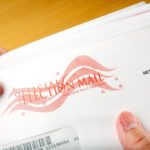 Postal Service News: More than three dozen Democratic senators have sent a letter to the U.S. Postal Service demanding it refrain from implementing President Donald Trump’s recent executive order aiming to put new rules on voting by mail around the country. In the letter, the senators argue that Trump’s order, announced late last month, is a part of his push to “unconstitutionally consolidate power to personally regulate American elections,” in this case with the help of the nation’s postal service in particular. The Democrats pointed specifically to the order’s directive for the creation of a national log of U.S. citizens who are eligible to vote in each state and the requirement that USPS not send absentee ballots to those not on the lists as an effort to turn the country’s mail and package delivery agency into “an election administrator and regulator.” The group also contended that such directives in the order give the USPS the “final say about whether to transmit a voter’s absentee ballots to election officials,” thus giving it the “ability to disenfranchise American voters.” “This directive will have a chilling effect on the eligibility of American voters to exercise their constitutional right to vote by imposing unnecessary barriers and would corrupt the independent mission of the Postal Service to determine who can vote by mail,” the Democratic senators wrote. The letter was signed by 37 Democrats and spearheaded by the party’s leader in the upper chamber, Sen. Chuck Schumer of New York, along with the ranking members of the Senate committees on Homeland Security and Governmental Affairs, Rules and Administration, and Judiciary.
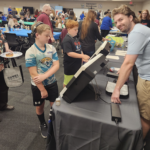 Take A Future Voter To Work Day: Over the years, the annual Bring Your Kid to Work Day has evolved from kids just hanging out while their parents worked all day to days filled with activities. In Flagler County, Florida departments from across the county came together to create an engaging experience for employees’ children, offering interactive booths and activities that highlighted the important work being done every day. At the Supervisor of Elections office, the focus was on one of the most important parts of civic life: voting. Kids had the chance to participate in their very own election, learning how the process works in a fun and approachable way. In total, 121 future voters participated in this year’s election, getting a firsthand experience of casting a ballot and seeing democracy in action. The excitement at the booth made it clear: civic engagement can start at any age when it’s presented in a way that’s both fun and meaningful. “Events like this not only strengthen connections within the workplace but also inspire the next generation to understand and appreciate the role of local government,” said Supervisor of Elections Kaiti Lenhart. “By turning learning into an interactive experience, Flagler County continues to build a foundation for informed and engaged citizens.”
 Sticker News: Congratulations to Arwen, a 6th-grade student at Tuskawilla Middle School for winning the inaugural Seminole County, Florida “I Voted” sticker contest. Arwen’s design features a bold and patriotic composition centered around a soaring bald eagle. The eagle, with wings fully extended in flight, clutches an American flag that flows dynamically beneath it, symbolizing strength, freedom, and national pride. The winning design was selected from more than 50 student submissions across Seminole County. “Today’s winning
  design is a reminder that civic pride starts early,” said Supervisor of Elections Amy Pennock. “It’s incredibly meaningful to see students engage in the democratic process in such a creative way. We’re proud to share this student’s work with voters across our county.” “I thought it was a really cool idea… that a lot of people will be wearing your thing,” said Arwen. “I’m still in shock.” The Wyandotte County, Kansas Election Office has announced the winners for the second “I Voted” and “Future Voter” sticker design contest. The designs were created by Rylee, a Piper High School senior and Melanie, also a senior, at Tuner High School. “Designs captured the spirit of civic pride and the importance of making your voice heard,” the election office said in a news release on Tuesday. “The Wyandotte County Elections Office received numerous creative designs this year and thank all the students who took the time to create a beautiful design.”
Personnel News: Commissioner Donald Palmer is stepping down from the U.S. Election Assistance Commission. Allison Cain has stepped down as the Saline County, Arkansas election coordinator after more than 10 years on the job. Cumberland County, North Carolina Elections Director Angie Amaro was put on paid administrative leave by the county elections board while a petition to fire her is pending with the state. David Marshall is the new Navajo County, Arizona recorder. Michael Paston is the new chief clerk for the Lehigh County, Pennsylvania Election Office.
 In Memoriam: Former Waukesha County, Wisconsin Clerk Meg Wartman has passed away after losing her battle with cancer. Wartman retired mid-term in January 2026 following a 2024 diagnosis of colorectal cancer. According to the Waukesha County Executive’s Office, Wartman was appointed County Clerk on December 18, 2018. After winning the 2020 election, she began her first full term on January 4, 2021, and was re-elected in 2024. “We are deeply saddened by the loss of Meg, whose strength, grace, and dedication to public service left a lasting mark on Waukesha County. She served our residents with integrity and compassion, even while facing her battle with cancer. Our hearts are with her family, friends, colleagues, and all who had the privilege of knowing and working alongside her. She will be greatly missed, and her legacy of service will not be forgotten,” County Executive Paul Farrow said. During her tenure, Wartman oversaw multiple countywide election cycles and served as the County’s chief records officer, advancing transparency, statutory compliance, and service to residents and local municipalities. “Meg was a force, a mentor, but more importantly, a close friend. She was someone who taught me the ropes and listened when times were tough. Her loss will hurt for a while among clerk staff, but we find strength knowing she’s no longer suffering,” Deputy County Clerk Jennifer Moore said. Jennifer Moore, the Deputy Clerk, will assume all of Wartman’s duties until the first week of June when the newly appointed County Clerk, Georgia Maxwell, will be sworn into office.
Ballot Measures, Legislation & Rulemaking
 Federal Legislation: U.S. Senators John Hickenlooper, Michael Bennet, Alex Padilla, and 35 of their colleagues, introduced the Mail and Absentee Voter Protection Act to block President Trump’s executive order on mail and absentee ballots. Specifically, the Absentee MVP Act would nullify Trump’s unlawful March 31 executive order (EO) and bars any similar EO. It also provides additional limits on the Trump administration’s attempts to implement the actions in the illegal EO by: Blocking the Department of Justice (DOJ) and DHS from sharing state voter lists; Defunding the DOJ’s efforts to compel production of state voter lists; Enforcing the Privacy Act by barring federal agencies from improperly sharing voter data, both within the government and with outside groups; and Defunding any future Commerce Department efforts to enact partisan regulation of mail in ballots. “In a country founded on the ideals of ‘We, the People,’ in which the right to vote is fundamental to who we are as a nation — people shouldn’t have to work too hard to have their voices heard and their votes counted,” said Padilla. “Instead of focusing on lowering costs, ending the illegal war in Iran and bringing our troops home, and improving the lives of Americans across the country, too many Republicans in Congress are shamefully focused on making it more difficult for Americans to cast their ballots in November. Democrats are full court press on pushing back against these blatant attempts to silence the American people.”
 California Ballot Measure: A proposal that would require California to verify proof of citizenship when a person registers to vote — and require voters to provide identification at polling places — will appear on the November ballot, state officials announced last week. If voters approve it, they would be required to show a government-issued ID each time they go to the polls, while mail-in ballots would need the last-four digits of an ID, such as a driver’s license. The secretary of state and county election offices would also be required to verify voters’ registration each time they vote. Currently, voters only need to provide an ID and Social Security number when they register to vote. Californians broadly support voter identification at the polls but are split along ideological lines when given specific details about the ballot measure, according to a 2026 poll from the UC Berkeley Institute of Government Studies. When told the measure is meant to combat voter fraud and that it could suppress eligible votes, support dipped to 37%.
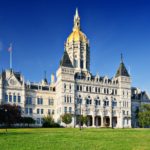 Connecticut: The campaign to make voting by mail a universal option in Connecticut moved forward April 23 as the House Democratic majority passed and sent to the Senate legislation that would lift the last barriers to no-excuse absentee voting. House Bill 5001 passed on a party-line vote of 101-49, reflecting a divide that opened during the COVID-19 pandemic in 2020, when President Donald J. Trump denounced emergency measures liberalizing voting by mail. The bill would repeal a law that now denies absentee ballots to any voter who cannot attest to being unable to vote in person due to sickness, disability, absence, military service, religious conflicts or being an elections worker. Until the passage of a constitutional amendment in November 2024 by a margin of 58% to 42%, those same six conditions were part of a state constitution that was unusually prescriptive on rules for absentee voting. The amended version allows voters to sign up for absentee ballot applications to be automatically mailed to them, not the actual ballot.
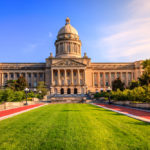 Kentucky: The Legislature overrode Gov. Andy Breshear’s veto of HB 139, an omnibus bill making numerous changes to Kentucky election laws. Under current law, Kentucky voters who cannot obtain a photo ID may present certain types of ID and sign an affidavit to vote. The bill removes food stamp cards, Social Security cards, and Supplemental Nutrition Assistance Program cards from the list of IDs that can be used if a person can’t obtain photo identification. It also removes the option for election workers to affirm the identity of individuals they personally know. The legislation also authorizes the State Board of Elections to enter into data-sharing agreements with the federal government to identify noncitizens on the voter rolls and prohibits the use of voting equipment that uses nonhuman-readable codes, such as barcodes. The Republican-controlled Senate and House both approved HB 139 along party lines. Beshear vetoed the bill on April 10. The House voted 80-20 to override the veto on April 14, with the Senate following suit later that day in a 32-6 vote.
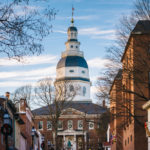 Maryland: Gov. Wes Moore signed another batch of bills into law this week including a bill aimed at protecting voter rights. The Voting Rights Act of 2026 is an emergency bill that passed the General Assembly on the final day after causing controversy between lawmakers. It aims to prevent local and county governments from impacting voters or the results of an election. The new law will also allow residents or the state’s attorney general to sue local and county governments over their voting processes or plans. “It ensures that if you honestly believe in democracy, more people should participate and not fewer,” Moore said during the bill signing. State Sen. Charles Sydnor sponsored the bill and said Maryland is leading the way to make sure everyone’s right to vote is protected. Voting rights advocates in Maryland say the Supreme Court actions underscores the importance of passing this state law now. “The onus has really been on state-level leaders to ensure that they are doing everything they can to protect access to the ballot and help to preserve and advance democracy,” said Natasha Murphy, from Black Girls Vote.
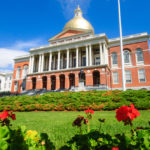 Massachusetts: During this week’s budget debate, lawmakers in the House voted down an amendment that would have covered the cost of photo identification for voters. Rep. Marc Lombardo offered an amendment directing the secretary of state to provide free photo ID cards for voters without valid government-issued IDs and who sign an affidavit. Lombardo said his proposal would protect “election integrity”. Rep. Rita Mendes, a Brockton Democrat born in Brazil, reflected on the additional steps she faced to secure an ID and cautioned the proposal would disproportionately impact voters in Gateway Cities like hers.
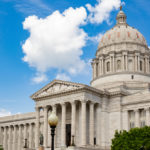 Missouri: With less than three weeks left to go in the Missouri legislative session, a wide-ranging elections bill is waiting in line to come up for Senate debate. The legislation is designed to ease administrative burdens for local election offices. It’s been years in the making for Missouri’s county clerks and State Rep. Peggy McGaugh, R-Carrollton. She served as the Carroll County Clerk for 32 years. “It has all the things that the local election authorities have needed,” she told Missourinet. The bill would allow government offices to email election notices. Another feature of her bill would give all Missouri election authorities the option to mail a notice of a sample ballot to voters – rather than publishing a notice in the newspaper. The bill would require automatic tabulating machines to be tested a week in advance of an election instead of two weeks. The proposal would also let voters cast a provisional ballot in any public election – not just state and federal ones.
 North Dakota: Home addresses of North Dakota legislative candidates and public officials would be confidential records under a bill draft being developed by a legislative committee. The bill would apply to a broad array of candidates and officials, from school board members to the governor, who could opt in to have their address treated as confidential information by government agencies. The proposal discussed last week grew out of discussions on how to improve the security of legislators and other officials that have been ongoing since the shootings of two Minnesota lawmakers last June. Senate Minority Leader Kathy Hogan, D-Fargo, suggested tabling the bill draft until the next meeting of the interim Legislative Procedure and Arrangements Committee to give lawmakers more time to consider possible unintended consequences. “This is a pretty significant change in public records, and I think we understand why it needs to happen, and I believe many states are doing this,” Hogan said. “But it’s a fascinating question, isn’t it, are there unintended consequences?”
 South Carolina Rulemaking: South Carolina can send voter information to the U.S. Department of Justice under an agreement the State Election Commission approved this week. The commission’s 4-1 vote ended months of deliberation over how South Carolina should respond to the Trump administration’s request to review voter data in an effort to remove those ineligible to participate, which prompted privacy concerns. Commissioner Joanne Day was the only “no” vote. Afterward, she said she still had constitutional concerns but declined to elaborate. The memorandum state elections director Conway Belangia signed Tuesday “is an apolitical agreement that responsibly balances DOJ’s legitimate governmental interests” with “the SEC’s statutory obligations under South Carolina law and its duty to safeguard, simultaneously, the integrity of South Carolina’s elections and the personal information of South Carolina’s registered voters,” according to a cover letter included. A representative for the Department of Justice has already signed the nine-page agreement. Election officials plan to transmit the voter rolls within the week, Belangia said. “We feel like the agreement is protecting those things that we need protected,” Belangia said.
Legal Updates
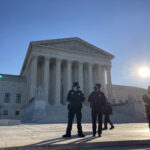 U.S. Supreme Court: The Supreme Court further eroded the Voting Rights Act strictly limiting how racial discrimination can be remedied in redistricting maps. In a 37-page opinion, the majority held that “because the Voting Rights Act did not require Louisiana to create an additional majority-minority district, no compelling interest justified the state’s use of race in creating SB8, and that map is an unconstitutional racial gerrymander.” Section 2 of the Voting Rights Act established a violation when political processes are not equally open to participation by members of a certain race, who have less opportunity than other members of the electorate to participate in the political process and to elect representatives of their choice. It stems from the 15th Amendment’s prohibition on racial discrimination in voting. But under the Supreme Court’s renewed interpretation, the opportunity that any given group of voters has to elect their candidate of choice depends on the voting preferences of other voters in the district, not race. “For example, in a district where most voters prefer Democratic candidates, a Republican voter in that district will have a low chance of securing the election of his or her preferred candidate,” Justice Samuel Alito wrote for the majority opinion. In the majority’s view, the act only imposes liability when there is a strong inference that a state intentionally drew its districts to afford minority voters less opportunity because of their race. Under the act, “a minority voter is entitled to nothing less and nothing more,” Alito wrote. They added the act should not intrude on states’ prerogative to draw districts based on nonracial factors, including to achieve partisan advantage. Because the plaintiffs failed to show sufficient evidence of intentional discrimination and instead relied on “historical evidence and evidence that failed to disentangle race from politics,” the lower court’s decision was affirmed and the case was remanded. In dissent Justice Elena Kagan wrote that under this new precedent, a state can, without legal consequence, systematically dilute minority citizens’ voting power. She explained that states still facing residential segregation, political division and other effects of long histories of racial discrimination, can split any minority community that is cohesive in its geography and politics so that it loses all electoral influence. “Members of the racial minority can still go to the polls and cast a ballot. But given the state’s racially polarized voting, they cannot hope — in the way the state’s white citizens can — to elect a person whom they think will well represent their interests,” Kagan wrote. “Their votes matter less than others do; they translate into less political voice,” she added. Kagan was joined by Justice Sonia Sotomayor and Justice Ketanji Brown Jackson. They criticized the court’s actions over the past decade as slowly chipping away at the Voting Rights Act, allowing a flood of discriminatory voting laws to follow.
 Alaska: The League of Women Voters of Alaska, and the Alaska Black Caucus filed a lawsuit against the Alaska Division of Elections challenging the decision to share Alaska’s voter rolls with the U.S. Department of Justice as unconstitutional. The lawsuit filed on April 22 charges the division with violating the right to privacy enshrined in the Alaska Constitution when officials complied with a Department of Justice’s request and turned over a copy of Alaska’s voter rolls, as well as signed a memorandum of understanding agreeing to remove voters the federal government identifies as ineligible. The lawsuit names Lieutenant Gov. Nancy Dahlstrom and Carol Beecher, director of the Division of Elections, in their official state capacities. The lawsuit highlights that the Department of Justice is sharing voter information with the U.S. Department of Homeland Security to search for noncitizens and to compile a national database.The lawsuit alleges that is in order to “conduct criminal and immigration investigations.” Plaintiffs argue the state’s agreement to remove voters the federal government has found to be ineligible and resubmit an updated list to DOJ within 45 days violates constitutional due process rights. They argue that “by giving DOJ the power to select which Alaskans have the right to vote and by obligating Defendants to purge voters from the voter list without any stated basis in law or process to challenge such an action.”
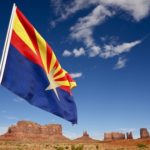 Arizona: The Arizona Court of Appeals dismissed a lawsuit from conservative groups that challenged how Arizona counties verify early ballot signatures and run ballot drop-boxes, among other things. Brought by the America First Legal Foundation and the Strong Communities Foundation of Arizona on behalf of a group of voters, the lawsuit rehashed numerous claims that election deniers have made unsuccessfully in court for years. The conservative groups argued that Maricopa, Yavapai and Coconino counties illegally used unstaffed ballot drop boxes, canceled voter registrations and used improper procedures to verify voter signatures on vote-by-mail ballot envelopes. In a unanimous decision written by Judge Anni Hill Foster, and joined by Judge David Gass and Chief Judge Randall Howe, Foster wrote that America First Legal lacked standing to bring the lawsuit because it did not allege that any Arizonans had been denied the right to vote, nor did it contest the results of an election. The plaintiffs merely “disagree with Yavapai County’s election practices,” Foster wrote. The lawsuit heavily cites Republican Kari Lake’s failed attempts to overturn the results of the 2022 election for Arizona governor that she lost to Democratic Gov. Katie Hobbs. “Election day on November 8, 2022 in Maricopa County was marred by ‘widespread failures’ and ‘technical problems’ that led to ‘the anger and frustration of voters who were subjected to inconvenience and confusion at voter centers’” Rogers wrote, quoting Lake’s lawsuit. Judges at the trial and appeals courts, as well as the Arizona Supreme Court, roundly rejected Lake’s arguments that the courts should overturn the results of the 2022 election and declare her the governor. The appeals court declined to consider Rogers’s arguments about ballot printer failures in Yavapai County, which he claimed were similar to those in Maricopa County. In her trial, attorneys for Lake failed to prove that long lines caused by ballot printer issues prevented anyone from casting a ballot, but Rogers repeated the claim anyway.
U.S. District Judge Susan Brnovich dismissed the U.S. Department of Justice’s lawsuit against Arizona over the state’s refusal to turn over an unredacted version of its voter roll, finding that the state isn’t required by federal law to provide it. Brnovich’s ruling comes after President Donald Trump’s administration sued Arizona last year, alleging that the state was interfering with the federal government’s ability to exercise oversight and enforce federal election laws. It sought to compel the state to hand over its full, unredacted voter list, which includes sensitive information such as voters’ full birthdates and Social Security numbers. Brnovich, like other federal judges in Michigan, Oregon, California, Rhode Island, and Massachusetts, said that none of the three laws that federal prosecutors used to justify their request — the Civil Rights Act of 1960, the National Voter Registration Act, and the Help America Vote Act — required the disclosure of the data.
 California: The legal dispute between Kings County and the City of Avenal continued this week after an appeals court ordered that ballots in the city’s recall election be sealed and not counted while the court reviews the election’s legality. Under the ruling issued this week, the Kings County Registrar of Voters may not certify the results as the court considers the city’s argument that the recall election is unlawful. Despite the order halting the count, voting in the recall election is still ongoing. Avenal City Manager Antony Lopez said the city is waiting for further direction from the appellate court. Lopez said the city has maintained from the start that it did not authorize the recall election. “Since the beginning, we’ve said and we hold the position that we never approved for this recall and never sanctioned and never delegated to Kings County, hence the election is illegal,” he said. Kings County has previously stated that recall proponents met all legal requirements and that it is the county’s responsibility to administer the process in accordance with state law. County officials have also said they do not take sides in the outcome of the election.
 Colorado: A three-judge panel of the Court of Appeals will not take a second crack at Tina Peters’ appeal despite a request from her attorney asking for more consideration of some of their arguments. Peters’ attorneys requested the rehearing on April 16, two weeks after the Court of Appeals ordered a re-sentencing for the former Mesa County Clerk on the grounds that the trial judge, 21st Judicial District Court Judge Matthew Barrett, had improperly considered Peters’ public comments and may have violated her First Amendment right to free speech. On April 23, the Court of Appeals rejected that rehearing request. In their request for a rehearing, Peters’ attorneys argued that the Court of Appeals “misapprehended” their arguments on the supremacy clause. Peters has long maintained that she was acting in a federal capacity when she permitted unauthorized access to county voting equipment and, therefore, should be immune from state charges. Thus far, no court has sided with Peters’ claims. Peters plans to appeal a recently-denied rehearing request to the Colorado Supreme Court, her lawyer told Colorado Newsline April 24.
U.S. District Court of Colorado Judge Philip Brimmer shut down an effort by the Colorado Republican Party to block unaffiliated voters from participating in the party’s June primary election. The decision is the latest action in a years-long legal battle in which the Republican Party challenged state laws enacted as a result of Proposition 108, a 2016 ballot measure that allows voters not registered with a political party to vote in partisan primary elections. In March, Brimmer ruled that the requirement for a party to opt out of primary elections — a 75% vote of the party’s central committee — is unconstitutionally high. The deadline for the party to opt out of the 2026 primary election was Oct. 1, 2025. Attorneys for the Republican Party said because Brimmer’s ruling came after the deadline, the court should block unaffiliated voters from participating in the primary. Neither the Colorado Legislature nor the Colorado secretary of state’s office have established a new mechanism for parties to opt out of the primaries since that ruling, Brimmer said in his decision denying the GOP’s emergency motion for a temporary restraining order. Granting the motion would go beyond the scope of his March order, Brimmer said, and would violate the Purcell principle, which says courts should not change election rules too close to an election to avoid confusion for voters and election officials.
 Hawai’i: A Ninth Circuit panel said this week that Hawai’i is not required to publicly disclose voter registration data, ruling against a conservative election integrity foundation’s efforts for a list of the Aloha State’s registered voters. The Public Interest Legal Foundation claimed that Hawai’i’s Chief Election Officer Scott Nago violated the National Voter Registration Act by refusing to hand over the state’s voter roll to the foundation. But a statewide voter list is not a record that concerns the implementation of programs that ensure the accuracy of lists of eligible voters under the act, U.S. Circuit Judge Michelle Friedland. “Covered ‘records’ are those about efforts to ensure the accuracy of voter lists, not voter lists themselves,” Friedland wrote. “NVRA is not a sprawling voter-data-preservation mandate; it is a transparency provision targeted at list-maintenance activities.” Friedland, an Obama appointee, was joined on the panel by U.S. Circuit Judge M. Margaret McKeown, a Bill Clinton appointee, and U.S. Circuit Judge Jennifer Sung, a Joe Biden appointee.
 Michigan: The Michigan Court of Claims dismissed a lawsuit by the Republican National Committee against Secretary of State Jocelyn Benson. The lawsuit, dismissed with prejudice on Wednesday, April 22, alleged that state election law and guidance from Benson’s office violated the Michigan Constitution by allowing non-Michigan residents to vote. It references individuals who haven’t lived in the state but are the spouses of military and overseas Michigan voters and children born to residents. Michigan’s election law now allows both spouses and dependents of an overseas voter to apply for an absentee ballot if they’re a citizen of the U.S. accompanying that overseas voter and if they’re not registered to vote anywhere else in the U.S. Benson’s election officials manual says U.S. citizens who have never lived in the country can vote in Michigan if they have a parent, legal guardian, or spouse who last lived there. They also must not be registered or have voted in another state. In response to the lawsuit’s dismissal, Benson — also running as a Democrat for governor — wrote in a statement that the decision is a “victory for military service members, their families and the rule of law.” “It’s a defeat for this disgraceful, coordinated attack against eligible Michigan voters and our secure election process,” she said. “Every U.S. citizen has the Constitutional right to freely vote in every election – and we should all share a basic, nonpartisan commitment to making that right real for every American citizen.”
 North Carolina: The North Carolina NAACP is appealing a lawsuit it lost earlier this year, in a case seeking to have North Carolina’s voter photo identification law ruled unconstitutional. Federal District Court Judge Loretta Biggs wrote that she personally believed the NAACP was correct that the new version of the law still discriminates against minority voters — but that she felt she had to rule against the NAACP anyway, due to previous federal appellate rulings. The NAACP is testing that with its appeal, which will take the case to the 4th Circuit Court of Appeals and, perhaps, later to the U.S. Supreme Court. “We will continue the fight against illegal discrimination and to ensure voters know their rights and know that they are protected in exercising them,” N.C. NAACP President Deborah Dicks Maxwell said in a statement after the initial ruling.
 Pennsylvania: The Pennsylvania Supreme Court ruled this week that spreadsheets of raw data associated with every ballot are public records, providing access to the “cast vote records” that had been requested by an election researcher hired by the Trump Administration last year. The Supreme Court said its unanimous decision was a way to “satisfy the voting public that our elections are safe, secure and accurate” while preserving the state constitution’s requirement that votes remain secret. The Lycoming County elections director had denied Heather Honey’s request for digital copies from the 2020 presidential election, saying that would amount to letting her review the contents of a ballot box, one vote at a time. Cast vote records are created when a voter’s choices are made electronically or scanned. Pennsylvania election law provides wide public access to county election records, except for the contents of ballot boxes and voting machines and records of assisted voters. Lycoming Voter Services had argued its scanners and tabulators constitute voting machines and the cast vote records are the contents of ballot boxes. Lycoming elections chief Forrest Lehman said he does not believe the records, which contain randomized data, will reveal any secret ballot information and that he is ready to provide the records upon request. The Supreme Court ruled that the cast vote records “are spreadsheets of raw data pulled from the cast ballots. They are not the physical ballots contained in the ballot box.” Therefore, they are public records, the justices concluded: “This interpretation does not destroy the secrecy of the vote any more than a tally of all votes from a specific election.” The high court said it was only ruling in the Lycoming County matter and said it was possible that other counties do not sufficiently randomize the data. “Whether the Election Code requires disclosure of CVRs that clearly link the contents of a ballot with personally identifying data is not before us,” wrote Justice Daniel McCaffery.
Guillermo Sainz who was accused of orchestrating a fraudulent voter registration scheme ahead of the 2024 presidential election has pleaded guilty. In October 2024, district attorneys in multiple counties announced they had received thousands of voter registration applications that did not appear to be legitimate. Sainz, who was in charge of the operation, pleaded guilty April 27 to three misdemeanor counts of soliciting voter registrations and will face 30 days in jail, along with a $1,000 fine and 11 months probation. Sainz was an organizer for the Arizona-based campaign firm Field+Media Corps, which conducted voter registration drives in Pennsylvania ahead of the 2024 election. According to criminal complaints filed against Sainz and six street canvassers, canvassers were paid based on how many registration forms they submitted. “The Office of Attorney General determined that the crimes were not motivated by efforts to sway any election or voter rolls for any specific party or candidate,” Attorney General Dave Sunday’s office said in a statement. “Rather, the charged defendants were motivated to maintain employment and income by reaching quotas.”
 Texas: A North Texas appeals court rejected a petition from a Dallas County republican trying to force the county to hold a precinct-specific Election Day for the upcoming primary election. The petition came after former county GOP Chair Allen West agreed to countywide voting for upcoming runoffs — in the wake of a chaotic March election marred by confusion and legal challenges. The filing from petitioner Barry Wernick, a Republican Party precinct chair and commissioners court candidate, requested the Dallas-based Fifth Court of Appeals order the county elections administrator to conduct the upcoming runoff Election Day with precinct-based polling places. The judges declined April 24, finding they had no jurisdiction to do so. They also found Wernick had no standing for relief, in part because he won his primary race outright and wasn’t in a runoff. He also was not a party to the election services agreement between the GOP’s County Executive Committee and the county, the court said, calling Wernick “a stranger to the contract.” “(Wernick) is a party precinct chair and, therefore, a member of the CEC. He also serves as a chair of a committee of the CEC,” Friday’s opinion said. “But he is not the county executive committee, nor is he chair of the CEC.” The court did not weigh in on the merits of the challenge itself — namely, whether the contract to go back to countywide voting between the county and the GOP under West was valid.
 U.S. Virgin Islands: A federal lawsuit over how primary elections are administered in the territory ended April 23 in a mediated settlement, resolving a dispute between the Democratic Party of the Virgin Islands and the Election System of the Virgin Islands over coordination of the party’s candidate certification process ahead of the August 1 primary. The agreement, reached after roughly two and a half hours of mediation before Magistrate Judge Emile Henderson III at District Court on St. Croix, sets out a coordinated timeline under which the Elections System and the Democratic Party will each carry out their respective roles in preparing for the primary. The lawsuit, filed April 9, named the Elections System of the Virgin Islands, Board of Elections Chair Raymond Williams, and Supervisor of Elections Caroline Fawkes as defendants. In its complaint, the party argued that its First Amendment rights were being infringed after election officials moved forward with their own procedures for the 2026 primary without implementing a party-adopted plan. Under the agreement, the Elections System will continue to administer the primary in accordance with Virgin Islands law, while the Democratic Party retains control over its internal vetting and certification of candidates. The timeline calls for election officials to provide a list of candidates who submit nomination petitions by May 19, notify the party of those who qualify by May 25, and for the party to submit its certified slate by May 27. Candidates who pass both processes — party screening and statutory eligibility — will appear on the ballot. The Elections System will conduct the primary in accordance with Virgin Islands law. The parties have 10 days to file a joint stipulation of dismissal. Henderson thanked the participants for their “hard work and diligence” in reaching an agreement. The parties then moved to Molloy’s courtroom, where Lynch withdrew his motion for a preliminary injunction, and Molloy found the motion moot. Members of the Board of Elections have challenged the settlement.
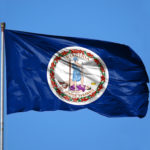 Virginia: Virginia’s Supreme Court denied a request for an emergency stay of a Tazewell County judge’s ruling that said the State Board of Elections cannot certify the results of Virginia’s redistricting referendum. Democrats had requested the emergency stay, which could have allowed the elections board to move forward with certifying the results while a Republican-backed appeal to block the redistricting played out. The Supreme Court’s action addressed only the request for an emergency stay, not the appeal itself. Virginia’s Supreme Court will ultimately decide whether Democratic lawmakers followed the rules for getting a Constitutional Amendment on the ballot.
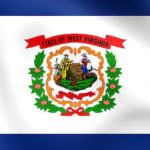 West Virginia: Secretary of State, Kris Warner, is asking a federal judge to toss U.S. government demands for unredacted voter registration data. The Department of Justice moved earlier this month to compel West Virginia officials to release the list that would include state voters’ information like birth dates, residential addresses, drivers license numbers and partial Social Security numbers. “This same story is playing out in dozens of States across the country. The United States asks a State to turn over unredacted voter lists; the State refuses; the Government sues. But the Government’s suits have not been successful,” wrote lawyers for West Virginia’s Secretary of State in a memorandum. “At least five federal courts have dismissed complaints nearly identical to this one.” The West Virginia Secretary of State is being represented by counsel from the state Attorney General’s Office, including Michael Williams, the solicitor general. The federal judge assigned to the case is Thomas Johnston, a George W. Bush appointee. “Though DOJ initially claimed the list-maintenance-review purpose, it seems the Government now wants to use the voter list for immigration enforcement reasons,” wrote lawyers for the Secretary of State. “Demanding unredacted voter lists for this use would be outside the Civil Rights Act’s purview.” Moreover, attorneys for the state maintain that the voter lists are internally created databases exempt from federal production requirements and that disclosure would violate state and federal privacy laws.
Opinions This Week
National Opinions: Federal interference | U.S. Supreme Court, II, III
Alabama: Audits
California: Voting rights | Ballot counting
Georgia: Voting system, II
Idaho: Executive order
Indiana: Secretary of state
Michigan: Secretary of state
New Mexico: Ranked choice voting
North Carolina: Cumberland County | Voting rights
Washington: Election security
Wisconsin: Disinformation
Upcoming Events
Practical AI Risk Management: Measuring AI in Election Offices: Join Ready for Tuesday for a conversation on artificial intelligence tailored for election practitioners and administrators. Using the National Institute of Standards and Technology (NIST) AI Risk Management Framework (AI RMF) as our guide, we’ll focus specifically on the Measure phase. The Measure function is about analysis and evaluation: examining how AI systems actually perform, whether they behave as intended, and what the evidence tells you about the tools you’re using. When: May 1, 12pm Eastern. Where: Online
Safeguarding Election Officials: Practical Strategies for Managing Doxing Risks: You run elections. You should not have to choose between doing your job and keeping your family safe. Doxing, the deliberate exposure of personal information online, is a real threat. But it is also one you can get ahead of. Your digital footprint can be reduced. Your exposure can be managed. And with the right tools, you and your team can take meaningful steps to protect yourselves before an incident ever occurs. On May 1 at 1:00 PM ET, the Election Security Exchange is bringing together three of the most credible voices in this space to give you a clear picture of how doxing works, who is behind it, and, most importantly, what you can do about it right now. When: May 1, 1pm Eastern. Where: Online.
Beat Academy: Midterm Prep: Great Lakes journalists! Work on coverage strategies, gain reporting tools and spark regional connections in our free election coverage workshop in Detroit (May 5) or Indianapolis (May 7), 9 a.m. to 4 p.m. Learn to respond to misinformation, do candidate research, report on key election drivers like immigration and affordability, and produce salient coverage that puts voter interests first. By the end of this workshop, you will: Learn how to respond to misinformation and efforts to undermine fair elections. Verify candidate backgrounds via tools and databases. Explore regional factors shaping Great Lakes midterm races. Develop coverage strategies for key election drivers like immigration and affordability. Generate story ideas and prioritize voter interests in your reporting. When and Where: May 5 (Detroit) and May 7 (Indianapolis).
Ready or Not: Election Administration Wins, Woes & What’s Still Coming in 2026: Election administrators have a lot on their plates in 2026 — and the year is far from over. From new legislation and technology changes to funding battles and workforce challenges, the field is shifting faster than ever. Join Ready for Tuesday May 5, at 12 p.m. for a candid, freewheeling conversation about the wins worth celebrating, the woes keeping administrators up at night, and the challenges and opportunities that are still taking shape on the horizon. We’ll dig into what’s gone right, what’s gone wrong, and what nobody quite knows yet. Whether you’re deep in the trenches of election administration or just trying to keep up with a rapidly evolving landscape, this webinar will give you an honest, engaging look at where things stand heading into the back half of 2026 — and what you should be watching for next. When: May 5, 12pm Eastern. Where: Online
Washington Association of County Auditors: The Washington Association of County Auditors will hold its annual conference from May 12-14 in Snohomish county.
2026 IIMC Annual Conference: The International Institute of Municipal Clerks will be holding its Annual Conference from May 17-21 in Reno, Nevada. When: May 17-21. Where: Reno.
CERA Courses (Auburn): The Certified Elections Registration Administrator (CERA) certification is the original professional certification for election administrators in the United States. The following courses will be available in Auburn in May: Course 5 – Ethics in Election Administration and Voter Registration; Course 8 – Implementation of New Programs in Election Administration and Voter Registration; Course 11 – History of Elections Part I: Antiquity to 1781; and Course 12 – History of Elections Part II: 1781 to Civil Rights Era 1960. When: May 18-23. Where: Auburn, Alabama
Building Disaster Resilience for Community Leaders: Disaster Preparedness for Election Offices: Join Ready for Tuesday for this Natural Disaster Awareness for Community Leaders course and increase your understanding of disasters, risk assessment in the context of disaster management, prevailing emergency management procedures and operations, and the different vulnerability factors that exist within your local community. Become familiar with the available resources for natural disaster preparedness and planning. Learn how to recognize and define the roles and responsibilities that may be expected to be assumed by a community leader and understand the roles that first responders and other support personnel are likely to assume to ensure assistance in the response and recovery phase of an emergency event. This course will use election office events as a series of case studies to help connect emergency management challenges to election administration. Feel free to invite your local emergency management partners to join this no-cost training. This course is hosted by Ready for Tuesday, Advance Elections and Portland State University’s Elections & Voting Information Center. The four-hour course is offered at no-cost to participants, and upon successful completion of the course a certificate will also be issued. When: May 28, 12pm Eastern. Where: Online.
CERA Courses (Austin): The Certified Elections Registration Administrator (CERA) certification is the original professional certification for election administrators in the United States. The following courses will be offered in Austin in June: Course 1 -Election Administration and Voter Registration as a System; Course 4 – Contingency and Continuity of Operations Planning; Course 5 – Ethics in Election Administration and Voter Registration; Course 11 – History of Elections Part 1: Antiquity to 1781; and Course 12 – History of Elections Part 2: 1781 to Civil Rights Era 1960. When: June 8-13. Where: Austin, Texas.
NMC Annual Conference: New Mexico Association of Counties- Clerks Affiliate will hold its annual conference from June 15-18 in McKinley County.
AAMCA Summer Conference: The Alabama Association of Municipal Clerks and Administrators will hold its summer conference from June 24-26 in Fairhope.
CERA Courses (Milwaukee): The Certified Elections Registration Administrator (CERA) certification is the original professional certification for election administrators in the United States. The following courses will be offered in Milwaukee in July: Course 5 – Ethics in Election Administration and Voter Registration; Course 6 – Communications and Public Relations in Election Administration and Voter Registration; Course 7 – Enhancing Voter Registration and Participation in Election Administration and Voter Registration; Course 8 – Implementation of New Programs in Election Administration and Voter Registration; and Course 9 – History in Elections Part 3: 1960 to Modern Era. When: July 11-18. Where: Milwaukee, Wisconsin.
2026 NACo Annual Conference & Exposition: The National Association of Counties will hold its 2026 Annual Conference & Exposition on Orleans Parish, Louisiana from July 17-20. When: July 17-20. Where: New Orleans.
NASED 2026 Summer Conference: The National Association of Directors of Elections will hold its summer conference from July 20-22 in Boston. When: July 20-22. Where: Boston.
iGO 9th Annual Conference: The International Association of Government Officials will hold its 9th Annual Conference from July 25-28 in Reston, Virginia. When: July 25-28. Where: Reston, Virginia.
2026 NCSL Legislative Summit: The 2026 NCSL Legislative Summit takes place in Chicago July 27-29, bringing together state legislators and legislative staff from all 50 states and U.S. territories for three days of collaboration, innovation and bipartisan dialogue. When: July 27-29. Where: Chicago.
SCARE 2026 Annual Conference: The South Carolina Association of Registration and Election Officials (SCARE) will hold its annual conference from July 27-30 in Isle of Palms.
Oregon Association of County Clerks: The Oregon Association of County Clerks will hold its annual conference from August 10-13 in Burns.
WMCA 46th Annual Conference 2026: The Wisconsin Municipal Clerks Association will hold its annual conference from August 18-21 in Green Bay.
Election Center 41st Annual Conference: The National Association of Election Officials (Election Center) will hold its 41st Annual Conference in Kansas City, Missouri from August 19 to 21. CERA classes will be offered August 22 and 23. When: August 19 to 21. Where: Kansas City, Missouri.
UAC Annual Convention: The Utah Association of Counties will hold its annual convention from September 8-10.
2026 WACO Conference: The Wyoming Association of County Officers-County Clerks will hold its annual conference from September 22-24 in Laramie.
2026 MACO Annual Conference: The Montana Association of Counties will hold its annual conference from September 27-30 in Helena.
Job Postings This Week
electionlineWeekly publishes election administration job postings each week as a free service to our readers. To have your job listed in the newsletter, please send a copy of the job description, including a web link to mmoretti@electionline.org. Job postings must be received by 5pm on Wednesday in order to appear in the Thursday newsletter. Listings will run for three weeks or till the deadline listed in the posting.
Clerk II, Dallas County, Texas–Performs a variety of moderately complex support tasks which may include: inputting, processing and distributing a variety of documents and records; collecting, compiling, filing and maintaining data; reconciling data, funds or inventory; and interacting with the public to provide excellent customer service. Works within a well-defined framework of policies and procedures, under moderate supervision. Responsibilities: 1. Receives, prepares, verifies and processes a variety of documents, instruments, records, bills, payments and receipts. 2. Inputs data to complete routine correspondence, forms, reports and documents. 3. Researches, locates, pulls and prepares a variety of documents, records and other assigned data. 4. Effectively answers routine inquiries and resolves basic customer service issues. 5. Collects, inputs, updates and reconciles data, funds or inventory and maintains filing/storage of documents and supplies. 6. Performs other duties as assigned. Salary: $17.30-$21.26/hr. Deadline: May 13. Application: For the complete job listing and to apply, click here.
Communications Officer, San Bernardino County – San Bernardino County Registrar of Voters is seeking a Communications Officer to lead the development and coordination of internal and external communications, media and public relations, and marketing initiatives for the department. This role is responsible for preparing press releases, public service announcements, articles, bulletins, reports, and informational materials such as brochures, as well as supporting presentations and community education and outreach efforts. The Communications Officer oversees a broad range of communication and information activities, serves as a liaison between executive leadership, management, and media representatives, and responds to inquiries from the media, public, and partner agencies. Salary: $76,752.00 – $105,580.80 Annually. Deadline: May 1. Application: For the complete job listing and to apply, click here.
Director of Voter Services, Chester County, Pennsylvania– The Director of Voter Services plans, organizes, supervises, and manages the activities of voter registration, campaign finance, and elections for the County of Chester in compliance with all federal, state, county, and local laws. Essential Duties: Election operations, Department leadership and administration, Communications and public engagement and other. Salary: $119,043.06 Annually. Application: For the complete job listing and to apply, click here.
Election Assistant, Olmsted County, Minnesota–Under supervision, assists with Olmsted County’s election process. Provides customer service to voters in person and via mail. Answers phone calls, directs the public to polling places, monitors supplies, and answers questions. Supports a diverse, respectful, and inclusive workplace. Examples of Work: Assists voters with the absentee voting process; Performs clerical duties including customer service, filing, answering phone calls and data entry to support the election process; Assists on Election Day by answering questions, monitoring supplies, and directing traffic; Processes absentee records on a statewide system; Prepares equipment and supplies for Election Day; Assists with election judge training; and Performs other related job duties as assigned. Salary: $21.30 – $35.59 Hourly. Application: For the complete job listing and to apply, click here.
Election Hardware Manager, Dallas County, Texas–Manages the lifecycle of election hardware by developing and maintaining processes, policies, systems and measurements. Manages the election hardware inventory; ensures quality control by assigning and deploying equipment; recommends, implements, and utilizes automation and tools to monitor and report on inventory; records and manages licenses, service agreements, and warranties for election hardware and related software/firmware; reviews, analyzes, and evaluates election hardware operations. Management Scope: Manages up to 5 staff. Responsibilities: 1. Establishes and maintains an inventory of election related assets to include but not limited to ballot marking devices, ballot counters, electronic poll books, mobile networking equipment, computers/laptops, mobile devices, tablets, and related software and peripherals. 2. Plans, monitors, and enforces the usage, tracking, and health of election hardware and software. 3. Plans, monitors, and enforces configuration of election hardware to include installed software, security configuration, and election specific programming/configurations. 4. Provides regular reports and analysis on asset usage and related costs. 5. Documents and provides guidance and training on the usage, tracking, and maintenance of election hardware and related peripherals and software in coordination with vendors and election staff. 6. Manages, trains and guides the work of staff in preparing, deploying, and supporting election hardware. 7. Performs other duties as assigned. Salary: $5675-$7079/month. Deadline: May 6. Application: For the complete job listing and to apply, click here.
Election Hardware Technician, Dallas County, Texas– Prepares election equipment, including equipment inventory, installation, programming, deployment, repair and testing. Serves as the helpdesk technical support during elections. Management Scope: Supervises up to ten (10) part-time employees. Responsibilities: 1. Programs, tests and prepares election equipment to conduct public logic and accuracy testing of election media devices, ballot marking devices, tabulators and software. b2. Maintains election equipment by troubleshooting, repairing and replacing defective parts or equipment to ensure compliance of voting regulations and safety guidelines. Cleans and stores ballot boxes, voting storage carriers, computers and other equipment; audits and logs voted and unused ballots; orders and maintains parts and supplies. 3. Tests and coordinates the set-up of election equipment, election computer systems, workstations and supplies to meet specification of voting system. 4. Supervises and trains part-time employees. 5. Maintains election equipment inventory and updates election equipment software. 6. Assists on Election Day by serving as the helpdesk representative, responding to problematic calls, instructing election judges and clerks on voting equipment operations, and preparing equipment and supply handouts 7. Performs other duties as assigned. Salary: $22.47-$28/hr. Deadline: May 6. Application: For the complete job listing and to apply, click here.
Election Specialist, Johnson County, Kansas–This role requires active involvement in day-to-day election operations, with responsibilities that may vary depending on assignment and election cycle needs. The Election Specialist performs a combination of administrative, technical, and operational tasks to ensure elections are conducted accurately, efficiently, and in compliance with applicable laws, policies, and procedures. The position plays a critical role in maintaining continuity, supporting cross-division coordination, and ensuring a consistent and reliable voter experience. Salary: $26.19-$35.43/Hr. Deadline: May 6. Application: For the complete job listing and to apply, click here.
Elections Administrator, Hood County, Texas–Provides customer assistance necessary in structuring, organizing and implementing the voter registration process and the county election process. Examples of Important Responsibilities and Duties: Oversee voter registration duties and the duties of organizing and conducting elections for the county; Hire, supervise and train department employees and election workers; Custodian of election equipment and all election records; Effectively manage public relations for the Election Administrator office by providing election information, issuing press releases, conducting interviews and participating in interviews with the media; Prepare and present annual department budget for approval of the County Elections Commission; Make reports to and work closely with the County Election Commission as well as the County Commissioners Court; Provide the clerical assistance needed by the Commissioners’ Court in canvassing precinct election returns; Responsible for filing of petitions, determining their validity and any other matters preceding the ordering of the election; Be willing to work and possibly contract with other political subdivisions in the county for their election needs; Follow legislative sessions to stay abreast of new and changing laws; Maintain office supply, polling location supplies, and forms inventory; Create and maintain a department procedures manual; Revise all Continuity of Operations and Emergency Plans as necessary; Attend annual Texas Secretary of State Election Law Seminar and any other functions deemed necessary; Represent the county in an honest and professional manner. Application: For the complete job listing and to apply, click here.
Elections Manager, Johnson County, Kansas– The Election Manager of Polling Location and Workforce Services is responsible for the planning, coordination, and execution of all polling location operations, election worker recruitment, training, and voting activities. This position operates under the direction of the Leadership Team and is responsible for implementing established strategies, policies, and operational plans to ensure successful election administration. This role combines leadership oversight with direct operational involvement, requiring active engagement in day-to-day functions while guiding staff to ensure all polling locations are appropriately staffed, trained, equipped, and prepared to deliver a consistent, accurate, and secure voting experience. The position is accountable for maintaining operational readiness, ensuring compliance with all applicable laws and procedures, and providing responsive support to election workers and voters throughout the election cycle. If you are looking for a rewarding experience, then consider joining our Election Office as an Election Manager. Salary: $38.39-$57.58/Hr. Deadline: May 6. Application: For the complete job listing and to apply, click here.
Elections Supervisor, San Bernardino County, California– Under general direction, performs supervisory duties of elections staff responsible for specific programs related to the Registrar of Voters; ensures quality of work and adherence to established policies and procedures and performs the more complex tasks relative to the elections process. Position perform related duties as required. Duties may include, but are not limited to, the following: Supervises the work of assigned staff; evaluates work performance, prepares, and signs performance evaluations. Participates in personnel decisions, including hiring and disciplinary actions and assists in resolving employee grievances; approves leave requests. Plans, organizes, schedules, and assigns work and related support duties; develops process workflow, priorities, deadlines, and work standards; makes recommendations on staffing needs; supplies and equipment. Assists in developing, revising, and implementing new or revised procedures, forms and office systems, coordinates services and work products with other departmental operations. Review and interprets legislation to determine the impact on division and makes recommendations to management to address impacts. Identifies training needs and plans training programs; may develop training curricula and prepare training materials. Provides supervision of election support staff, performing necessary duties related to the department. Collaborates with other departments to coordinate logistical, operational, administrative, and/or technical matters. Monitors assigned division(s) to ensure safety principles/protocols and procedures are being followed to regulations.Prepares a variety of reports, records, and other documents related to assigned division(s) within the department. Provide vacation and temporary relief as required. Salary: $68,536.00 – $94,203.20 Annually. Application: For the complete job listing and to apply, click here.
IT/GIS Systems Specialist Journey, King County, Washington – The Department of Elections is searching for an energetic and resourceful professional who likes to get stuff done. The IT/GIS Systems Specialist, Journey in the Elections Department combines an exciting environment with the opportunity to cultivate talents and apply a variety of skills. The ideal candidate will thrive in an innovative, fast-paced environment and will not hesitate to roll up both sleeves, work hard, have fun, and get the job done. This hybrid position blends hands on IT support with foundational GIS work to keep King County Elections running smoothly. As part of the TECHGIS Division, you will help ensure our staff—and the public we serve—have reliable technology and accurate spatial data. In this role, you will provide journey level support across key IT and GIS functions. Responsibilities include delivering day-to-day desktop support for Elections staff, assisting with equipment provisioning for new employees (including our large seasonal workforce), and contributing to GIS data maintenance, mapping tasks, and spatial workflow processes. Salary: $44.83 – $56.83 Hourly. Deadline: May 8. Application: For the complete job listing and to apply, click here.
Poll Worker Assistant Department Manager, Palm Beach County, Florida– The primary responsibility of the Poll Worker Department Manager is to oversee the planning and the completion of various projects, administrative functions, operations, and specialized tasks in the Poll Worker Department. The work involves knowledge and application of departmental operations, planning, assigning responsibilities, monitoring election worker classes, maintaining records, evaluating performance, and the ability to review work for accuracy. This position requires initiative and sound independent judgement in the application of office policies, election laws, and procedures. Application: For the complete job listing and to apply, click here.
Sales Engineer I, Hart InterCivic–The Sales Engineer I is responsible for assisting the Sales Team in generating sales of Hart’s products and services, focusing on expanding existing accounts and developing new accounts, while partnered with other Sales or Hart team members. The Sales Engineer I will have an assigned territory(ies) and/or sales team member(s) and an assigned team quota. Application: For the complete job listing and to apply, click here.
Senior Project Manager for Research, Partnerships, UC San Diego– The Department of Political Science was founded in 1974 and currently has 41 faculty members and 11 adjunct faculty who represent a broad spectrum of backgrounds, methodologies, and approaches. Ours is a young department, and yet it has skyrocketed to prominence among political science departments in the United States. The most recent National Academy of Sciences study ranks us among the top ten graduate programs in political science in the country. The political science department conducts research and teaching in all subfields of political science. The Center for Transparent and Trusted Elections at UC San Diego facilitates collaboration between researchers, election officials, and civic partners to strengthen democratic institutions through evidence-based election administration. The Senior Project Manager for Research, Partnerships, and Outreach serves as the primary lead for research project lifecycles and strategic dissemination. The Senior Project Manager of Research, Partnerships and Outreach is responsible for the systematic management of multi-party research initiatives—defining project scopes, managing complex deliverables, and ensuring adherence to grant requirements and university compliance standards. This role requires a sophisticated understanding of the distinct communication frameworks utilized by researchers, election administrators, and journalists. The Senior Project Manager will translate complex research findings into accessible policy briefs, technical reports, and high-impact digital content tailored for a national audience of election administrators and policymakers. Beyond project coordination, the Project Manager will steward cross-sector partnerships, negotiate timelines among diverse stakeholders, and facilitate high-level outreach to amplify the Center’s data through national media and professional associations. This position requires an advanced ability to analyze organizational needs and deliver strategic communications that drive policy influence and institutional trust. Hiring Salary: $71,600 – $99,500. Deadline: May 1. Application: For the complete job listing and to apply, click here.
Voter Services Manager, King County, Washington–The Voter Services Manager (Elections Program Manager) provides leadership to a dynamic, highly skilled team of supervisors and staff who manage the voter records of over 1.4 million registered voters in King County. This position works closely with their team and department leadership to develop and deliver on the workgroup’s goals, priorities, and the department’s vision. The ideal candidate will articulate a compelling vision for voter services that inspires the team, emphasize collaboration, clear communication, and thoughtful problem-solving in compliance with election laws, and play a vital role in election planning and operational coordination. Salary: $138,964.18 – $176,145.84. Application: For the complete job listing and to apply, click here.
Marketplace
electionline provides no guarantees as to the quality of the items and the accuracy of the information provided about the items in the Marketplace. Ads are provided directly by sellers and are not verified by electionline. If you have an ad for Marketplace, please email it to: mmoretti@electionline.org
 Free Election Supplies: Larimer County, Colorado, Elections just purchased some new Election
  Supplies. This resulted in a surplus of old supplies that are still in good condition. As they changed some of their processes, they will no longer be using these items. They are looking for anyone across the country who could use these for their operations. All they ask is that you arrange shipping or pick them up. Who doesn’t want a nice road trip to lovely Fort Collins, Colorado? These items include: ballot boxes (small, medium, and large), voting booths (standard and accessible), I Voted Stickers, and Election Judge Aprons (small and large). If you are interested in any of these items, please reach out to Dirk (dirk.bruley@larimer.gov) or Eric (eric.busse@larimer.gov), who can also be reached at 970-498-7820.