In Focus This Week
Transparency by the dashboard light
Leon Co., Fla. dashboard offers window to audits
By Mark Earley, supervisor of elections
Leon County, Florida
On election night, the public watches vote totals roll in on the news. What most voters never see is the careful work that comes after, when election officials confirm that every ballot was counted exactly as the voter intended.
After each election, the Leon County Elections Office runs every voted ballot through a second, independent tabulator. The results from that retabulation audit are compared against the original count, contest by contest. In our 2022 primary and general elections, the two systems matched at a rate above 99.99%.
That fact should build confidence in elections, but, for too long, much of that work happened out of public view. Voters were asked to trust a process they could not easily examine for themselves.
Achieving better transparency in our auditing processes is why I have been working to put our retabulation audits online for the world to see since 2015. But major hurdles had to be overcome, such as protecting voter privacy, managing large datasets and image files, and designing an interface anyone can navigate and understand with ease.
That is why our office partnered with the LeRoy Collins Institute at Florida State University to create the Post-Election Audit Dashboards, now live at VoterData.lci.fsu.edu.
The dashboards give voters direct access to the evidence behind the results. Users can compare totals by contest and review data by precinct, voting method, and contest. They can see where small differences appear and better understand why. They can even review images of individual ballots with voter privacy protected.
Making those images public requires great care and impressive programming skills. Ballot images carry information that could identify voters, including precinct codes, party designations, timing marks, and even a voter’s handwriting. With protecting privacy as a top priority, the research team at the LeRoy Collins Institute built technology that uses machine learning to detect handwriting on ballots and redact anything that could reveal who cast them.
Ballots become visible, while voters stay private.
The dashboards also make government work better. My office regularly receives requests for election data, each one requiring staff to compile and deliver information individually. Now, we can direct the public to a single, comprehensive source.
Voters get faster, more direct answers, while my staff saves valuable time.
A survey experiment conducted by the LeRoy Collins Institute found that Florida voters who viewed the dashboard reported increased confidence that ballots in Leon County’s 2024 election were counted correctly. This improvement in voter confidence was even greater than improvements from reading a standard PDF audit report from their own county. The data makes clear that when voters can see and interact with the evidence, trust grows.
Leon County served as the pilot for this project, working alongside FSU programmers and researchers to overcome the many technical difficulties. The framework was built to be adaptable, and the Osceola County Supervisor of Elections Office has since joined the effort to refine and expand it.
I have spent more than 30 years working in elections. One of the greatest challenges in this field has always been closing the gap between what election officials know and what voters can see. Post-election audits already confirm that our systems work, but the dashboards let voters verify that for themselves.
I invite you to explore our website and watch our post-election audit video, and take a deep dive into the Post-Election Audit Dashboards. The proof is public, the tools are ready, and the case for putting this kind of information in public view gets stronger with every election.
electionline Daily News Email
 What’s the best part of waking up? electionline Daily News in your inbox of course so be sure to sign up for your daily dose.
Each morning you’ll receive the top headlines of the day, plus a listing of states featured in that day’s news round up.
To sign up, simply visit our site and provide us with your email and you’ll begin receiving the news in your inbox each morning.
We Google so you don’t have to!
electionline Merch
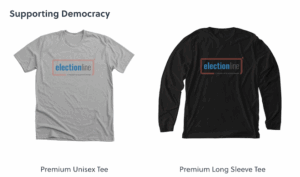 You’ve asked for it, well now you’ve got it! Just in time for all of your holiday gift-giving. We’ve opened up an electionline merch store using Bonfire. Currently we’re offering a couple of different t-shirts, a long-sleeve t-shirt and a hoodie.
Upcoming Schedule Changes
 electionline Daily News: The Daily News will publish by 10am Eastern on the following days: July 13, 14, 23, Aug. 3 and from August 18-25.
Election News This Week
 Federal Update: The Justice Department sent letters to all 50 states and the District of Columbia on July 7 threatening criminal prosecution of top election officials if ballots cast by noncitizens were counted in upcoming elections. The letters arrived in the midst of an ongoing campaign by President Trump and his allies to tighten election rules to prevent a problem that doesn’t exist: widespread noncitizen voting in American elections. David Becker, executive director of the nonpartisan Center for Election Innovation and Research, said election officials are unlikely to be intimidated by the warnings, but responding to repeated federal demands is draining time and attention from their work. “It’s not a threat to the public servants who run elections, but it is exhausting,” he said. FEMA, part of the Homeland Security Department, has told states that it would withhold 20 percent of some terrorism-preparedness grants unless they provide “proof of compliance” with the election security measures, the documents show. The grants, which total $1 billion each year, help pay for physical barriers and other security measures as well as planning and drill exercises and cybersecurity protections. Budget chief Russell Vought told lawmakers that he’s willing to work with Department of Homeland Security Secretary Markwayne Mullin on re-staffing up the Cybersecurity and Infrastructure Security Agency, following deep personnel cuts and further proposed reductions in the fiscal 2027 budget blueprint. Trump met June 30, at the White House with Tina Peters, former Republican Mesa County, Colorado clerk who was released early from prison after being convicted of crimes tied to tampering with voting machines to prove baseless 2020 election denial conspiracies. According to NBC News, a White House task force is gathering thousands of pages of documents from the CIA, the National Security Agency, the Office of the Director of National Intelligence, the FBI and the Justice Department with plans to declassify some of them, which would give Trump an opportunity to amplify new accusations about past elections, three people familiar with the effort said. The group has been charged with gathering information from federal intelligence and law enforcement agencies, including related to the 2020 presidential election, signs of ballot irregularities, potential voting machine issues and possibly beyond, according to the three people and two other people familiar with the task force’s mandate. Senate Democrats announced a new election observer program. Senate Minority Leader Chuck Schumer of New York and California Sen. Alex Padilla said the initiative will train Senate staff to act as election observers to stop potential interference in November’s midterm elections. The Senate election observer program is the result of the Senate Democrats’ Election Protection Task Force that Schumer and Padilla launched earlier in the year “to prevent, monitor, and challenge any malfeasance from Donald Trump and the far-right before, during, and after our elections in November,” the Senate minority leader wrote on X last month. The task force brought together 11 senators and elections experts to determine ways to safeguard voting rights. Padilla said the Senate election observer program will put trained, official observers on the ground “to observe activities around Election Day, observe activities around polling locations and other election facilities to help deter any attempts at voter intimidation.” If any inappropriate activity is observed, he said, it will help inform future policymaking and additional oversight that may be necessary.
 2026 Elections: Colorado finished up the June primaries on the 30th and it was largely smooth sailing in the majority vote-by-mail state. With wildfires raging, voters in some areas were able to cast their ballots online, a provision that’s been available for more than a decade. Additionally, elections staff in several counties had to be ready to move if the fires got closer. “We have prepared to evacuate, but at this point, we have been able to operate and set up an emergency generator,” Lake County Clerk and Recorder Tracey Lauritzen told the Colorado Sun on primary day. “There’s four more hours to go. This fire is kind of off-mountain and not impacting travel.”Jefferson County Clerk Amanda Gonzalez won the Democratic nomination for secretary of state. Secretary of State Jena Griswold won the Democratic nomination for state Attorney General. Early voting had been set to start on Guam on July 6, but due to ongoing recovery efforts from Super Typhoon Bavi, the Guam Election Commission postponed the start to July 9. We love a unique polling place and so too do apparently 230 San Joaquin County, California voters who cast their primary ballots at the De Young Shoreline Chapel, a local funeral home. “It has been used for the past 14 years and served over 230 voters in this election alone,” county Registrar of Voters Olivia Hale told the San Joaquin County Board of Supervisors last week. “We have not received any complaints from voters in that precinct. And we do not intend to move the polling location as we try to keep locations the same wherever possible.” The US Department of Justice intends to send election monitors to polling places in three Michigan cities during the Aug. 4 primary, a federal spokesperson confirmed. While federal monitors typically observe elections in dozens of communities each cycle, the three Michigan cities that the Trump administration will monitor in August are Democratic strongholds, and Michigan Attorney General Dana Nessel raised alarms over what her office called “baseless accusations” by the DOJ. Rappahannock County, Virginia’s Office of the General Registrar is rolling out new equipment and procedures ahead of the Aug. 4 Republican primary aimed at making voting more accessible for residents with mobility, hearing and vision impairments. Mohave County, Arizona will debut new ballot paper with added security measures in the July primary.
 Price of Postage: The U.S. Postal Service is once again raising the price of Forever stamps and other postal rates. Forever stamps will increase in price by 4 cents from 78 cents to 82 cents when the price increase goes into effect on July 12. Overall, the Postal Service is raising mailing services product prices about 4.8%, according to USPS. The Postal Service raised the price of the Forever stamp from 73 cents to 78 cents in July 2025. When Forever stamps were introduced in 2007, they cost 41 cents each. That’s a 100% increase in 19 years. Other price increases include: Domestic postcards – 61 cents to 65 cents; Letters (metered 1 ounce) – 74 cents to 78 cents; Letters (1 ounce) – 78 cents to 82 cents; International postcards – $1.70 to $1.75; International letter (1 ounce) – $1.70 to $1.75. The additional-ounce price for single-piece letters will remain at 29 cents, according to the USPS. The price increases were needed to help the Postal Service address rising costs and other challenges, the agency said in its announcement. “In the midst of the severe financial crisis facing the Postal Service and continued rising operational costs, the Postal Service is using all available tools, including available regulatory pricing authority, to ensure we can continue to fulfill our universal service obligation and serve the American public,” the Postal Service said at the time.
 History of Voting: Last week, the U.S. marked its 250th birthday. To mark that occasion, several media outlets produced pieces about the history of voting and democracy in America. Here’s a look at a few. PolitiFact from the Poynter Institute has From booze-filled parties to mail ballots: How did American voting actually evolve? which takes a broad look at how the nation has cast ballots over the last 250 years. The Fulcrum has What 250 Years of Voting Rights Battles Tell Us About Today. Historian Carol Anderson lays out the history of voting in the U.S. to understand the fight over elections today in America’s Long History of Voting and Election Integrity from KQED. The National News Desk produced History of expanding voting rights since nation’s founding which appeared on numerous local outlets. Voting rights have expanded and contracted throughout American history, and as the nation celebrates its 250th anniversary, that story is still being written. From barriers to breakthroughs: How voting rights have evolved over America’s 250-year history takes a look at that history. The Associated Press has a look at those who paid the ultimate price for voting rights in, Some paid the ultimate price to enact voting rights. Their survivors see America turning backward. And New York City’s oldest museum, the New York Historical (formerly the New-York Historical Society) recently debuted a new addition. Named the Tang Wing for American Democracy, and stretching west on 76th Street, the four-story, 71,000-square-foot addition houses an open-air sculpture court, a roof garden, classrooms, the museum’s first on-site conservation lab and the future quarters, beginning in 2028, of the American LGBTQ+ Museum.
Sticker News: Designs from two local students will be used as “I Voted” stickers to boost the public profile of elections in Washington County, Arkansas over the next two years. The winners of this year’s sticker design contest were announced by the Washington County Election Commission. This year’s contest was divided into two groups by grade level. The designs will be used as stickers offered to voters when they cast their ballots in elections through the primary election in March 2028. In the Kindergarten through Eighth Grade category, the design submitted by Russell Wolle nzien, a fifth grade student at Randall G. Lynch Middle School in Farmington, was the winner. In the Ninth through 12th Grade category, the design entered by Madi Brannan, a ninth grader at Elkins High School, was the winner. The winners were chosen from among designs submitted in the two grade-level competitions. Jennifer Price, the county’s elections director, said 498 people cast “ballots” online and 23 voted in person in the competition. Price said the Election Commission received 96 entries in the Kindergarten though Eighth Grade category and nine entries from ninth through 12th grade students. In the 2024 contest, the county received 54 entries from students in kindergarten through ninth grade. Price said she thinks the contest is a useful way of introducing young people — “our future voters,” as she called them — to the election process. Those who voted in person were able to use the same voting machines used by the county to conduct its elections. Stickers designed by two seventh graders will be at the Jamestown, Rhode Island polls when voters cast their ballots in September and November. The designs by
  Lawn School students Brayden D’Amico and Hannah Sandler won the 2026 “I Voted” sticker challenge after they were chosen via an online poll (413 votes) from among six finalists. D’Amico’s design, which won first place, will appear on the stickers for the general election. It depicts the Newport Pell Bridge and a lighthouse with the American flag as the backdrop. It received 39% percent of the first-place votes (161) with a weighted average of 4.77 out of 6. There were a total of 159 submissions. Canvassing clerk Keith Ford announced the winners during the town council’s June 15 meeting. D’Amico and Sandler were given certificates of recognition. Well this is one way to increase your “I Voted” sticker collection (what? You don’t have an “I Voted” sticker collection?!). According to the Cochise County, Arizona Recorder’s Office and Cochise County Elections Department, a packaging mistake resulted in some voters receiving “I Voted Early” stickers from Yuma County instead of Cochise County versions. The error only impacted the promotional stickers included in the packets. Officials emphasized that the mistake did not extend to any actual voting materials. Cochise County Elections Director Melissa Avant, who oversees ballot design and election administration, verified that proper ballot styles went to each voter impacted by the sticker mix-up.
Personnel News: Utah County, Utah Clerk Aaron Davidson lost his reelection campaign, contender Corey Astill totaled will face Forward Party candidate Russ J Rampton in November. Mike Queen, longtime communications director in the West Virginia secretary of state’s office, will retire in March 2027. New Mexico Secretary of State Maggie Toulouse Oliver received a lifetime achievement award from the Center for Election Innovation & Research. South Dakota Heather Baxter received the support of the South Dakota Republican Convention over incumbent Secretary of State Monae Johnson. Brooke Weathers has been appointed acting Bond County, Illinois clerk and recorder. Lincoln County, Montana Election Administrator Melanie Howell has been placed on administrative leave. Troy Havard is the new Lubbock County, Texas elections administrator. Waynesboro, Virginia registrar Lisa Jeffers will retire after the November election. Eric Navagh has been appointed the new director of the New Hanover County, North Carolina board of elections. Antrim County Clerk Victoria Bishop is facing a recall effort after a petition was filed with the Michigan Board of State Canvassers. Dallas Woodhouse, a former GOP operative working in state Auditor Dave Boliek’s office, has been reassigned from his job as liaison to county elections boards.
New Research & Resources
State Election Information Hub: The National Conference of State Legislatures launched its new State Elections 2026 page, a comprehensive, one-stop hub to follow this year’s state elections. This new resource provides information on the 2026 primary and general elections, legislative races by state and chamber, an interactive map on partisan composition, ballot measures, election administration and other key election-related topics. On Nov. 3, 2026, voters in 46 states will choose 6,139 state legislators, deciding over 83% of all legislative seats nationwide. Additionally, voters in Washington, D.C., American Samoa, Guam and the Northern Mariana Islands will elect 157 legislators. The 2026 State Elections Information Hub brings together NCSL’s election resources in one place, including: State partisan composition, 2026 legislative races by state and chamber, statewide ballot measures databases, NSCL Elections Defined video series, and NSCL election resources. NCSL will continue updating these resources throughout the 2026 election cycle, providing coverage before and after the Nov. 3 general election.
2024 Precinct Project: The MIT Elections & Science Data Lab (MESDL) 2024 precinct project is now finished—our largest and most expansive yet! This year’s nationwide dataset contains vote counts for more than 54,000 candidates running for over 12,000 offices across 200,000 precincts nationwide, taking over 500 days to complete by 12 talented researchers. Precinct project data come from a variety of sources, including state election pages, OpenElections, academic sources, or a combination of the three. This year, our research team also tested various LLM modeling techniques to manage, clean, and quality assure 2024 precinct project data. Each state was then manually reviewed by the research team, helping ensure the high quality of our nationwide dataset.
2026 Election Confidence Tracker: Better Choices for Democracy and AlphaRoc have released new data from the 2026 Election Confidence Tracker. Explore Better Choices for Democracy + AlphaRoc survey data and analysis to learn what matters most to voters and how Americans view representation, participation, and the accuracy of the vote count ahead of the 2026 general election. The latest findings reveal a striking disconnect: voters are ready to participate, but many do not feel represented: 86% of registered voters intend to vote; 86% trust the accuracy of the local vote count; and Only 23% believe Congress cares about people like them. The crisis is not whether votes will be counted. It is whether voters will be heard.
Democracy Audience Map: The Democracy Audience Map, from the Democracy Communications Collaborative and Harmony Labs, is a suite of tools for pro-democracy communicators, organizations, and funders to reach and persuade more Americans. In today’s fractured media landscape, the Democracy Audience Map fills a critical gap. It gives communicators new data-driven analysis and tools to effectively reach and move more Americans. The Map provides insight into the places each audience consumes media, the language of their values, and their preferences and concerns about governance. The Democracy Audience Map can also help funders and organizational leaders make strategic decisions about growth, differentiation, program design, and investment. It was created by the DCC, in collaboration with Harmony Labs, as a public good to increase collective impact and strategic alignment in the democracy field.
New AVR post-transaction mailer template: The Center for Civic Design has been building the voter response mailer toolkit to help election offices create clearer voter communications. The newest addition is the AVR post-transaction mailer, designed for states that use Secure Automatic Voter Registration (SAVR). When someone visits a government agency to renew a license, apply for benefits, or update an address, their eligibility to vote is verified as part of the transaction. Registration happens in the background. Later, the voter receives a mailer informing them that they’re registered. It’s a chance to decline, and depending on the state, choose a party affiliation, or do nothing at all. The mailer has to do a lot: inform, invite action, and help voters understand their options clearly enough that it feels like good news rather than fine print. Over the years, we’ve partnered with election offices and researchers across the country on AVR design. We’ve tested consent language with Medicaid applicants in Colorado. We’ve seen where the decline option gets buried, where voters misread what’s being asked, and where a moment of confusion becomes a missed registration. Those lessons are built into the AVR post-transaction mailer. The voter response mailer toolkit is a growing collection of customizable templates for voter communications. Cure notices, permanent vote-by-mail mailers, and UOCAVA renewals are already part of the toolkit.
VoterCast: VoterCast is a voter outreach platform built specifically for election officials. Powered by Ready for Tuesday, this tool helps election professionals expand their communications efforts by producing a library of research-backed content and graphics designed to help voters understand all aspects of the election process. Our goal is simple: save time, reach more voters, and build public trust in elections. The platform provides off-the-shelf materials covering the most common voter outreach topics from registration deadlines, voting options, polling locations, to election results confidence, and more. Content is formatted and ready to use.
Ballot Measures, Legislation & Rulemaking
 Federal Legislation: Speaker Mike Johnson (R-Louisiana) announced June 29 that he plans to use an unusual maneuver to merge the Safeguard American Voter Eligibility (SAVE America) Act with the National Defense Authorization Act (NDAA) after conservatives ground the House to a halt over the voter ID bill. Hard-line conservatives have said they would oppose any procedural rules that tee up debate and a final vote on legislation until the Senate passes the SAVE America Act, which would require proof of citizenship to register to vote in federal elections and the presentation of an ID to cast a ballot, or until the House takes further action to force the issue. According to The Hill, Johnson said that he will use a process called “MIRVing,” in which a procedural rule directs separately passed legislation to be packaged together and sent to the Senate. “We’re going to pass a MIRV, or what’s better known as a ‘merge onto the rule.’ So what that means is, when Republicans vote for the rule, they’ll be voting not just for the NDAA and everything else in there, but they’ll be voting to merge onto that the SAVE America Act we passed back in February,” Johnson said. “So that will send both of those items together over to the Senate, and so if any Republicans choose to vote against the rule, they will be voting against that outcome. So we think this is another good way to show the resolve of the House,” he added. Rep. Anna Paulina Luna (R-Florida) who submitted an amendment to the House Rules Committee to attach the SAVE America Act to the NDAA, quickly came out against Johnson’s plan. “’MIRVing’ the NDAA plus either SAVE America or Voter I.D. would still allow the Senate to strip out either or. The only way to ensure the Senate passes this is to make sure it’s in the bill text of the NDAA, meaning that my amendment(s) must be made an order. I’m not trying to be difficult, but this is what 80% of Americans want and what we promised the American people, so I stand by my decision,” Luna wrote on the social platform X.
 Arizona Ballot Measure: A campaign to ask voters to enshrine the right to vote by mail into the Arizona Constitution has failed to gather enough signatures to make it on the November ballot. The political action committee behind the campaign, Protect the Vote Arizona, announced a day before the deadline that its 2,000 volunteers had gathered 439,000 signatures, not enough to withstand inevitable challenges to and disqualifications of thousands of those signatures. Spokeswoman Stacy Pearson said the campaign would instead focus on a legal challenge to the Republican ballot referral that Protect the Vote Arizona was created to compete with in November. With a requirement to gather 383,923 valid voter signatures before the July 2 deadline, Protect the Vote Arizona’s Free, Fair and Secure Elections Act faced an uphill battle since volunteers began collecting signatures in the spring. The ballot initiative was filed with the secretary of state in March and had only gathered 50,000 signatures as of May 6. “Facing an impossible 88 percent validity requirement, the campaign made a strategic decision to not turn over the signatures of hundreds of thousands of mail-in voting supporters to the very election-denying politicians (i.e. Maricopa County Recorder Justin Heap) that this measure was designed to protect against,” Stacy Pearson, spokeswoman for the campaign, said in a statement.
 Los Angeles: The Los Angeles City Council reversed course on a high-profile ballot proposal to expand voting rights for noncitizens. Council members unanimously held off on a Nov. 3 ballot measure that would have asked voters to create a pathway for noncitizens — possibly green-card holders and recipients of Deferred Action for Childhood Arrivals — to vote in city and school board elections. Councilmember Hugo Soto-Martínez was the chief proponent of the proposal to expand noncitizen voting rights in L.A. But he announced he would join his colleagues in withdrawing the proposal, saying he had been hearing concerns from members of the Black community. MPAC Los Angeles, or Mobilizing Preachers and Communities, sent Soto-Martínez a letter on Sunday saying his proposal could “unintentionally expose vulnerable residents to greater scrutiny, political attacks, and fear.”
 Florida: Gov. Ron DeSantis (R) has vetoed legislation that would have allowed high school students to earn scholarships by volunteering at polling locations — and he’s citing the support of a progressive civil rights organization loathed by conservatives as a reason for rejecting it. Debate about the bill (HB 461) during the committee process was devoid of any controversy, and it passed unanimously in both the House (108-0) and the Senate (37-0). The House version was sponsored by Republicans Kiyan Michael and Susan Valdés, of Jacksonville and Tampa, respectively, and in the Senate by Jacksonville Republican Clay Yarborough. Another Republican, Duval County Supervisor of Elections Jerry Holland, was a key figure pushing for the measure. Speaking during a Senate committee meeting in January, he said he conceived of the idea when helping his grandson look over options for him to fulfill community service hours, but none involved civic matters. “Why can’t they learn about elections?” Holland said. “And why can’t we find something that gets young people involved in elections and inspires them maybe to be a poll-worker in the future?” Among the organizations supporting the measure were the League of Women Voters of Florida, Common Cause, and the Southern Poverty Law Center (SPLC). It was public support from that group that the governor noted in his veto message, saying that could potentially lead to a violation of a state law that bans any specific polling location from having poll workers from only one political party. “While the House and Senate sponsors had a noble intent in filing the bill, the application of the bill may result in an avenue for polls to be staffed with volunteers that may not be subject to Florida’s prohibition on single party registered poll workers for general elections,” DeSantis wrote. “Given the bill received support in committee by representatives of the Southern Poverty Law Center, this may indeed be the consequence of the legislation.”
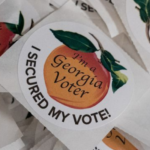 Georgia Rulemaking: The State Election Board has passed a rule aimed at granting board members access to the secretary of state’s election night hub, defying a warning from the attorney general’s office that such a rule would exceed the board’s authority. The measure passed in a 3-2 vote, with three Republican-aligned members voting to adopt the rule and the sole Democratic appointee and the chairman opposing it. The board also passed a separate rule aimed at defining what counts as a vote and how those votes should be tallied. The proposed rule was introduced by board member Salleigh Grubbs, who also serves as the first vice chair of the Georgia Republican Party. It coincides with an ongoing legal effort to give parties, board members and poll watchers access to the state’s emergency operations center, where the secretary of state’s election night reporting activities are conducted. No ballot counting takes place on site and the hub is not a polling place, early voting location or tabulation center, which the attorney general’s office has said exempts the area from state laws requiring poll watchers to have access to the areas where votes are being counted. “We’re not saying that anything that goes on there is nefarious or bad, but we want to make sure that the process is so clean that it couldn’t occur,” said newly-appointed board member Carolyn Roddy.
 Michigan: State Sen. Jonathan Lindsey has introduced legislation to reinstate certain absentee voting standards that would place the responsibility to register with voters and with local clerks to verify their information. Lindsey’s legislation, Senate Bill 1054, would restore the previously existing categories that qualified a voter to receive an absentee ballot. These categories would include physical disability, religious obligation, election inspector duties, being 60 or older, or absence from your polling location during voting, for instance, serving in the military. Lindsey says “This bill would restore sensible standards to Michigan’s absentee ballot process, “I believe people should have a sound reason to vote absentee. Universal, no-questions-asked absentee ballots open the door for fraud and errors, undermine our election day process and civic engagement, and make it more difficult for Michiganders to cast their ballots in private or without third-party influence.”
 New Jersey: Gov. Mikie Sherrill signed the John R. Lewis Voter Empowerment Act of New Jersey into law, making New Jersey the tenth state to enact its own voting rights law. The new law, named for the late Georgia congressman and civil rights leader John R. Lewis, was approved by the Legislature on June 30 along party lines after months of debate and amendments. The legislation was sponsored in the Senate by Senate President Nick Scutari, Senate President Pro Tempore Shirley Turner (D-Lawrence), and Sen. Joe Cryan (D-Union). Assemblywoman Verlina Reynolds-Jackson (D-Trenton) was the Assembly prime sponsor. The law declares it to be New Jersey’s public policy to encourage participation by all eligible voters and ensure that members of protected classes, including racial, color, and language-minority groups, have an equal opportunity to participate in the political process. It directs courts to interpret voting laws liberally to protect the right to vote and ensure equitable access to voter registration and elections. Scutari said the legislation is intended to preserve confidence in New Jersey’s election system. The law prohibits state agencies, local election offices, and political subdivisions from adopting voting qualifications, election procedures, or policies that deny or abridge the voting rights of protected classes or create material disparities in voting opportunities. It also establishes standards for claims involving alleged vote dilution resulting from election methods and authorizes courts to order remedies for violations. The statute expands language-access requirements. Political subdivisions that meet specified population thresholds must provide ballots, election notices, instructions, voter information, and other election materials in designated languages in addition to English. They also must provide bilingual election workers when available. The Attorney General will determine which jurisdictions qualify for additional language assistance using census or comparable government data. The bill originally would have created an independent Division of Voting Rights, but that provision was removed before final passage. The law also establishes a preclearance process requiring certain covered political subdivisions to obtain approval from the Attorney General before implementing specified election-related changes. Covered jurisdictions are identified under criteria set forth in the statute. Additional provisions require greater public participation in municipal and county redistricting in covered jurisdictions. They include multiple public hearings before and after draft maps are released, outreach to non-English-speaking communities, publication of proposed maps and explanatory reports, and additional opportunities for public comment before final adoption. The act also creates a process allowing prospective plaintiffs to notify political subdivisions of alleged violations before filing suit, giving local governments an opportunity to take corrective action. Under certain circumstances, plaintiffs who successfully prompt remedial action may recover up to $50,000 in documented costs associated with preparing their claims, subject to periodic adjustment.
 North Carolina: Democratic state lawmakers proposed a constitutional amendment that would guarantee North Carolinians at least 14 days of in-person early voting for each election. That’s after Republican senators introduced legislation that would shorten the state’s current early voting period. House Bill 1240, sponsored by Rep. Rodney Pierce (D-Halifax), would create a constitutional right to vote early in person in primary and general elections held in even-numbered years. The proposal would require at least 14 days of early voting and preserve same-day voter registration during the early voting period. It also would set minimum hours for early voting sites while leaving county election boards in charge of selecting sites and staffing. The proposal comes weeks after Republican senators introduced Senate Bill 1084, which would reduce North Carolina’s early voting period from 17 days to 10. Republican lawmakers have said a shorter early voting period would reduce staffing and administrative demands on county election offices. More than 4.2 million North Carolinians cast ballots during the 2024 general election’s early voting period, accounting for nearly three-fourths of all votes cast, according to the North Carolina State Board of Elections.
A divided state House approved an elections bill that clears a path for more ballot challenges, election audits, and registration removals. Democrats roundly criticized House Bill 958, saying it will make unfounded voter challenges more likely, sow confusion, inject partisanship into election administration, and make it harder for eligible voters to have their votes count. “You don’t know the fear of having a government agency coming in and turning your life upside down,” said House Democratic Leader Robert Reives (D-Chatham). The House approved the bill in a party-line 66-47 vote. It now goes to the Senate for consideration. Under the bill, the N.C. Board of Elections would be able to hire private attorneys to represent them, bypassing the office of Democratic state Attorney General Jeff Jackson. And state election lawsuits would no longer automatically be heard in Wake County.
 Rhode Island Rulemaking: Regulations approved by a 4-0 vote of the Rhode Island Board of Elections at its meeting July 7 codify and add detail to the process and protections for early voting, available at designated locations 20 days before primary and general elections. Early voting was enshrined in state law under the 2022 Let RI Vote Act. But the law does not specify how local boards of canvassers and municipal clerks should carry out the early voting process for the thousands of voters who choose to cast ballots early. The 14-page guidance adopted this week fills the gap, tackling voter identification, ballot submission and tabulation, security and voter conduct. The rules are nearly identical to what’s already on the books for polling places on Election Day. “The state board, and local boards, were looking for some sort of structure and rules around conduct of early voting so it can be a more formalized process, and more uniform,” Miguel Nunez, elections board executive director, said in an interview with the Rhode Island Current. The adopted regulations will now be submitted to the Rhode Island Department of State for formal enactment. Early voting for the Sept. 9 state primaries begins on Thursday, Aug. 20.
 South Dakota Rulemaking: Under state law, any “interested person” can petition state boards to change administrative rules. But South Dakota citizens and organizations don’t qualify as “persons” under that chapter of state law. The existence of that limitation surprised some members of the state Board of Elections on Wednesday during a meeting called for the express purpose of voting to advance or defeat a rules package the body spent two hours pondering last week. The League of Women Voters leaned on what it believed to be its right to petition state board earlier this month when it offered the board a series of rule changes the group argued were necessary to standardize the administration of a new state law that requires first-time voter registrants to provide proof of U.S. citizenship. The board dismissed the petition in a 5-2 vote after one of the board members told the group that the advocacy nonprofit lacks the legal standing to ask for the changes.
Legal Updates
 U.S. Supreme Court: In a 5-4 decision, the Supreme Court ruled against Republicans’ attack on mail-in ballots shoring up election rules in over a dozen states ahead of the midterms. Nearly 30 states and the District of Columbia allow at least some ballots that are cast by Election Day to be counted if they are received soon after that. In 2020, the Mississippi Legislature enacted one such law, permitting absentee ballots to be counted as long as they were postmarked on or before the date of the election and received by the registrar no more than five business days after the election. The Republican National Committee argued that in practice, Mississippi’s law meant the election no longer ended on Election Day. But in a 5-4 opinion, the high court majority held the committee’s argument conflicts with the Uniformed and Overseas Citizens Absentee Voting Act, which requires states to let absent military and overseas voters cast absentee ballots in federal elections — and, as a backup, establishes a federal absentee voting system. The justices held that federal statutes do not prevent Mississippi from counting absentee ballots postmarked by Election Day but received up to five days afterward. They also affirmed that nothing in the federal statutes requires ballots to be received by Election Day. “In sum, the Election Day statutes require the electorate’s choice to be made on Election Day. That occurs so long as Election Day is the deadline for individuals to vote — as it is in Mississippi,” Justice Amy Coney Barrett wrote for the majority. “But the Election Day statutes do not set a deadline for ballot receipt, so they do not prevent Mississippi from counting ballots postmarked before Election Day yet received afterward,” the Donald Trump appointee added. Chief Justice John Roberts joined the opinion, along with justices Sonia Sotomayor, Elena Kagan and Ketanji Brown Jackson. Roberts was appointed by George W. Bush, Sotomayor and Kagan by Barack Obama, and Jackson by Joe Biden.
The U.S. Supreme Court agreed to consider a case that could decide whether the state can require Arizonans to provide proof of citizenship to register to vote and if it can purge voter rolls in the months leading up to an election. The high court’s decision in the case, which could come before the 2028 presidential election, could impact similar laws in other states that also face legal challenges. The case originated in 2022 when a group of voting rights organizations, including Mi Familia Vota and Living United for Change in Arizona, challenged two new laws signed by then-Gov. Doug Ducey, a Republican. The laws would ban voters who don’t provide proof of citizenship from voting by mail and in presidential elections. It would require more frequent and extensive checks of voter rolls for noncitizens, and subsequent purges.
 Federal Litigation: U.S. District Court Judge Indira Talwani has halted President Donald Trump’s executive order that sought to create a federal voter list and limit who can receive a mail ballot. Talwani, who was nominated by Democratic President Barack Obama, sided with a coalition of nearly two dozen states that challenged the Republican president’s order in granting a summary judgment. Her ruling applies to this year’s midterm election cycle. Plaintiffs argued in two lawsuits, both filed in federal court in Boston, that Trump’s order should be found unconstitutional because the states and Congress, not the president, have the power to set election rules. The judge agreed, saying in her ruling that the provisions of Trump’s order seeking to create a federal list of eligible voters and using the U.S. Postal Service to determine who can receive a mail ballot are “legally void” because they “unconstitutionally violate the separation of powers.” The White House stood by Trump’s executive order and indicated the administration would appeal the ruling. The order, said spokeswoman Abigail Jackson, “lawfully protects our elections, and we are confident that we will ultimately prevail in its implementation.” The administration, in its motions to dismiss the lawsuits challenging the order, argued that the motions were premature and that plaintiffs lacked the legal basis to bring their claim based on the Administrative Procedure Act, which governs how federal agencies develop and issue regulations. But in an interim order before Thursday’s ruling, Talwani said the motions pertaining to this year’s election cycle were relevant: “In light of the EO’s specific deadlines over the next three months, and the reality that elections will be occurring throughout this period with the November 3, 2026 midterm occurring in just five months, postponing judicial review is impracticable and may inflict significant hardship on Plaintiffs,” she wrote. That order denied the Trump administration’s motion to dismiss the challenges.
U.S. District Judge Emmet Sullivan blocked the U.S. Postal Service’s proposed restrictions on mail-in voting, finding that they violated a settlement with a leading civil rights group that required expedited mail-in ballot handling. The Postal Service in May proposed a rule requiring states to provide lists of voters and adopt new balloting procedures before the mail agency would make deliveries. If states did not comply, the Postal Service would refuse to deliver the ballots. Sullivan sided with the NAACP rights group, which argued that the new rule would run afoul of a 2021 legal settlement that required USPS officials to take “extraordinary measures” to ensure timely delivery of ballot mail through 2028. Sullivan’s ruling prevented the Postal Service from implementing the proposed regulations, which stemmed from Trump’s March executive order directing the Department of Homeland Security to compile a list of confirmed U.S. citizens eligible to vote in each state and requiring the USPS to only deliver ballots to voters on each state’s approved mail-in ballot list. Sullivan’s ruling marked the second defeat in the courts in as many weeks for Trump’s push to severely restrict mail-in voting ahead of the November 3 midterm elections, with his Republican Party locked in a tight battle to maintain control of both houses of Congress.
A three-judge panel of the 10th Circuit Court of Appeals ruled this week that Wyoming, Montana and Colorado voter-rights groups can wage a new civil trial against a group of private citizens who canvassed door-to-door to investigate whether the 2020 presidential election was fraudulent. The voter rights groups “were not fully heard at trial,” according to a panel comprised of judges Veronica Rossman, Michael Murphy and Richard Federico. Shortly after the 2020 election, three Colorado residents formed an unincorporated association, the United States Election Integrity Plan (USEIP). The volunteers asked voters if they’d engaged in voter fraud, whether they’d participated in the 2020 election, and whom they’d voted for, court documents say. Three voter-rights groups — the Colorado Montana Wyoming State Area Conference of the NAACP, League of Women Voters, and Mi Familia Vota — filed a lawsuit against the group and the three co-founders in March 2022 to stop those activities. The groups called those canvassing efforts voter intimidation, and invoked two federal laws against it: the Voting Rights Act and the Ku Klux Klan Act. Their civil complaint alleged the volunteers were sometimes armed and wore official-looking badges.
U.S. District Judge T. Kent Wetherell II has ordered the U.S. Department of Homeland Security to resume giving four Republican-led states access to an immigration database to check the citizenship status of people on their voter rolls, after another judge blocked it from continuing to use the database nationwide. Wetherell, in a ruling on Tuesday said he was aware of Washington, D.C.-based U.S. District Judge Sparkle Sooknanan’s June 22 decision to halt use of the revamped database, which contains Social Security numbers, citizenship status, and other data on people nationwide. But Wetherell, who was appointed by Republican President Donald Trump, said that by disabling Florida, Ohio, Iowa and Indiana’s access to key features in the database in response to Sooknanan’s ruling, DHS had violated an earlier settlement the Trump administration entered into with the states to improve and modernize the system. “The fact that Defendants disabled those features to comply with Judge Sooknanan’s order does not change the fact that they violated the agreement,” he said.
 Alabama: Montgomery County Circuit Court Judge Brooke Reid is weighing whether to dismiss a legal challenge to Sen. Tommy Tuberville’s eligibility to run for Alabama governor, brought by two Alabama voters. Reid heard arguments June 29 but did not issue an immediate ruling, saying she would need additional time to decide whether the court has jurisdiction over the residency challenge. Tuberville’s legal team filed a motion to dismiss the case entirely, arguing the court lacks jurisdiction. Attorney Joe Espy argued on Tuberville’s behalf. The plaintiffs’ attorney, Barry Ragsdale, argued the case should not be dismissed and that the courts should rule on constitutional questions. “We believe the courts and the judiciary are who should pass on whether the constitution has been violated, and again, like I said to the judge, we don’t vote on whether people get constitutional rights,” Ragsdale said.
 Alaska: Superior Court Thomas Matthews says the Alaska Division of Elections was wrong to disqualify Petersburg retiree Dan Sullivan as a challenger to U.S. Sen. Dan Sullivan. Matthews said the decision to drop the candidate “was based upon a new, previously unstated, ‘good-faith’ criteria” that’s not in the Constitution or state law. “In addition, the (Division of Elections) Director’s assertion that Mr. Sullivan seeks to confuse or misguide voters is not supported by a preponderance of evidence,” the judge wrote in a 32-page decision issued Friday night. “Instead, the Division accepted at face-value the assertions of the complaint, and disregarded Mr. Sullivan’s assertions.” On June 29, with the deadline to print ballots less than 24-hours away, the Alaska Supreme Court upheld Matthews’ ruling. The Supreme Court’s ruling was issued three hours after the justices heard arguments in the appeal by the Alaska Division of Elections. But the ruling gives the Alaska Division of Elections leeway to determine how the candidates’ names will appear on the ballot, which could potentially raise further disputes.
 Arizona: A challenge to election rules by the Pima County Republican Party could open the door to people standing 75 feet from polling places being able to shout at voters about how they should cast their ballots — and even use bullhorns and amplifiers. State Elections Director Lisa Marra testified in federal court Wednesday that statutes prohibit “electioneering” within 75 feet of polling places, and she acknowledged state law is silent about activity beyond that point. But the state Elections Procedures Manual says that electioneering is forbidden beyond that 75-foot limit “if it is audible from a location inside the door to the voting location.” Attorney Jeffrey Clark, who represents the county party that sued, says that makes illegal the decision of Secretary of State Adrian Fontes to include the ban on some activity outside that 75-foot perimeter. He said the secretary cannot enact restrictions more strict than what the Legislature has put into the law. Anyway, he said, any rule that restricts anything outside that line violates the First Amendment. It is now up to U.S. District Court Judge Michael Liburdi to decide whether the provision in the manual is legal and enforceable.
The U.S. Supreme Court says it will hear arguments over whether an Arizona law requiring proof of citizenship when registering to vote is legal. The state requires Arizona voters to show they’re citizens when registering, but lower courts have ruled that violates federal law. That’s led to a kind of two systems: one for voters who register using the state form and show proof of citizenship, who are allowed to vote in all races and another for those who use the federal registration form, which requires voters to attest under penalty of perjury that they’re citizens, but does not require any further proof. Those voters are only allowed to vote in federal races, not state ones.
The Arizona Supreme Court sided with Maricopa County Recorder Justin Heap in the ongoing fight between him and the county board of supervisors over election duties. In a unanimous order, the state’s highest court vacated a June ruling from the Arizona Court of Appeals, and reinstated injunctions put in place in April that required the board of supervisors to “fund all necessary expenses of the Recorder.” After Heap, who is allied with election deniers, won the 2024 Republican primary for Maricopa County Recorder, and before the general election, the board of supervisors signed an agreement with Heap’s predecessor to shift the recorder’s IT department to be under the board’s control. Heap terminated that agreement shortly after he took office, and has been feuding with the Board of Supervisors since then. In June 2025, he sued the board over their election duties dispute. Chief Justice Ann Timmer wrote that based on past case law, “the Board cannot use budgetary authority to usurp an independently elected officer’s statutory functions.” The high court opted to vacate the appeals court stay, and to reinstate the lower court’s order, with changes outlined in a 12-point interim operational protocol that Heap had earlier proposed to ensure that the primary election isn’t impacted. “To the extent issues can be resolved without disrupting procedures that are actually ongoing in the primary election process, the Court wishes to do so,” Timmer wrote.
 Arkansas: U.S. District Judge Timothy Brooks declared unconstitutional state laws restricting Arkansas’ initiative and referendum process that are being challenged in court by ballot measure sponsors. Brooks also allowed a handful of claims in the case to proceed to trial and left in place a preliminary injunction that temporarily blocked some of the challenged laws. The laws Brooks declared unconstitutional imposed requirements including that canvassers request photo ID from signers and that paid signature-gatherers’ home addresses be provided to the state. The 62-page order, which came just days before the July 3 deadline to submit petitions to qualify ballot measures for the November ballot, stems from a federal lawsuit filed against the secretary of state last April by the League of Women Voters who argued several new state laws violated the U.S. and Arkansas Constitutions. Two ballot question committees, Protect AR Rights and For AR Kids, were later allowed to intervene in the case. The groups challenged additional laws not included in the original suit, including a law that prohibits ballot titles from being written above an eighth-grade reading level, and another law that mandates a minimum number of petition signatures must be collected from at least 50 counties instead of 15 as directed in the Arkansas Constitution.
 California: The Third District Court of Appeal denied an urgent request from the state’s attorney general to slap down a Shasta County elections law he has called illegal. The court opted against reviewing Attorney General Rob Bonta’s challenge to the county’s Measure B, which adds additional requirements like showing photo ID when voting. That measure, which received about 55% of the vote June 2 in the North State county, would require government-issued identification to register and vote, largely eliminate vote-by-mail and early voting, mandate hand-counted ballots and create a county voter registration system separate from California. The appeals court made no decision about the suit’s merits. “The denial is without prejudice to petitioners seeking expedited relief in the trial court in the first instance and to refiling in this court upon a showing that petitioners attempted to obtain expedited relief in the trial court, and the trial court failed to timely act,” the court wrote. “The attorney general and the secretary of state will quickly move to obtain relief in the appropriate court to protect voters’ rights and enforce state election laws,” Bonta’s office said in a statement. Bonta filed his complaint June 12, asking for a swift decision.
The California attorney general and secretary of state have refiled their joint lawsuit against Shasta County, challenging the legality of Measure B in the Shasta County Superior Court. “Measure B is an unlawful attempt to disenfranchise voters and create a rogue election system that serves only a select few,” said Secretary of State Shirley N. Weber in a press release yesterday evening. The voter-approved measure seeks to change Shasta’s election procedures in multiple ways that contradict state laws, including mandating voter ID, eliminating most mail-in voting, implementing a hand count of votes, and separating Shasta’s voter rolls from state oversight. The measure gained 56% approval in Shasta’s June primary. In the press release, the state said its initial decision to file in the appeals court last month was an attempt to speed the process of a court decision. The Third Appellate District court pushed back the case shortly thereafter, saying it was not the correct venue and redirecting the matter to a trial court. “Our position remains unchanged: Measure B is legally indefensible,” said Attorney General Rob Bonta in the state’s press release about the refiling.
 Colorado: The Republican National Committee and two Colorado Republican elected officials are suing Colorado Secretary of State Jena Griswold, alleging that a policy allowing some U.S. citizens overseas to register and vote in Colorado elections violates the state constitution. Douglas County Clerk and Recorder Sheri Davis and U.S. Rep. Jeff Crank of Colorado Springs joined the RNC as plaintiffs in the lawsuit, which was filed in Denver District Court. The suit targets guidance issued by Griswold affirming that U.S. citizens covered by the Uniformed and Overseas Citizens Absentee Voting Act may register to vote in Colorado even if they have “never lived in the United States,” provided that their “parent, legal guardian, spouse, or domestic partner was a resident of Colorado before leaving the United States.” The GOP lawsuit argues that Griswold’s guidance and a state statute applying the same criteria to eligible UOCAVA voters both violate the voter residency requirements in the Colorado constitution. It seeks a court order declaring the law unconstitutional and requiring Griswold to remove the allegedly ineligible voters from the rolls. “Residency is not inherited and cannot be established by proxy,” the lawsuit says. “An individual who has never personally made Colorado his or her home has not ‘resided in this state’ within the meaning of Article VII of the Colorado Constitution.”
The League of Women Voters of the Pikes Peak Region and other voting rights groups are suing Colorado Springs over when the city holds elections. Colorado Springs holds its municipal elections during the spring, and elects its mayor and councilors on different years than when state and federal offices are elected. By doing this, the voter rights groups say the city is breaking the state’s Voting Rights Act, which was enacted last year. The lawsuit alleges holding these elections at a different time than state and federal elections suppresses the votes of people of color. The suit presents voting data that revealed Black and Hispanic voters had roughly half the voter turnout of white registered voters in such municipal elections. The lawsuit says in the city’s six most recent local elections, 4 percent of non-white registered voters voted, compared with 5.8 percent in November state and federal elections. Kevin Bommer, head of the Colorado Municipal League, said the lawsuit could have a widespread impact on the state. A member of the league testified against the new law that the suit is based off of at the state house last year.
 Georgia: Trump-appointed Judge William M. Ray has quashed a subpoena from the U.S. Department of Justice seeking personal information from the nearly 3,000 Georgians who served as Fulton County election workers and volunteers during the 2020 election, dealing a blow to the administration’s escalating effort to uncover alleged voter fraud in Georgia. The ruling ends a monthslong effort from the Department of Justice to obtain the names, positions, addresses, phone numbers and email addresses of election workers in Georgia’s most populous county. Lawyers for the Justice Department argued the records were needed to investigate possible election law violations. But in a 28-page opinion, the judge pointed out that the statute of limitations for any election-related crimes committed in 2020 has expired and cautioned against allowing sensitive information to be divulged without a “legitimate law enforcement purpose.” “Should a private company fail to protect such information from electronic thieves, such company would most likely be sued in a data breach class action lawsuit,” Ray wrote. “Thus, everyone, whether you support the President or you do not, or whether you believe the 2020 Election was fair or believe that it was not, should be concerned about the DOJ’s ability to utilize the power of the Grand Jury to appropriate your private information without a legitimate purpose.”
 Maryland: Circuit Court Judge Robert J. Thompson denied a temporary restraining order to establish guidelines to canvass mail-in ballots. Thompson’s opinion released June 25 says that the complaint filed by several Republican candidates and a group called SecuretheVOTEMD would not “have a great likelihood of success on the merits in this matter.” The complaint was filed June 23, Election Day, and the plaintiffs included 10 Republicans who sought congressional, state and county offices. One of the plaintiffs, Del. Robin Grammer (R-Baltimore County), said Monday, ahead of the filing, that the complaint stemmed from what he called a mail-in ballot “fiasco” after the state Board of Elections had to replace more than 437,000 mail-in ballots. The complaint sought for canvassing to be shown via livestream video and to allow observers to watch ballots to be counted. With the specific exception of livestream, the judge wrote that the general public, candidates and their representatives can watch ballots being counted because they “are already enshrined into law.” “While most of the facts are not in dispute in this case, and, while conspiracy theories abound, the court finds that the printing and distribution of erroneous ballots was an honest mistake,” the judge wrote. “Those replacement ballots indicated that the previous ballots should not be used. In addition, SBE followed up with another mailing to those same voters notifying them of the mistake, and urging them to vote only the corrected ballots.”
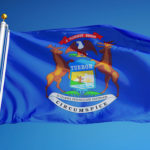 Michigan: Hamtramck City Councilmember Mohammed Hassan has been acquitted of all felony charges in connection with the 2023 city council election. On July 1, a Wayne County jury acquitted Hassan of both felony counts of election law forgery and forging a signature on an absentee ballot application. However, the jury found Hassan, who also serves as the city’s mayor pro tem, guilty of providing a false statement in an application for an absentee ballot, a 90-day misdemeanor. The jury’s decision came three days after witness testimony and within two hours of the jury being handed the case on Wednesday morning. If convicted, Hassan faced the possibility of five years in prison and up to a $1,000 fine. Hassan was initially charged in August 2025 with election law forgery, two counts of unqualified elector attempting to vote, forging a signature on an absentee ballot application and providing a false statement in an application for an absentee ballot.
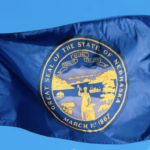 Nebraska: The Nebraska Supreme Court ruled June 26 that a lawsuit that sought to stop the state from handing over potentially sensitive voter data to the U.S. Department of Justice is moot and dismissed the appeal. The court in its ruling wrote, “because Nebraska’s voter registration list has already been released to the DOJ, this matter is moot, and we decline to apply the public interest exception to the mootness doctrine. As such, the appeal and cross-appeal are dismissed.” The lawsuit was brought by the voting advocacy group Common Cause and Omaha voter Dawn Essink against Secretary of State Bob Evnen last fall. In February, a Lancaster County District Court judge ruled that Common Cause lacked standing to sue because the alleged harm was speculative and not imminent. Shortly after that ruling, Evnen released the voter data to the federal government. The plaintiffs’ attorneys asked the high court to reverse the Lancaster County decision. Attorneys for the state argued the lower court’s decision should be affirmed, saying it was too late to stop the data from being shared.
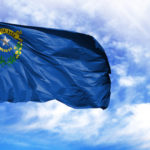 Nevada: Republicans are challenging a Nevada law that allows U.S. citizens born abroad to vote in the state despite never living in the country. The Republican National Committee, the Nevada Republican Party and Jim Marchant, Republican nominee for Secretary of State, filed a lawsuit in the First Judicial District Court in Carson City late last month. Secretary of State Francisco Aguilar, the Nevada State Democratic Party and the Democratic National Committee were listed as defendants. Under current law, a U.S. citizen who has never resided in the United States is eligible to vote in Nevada as long as the state is their parents’ last legal address and the absentee voter has not registered to vote in another state. The Nevada law enacted the federal Uniformed Military and Overseas Absentee Voters Act through the Legislature. No lawmaker voted against it, and then-Gov. Brian Sandoval, a Republican, signed 2011’s Assembly Bill 100 into law. Democrats counter that the legal challenge seeks to disenfranchise citizens who live abroad. “The lawsuit challenging Nevada’s protections for certain overseas voters is an attack on the voting rights of eligible U.S. citizens living abroad, and military families whose lives are shaped by service and sacrifice,” Aguilar said in a statement. “Children born overseas should not be punished because their parents served, worked or were stationed outside the United States,” he added. “Nevada will not turn its back on military families simply because their service took them away from home.” Absentee voters are required to reaffirm their eligibility every election cycle, according to the secretary of state’s office.
 New Hampshire: The U.S. Department of Justice’s Civil Rights Division is appealing a decision by a federal judge to dismiss a lawsuit it filed last year against New Hampshire and five other states for failure to produce statewide voter registration lists at the government’s request. An order issued June 29 by U.S. District Judge Joseph Laplante dismissed the federal government’s case against the New Hampshire Secretary of State’s Office seeking New Hampshire’s unredacted statewide voter registration list — including sensitive personal information considered confidential under state law. When the lawsuit was dismissed, New Hampshire Secretary of State David Scanlan said he is “committed to protecting the private information of New Hampshire voters to the fullest extent required by law.” At this time, attorneys with the Department of Justice have simply notified the court and parties involved they are appealing the decision. A motion detailing their case for appeal has yet to be filed.
 Pennsylvania: U.S. District Judge Cathy Bissoon dismissed a case brought by the U.S. Department of Justice seeking a copy of the state’s voter roll containing voters’ personal identifying information. “Public statements from government officials reveal its intentions: to create a nationwide voter-database, for potential weaponization in future elections; as a “fishing expedition,” hoped to advance unsubstantiated claims of non-citizen voting; and as a tool for immigration enforcement,” Cathy Bissoon, district judge for the Western District of Pennsylvania, wrote in a decision June 27. The department sued Pennsylvania in September. The Justice Department has said it is seeking the nonpublic information in order to ensure states are complying with federal voter registration laws. In December, the Pennsylvania Department of State urged the court to dismiss the case on the grounds that the laws the Justice Department was citing — the Help America Vote Act and National Voter Registration Act — don’t actually give them authority to demand the nonpublic versions of the voter rolls, and that the specific information the Justice Department sought was unnecessary to accomplish its objectives. The Justice Department has sued 30 states and the District of Columbia for access to state voter rolls containing personal information such as driver’s license and partial Social Security numbers. The Justice Department has filed an appeal.
 South Carolina: The South Carolina Republican Party has officially filed a federal lawsuit in pursuit of party registration and closed primaries in South Carolina. In a lawsuit dated July 4, the party asked the court to recognize its constitutional right to limit participation in its nomination process to just Republican voters, citing the First Amendment. The official filing comes after the state party’s delegates voted to amend its rules at the state convention. 579 delegates approved the new rule, which stipulates that voters participating in Republican primary elections must register with the party. The legislature failed to advance a bill earlier this year that would require both party registration and closed primaries. Currently, any registered voter may participate in the primary election of their choosing. This has led to outside organizations encouraging participation in certain primaries to boost their own electoral interests.
 Wisconsin: After losing in federal district court last month, the U.S. Department of Justice asked the 7th Circuit Court of Appeals to expedite its lawsuit in order to audit Wisconsin’s voter registration list ahead of the August primary and November general election — demanding sensitive voter data like drivers license information and partial Social Security numbers. The DOJ’s emergency motion suggested “many” absentee ballots could be sent to “non-citizens” or otherwise “fraudulent” registrants without a federal audit. The appeals court denied the request on June 24. Court filings from the Wisconsin Elections Commission say it provided the DOJ with publicly accessible voter roll data. But the administration argues the Civil Rights Act of 1960, the Help America Vote Act and the National Voter Registration Act require Wisconsin to give its voters’ driver license numbers and the last four digits of social security numbers too.
In a 5-2 decision, the Wisconsin Supreme Court ruled that an activist group does not have the right to obtain the documents that notify election officials when someone is declared incompetent to vote by a circuit court judge. The Wisconsin Voter Alliance filed open records requests in a number of counties seeking the notice of voting eligibility forms that circuit courts send to local and state election officials when a judge declares a person incompetent and ineligible to vote. The group then sued to force the release of those documents. The statute guiding declarations of incompetency and the process through which a person declared incompetent can lose their voting rights includes a provision that states court records “pertinent to the finding of incompetency” are closed. In the majority opinion written by Justice Janet Protasiewicz and joined by the other three liberal justices plus conservative Justice Brian Hagedorn, the Court ruled that the NVE form is created as part of a guardianship case, therefore it’s pertinent to the finding of incompetency and shielded from public disclosure.
Opinions This Week
National Opinions: Democracy, II, III | Vote by mail, II | Voting rights, II, III | Voter ID | U.S. Supreme Court, II, III | Last-minute election reform | U.S. Postal Service | Noncitizens | SAVE Act, II, III | Wagering | 2020 election | Ranked choice voting | Election threats |
Arizona: Honest elections | Language access |
Colorado: Ranked choice voting | Tina Peters |
Florida: Voting rights | Vote by mail |
Georgia: Federal interference |
Idaho: Voting rights |
Illinois: Vote by mail |
Indiana: Secretary of state, II | Election security |
Maine: Ranked choice voting, II, III |
Michigan: Ballot access |
Minnesota: Voting Rights Act |
Nevada: Secretary of state |
New Jersey: Vote by mail |
North Carolina: Election legislation | Early voting |
Ohio: Voter ID | Voter fraud | Secretary of state |
Oregon: Open primaries |
South Dakota: Election security |
Virginia: Special election costs |
Washington: Vote by mail | Election oversight |
Wisconsin: Vote by mail |
Upcoming Events
CERA Courses (Milwaukee): The Certified Elections Registration Administrator (CERA) certification is the original professional certification for election administrators in the United States. The following courses will be offered in Milwaukee in July: Course 5 – Ethics in Election Administration and Voter Registration; Course 6 – Communications and Public Relations in Election Administration and Voter Registration; Course 7 – Enhancing Voter Registration and Participation in Election Administration and Voter Registration; Course 8 – Implementation of New Programs in Election Administration and Voter Registration; and Course 9 – History in Elections Part 3: 1960 to Modern Era. When: July 11-18. Where: Milwaukee, Wisconsin.
Will the midterms happen? Your election questions, answered: Will the 2026 midterms happen? Short answer: Yes. Long answer: Elections happen because thousands of local officials follow state and local laws requiring them to happen — and history shows they’ve done so before, even under immense pressure. The greater danger isn’t no election, but one that’s chaotic, unfairly challenged, or deliberately cast as illegitimate after the fact. Got more questions about the midterms? Submit them to Votebeat reporters with your RSVP on Eventbrite, and they’ll give you the long answer live on July 13 at 5 p.m EDT. Votebeat is a nonprofit newsroom specialized in explaining how elections work. Each of our reporters and editors spend every day covering voting rules, election administration, misinformation, election lawsuits, local officials, and the systems that determine how ballots are cast and counted. Ask them anything! When: July 13, 5pm Eastern. Where: Online.
2026 NACo Annual Conference & Exposition: The National Association of Counties will hold its 2026 Annual Conference & Exposition on Orleans Parish, Louisiana from July 17-20. When: July 17-20. Where: New Orleans.
NASED 2026 Summer Conference: The National Association of Directors of Elections will hold its summer conference from July 20-22 in Boston. When: July 20-22. Where: Boston.
iGO 9th Annual Conference: The International Association of Government Officials will hold its 9th Annual Conference from July 25-28 in Reston, Virginia. When: July 25-28. Where: Reston, Virginia.
2026 NCSL Legislative Summit: The 2026 NCSL Legislative Summit takes place in Chicago July 27-29, bringing together state legislators and legislative staff from all 50 states and U.S. territories for three days of collaboration, innovation and bipartisan dialogue. When: July 27-29. Where: Chicago.
SCARE 2026 Annual Conference: The South Carolina Association of Registration and Election Officials (SCARE) will hold its annual conference from July 27-30 in Isle of Palms.
Oregon Association of County Clerks: The Oregon Association of County Clerks will hold its annual conference from August 10-13 in Burns.
WMCA 46th Annual Conference 2026: The Wisconsin Municipal Clerks Association will hold its annual conference from August 18-21 in Green Bay.
Election Center 41st Annual Conference: The National Association of Election Officials (Election Center) will hold its 41st Annual Conference in Kansas City, Missouri from August 19 to 21. CERA classes will be offered August 22 and 23. When: August 19 to 21. Where: Kansas City, Missouri.
UAC Annual Convention: The Utah Association of Counties will hold its annual convention from September 8-10.
2026 WACO Conference: The Wyoming Association of County Officers-County Clerks will hold its annual conference from September 22-24 in Laramie.
2026 MACO Annual Conference: The Montana Association of Counties will hold its annual conference from September 27-30 in Helena.
Job Postings This Week
electionlineWeekly publishes election administration job postings each week as a free service to our readers. To have your job listed in the newsletter, please send a copy of the job description, including a web link to mmoretti@electionline.org. Job postings must be received by 5pm on Wednesday in order to appear in the Thursday newsletter. Listings will run for three weeks or till the deadline listed in the posting.
Account Executive, VotingWorks– We are looking for a trusted sales leader who understands that election administrators don’t buy voting machines, they buy trust, both in the equipment and in the vendor. All 83 of Michigan’s counties will soon open at once, and we are in the running for the state RFP enabling us to sell our voting machines. Incumbents will have to re-earn their contracts, and we’ll be competing on equal footing for the first time. This opportunity is time bound. Trust matters deeply in this market. Your job is to build relationships and earn credibility quickly with state and local election officials. You will own the full Michigan territory. You’re responsible for the entire sales process: building pipeline, running demos, navigating procurement, and closing deals. We want sustainable sales contracts that are technically sound, politically supported, and set up for a clean handoff to Customer Success. For your first demos, you’ll be paired with our Executive Director and our Head of Customer Success to learn the messaging and the product. Once you take on demos on your own, you should still know when to bring in executive support and when to handle things yourself. This is a competitive market with a real window of opportunity. If you want to sell something that actually matters to Democracy, and you’re energized by moving fast when the timing is right, we’d like to meet you. Application: For the complete job listing and to apply, click here.
Accounts Payable & Payroll Specialist, King County, Washington– This is an amazing opportunity to be engaged in the election process! The Department of Elections is searching for energetic and resourceful professionals who like to “get stuff done”. The Accounts Payable & Payroll Specialist position in the Elections Department combines an exciting, fast paced environment with the opportunity to cultivate talents and apply a variety of skills. The ideal candidate will thrive in an innovative and fast-paced environment and will not hesitate to roll up both sleeves, work hard, have fun, and get the job done. We are seeking a detail-oriented and collaborative professional to support payroll, finance, and human resources operations. The Accounts Payable & Payroll Specialist supports the department’s mission by processing vendor payments and payroll, maintaining accurate financial and employee records, supporting audits and reporting, and contributing to continuous improvement initiatives. Work is performed under limited supervision and requires independent judgment. This position reports directly to the Administrative Services Manager and works closely with both the Finance Administrator I and the Human Resource Analyst. The ideal candidate thrives in a fast-paced environment, values accuracy and confidentiality, and enjoys delivering exceptional customer service to employees and partners throughout the organization. Salary: $32.44 – $41.25 Hourly. Application: For the complete job listing and to apply, click here.
Administrative Specialist (Elections Specialist–Russian), King County, Washington– This is an amazing opportunity to be engaged in the election process! The Department of Elections is searching for energetic and resourceful professionals who like to “get stuff done”. The Administrative Specialist II positions in the Voter Services Department combines an exciting, fast-paced environment with the opportunity to cultivate talents and apply a variety of skills. The ideal candidate will have a desire to help ensure the democratic process through public service. They will thrive in an innovative environment and will not hesitate to roll up both sleeves, work hard, have fun, and get the job done. King County Elections (KCE) manages voter registrations and elections for more than 1.4 million voters in King County, one of the largest vote-by-mail counties in the United States. KCE’s mission is to conduct accessible, secure, and accurate elections. As a leader in providing inclusive elections, KCE is focused on core values of accuracy, equity, integrity, service, teamwork, and transparency. The team at KCE is committed to ensuring all King County voters can get registered, cast their ballot, and make their voices heard. Salary: $29.46 – $37.47 Hourly. Application: For the complete job listing and to apply, click here.
Assistant Director, Peoria County, Illinois–The Assistant Executive Director is responsible for assisting the Executive Director in all aspects of the administration of the Election Commission. Duties include the application of all statutory requirements in maintaining the permanent registry of voters and in planning, organizing and conducting of local, state, and federal elections in the County of Peoria. A Bachelor’s degree in Political Science, Public Policy, Public Administration, or related field required. Master’s degree preferred. A minimum of two years office experience with election experience preferred and/or combination of education and experience. Must possess a strong technical aptitude. Knowledge of Microsoft Windows based software including Microsoft Word, Excel and Access required. Must be detail oriented and able to work under the pressure of deadlines. Must remain nonpartisan when acting in a professional capacity. Must have strong public relations skills including good oral and written communication skills and be comfortable with public speaking and interactions with the media. Ability to maintain confidentiality. Must have valid Illinois driver’s license. Salary: $60,000-$80,000. Deadline: July 10. Application: For the complete job listing and to apply, click here.
Customer Support Center Consultant Level 1, Hart InterCivic– The Customer Support Center Consultant Level 1 (CSC 1) provides Tier 1–2 support for Hart InterCivic products, helping customers troubleshoot issues and keep election operations running smoothly. The CSC I’s primary responsibilities are to: Resolve and route customer issues via phone, email, and remote tools; Document cases in the CRM and communicate status through resolution; and Use product documentation to deliver clear, customer-friendly solutions. This role researches and resolves issues, supports hardware/software configuration and deployment, and provides training or on-site support as needed. It also documents processes and partners with other departments to improve service delivery. This position follows the Proprietary Information and Intellectual Property Agreement and is responsible for protecting company information, including when working off-site or outside normal hours. Application: For the complete job listing and to apply, click here.
Deputy Director, New Hanover County, North Carolina– Are you an experienced elections or public administration professional with a strong commitment to public service? New Hanover County is seeking an Elections Deputy Director to support the Elections Director in overseeing daily operations and ensuring the successful delivery of election services. This role provides staff supervision and assists with procedural and technical improvements, voter education programs, public communications, in-person voting operations, Board of Elections meeting preparation, and election official training. The Deputy Director ensures continuity of operations in the Director’s absence and directly supervises teams responsible for voter registration, outreach, and logistics, maintaining a high level of customer service during large-scale election events and periods of increased demand. Salary: $62,126.00 to $83,870.50. Application: For the complete job listing and to apply, click here.
Deputy Elections Administrator, Tarrant County, Texas – The Deputy Elections Administrator is responsible for assisting with and overseeing the daily operations of the Elections Administration Department, including coordination of Voter Registrar duties and all election management activities for Tarrant County. This position provides executive-level operational and tactical leadership and exercises full authority in the absence of the Elections Administrator. Responsibilities include managing personnel, directing election logistics, ensuring legal compliance, overseeing technology and equipment deployment, coordinating poll worker operations, and maintaining the integrity and security of all election processes. Application: For the complete job listing and to apply, click here.
Director of Product Certification, Clear Ballot–Our certification department is seeking an organized, process-oriented program manager to join the team as Director of Product Certification. In this leadership role, you will oversee certification strategy, execution, and compliance across multiple jurisdictions. You will act as the primary liaison with regulatory bodies while managing internal teams and ensuring all certification efforts are completed efficiently and successfully. Application: For the complete job listing and to apply, click here.
Elections & Recording Manager, Lane County, Oregon– Every election matters. Every ballot matters. Every voter deserves confidence that the process is accurate, secure, transparent, and fair. Lane County is seeking an experienced election professional to serve as our next Elections & Recording Manager. Reporting directly to the County Clerk, this leadership role oversees the daily operations of one of Oregon’s largest county election and recording offices, serving more than 300,000 registered voters in a 100% vote-by-mail environment. This is more than an operations role—it’s an opportunity to help safeguard one of our community’s most important public institutions while leading a talented team dedicated to exceptional public service. As the Elections & Recording Manager, you will oversee the administration of all federal, state, and local elections while ensuring compliance with Oregon election law and maintaining the integrity, security, and transparency of every step of the election process. In addition, you will lead the County’s Recording program, which maintains official public records and provides a variety of essential services to the public. Salary: $100,360 – $137,363. Deadline: July 20. Application: For the complete job listing and to apply, click here.
Elections Coordinator, Education & Communications, New Hanover County, North Carolina – The New Hanover County Board of Elections is seeking an Elections Coordinator to join a dedicated and collaborative team committed to serving the community. In this role, you will plan, coordinate, and support key Board of Elections programs and operations while helping ensure election activities are conducted accurately, securely, and in compliance with all applicable federal, state, and local laws, regulations, policies, and procedures. Salary: $53,668 – $91,234. Deadline: July 16. Application: For the complete job listing and to apply, click here.
Elections Specialist, Voter Education, Outreach & Precinct Officials, Onslow County, North Carolina– Performs intermediate skilled administrative support work facilitating all aspects of the voter education, outreach, and precinct official processes, and related work as apparent or assigned. Work is performed under the close supervision of the Elections Deputy Director. Our core values—Resilience, Excellence, Accountability, Customer Service, and Honesty—are the foundation of our work and the standard by which we operate. As a member of our team, you are expected to demonstrate these values in every aspect of your role. This means delivering high-quality work, taking responsibility for your actions, providing exceptional service, and maintaining integrity in all interactions. Your commitment to these principles is essential to fostering a positive workplace culture and ensuring the success of our organization and the community we serve. Salary: $21.18 – $27.53 Hourly. Deadline: July 16. Application: For the complete job listing and to apply, click here.
Field Services Engineer, Clear Ballot–Join our Professional Services team as a Field Service Engineer, where you will provide on-site technical support and services to clients across the country. In this role, you will help ensure that election technology operates reliably and securely, supporting the integrity of the voting process. This position requires frequent travel—up to 70%—especially during election cycles, to deliver hands-on support and expertise. Application: For a complete job listing and to apply, click here.
GIS Specialist, Palm Beach County, Florida– Help power accurate, well-run elections through smart mapping and rock-solid data. As a GIS Specialist II with the Palm Beach County Supervisor of Elections, you’ll own core geospatial datasets, turn complex information into clear maps and insights, and improve the workflows teams rely on to plan and execute election operations. Your work helps ensure precinct, polling place, and district data is accurate and easy to use—supporting operational readiness, transparency, and timely decision-making. You’ll maintain and enhance GIS databases, produce print and web-ready map products, perform quality control and spatial analysis, and keep GIS synchronized with the Voter Registration System. You’ll collaborate with both technical and non-technical teams, document standards and changes, and provide training and troubleshooting support. Salary: $72,800 to $87,000. Application: For the complete job listing and to apply, click here.
IT Assistant Manager, Palm Beach County, Florida–The Assistant IT Manager plays a vital and supportive role in ensuring the smooth operation of the IT department, aligning both the technical infrastructure and the team with the organization’s goals. This position involves collaborating closely with the Election Technology Director to oversee the implementation of technology solutions that meet the organization’s needs. The Assistant IT Manager helps maintain an efficient and effective IT environment. The Palm Beach County Supervisor of Elections Office is committed to hiring talented individuals with diverse experiences that will enhance the services we provide to the residents of Palm Beach County. We are always looking for dedicated individuals who do all things with Integrity and Accountability, who excel in Customer Service, and believe in Transparent, Secure Democracy. At the Supervisor of Elections Office, we strive to help our employees find passion and purpose. Join us in being the best place to vote. Salary: $85000 to $125000. Application: For the complete job listing and to apply, click here.
Voter Registration Supervisor: Under general supervision of the Director/Deputy Director the Voter Registration Supervisor performs a variety of duties in order to successfully prepare for all elections. Other duties: Assist in all necessary daily activities of the election process, including but not limited to absentee voting, campaign finance, ballot proofing, ballot language, posting the mail and the care for the overall appearance and maintenance of the office. Adhere to all office procedures adopted by the Geauga County Board of Elections. Deadline: July 14. Application: Please email resume to tplants@geauga.oh.gov
Marketplace
electionline provides no guarantees as to the quality of the items and the accuracy of the information provided about the items in the Marketplace. Ads are provided directly by sellers and are not verified by electionline. If you have an ad for Marketplace, please email it to: mmoretti@electionline.org