In Focus This Week
The List 2026
What’s In & Out in election administration
You’ve waited all year for it so without further ado, here is electionlineWeekly’s annual list of what’s in and what’s out in election administration for 2026.
As always, a hat-tip to The Washington Post that began its version of The List 48 years ago for the coming year of 1978 and inspired us to start ours. Update! The Post has published their list for 2026 and for the first time in our memory, there is crossover! According to The Post, Out: POTUS vs. Diversity, Equity and Inclusion; In: SCOTUS on the Voting Rights Act.
Happy New Year, here’s to a better 2026 and as always, may the gods of democracy have mercy on our souls!
Out: Trad wives drinking dirty sodas (Election Center in SLC)
In: Taylor’s husband eating burnt ends (Election Center in KC)
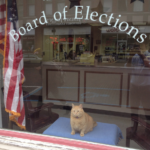 Out: Election office cats (sorry Pumpkin!)
In: Bomb sniffing election dogs (15/10, would pet, when they aren’t working of course!)
Out: Performative plans
In: Practical readiness
Out: Knowing what congressional district boundaries will be in place the year before an election.
In: Uncertainty and litigation over congressional district boundaries.
Always in: Election administrators having to scramble at the last minute to effectuate boundaries approved by Legislatures or courts at the last minute.
 Out: Legacy media
In: Substacks and podcasts
Out: Sharing data with the federal government to improve voting rights
In: Shielding data from the federal government to protect voter privacy
Out: Election vendor consolidation
In: Election vendor renaming
Out: Whimocracy
In: The Constitution
Out: The myth of The Stolen Election
In: The reality of The Stollen Election
Out: States quitting ERIC
In: States wishing they hadn’t
 Out: Voter registration at citizenship ceremonies
In: Getting sued
Out: Counting postmarked absentee/mail ballots after election day.
In: Requiring absentee/mail ballots to be received by election day
Out: Go it alone
In: Do it together
Out: Strong associations are a nice-to-have
In: Strong associations are a must-have
 Out: Fears of overzealous pollwatchers on Election Day
In: Fears of ICE agents on Election Day
Out: Ignoring burnout
In: Workforce sustainability
Out: Only TTXs
In: Tabletop exercises AND tabletop board games
Out: Lower courts
In: The Supreme Court
Out: Rummaging around for a stamp
In: Free postage for mail ballots
Out: SAVE Act
In: SAVE system for voter lists
 Out: Scattered election dates
In: Consolidated election dates
Out: AI as the shiny new thing
In: AI with humans in the loop and clear disclosures
Out: Elections climate contingency plans
In: Climate resilience in elections
Out: Midterm voter apathy
In: A marked increase in midterm voter turnout
 Out: Prepping for new congressional district lines every 10 years.
In: Prepping for new congressional district lines every 2 years.
Out: Mid attempts to reach young voters
In: Youth voter outreach that’s fire
Out: Keeping your light under a bushel
In: Celebrating your office’s excellence
Out: “I sure wish the federal government would help us”
In: “I sure wish the federal government would leave us alone”
Out: CISA
In: Sitch incoming soon, stay tuned!
 Out: Photo ID for voting
In: Documentary proof of citizenship for voting
Out: Seeking assistance from security experts in the federal government.
In: Protecting the security of elections from meddlers in the federal government.
Out: 6-7
In: 2-5, as in twenty-five years of electionline!
Special thanks to Barry Burden, Brian Corely, Doug Chapin, Eric Fey, Josh Goldman, Max Halipern, Dave Kunnen, Mindy Moretti, Katy Owens Hubler, TJ Pyche, Rob Rock and others for contributing their thoughts and ideas for this list.
electionline Daily News Email
 What’s the best part of waking up? electionline Daily News in your inbox of course so be sure to sign up for your daily dose.
Each morning you’ll receive the top headlines of the day, plus a listing of states featured in that day’s news round up.
To sign up, simply visit our site and provide us with your email and you’ll begin receiving the news in your inbox each morning.
We Google so you don’t have to!
electionline Merch
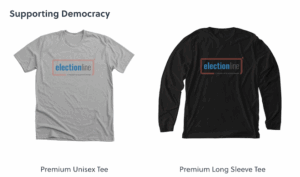 You’ve asked for it, well now you’ve got it! Just in time for all of your holiday gift-giving. We’ve opened up an electionline merch store using Bonfire. Currently we’re offering a couple of different t-shirts, a long-sleeve t-shirt and a hoodie.
Election News This Week
 Federal Update: According to reporting from Stateline, the U.S. Department of Justice has sent a confidential draft agreement to more than a dozen states that would require election officials to remove any alleged ineligible voters identified during a federal review of their voter rolls. The agreement (MOU) would hand the federal government a major role in election administration, a responsibility that belongs to the states under the U.S. Constitution. A Justice Department official identified 11 states that have expressed an interest in the agreement during a federal court hearing in December, according to a transcript reviewed by Stateline. Two additional states, Colorado and Wisconsin, have publicly rejected the memorandum of understanding and released copies of the proposal. The 11 states “all fall into the list of, they have expressed with us a willingness to comply based on the represented MOU that we have sent them,” Eric Neff, the acting chief of the Justice Department’s Voting Section, said at the hearing. He spoke at a Dec. 4 hearing in a federal lawsuit brought by the Justice Department against California, which has refused a demand for the state’s voter data. The states Neff identified are led by Republicans — Alabama, Mississippi, Missouri, Montana, Nebraska, South Carolina, South Dakota, Texas, Tennessee, Utah and Virginia. The Justice Department says it needs voters’ detailed information to ensure ineligible people are kept off state voter rolls and that only citizens are voting. The draft memorandum of understanding, which is labeled “confidential,” outlines the terms of the proposed agreement between each state and the Justice Department. After a state provides its voter roll, the federal department would agree to test, analyze and assess the information. The department would then notify states of “any voter list maintenance issues, insufficiencies, inadequacies, deficiencies, anomalies, or concerns” found. Each state would agree to “clean” its voter roll within 45 days by removing any ineligible voters, according to the memorandum. States would then resubmit their voter data to the Justice Department for verification.
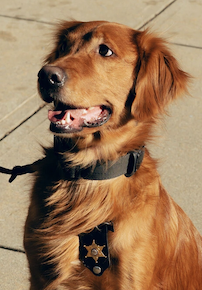 Democracy Dogs: Twenty-nine election heroes were recently honored by the Office of the New Jersey Attorney General for their role in keeping the 2024 election safe in The Garden State. At a ceremony at the Trenton War Memorial 29 bomb-sniffing dogs and their handlers were honored for their job of rushing to polling places across New Jersey on Election Day after a wave of bomb threats, sweeping the sites so efficiently that they were rarely closed for longer than 30 minutes. “The threats were addressed swiftly, quickly,” Matthew J. Platkin, the attorney general of New Jersey, declared before the dogs were brought onstage one by one to receive their awards. “It was remarkable service by our law enforcement across the state and by our four-legged partners in combating crime.” Because bomb-sniffing dogs do not have the same physical demands as patrol dogs, various breeds can be trained for the work. Numerous dogs who were called into service on Election Day were rescues. Most of the polling places had already been evacuated by the time the canine units arrived. They cleared the sites and surrounding areas, and often did additional walk-throughs throughout the day as a precaution.
 Let’s Roll: A new project from the Hardin County, Kentucky Clerk’s Office is ready to roll out as the deadline for the 2026 primary elections season draws nearer. According to The News Enterprise, Hardin County Clerk Brian D. Smith needed wheelchairs, which would be used to help voters who have difficulty with mobility get to the voting booths. “We started asking the public several months ago, asking if anyone had a spare wheelchair that still works or they don’t need anymore,” Smith said. “A lot of folks have one tucked in their basement or in their garage and, boy, did this community really show up. They have donated enough wheelchairs to be able to launch a project that we have today for the elections in 2026.” While all the voting buildings are ADA-complaint, Smith said other issues face voters with limited mobility. “The issue is it can be still a long trek from that handicapped accessible parking spot to the voting booth, and we know that that can be a difficult struggle for some folks with mobility issues or maybe they’re on oxygen or something like that,” Smith said. “We’re going to have teams of folks out helping that day.” Now that the clerk’s office has enough wheelchairs, Smith said they now are in the process of getting them ready for the election season. “We’re going through each of the units to make sure that they’ll all be cleaned up, looked at, checked out mechanically and make sure everything’s safe and effective,” Smith said. “Some of the ones we got are literally brand new and still have packaging on them. It’s really exciting that we’ll be able to roll these out, literally and figuratively, with the elections next year.” If a resident has a walker or wheelchair that they struggle to get in and out of the car, they don’t have to worry about it, Smith said, as volunteers will be there to assist those voters. “It’s our hope that the community will see this as just another service,” Smith said. “The elections are for everybody. We want to make sure every citizen exercises their right to vote and we don’t want a mobility issue to make it more difficult for someone to vote than it should be.”
 Hall of Fame: West Virginia Secretary of State Kris Warner appeared at the Lincoln County Courthouse December 18 to induct 146 Lincoln County residents into the West Virginia Voter Hall of Fame. To earn this honor, you must vote in every general election held in West Virginia for at least 50 years. Each inductee received a certificate noting this accomplishment, a pin, and took a picture with Secretary Warner. “It’s really important, we’re handing out certificates today, this is a generation that didn’t receive a certificate for everything that they did. So just taking the time to stop and recognize them is important, it’s an important message for the rest of the community,” said Warner. Sixteen Lincoln County residents were also inducted into the West Virginia Poll Worker Hall of Fame. Warner established the Poll Worker Hall of Fame earlier this year and recognizes people who have served their county as poll workers for at least 20 years. “The reason that we started this is we polled all 55 county clerks; 52 of 55 said they had trouble in the last election and will need help in finding poll workers for this election. But we want to bring attention, and if we can help register more poll workers, we can do that, but we want to honor those that have been here,” said Warner. Warner also gave a special shoutout to Lincoln’s County Clerk Kristy Scraggs, crediting her for the county’s consistent turnout for elections and her ability to recruit poll workers.
 Podcast News: In the final edition of High Turnout Wide Margins for 2025 hosts Eric Fey and Brianna Lennon speak with Tom Rogers, who was the Australian Electoral Commissioner from 2014 to 2024. They spoke about the structure of Australian elections, how the country counts its ballots, and the importance of democracy sausages. Joshua Douglas, host of the Democracy Optimist podcast speaks to Evan Weissman, the founder of “Warm Cookies of the Revolution,” which he refers to as a “civic health club.” The organization promotes civic health by creating an enjoyable and engaging atmosphere to discuss social issues that are critical to people’s lives—and they bring warm cookies to every event. Weissman has won several awards for his efforts, which have engaged more than one million people.When veteran journalist and advocate Bob Phillips took over as executive director of Common Cause of North Carolina a quarter century ago, he was the organization’s sole staff member and the work he pursued to fight for fair elections, voting rights and honest government could often be a lonely effort. Today, as he prepares to retire next month, he’s no longer quite so lonely – with a staff of 15 Common Cause North Carolina is now the organization’s largest state affiliate – but many of the battles he fights remain daunting and uphill affairs. Yet as Bob reminded Newsline when they talked last week, there remain simple and doable fixes that could return fairness to our elections, and there are many reasons to believe caring and thinking Americans will be able to make them a reality in the not too distant future.
Personnel News: Johnson County, Kansas election chief Fred Sherman, announced his resignation December 18 saying he had been forced out by the secretary of state. Patti Jackson is retiring after 40 years with the Worcester County, Maryland board of elections. Longtime administrator of elections for Allegany County, Maryland Diane Loibel is retiring. Erie County, New York Democratic chair Jeremy Zellner has left his election commissioner role to run for state senate. Salleigh Grubbs, first vice chair of the Georgia Republican Party, has been appointed to the Georgia State Board of Elections. Brook Schreiner is the new Chatham County, Georgia elections supervisor. Connie Schmidt has been appointed interim Johnson County, Kansas election commissioner. Brendan A. O’Donnell has been appointed deputy secretary of state for New Hampshire. Kierra Cannon has resigned as the Greene County, Pennsylvania director of elections. Longtime Lenox, Massachusetts Clerk Kerry Sullivan has retired. Gerald Sherayko has been appointed to the Lynchburg, Virginia electoral board. Shawn Brom has been appointed the new San Diego County, California registrar of voters. Wyoming Secretary of State Chuck Gray has announced his candidacy for Congress.
Ballot Measures, Legislation & Rulemaking
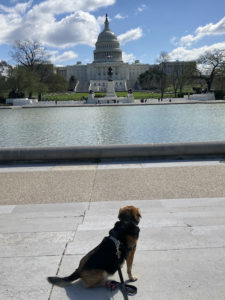 Federal Legislation: Bipartisan legislation authored by U.S. Sen. Susan Collins (R) and Sen. Mark Warner (D) aimed at strengthening the security of U.S. elections has been signed into law as part of the Fiscal Year 2026 National Defense Authorization Act (NDAA). The election security provision originates from the Strengthening Election Cybersecurity to Uphold Respect for Elections through Independent Testing (SECURE IT) Act, which Collins and Warner introduced in May. Language from the bill was incorporated into the annual defense authorization and directs the Election Assistance Commission to require penetration testing for election systems seeking federal certification. The testing is designed to identify vulnerabilities by allowing researchers to attempt to attack election systems using the same tools and techniques commonly employed by cybercriminals, with the goal of better protecting voting infrastructure from real-world threats. Collins said the bipartisan effort is intended to strengthen the integrity of the election process by ensuring voting systems are safe and secure while bolstering public confidence in elections.
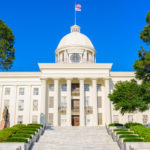 Alabama: Rep. Adline Clarke, D-Mobile has pre-filed a bill for the 2026 legislative session that would allow a voter with a disability to have assistance with filling out an absentee ballot. HB 45, would require the secretary of sate to change the absentee ballot application to allow another person to submit the disabled voter’s ballot. On existing absentee ballots, only the voter can submit the ballot except in the case of “medical emergency absentee applications.” “I’ve had constituents complain to me about not being able to hand deliver an absentee ballot application on behalf of a loved one or a neighbor,” Clarke said in an interview. “ I do believe that state law allows for us to be good Samaritans and to help the disabled with the entire absentee voting process.” This is the third session Clarke has filed the bill. Each year Clarke filed the bill, it was not considered in its respective House committee. Clarke said she hopes pre-filing the bill will help move it through, but only about one third of filed bills are passed each year. “Sometimes a third of those get passed, which means two thirds of them don’t,” Clarke said. “We have to keep trying.”
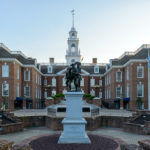 Delaware: Last week, Rep. Mara Gorman (D-Newark) announced a bipartisan bill that would require primary elections as a part of the special election process for filling vacant seats in the legislature. Co-sponsored by State Sen. Eric Buckson (R-South Dover), the proposal would strip local political party committee members’ authority to select a special election candidate, and instead allow voters to select their party’s candidate through a primary election. The bill comes after a year that saw three high-profile special elections. While Gorman acknowledged the controversy over special elections in the state over the past year, she said the bill is intended to encourage the democratic process across all elections, including special elections, rather than respond to any specific previous special election circumstance. “Under our current law, the way that people are selected to be candidates for special elections is basically done behind closed doors by party volunteers,” she told Spotlight Delaware. “I don’t think that’s a very democratic process.” In the bill, the state Election Commissioner would issue a “writ of election” within five days of the seat being vacated. From there, each party would have 35 to 40 days after the “writ of election” was issued to hold a primary election, and another 35 to 40 days after the primary for the general election to take place. The timeline would be adjusted to line up with the regularly scheduled September primary and November general election, if the vacancy occurs after May 15 in a general election year, Gorman said.
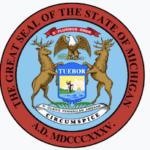 Michigan Ballot Measure: Rank MI Vote, a group seeking to bring ranked choice voting to Michigan is ending its effort to place a constitutional amendment on the ballot for the 2026 election, but organizers say they may try again for 2028. In a December 15 email to volunteers, Rank MI Vote’s statewide field co-directors Kate De Jong and Kate Grabowsky said the group is “pausing signature gathering efforts, but we aren’t pausing the campaign to bring ranked choice voting to Michigan.” Organizers needed to collect 446,198 valid voter signatures in a 180-day window to make the 2026 general election ballot, but it appears they were falling short. Earlier this month, WLNS News reported the group was more than 200,000 signatures short of their goal. “We can’t depend on a triggering event that would super-charge our petition drive,” De Jong and Grabowsky wrote in the email to campaign volunteers. Instead, they said they would prepare for “a second launch in April 2027” to make the 2028 ballot.
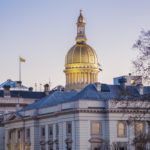 New Jersey: Under state law, mail-in voters have few options to address technical mistakes with their ballots, but legislation cleared by the state Senate on December 18 would give voters more ways to “cure” their ballots. Election officials reject hundreds of ballots each year due to mistakes with envelopes, including missing privacy envelopes or missing signatures on envelopes. Under current law, voters are only allowed to cure ballots with signature discrepancies — technical issues with how a ballot is mailed in are not eligible for cures. In a party-line vote, the state Senate approved the reform 23-14. The bill has been introduced in the Assembly, but has not been before a committee. State Sen. Paul Sarlo (D-Wood-Ridge) sponsored the legislation. “The bill would give the voter the opportunity to submit a new mail-in ballot if the voter failed to enclose the ballot in the inner envelope, sign the certificate, if the voter failed to provide or properly seal the inner or outer envelope, or if the seal appears to be tampered with,” the bill states.
Both chambers approved a bill that would establish a new automatic voter registration system in the state, reforming how the Motor Vehicle Commission processes potential new voters. The legislation would move MVC voter registration to an opt-out standard, sponsor and state Sen. Andrew Zwicker (D-South Brunswick). “The bill is making it easier for those eligible to vote in Jersey to get registered,” Zwicker said. “That’s the fundamental, basic principle. Those who are at the DMV who are not registered, if they meet certain requirements, it would put them into the process to begin voter registration.” Democrats supported the bill, but Republicans voted against it; the Assembly cleared the bill 49-25, and the Senate approved the bill 25-12. The legislation now goes to Gov. Phil Murphy’s desk.
A separate bill, also sponsored by Zwicker, would reform how the state conducts post-election audits of election results. The legislation would allow third-party electronic machines to conduct audits in addition to hand counts, among other procedural reforms. “With the widespread adoption of early voting and vote-by-mail, we need a more flexible system capable of accurately and efficiently counting paper and electronic ballots,” Zwicker said in a release. “While necessary in the past, hand-counting ballots is simply not the most effective way to audit our elections in the modern era. This legislation is an easy way to make the auditing process more secure and transparent.” The audit reform bill passed the Assembly in a 77-2 vote and the Senate in a 37-0 vote on Monday, and now heads to the governor’s desk.
 New York City: A Staten Island City Councilmember introduced legislation that would see political parties rendered irrelevant in the five borough’s municipal elections. Under the legislation introduced by South Shore Republican Frank Morano, candidates for office like mayor, public advocate, borough president and City Council would appear on ballots without their political parties listed. Municipal elections would also be conducted entirely on a ranked-choice basis similar to how primary and special elections are currently held. “New York City is one of the most diverse cities in the world, yet we run our elections under a structure designed for a very different era,” Morano said. “Right now, a small slice of partisan primary voters effectively decide most offices, while independents and unaffiliated New Yorkers are shut out. That doesn’t strengthen democracy – it narrows it.” The road to nonpartisan elections faces an uphill battle in New York City as local voters would need to approve that kind of change in a ballot referendum, similar to the one they voted for in 2019 paving the way for non-partisan ranked choice voting in special and primary elections.
 Ohio: A bill that eliminates the four-day grace period for absentee ballots to arrive at boards of elections will become law, though Gov. Mike DeWine admits he’s not happy about that. DeWine said in a press conference that he’ll sign Senate Bill 293. But DeWine, who has said more than once that he didn’t see a need to change Ohio’s election laws, noted that Ohio runs good elections and he thinks allowing four extra days for mailed in ballots to arrive is reasonable. “I normally would veto a repeal this four-day grace period. And frankly, that’s what I wish I could do,” DeWine said in a press conference announcing the signing of several other bills. But he said a federal court ruled a similar grace period in Mississippi violates federal law, and the case will be heard by the U.S. Supreme Court. Under SB 293, ballots must be at boards of elections by election day. Democrats and voting rights groups had asked DeWine to veto the bill, saying it could result in thousands of votes not being counted. Attorney General Dave Yost received a letter from the Department of Justice in September, warning that Ohio could face a federal lawsuit following an executive order Trump issued in March stating that there is “a uniform and nondiscriminatory ballot receipt deadline of Election Day for all methods of voting”, with ballots from military and overseas voters exempted.
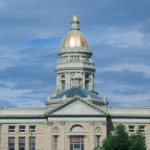 Wyoming: Secretary of State Chuck Gray recently hosted a news conference at the Wyoming State Capitol to discuss his top five legislative priorities. One, hand-marked paper ballots: The first priority centers on mandating pen-to-paper ballots as the default voting method in Wyoming. While 22 of the 23 counties already operate this way, Gray noted that Laramie County, the largest county, utilizes electronic ballot marking devices that cast votes using barcodes. Gray said this mechanism lacks transparency for the voter because it is unknown to the naked eye if the barcode accurately reflects what is filled out on the ballot. Two, ballot drop boxes: This priority addresses two measures intended to tighten procedures for handling ballots after they leave the voter’s possession. Gray seeks to explicitly ban both ballot drop boxes and ballot collection. Regarding drop boxes, Gray argued they lack statutory authorization and proliferated only during the government’s response to COVID-19. “I believe it is important that we take immediate action to explicitly ban ballot drop boxes,” he said. Three, true photo for voter ID: Gray aims to change Wyoming’s Voter ID law by requiring that all forms of identification presented for voting must include a photograph. While Gray was the lead sponsor of the 2021 voter ID statute as a state lawmaker, he noted concessions were made that he wants to now improve upon. Specifically, he seeks to remove identifications from the statute that lack photos, such as Medicare and Medicaid cards, which are currently acceptable. Four, hand counts for recounts and audits: This measure seeks to institute hand tabulation verification of voting machines for recounts and audits. Gray stated that many Wyoming residents are distrustful of electronic voting machines and need verification methods.The proposal would implement mandatory hand recounts in races decided by a narrow margin (within one or two percentage points) or allow candidates to request a hand recount. Gray reminded those at the news conference that the bill to enable candidate-requested hand recounts passed the House in 2025, but was held by Senate leadership. Five, banning dual citizenship voting: The fifth priority is a new initiative aimed at amending the Wyoming Constitution to require all qualified electors to be solely United States citizens, effectively banning dual citizenship for voting and holding office. Gray said this measure “is in line with the intent of the state’s founders when they drafted the state constitution.” Gray noted that currently, dual citizens are legally allowed to vote under Wyoming law, leading to constituent questions.
Legal Updates
 U.S. Department of Justice: The Justice Department sued three more states – Georgia, Illinois and Wisconsin – and the District of Columbia to gain access to their entire voter files, not just what is typically publicly available. This brings the total number of states sued to 22 plus DC. The Justice Department said 10 states are either in full compliance or working toward it. The Trump administration has characterized the lawsuits as part of an effort to ensure the security of elections, and the Justice Department says the states are violating federal law by refusing to provide the voter lists and information about ineligible voters. The lawsuits have raised concerns among some Democratic officials and others who question exactly how the data will be used, and whether the department will follow privacy laws to protect the information. Some of the data sought includes names, dates of birth, residential addresses, driver’s license numbers and partial Social Security numbers. Minnesota Secretary of State Steve Simon moved last week to dismiss a federal government lawsuit seeking broad access to Minnesota voter data, calling it a “fishing expedition” involving sensitive personal information. Lawyers for Simon asked a federal judge to toss out the case brought in September by the U.S. Department of Justice. The new motion contends the federal lawsuit doesn’t make a clear legal argument for accessing the state-maintained data.
 Colorado: Last week, attorneys for Tina Peters asked the Colorado Court of Appeals to order that the former Mesa County clerk “must be released from custody forthwith” following the signing of a pardon document by President Donald Trump earlier this month. Trump does not have the power to pardon Peters, who was convicted in state court and is now serving a nine-year sentence in state prison for her role in a breach of her office’s election systems, part of an attempt to find evidence of voter fraud in the 2020 presidential election. But her attorneys pursued a presidential pardon anyway, expressing hope that the conservative majority on the U.S. Supreme Court will rewrite the centuries-old legal doctrine of dual sovereignty in criminal proceedings. Peters’ motion, the latest in a series of attempts by her attorneys and allies in the election conspiracy theory movement to force her release from state custody, was filed on Dec. 23 in her pending case before Colorado’s second-highest court, where she has appealed her August 2024 conviction, arguing that her imprisonment violates her First Amendment right of free speech. Peters has separately petitioned for a writ of habeas corpus in federal court, while Trump’s Department of Justice has formally requested her transfer to federal custody, a request the state has rejected. The new filing asks the Colorado Court of Appeals to “enter an order indicating that it lost jurisdiction and finding that … the Pardon which was issued on Dec. 5, 2025, was effective and vitiated the convictions against Tina Peters in the State of Colorado.” The motion, signed by Peters attorneys Peter Ticktin and John Case, is littered with debunked claims casting doubt on the legitimacy of what it calls the “most controversial Presidential Election in history.” Peters, a prominent election denier, was convicted by a Mesa County jury on multiple felony counts in connection with the breach of her office’s secure elections equipment during a 2021 software update.
 Georgia: Fulton County Superior Court Judge Robert McBurney has cleared the way for the Georgia State Election Board to obtain Fulton County ballots and other documents from the 2020 election. McBurney on December 19 ruled that the election board is well within its authority to request the information it has sought for more than a year. He ordered the county to provide an itemized estimate of the cost of complying with the subpoenas. Fulton County sought to quash the subpoenas, arguing they were unreasonably broad and related to an investigation that had already been closed. McBurney wrote it wasn’t clear the board’s original investigation was concluded. And he wrote the board has the authority to open new investigations anyway. “As stale and ill-timed as these requests might seem to the casual observer, they were nonetheless inquiries that fell squarely within the SEB’s (State Election Board’s) authority,” McBurney wrote. The judge ruled the election board must pay for the ballots and other documents it seeks. Fulton County has estimated it will cost nearly $400,000 to comply with the subpoena. McBurney ordered the county to produce a detailed cost breakdown by Jan. 7.
 Idaho: Former Ketchum City Council candidate Perry Boyle withdrew his lawsuit accusing the Blaine County Clerk’s Office, which oversees county elections, of improperly rotating candidate names on ballots and placing him at a disadvantage in November’s City Council election. Idaho’s courts database states that 5th District Judge Ned Williamson on Tuesday dismissed the lawsuit’s claims against the Clerk’s Office “with prejudice,” meaning the claims cannot be brought back to the court. Boyle told the Express that he withdrew the lawsuit, filed against the Clerk’s Office and Blaine County Clerk Stephen Graham on Dec. 3, after receiving a letter from Idaho Secretary of State Phil McGrane in which McGrane agreed to “election reform.” In a statement, Graham wrote, “The court signed an order and judgment dismissing the case, affirming that the election was conducted in firm compliance with Idaho law and Secretary of State directives.” Graham said that his office’s election procedures were “sound, lawful and consistent with statewide practices.”
 Michigan: Judge Patricia Perez Fresard of the Third Judicial Circuit of Michigan ruled that 37 untabulated ballots in Hamtramck’s disputed municipal election should not be counted, affirming Adam Alharbi’s controversial and narrow victory in the race for mayor. However, according to Votebeat, the decision is likely only the starting gun for a legal race against the clock before the city’s new mayor is sworn in at the beginning of January. In her written decision, Fresard said that the Wayne County Board of Canvassers “exercised its discretion” when declining to count the 37 ballots after the city clerk “failed to comply with mandatory requirements imposed to protect the integrity of ballots.” Fresard had initially ordered the parties to meet to see if they could come to a resolution. That failed, attorneys said, leading to just over 20 minutes of courtroom debate, primarily between lawyers for Alharbi and his opponent in the mayoral race, City Council member Muhith Mahmood, who finished 11 votes behind. On December 29, a motion for an emergency appeal, was filed on behalf of Mahmood and the 37 voters. The motion is seeking to reverse Fresard’s decision and allow those absentee votes be included. Mahmood’s attorney, Mark Brewer, says he is confident they will hear back from the Supreme Court. “We are hopeful with the state Supreme Court because the matter is really urgent,” said Brewer.
 New Mexico: Nonprofit good government group Common Cause, along with two New Mexico residents, have filed a motion to intervene in the U.S. Department of Justice’s lawsuit against New Mexico Secretary of State Maggie Toulouse Oliver. Lawyers from the ACLU National Voting Rights Project and ACLU of New Mexico are representing them. In the filing arguing for the right to intervene in the case, Common Cause contends that it has more than 9,000 members and supporters in New Mexico “whose personal data will be provided to the federal government if DOJ prevails in this lawsuit.” In addition to Common Cause, proposed intervenors include registered New Mexico voter Claudia Medina, who has lived in the state for more than three decades. Born in Colombia, Medina moved to the United States to attend graduate school and became a naturalized U.S. citizen in 1995, the suit says, and registered to vote the same day. “She has voted regularly in local, state, and federal elections ever since.” However, the filing notes, Medina “is concerned about how DOJ might use her sensitive voter data, particularly in light of widely reported recent examples of the federal government’s provision of data to unvetted members of the Department of Government Efficiency …without adequate guardrails or privacy protections.” As such, Medina “fears that the federal government’s efforts to gain voters’ sensitive information will make eligible voters—especially naturalized citizens like herself— ‘less likely to register to vote or even just to vote..’”
Opinions This Week
National Opinions: Election myths | Voting rights | 2025 in review | DOJ voter data requests | 2020 election
Alaska: Citizenship ballot measure, II
Arizona: Native American voting rights
Arkansas: Secretary of state
California: Voter ID ballot measure | Special elections, II
Colorado: Tina Peters | Election certification | Election integrity
Maryland: Ranked choice voting
Michigan: Turnout
New Hampshire: Voter registration
New Jersey: Election legislation
New York: Rensselaer County
North Carolina: Boards of elections
Ohio: Election legislation, II
Pennsylvania: Judicial elections
South Carolina: League of Women Voters
Texas: Noncitizens | List maintenance
Wisconsin: Election deniers
Upcoming Events
JEOLC 2026: The Election Center will host the 2026 JEOLC conference at the Ritz Carlton in Pentagon City, Virginia from January 6-10. One CERA renewal class will be offered. Please visit the Election Center website for more information and to register when it’s available.
Southern Political Science Association 2026 Conference: Experience Southern’s Hospitality at the 2026 SPSA Conference in New Orleans! The 2026 SPSA Preliminary Program is available HERE. Updates will be made periodically to the program, so please refer to this page for the most updated version available. When: January 14-17. Where: New Orleans
iGO Midwinter Conference: The International Association of Government Officials will hold its Midwinter Conference in Albuquerque, New Mexico from January 19-23, 2026. Please visit the iGO website for more information and to register.
2026 NASS Winter Conference: The National Association of Secretaries of State will hold its 2026 Winter Conference in Washington, DC from January 28-31. Please refer to the NASS website for more information about the event and to register.
2026 NASED Winter Conference: Twice a year, National Association of State Election Directors members gather to discuss the latest developments in election administration. Members of the public are welcome to attend at the non-member registration rate. Please refer to the NASED website for information about the 2026 Winter Conference. When: Feb. 1-3, 2026. Where: Washington, DC.
2026 NACo Legislative Conference: The National Association of Counties will hold its 2026 Legislative Conference in Washington, DC from February 21-24, 2026. Please visit the NACo website for more information about the event and to register.
Election Center February Workshop: Focusing on interaction and sharing of practices selected by members to receive People’s Choice Awards, the February Workshops formalize those critical conversations that happen at conferences during meals, in the hallways, & the hotel lobby. The agenda augments the award-winning member presentations with applicable research and resources.Two CERA core courses and one renewal will be held following the workshop. When: February 25-27. Where: Jacksonville, Florida.
Election Center April Workshop: In April, the focus is on state associations and state trainings both by modeling conference formats, facilitation techniques, and potential content resources. The Coalition of Election Association Leaders (CEAL) guides state groups in their maturation process with mentorship and networking opportunities. When: April 22-24. Where: Chicago.
Job Postings This Week
electionlineWeekly publishes election administration job postings each week as a free service to our readers. To have your job listed in the newsletter, please send a copy of the job description, including a web link to mmoretti@electionline.org. Job postings must be received by 5pm on Wednesday in order to appear in the Thursday newsletter. Listings will run for three weeks or till the deadline listed in the posting.
Deputy City Clerk, Madison, Wisconsin– The City of Madison Clerk’s Office is looking to hire two (2) Deputy City Clerk positions! The Deputy City Clerk is responsible for the oversight, direction, and coordination of election and/or licensing programming within the City Clerk’s Office. The position is responsible for high level election related decision making, troubleshooting, and assignment of work, along with managerial responsibilities related to all staff in the office. The work shall include: development and implementation of election processes and procedures; issuance of City and County licenses and permits; maintenance of a centralized information bureau as the custodian of official City of Madison documents; administration and recording of the proceedings of the Common Council; and related policy development and direction. This position may act on behalf of the City Clerk during their absence. This position requires the ability to execute and organize highly technical operations under state statute in coordination with the Office of the City Attorney. Under the general supervision of the City Clerk, this position is responsible for exercising considerable judgment and discretion in meeting program objectives. Salary: $83,478.98 – $100,326.72 Annually. Deadline: January 5. Application: For the complete job listing and to apply, click here.
Director of Election Information Technology, King County, Washington– King County Elections (KCE) seeks a dynamic and visionary leader to serve as our Director of Elections Information Technology (Division Director – Technology). The Director of Elections Information Technology will report to the elected Director of Elections, serve as a member of the Department’s Leadership Team, and lead and support a highly skilled team to achieve excellence in election technology, security, and administration. This role will play a key part in developing departmental goals, strategies, and initiatives, driving the adoption of new technologies within KCE, and fostering a culture of innovation and collaboration. This is a unique opportunity to inspire and empower a team, drive the adoption of new technologies within KCE, identify opportunities to bring innovation to the forefront of our operations, and significantly impact the future of election administration in one of the most populous and diverse counties in the United States. This is a hybrid position that performs work remotely and on-site. As a leadership team member, this position is expected to work on-site frequently during active elections. Salary: $166,509 – $211,060. Application: For the complete job listing and to apply, click here.
Director of Elections & Registration, Cobb County, Georgia– The purpose of this classification is to plan, direct and oversee the operations and staff involved in voter registration and election processes for the County under the general oversight of the Board of Elections and Registration, including, but not limited to, conducting federal, state, county and municipal elections, registering voters, and maintaining voter lists, and to ensure such processes are carried out in compliance with local, state, and federal election and voter registration laws, rules, and regulations. The Director of Elections & Registration oversees the operations and staff of the Elections & Registration Department that serve the over 500,000 registered voters of Cobb County. While the department is funded by Cobb County Government, it is governed by a 5-member citizen board comprised of two members appointed by the Cobb County Legislative Delegation, one member appointed the Chair of the Cobb County Board of Commissioners and one member each appointed by the county Democratic and Republican parties. Salary: Up to $180,000 (Depending On Experience). Deadline: January 12. Application: For the complete job listing and to apply, click here.
Election Administrator, Victoria County, Texas–Performs vital work planning, organizing, coordinating, and managing federal, state, and local elections plus all facets of voter registration processes in accordance with the Texas Election Code, and other applicable federal, state, or local laws and regulations, including administrative direction from the Texas Secretary of State. Ensuring smooth elections operations including inputting and maintaining voter registration databases, training and supervising poll works, preparing staffing and logistics for voting, administering early voting by mail and in-person, supervising balloting & tabulation, and preparing final canvassing reports. Coordinating closely with political party chairs in conducting primary, runoff, and general elections while guaranteeing impartiality. Preserving voter registration applications, official election documents, and candidate campaign filings/disclosures. Salary: $61,494 – $76,868. Application: For the complete job listing and to apply, click here.
Elections Director, New Hanover County, North Carolina– New Hanover County, located on the North Carolina coast with a population of over 240,000 and approximately 183,400 registered voters, is seeking an Elections Director to become part of a dynamic, professional county organization with a clear vision as a vibrant, prosperous, diverse coastal community, committed to building a sustainable future for generations to come. The Elections Director will be responsible for planning and directing overall operations of the office of the New Hanover County Board of Elections in the preparation for and execution of all federal, state, and municipal elections in New Hanover County. The next Director will possess extensive knowledge of electoral procedures and policies as set forth in the NC General Statutes and will demonstrate critical thinking skills along with analytical and problem-solving abilities. Salary: $79,291 – $134,795. Application: For the complete job listing and to apply, click here.
Elections Manager, Kalamazoo County, Michigan–The purpose of this job is to manage and supervise all election operations within Kalamazoo County under the direction of the County Clerk and Chief Deputy Clerk. The Elections Manager ensures compliance with federal, state, and local election laws while coordinating with various jurisdictions to conduct fair, accurate, and transparent elections. This position is responsible for leading all phases of election planning, execution, and post-election auditing, supervising division staff, and serving as a liaison to election-related boards, commissions, local clerks, and the State of Michigan. Salary: $81,744- $95,638. Application: For the complete job listing and to apply, click here.
Election Operations & Workforce Manager, Charleston County, South Carolina– The Board of Voter Registration and Elections is an award-winning organization dedicated to excellence in electoral processes. Our mission is to daily serve the Charleston County voting constituency with Vigilance, Objectivity, and Transparency in a manner that promotes due diligence Excellence in all aspects of Elections Management. We are committed to continuous improvement, innovative practices, and exceptional service to our community, ensuring every voter’s voice is heard. Are you driven by a passion for democracy and civic engagement? Join the Board of Voter Registration and Elections as the Election Operations and Workforce Manager and play a critical role in delivering seamless, fair, and accessible elections. Key Responsibilities: Poll Worker Recruitment and Management; Polling Location Management; Liaison and Community Engagement; Support for Election Operations on Election Day and Early Voting; and Team Leadership. Salary: $68,140 – $89,252. Application: For the complete job listing and to apply, click here.
Regional Sales Director – Pacific West, Runbeck–The Regional Sales Director is responsible for leading high-value sales efforts, managing key client relationships, and driving revenue growth through strategic account development. This role requires a seasoned sales professional with a proven record of exceeding sales targets, developing new business opportunities, and nurturing long-term client partnerships. The Regional Sales Director acts as a trusted advisor to clients, aligning solutions with their business objectives while contributing to the company’s overall sales strategy and success. Territory will cover California, Nevada, Oregon, Washington, Alaska and Hawaii. For the complete job listing and to apply, click here.
Research & Policy Analyst, City of Richmond – The Office of Elections is seeking to hire a Research and Policy Analyst (Legal Advisor). The Research and Policy Analyst (Legal Advisor) position is responsible for conducting thorough research and analysis to support election staff, candidates, political committees and other entities throughout the election cycle. The position helps ensure compliance with state and local election laws related to candidate qualifications, ballot access, filing requirements, and campaign documentation. The role will also help draft policies and procedures to ensure elections are conducted in compliance with all aspects of local, state and federal law related to election administration, voter registration, and elections, more broadly. Salary: $71,875 – $113,000. Deadline: January 14. Application: For the complete job listing and to apply, click here.
Senior Director, Legislative Affairs, Common Cause– We are seeking a strategic, experienced, and mission-driven Senior Director, Legislative Affairs to lead our federal legislative advocacy work and our strategic approach to advocacy within our states to strengthen our democracy by holding power accountable. In this role, you will be responsible for developing and executing a dynamic federal lobbying strategy, managing high-level relationships with lawmakers and key partners, and building strategic alignment across Common Cause’s policy pillars and state teams. You will serve as a key thought partner in our cross-department campaigns and media efforts that include federal legislative components. This is a full-time role reporting to the Senior Vice President, Policy & Litigation; this role is based in Washington, DC, with an expectation to work in-person at least two days per week, up to five days per week during peak legislative periods, and travel at least four times per year. Salary: $128,750 – $144,200 a year. Application: For the complete job listing and to apply, click here.
Training Program Manager, Charleston County, South Carolina– Democracy works best when every election runs flawlessly—and that starts with exceptional training. As Training Manager for the Board of Voter Registration and Elections, you’ll empower our poll managers and staff to deliver elections that are fair, accessible, and trusted by every voter in Charleston County. The Board of Voter Registration and Elections is an award-winning organization dedicated to excellence in electoral processes. Our mission is to daily serve the Charleston County voting constituency with Vigilance, Objectivity, and Transparency in a manner that promotes due diligence Excellence in all aspects of Elections Management. We believe that people are the foundation of successful elections. That’s why training is not just a task—it’s a core function of our mission. When our teams are prepared, voters can be confident that their voice will be heard, and their ballot counted. As Training Manager, you are not simply teaching procedures—you are building trust in the democratic process. You will design and deliver training that helps every poll manager, staff member, and Board member understand the importance of their role, perform it with confidence, and meet the highest standards of service to our voters. Salary: $68,140.00 – $82,000.00 Annually. Application: For the complete job listing and to apply, click here.
Voter Registration Program Coordinator, Yavapai County, Arizona– Under general supervision, performs professional and administrative work of moderate to considerable difficulty in overseeing day-to-day operations of programs, projects, and services for the department. Major Duties, Responsibilities: Provides customer service, answer questions regarding policies, codes, rules, and regulations. Conducts research, compiles and analyzes data to make recommendations as needed. Performs a variety of administrative tasks, including preparing reports, records, correspondence, and other documents. Develops operational procedures and policies for review by management; develops, implements and/or oversees training programs for staff and/or volunteers. Provides direction, guidance, and leadership to staff as needed. Evaluates program effectiveness, and ensures compliance with applicable policies, rules and/or regulations. Maintains office records/files and databases that may include confidential and sensitive information. Prepares and presents information as required by department. Coordinates projects and programs as assigned and advises department of progress, timelines, work status, and plans. Participates in administrative meetings and trainings required by County, State, department, and/or other third-party partners. Performs other job-related duties as assigned. Salary: $25.74 – $32.82 Hourly. Deadline: January 1. Application: For the complete job listing and to apply, click here.
Voter Services Manager, City of Richmond – The City of Richmond Office of Elections is seeking a highly organized and knowledgeable Voter Services Manager. The purpose of the position is to provide management of and administrative assistance for all aspects of voter registration, and absentee services to the Office of the General Registrar. This includes voter registration procedures and the sequence of absentee ballot processes during an election cycle. The incumbent must be able to multi-task and demonstrate sound, independent judgement. The incumbent must have the ability to prioritize, organize and evaluate work; determine appropriate action and adjust workloads according to deadlines and other program requirements. Experience in dealing effectively with a broad range of people in a business environment, with members of the community and with the public is essential. The incumbent in this position will be required to work within adhere to, interpret, apply and explain federal and state regulations, policies and procedures and respond in writing and verbally. Salary: $2,147.12 – $3,319.46 Biweekly. Deadline: January 15. Application: For the complete job listing and to apply, click here.
Marketplace
electionline provides no guarantees as to the quality of the items being sold and the accuracy of the information provided about the sale items in the Marketplace. Ads are provided directly by sellers and are not verified by electionline. If you have an ad for Marketplace, please email it to: mmoretti@electionline.org