In Focus This Week
Countdown to November 3
What to watch
By M. Mindy Moretti
electionline.org
Following the unprecedented 2020 election, many of us thought (hoped, prayed) we were done with unprecedented elections, but here we are. Again.
 Another nationwide general election where things are both routine and anything but routine.
There’s a lot to watch on Tuesday and we, of course, will be keeping an eye on everything, but these are some of the major issues that we’ll be tuned into.
We’ll be posting our Election Dispatches throughout the day more or less around 9am, 12pm, 3pm, 6pm, and 8pm. Depending on how things go we may add in another late morning and afternoon dispatch.
Good luck to all the elections officials out there, may the odds be forever in your favor and may the gods of democracy have mercy on all of our souls!
Federal Interference

Louisiana’s 2026 “I Voted” sticker.
Other than zookeepers and nuclear plant managers, there is probably no other occupation with a bigger contingency plan binder than elections officials. Even then, new things are added all the time and this, planning for federal election interference, either at the polls or after the fact, has been the main focus. “This is the first time ever that we have had to engage in scenario planning to safeguard against potential federal interference in elections,” Shenna Bellows, the secretary of state in Maine, told The New York Times. “It seems like the federal government is now adversarial to the states.” According to The Guardian, since early this year, 24 Democratic attorneys general have expanded coordination with about a dozen Democratic secretaries of state and several civic groups using weekly Zoom calls and in-person tabletop exercises to strategize about countering any federal intervention in the elections. And it’s not just at the polls where there are concerns. The top Democrats on the House and Senate intelligence committees say they are operating under the presumption that President Trump and his allies will allege fraud related to this year’s midterms in order to justify election interference. “We start with the premise that the president is going to do that. It would be irresponsible not to, speaking as somebody who was in the chamber on January 6, 2021,” said Rep. Jim Himes, D-Conn. “We’re making the assumption that the president is not going to accept the results of what looks to be a very challenging election for him and his party.”
Watching the Watchers
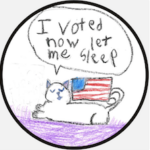
One of Michigan’s 2026 “I Voted” stickers.
In addition to hundreds of Justice Department monitors, there could equally as many, if not more, poll watchers from the Democrats and outside watchdog groups–on both sides of the aisle–at the polls on Tuesday. According to the Associated Press, a sprawling election protection effort on the left that is expected to deploy tens of thousands of monitors will be met by the largest-ever monitoring program by the Justice Department and still more observers from Republican-aligned groups. The result could be unlike anything seen at the polls in modern times. “We’ve never done this before,” said Jane Kleeb, vice chair of the DNC of the party’s sweeping efforts. But “we’ve never had to deal with the president of the United States saying that he may seize ballots, put ICE agents outside polling locations and other kinds of very clear direct threats to the voting process.”
Vote By Mail
While vote-by-mail is still a popular option for many voters, a number of states are reporting fewer voters choosing that option this year. Why that may be varies, but in some instances states have changed their vote-by-mail laws and rules since the 2024 election including in Florida where voters were required to reapply for a mail ballot, North Carolina where voters must now seal both an interior and the exterior envelope, and Ohio where the deadline for mail ballots to arrive has changed. Additionally, there are issues and concerns with the U.S. Postal Service itself. ProPublica recently reported that the rates of ballots rejected for arriving late this year doubled or tripled in areas affected by cost-cutting measures compared to the 2022 primary. State and local elections officials began early encouraging voters to use drop boxes instead of mailboxes and even the Postal Service said that voters should mail their ballots at least a week before Election Day. “The Postal Service is confident and ready to deliver a successful Election Mail season,” Postmaster General David Steiner said in a statement last week. He added that the agency’s goal is to instill “confidence in all Americans that their Election Mail will be handled securely — and delivered reliably.”
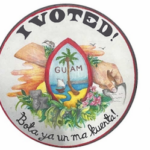
One of Guam’s 2026 “I Voted” stickers.
Ballot Counting and Result Acceptance
Although some states changed laws since the last election to allow for earlier and more speedy ballot process and counting, it’s still a marathon to get the millions of ballots fairly and accurately counted. Some races, which could signal control of Congress, will take longer than others. Additionally will the losers be willing to accept the results. This week the president declined to unconditionally accept the results. “I will — if they’re honest elections,” he told reporters at Joint Base Andrews in Maryland before taking off for two rallies in Texas. Earlier this month Reps. Josh Gottheimer (D-N.J.) and Don Bacon (R-Neb.) circulated a letter on Capitol Hill in an attempt to dispel the argument that America’s elections are anything but secure. Gottheimer is running for reelection, and Bacon is retiring, but both are seeking a pledge from lawmakers in both parties to put trust in voters — and the voting system — and embrace the midterm results. Congress’s oath to defend the Constitution, they note, demands it. “Through war and peace, through eras of bitter division and moments of national unity, one practice has held constant: those duly elected under the laws of their states take their seats, and the results of a free election are honored regardless of who prevails,” the lawmakers wrote.
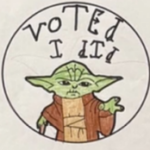
Montgomery County, Indiana 2026 “I Voted” sticker.
Late-breaking Litigation
There is already so much litigation out there, will all of it that needs to be decided by the time polls open on Tuesday? What new suits will be filed between now and then? What sort of litigation, if any, will be filed on Election Day and in the days following?
New laws
A lot has changed since many voters last went to the polls. How will new laws on everything from voter ID to mid-cycle redistricting affect those who come out to vote on Tuesday?
Turnout
Turnout has soared for early voting this year with many states and counties breaking midterm turnout rates and some even breaking presidential rates. As reported by NPR, A surge in ballots cast before Election Day doesn’t necessarily mean more Americans will vote overall. Charles Stewart, a political science professor at MIT and founding director of the MIT Election Data and Science Lab, told Morning Edition that many of those voting early would have voted on Election Day anyway. Stewart said the increase reflects both voter enthusiasm and the money campaigns are spending to encourage supporters to vote early. In-person early voting numbers are much higher than mail-in voting numbers in many places this year as well. As of October 27, 34 million people have either gone to the polls to cast a ballot or have mailed in their vote, and the current tally is on track to surpass early voting in the 2022 midterm elections, Michael McDonald, a professor of political science at University of Florida who runs the UF Election Lab told States Newsroom. McDonald said he’s not sure if voters will surpass record-breaking early voting of 2018, but it’s clear that the surge in early voting will eclipse turnout in the 2022 midterm elections, where nearly 46 million Americans voted early, according to the UF Election Lab. “Right now, the data that I can see, it looks like we’re running at least even to the 2018 election. If the voting continues through Election Day, we would be somewhere around that number,” he said. “That’s a high water benchmark,” McDonald said, adding that the 2018 election was the highest turnout for a midterm election since 1914.
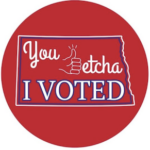
North Dakota’s 2026 “I Voted” sticker.
Secretary of State Races
The top election official spot is on the ballot in 23 states this year and while secretary of state has always been a top executive job, it’s only more recently that the contests – in some states anyway – have gotten top executive attention from the media and voters. This year is no exception. In addition to the 23 states with the top election official on the ballot, there are another 12 states and D.C., where voters are selecting the officials who will then appoint their state elections chiefs. Those states are: Alaska, District of Columbia, Florida, Illinois, Maine, Maryland, New Hampshire, New York, Oklahoma, Pennsylvania, South Carolina, Texas, and Wisconsin.
Ballot Measures
Voting on voting has grown in recent years and this year is no exception. Voters in more than 21 states will vote on elections-related ballot measures both at the state and local level. Of the elections-related ballot measures, voter ID requirements and citizenship requirements certainly lead the pack, but there are also measures on election dates, recalls, special elections, ranked choice voting (to implement and repeal), and there are a number of ballot measures on ballot measures themselves.
The Unknown Unknowns
Back in 2002, former Defense Secretary Donald Rumsfeld infamously said, “…we know, there are known knowns; there are things we know we know. We also know there are known unknowns; that is to say we know there are some things we do not know. But there are also unknown unknowns—the ones we don’t know we don’t know.” And while we tut-tutted about it when he said, it really has become a life lesson for Election Day. There are the known knowns — people will show up at the polls and vote. There are the known unknowns — lines will form, equipment will fail, someone will show up late to open a polling place, a car may crash into a polling place, etc. But what we don’t know are the unknown unknowns. What those will be for 2026 are anyone’s guess, but we’ll be sure to bring them to you via our Election Day Dispatches and right back here next week.
Election Costs
What is the cost of an excellent election?
New research on election costs and how you can make your voice heard.
By Andrew White, Applied Data Fellow
Center for Tech and Civic Life
Across the 10,000+ election offices in the United States, one goal unites them all during election season: “the election has to happen.” And that goal has been met consistently, even in the face of natural disasters, public health events, and a quickly changing policy landscape. But what does it take to ensure that an excellent election happens?
Well, it costs money, of course!
The U.S. Alliance for Election Excellence (USAEE), a nonpartisan collaboration between local election officials and other election experts, has made excellent elections its focus. Seeing the lack of a national standard by which to assess election administration services and needs, the Alliance, in collaboration with nearly 300 local election officials representing over 36 million voters, created the Standards for Election Excellence to support local election officials, improve election operations, and build public trust. Demonstrating excellence in a Standard could include building a strong poll worker training program, maintaining up-to-date emergency response plans, or building a more voter-friendly ballot — the possibilities are broad, and designed to be achievable for jurisdictions of all sizes. And since excellence requires resources, we’re curious how much it will cost election offices to meet the requirements of the Standards.
At the Center for Tech and Civic Life (CTCL), I’m part of a team that’s working to quantify those costs. We know that being able to attach cost estimates to the Standards will go a long way toward helping election departments pursue and achieve them. (If you’d like to give us some insight into what your office spends on Standards-related costs, you can do so in this survey right here). Toward that goal, the Election Costs project is currently analyzing data from the Alliance’s 2026 Election Excellence Grant Program, which offers funding to help election offices pursue and achieve excellence in specific Standards of their choice. As part of the submission process, respondents are asked to describe how they plan to spend the grant money, which provides us a picture of some of the most common expenditures for each Standard and a sense of how much an election department can expect to spend. We’re also eager to learn which Standards attract the greatest share of investment among grant seekers.
Figure 1 illustrates the popularity of each Standard by the number of election offices that expressed interest, revealing significant variation. There is no upper limit on the number of Standards an office can choose, so these numbers do not indicate that offices that chose, say, the Poll Worker Training Standard did not also express interest in the Plain Language Standard. However, roughly 87% of offices chose three Standards or fewer, meaning the average office was focused on a small subset of the Standards for Excellence, with the popular Standards appearing in many applications and the less popular Standards in fewer.
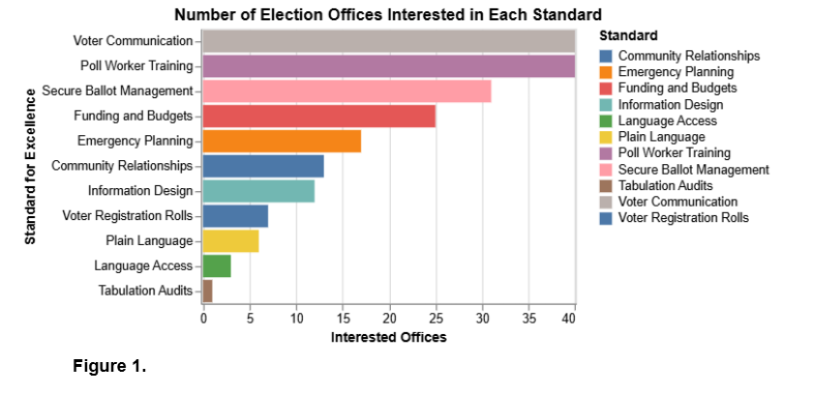
Figure 2 tells a slightly different story. This graph maps the average amount of planned spending on every Standard, meaning, for example, that the average office that expressed interest in the Funding and Budgets Standard allocated roughly $9,000.00 to it.  Taking the two graphs together, a few overall trends appear. Firstly, some Standards received relatively low interest and relatively low average planned spending. On the other hand, Secure Ballot Management was selected by over 31 offices and attracted $10,000 of planned spending, on average—placing it among the most popular and most invested-in Standards. This may be because offices tended to include physical investments in the plans for this Standard, including expenditures such as ballot drop boxes, poll pads, and security cameras. These physical assets represent relatively high fixed costs, which are well-suited to a one-time grant payment, perhaps making them a more attractive choice than standards that attracted investment in smaller expenditures.
But while these preliminary results are fascinating, our work isn’t finished. We have more responses to analyze and tests to run, and in addition to that, we want to hear from you! If you haven’t yet taken the election costs survey we mentioned earlier, we invite you to add your voice. Every response adds to our understanding of what it takes to run elections, and we’d love to hear from as many election offices as possible. Here’s the link again to the election costs survey. The survey is only 5 questions about elections costs and investment priorities, and should take 10 minutes or less to complete. Thank you all for reading, and please consider sharing your experience with us!
electionline Daily News Email
 What’s the best part of waking up? electionline Daily News in your inbox of course so be sure to sign up for your daily dose.
Each morning you’ll receive the top headlines of the day, plus a listing of states featured in that day’s news round up.
To sign up, simply visit our site and provide us with your email and you’ll begin receiving the news in your inbox each morning.
We Google so you don’t have to!
electionline Merch
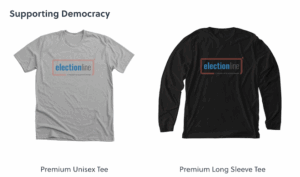 You’ve asked for it, well now you’ve got it! Just in time for all of your holiday gift-giving. We’ve opened up an electionline merch store using Bonfire. Currently we’re offering a couple of different t-shirts, a long-sleeve t-shirt and a hoodie.
Election News This Week
 Federal Update: According to NextGov, Department of Homeland Security Secretary Markwayne Mullin plans to review the nation’s election security posture after the midterms and consider changes aimed at bolstering public confidence in voting systems. Mullin outlined the plans during an all-hands address at the Cybersecurity and Infrastructure Security Agency’s headquarters this week, according to a CISA official with direct knowledge of the remarks. The official was granted anonymity because they were not authorized to discuss details of the speech. The secretary told employees he intended to hold a “debrief” after the elections and weigh whether changes to systems were needed to improve trust in election outcomes among voters. He also said DHS was not seeking to “suppress” votes and said the department’s goal is ensuring ballots are secure and legally cast. President Donald Trump said on Monday the US would give $1 million to anyone who reported voter fraud that leads to an arrest and conviction, a week before midterm elections that polls show could prove difficult for his Republican Party. “Anybody reporting Voter Fraud in the past Elections, or the upcoming 2026 Midterm Election, will be paid $1,000,000 upon the arrest and conviction of those that created the Fraud,” Trump wrote on Truth Social.
 U.S. Department of Justice Update: Last week, the U.S. Department of Justice (DOJ) began notifying the states and counties it planned to send monitors to this year. While the DOJ has always sent monitors to some polling locations on Election Day according to a Justice Department official, the goal this year is to send more than 1,000 monitors to all 50 states. For comparison, the Department sent 388 monitors to polling sites in 2022. In Arkansas, the Washington County elections commission voted to prohibit the monitors from accessing polling places Commissioner Matt Mendenhall said he was frustrated that the Justice Department did not tell the commission how many monitors it will send until nearly a week after first announcing the plan. “I think that some of those people from the Justice Department could learn something if they would come here and do it, but it’s got to be done right,” Mendenhall said. “It’s got to be planned, and your lack of planning is not our emergency.” The Pulaski County elections commission planned a vote on the monitors on Oct. 30. About two dozen monitors will be in Indiana, but they will not be permitted inside vote centers and must stand at least 50 feet away. “Their default position is to remain outside and not enter the voting location unless state law otherwise permits their entry. In our agency’s view, our state law does not give federal monitors access to enter any voting location,” an Indiana Election Division official said. In Jefferson County, Kentucky, Clerk David Yates said the DOJ asked for consent to have federal monitors inside polling locations, which he said violates state law. He said the DOJ has yet to provide details outlining the legal authority to have monitors inside polling locations. In a letter to the DOJ, Yates explained that after consulting with attorneys and the Kentucky State Board of Elections, federal monitors would not be allowed inside polling locations. Monitors can be outside the required 100-foot radius around those sites, and may ask voters exiting locations about their experience, he said, adding the interpretation of the law is shared with Fayette County election officials as well. “We can’t allow someone to be in a polling location that’s not explicitly authorized in there,” Yates said. “This law was put in long before this current administration.” In Wyoming, Laramie County Clerk Debra Lee confirmed that the Department will send officials to Cheyenne next week to monitor Wyoming’s general election. In a press release, Lee said she expects the visit to go better than the last one, when Gov. Mark Gordon and other local officials were caught off guard by federal monitors’ “aggressive” behavior, raising concerns about interference. In a Monday meeting, the DOJ confirmed its plans and also agreed to comply with a recent opinion by Wyoming Attorney General Keith Kautz, which concludes state law places limits on the federal monitors’ actions, according to the release.
 Early Voting Updates: Polls opened in the village of Kipnuk, Alaska for the first time since the remnants of Typhoon Halong ravaged Western Alaska villages last fall. Most residents of Kipnuk and nearby Kwigillingok were evacuated in the days after the storm amid widespread devastation. Polling places in the two villages never opened for the August primary. Polling places in some rural Alaska communities have failed to fully open to voters, more than a week after early and in-person absentee voting across Alaska started on Oct. 19. Federal agents were spotted outside of a polling location in Sutter County, California last week. Sutter County Registrar of Voters Donna Johnston said she approached the vehicles but could not identify which agency the officers were with. “I just let them know that they were in our parking lot and then I gave them our little law enforcement brochures for law enforcement at the polls,” Johnston said. Police investigated a suspicious individual carrying a “barrel” at Wilton, Connecticut polling location Monday. Nearby schools were placed under lockdown during the investigation, police said. After reviewing surveillance footage, police determined he was there for legitimate reasons and did not pose any threat. Leon County, Florida Supervisor of Elections Mark Earley said Border Patrol agents briefly stopped at an early voting site after mistakenly believing they could vote there. The library is the county’s busiest early voting location, according to Earley. “I accept this account of the incident, as it fits the facts as I understand them, and it is in keeping with the guarantees election officials received that federal agents would not be stationed at polling sites. I am satisfied this was an isolated instance of agents attempting to vote before they left Florida,” Earley said. People heading to a Solon High School football game Friday night also had the chance to cast ballots 11 days before Election Day. Johnson County, Iowa brought voting equipment to Solon High School and kept it available until 8 p.m. as people arrived for the game. About 100 voters took advantage of the option. Jefferson Parish, Louisiana spokesperson Rachel Strassel said a Registrar of Voters employee working at the polling location was handling an envelope and noticed “a suspicious liquid stain.” “Out of an abundance of caution, Jefferson Parish’s Safety and Security Department followed the hazmat (hazardous materials) protocol and closed the fifth floor of the Yenni Building, which includes an early voting location,” Strassel said. The closure lasted about 90 minutes. The floor and polling place was reopened after first responders and hazmat personnel gave the all-clear. An Atlantic County, New Jersey early voting site was closed for about 45 minutes due to a gas leak. A squirrel apparently blew a transformer, setting a pole on fire outside a Monroe, North Carolina early voting site on Monday. Early Voting Updates: Early voting continued at a brisk pace this week with more states and counties breaking turnout records. Officials in Southlake, Texas worked to make sure street closures and parking restrictions from a light festival did not impact nearby early voting. A Bell County, Texas voting location was evacuated on Oct. 22 after workers at the site reported smelling smoke, according to the county. Also in Texas, Fort Bend ISD says contracted security guards who improperly removed election signs and poll workers from a polling location will no longer be allowed to work security details at district facilities designated as voting sites. In Washington, DC, early voting kicked off on the 26th with voters expressing their concerns about the presence of the National Guard around drop boxes. In the other Washington, several counties took the governor up on his offer to deploy National Guard troops to protect drop boxes. “They are just extra eyes and ears out at our 101 drop boxes across King County in this election,” said Halei Watkins, spokesperson for the King County Election’s office. The troops would not be in uniform, carry arms, or interact with voters.
 Election Security News: An artificial intelligence agent accessed publicly available Georgia voter data, sources from the secretary of state’s office and AI company Anthropic confirmed. On Monday, Anthropic confirmed its Claude artificial intelligence bot accessed the data without being prompted to do so. A company spokesperson said Claude did not access the state’s voter registration system, change voting records or obtain any individual voter records. “The model pulled only aggregate counts, which can be derived from voter data the state makes available to anyone for a fee,” the spokesperson said. it’s unclear what fees Anthropic is referring to. Anyone can purchase a public version of the state’s voter rolls for $485, but the Secretary of State’s Office said that Claude didn’t access that information. The office confirmed the AI model did not enter any voter files or Georgia’s voter registration system. The election data it’s said to have accessed is publicly available via the state’s data hub, officials said. “Anthropic’s AI agent accessed publicly available voter information, just as anyone else in this country can,” said Robert Sinners, a spokesperson for the secretary of state’s office. “There was no data breach, hack or unlawful or harmful tampering with voter information or election systems and zero reason to make any changes to our public facing website,” he said. According to the Atlanta Journal-Constitution, state officials opened an investigation into the matter in early October after Anthropic contacted the secretary’s office. A timeline of events shows state officials shared findings of the investigation with the White House on Oct. 9. The office has not issued a final report yet.
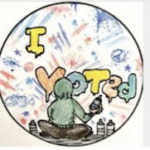 Sticker News: Congratulations to Camille Attia for winning this year’s Dutchess County, New York “I Voted” sticker contest. Congratulations to Theo Moore of Burlington for winning this year’s “I Voted” sticker contest for the state of Vermont. His
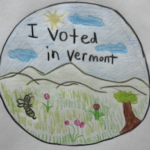 drawing depicts the Green Mountains, a blue sky, and multiple trees and flowers. “This sticker design contest showcases young Vermonters’ creativity and helps bolster our civic pride at the polls,” said Secretary of State Sarahh Copeland Hanzas. Alabama Secretary of State Wes Allen recently announced the release of newly designed America 250 “I Voted” stickers commemorating the 250th anniversary of the founding of the United States. The stickers are being introduced ahead of Alabama’s November 3 General Election. “For 250 years, Americans have fought, sacrificed, and worked to preserve the freedoms that make our
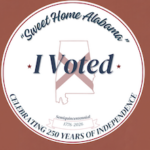 Nation the greatest country in the world. This America 250 ‘I Voted’ sticker represents more than participating in an election – it represents our commitment to preserving the constitutional republic our Founders gave us,” Allen said. While some counties and states send “I Voted” stickers to voters who vote by mail, not all do and so in 2020Allison McGillivray of Portland, Oregon started offering to send the stickers to friends and family because “friends around the country were sharing their voting moments on social media, sporting the stickers they got at the polls, and I was jealous!” she told Axios. “I knew I wasn’t the only one, so I ordered a roll of stickers and offered to send them to anyone interested. I don’t ask who anyone voted for, I just ask them to promise me that they voted.” McGillivray set up a dedicated email and a website to field requests for stickers. She doesn’t share mailing addresses, ask about voting choices or even correspond with people who request stickers. “I just send them a sticker!” she said.
Personnel News: Gabriel Sterling has joined the Secure Democracy Foundation as a senior fellow. Bonnie Paige has resigned as the Stockton, California interim clerk. Surrey County, Virginia General Registrar Sharna’ White has resigned. Lawrence County, Tennessee Election Commission member Keith Durham has resigned. Concordia Parish, Louisiana Registrar of Voters Golda Ensminger announced that she will be retiring, effective January 1, 2027. Sheboygan County Clerk Jon Dolson will still be involved in the upcoming fall election, despite the Wisconsin Elections Commission’s determination that there was probable cause he violated state laws when he shared confidential voter information from the state voter database.
New Resources & Resarch
ID and Go Templates: The Center for Civic Design recently published new resources to help election officials communicate about the new ID and Go options for returning mail ballots. The resource includes customizable templates for social media and polling place signage. – The Center for Civic Design.
2026 Election Hub: Risk Monitoring and Mitigation Resources: The midterms are taking place in an elevated political violence risk environment, but there are many tools communities are already using to safely track and respond to emerging threats. To support these efforts, we’ve assembled a new one-stop hub for election resources from BDI and our partners across the risk mitigation ecosystem. This year’s election hub includes:
- The latest data on political violence risk factors to inform threat assessments and security planning
- De-escalation training resources to help election workers, public officials, and other community leaders safely navigate tensions at the polls
- New guides and case studies highlighting best practices for community response
And more! All hub resources are public and can be shared widely with press, practitioners, and community partners. Check back for updates through the election and post-election period. In addition to the public tools made available through our website, BDI continues to provide national and state-based early warning support directly to a wide coalition of partners. If you don’t see resources or analysis you need on the hub, please reach out to request custom support. Together, we can all help contribute to another safe and secure election. – Bridging Divides Initiative.
Major AI Models Are More Willing than Ever to Create Fake Election Images: Earlier this year, the Brennan Center ran a study that asked six of the most popular artificial intelligence tools to produce fake election content, and every one of them did. The AI produced a wide range of media, including realistic images of a person stuffing mail ballots into a drop box and a memo on U.S. government letterhead claiming to have identified millions of ineligible voters. With the midterms just weeks away, we ran the same prompts again to see whether there were any changes in what the AI produces. The results: One company significantly improved its protections against the creation of election disinformation, two others made it easier to create convincing fakes, and the rest showed little change. This shows the dangers to democracy when technology companies are left to regulate themselves. Of the six models we previously tested, OpenAI’s ChatGPT made the most progress. ChatGPT now steers potentially harmful election prompts into a nonphotorealistic style. We saw an early form of this in some of our first-round tests earlier this year. This round, ChatGPT turned nearly every one of our prompts into an illustration. The idea is that a cartoon featuring a ballot drop box can’t be used for disinformation in the way a fake photo could be, so ChatGPT can keep creating images for ordinary requests while declining to produce the realistic fakes that do maximal damage. – The Brennan Center.
The Average 2026 Ballot Measure is Written at a Graduate-school Reading Level: The titles of this year’s 164 statewide ballot measures are written at an average reading level of 17 years of education, equivalent to a first-year graduate student, according to Ballotpedia’s annual Ballot Measure Readability Report. Individual measures ranged from a fifth-grade level for Idaho’s advisory question on an official state gun to a 48th-grade level for Colorado Amendment 83, which would establish a right to hunt and fish. No formal education level corresponds to a 48th-grade score. For many voters, the ballot title is the only description of a measure they’ll read before deciding how to vote. When the language is hard to follow, voters may misunderstand what a yes-or-no vote means or skip the question entirely. Academic research has found that ballot questions with more complex language are associated with more voters leaving them blank. “The most significant factor driving readability differences isn’t the type or topic of the ballot measure, but which state it’s in,” said Ryan Byrne, managing editor of Ballotpedia’s ballots team. “There are substantial variations from state to state, highlighting that the ballot measure process, in all its aspects, even sentence structure, is fundamentally a state-based process.” Ballotpedia’s report uses two formulas, the Flesch-Kincaid Grade Level and the Flesch Reading Ease score, to measure how accessible ballot titles are based on factors such as the number of syllables, words, and sentences. The grade level estimates the years of education needed to understand a text. The reading ease score runs from 0 to 100, with lower scores indicating harder text; anything below 30 is considered very difficult to read. This year’s average Flesch Reading Ease score was 18. Both scores measure language structure only, not the complexity of the ideas or whether a title is accurate or fair. – Ballotpedia.
An Analysis of Statewide Election Recounts, 2000-2025: A new FairVote report finds that election recounts rarely change the outcome of a race. Margins must be exceptionally close for a change in outcome to be plausible. In the 7,437 statewide general elections from 2000 through 2025, there were 37 complete statewide recounts. Only three of those 37 recounts changed the outcome of the race. In all three, the original margin of victory was less than 0.06%. Recounts tend to lead to small vote gains for both sides, and typically widen the gap between the top two candidates instead of decreasing it. “This report shows that U.S. election results are accurate and trustworthy. In nearly 7,500 elections over 25 years, recounts have changed the outcome just three times,” said Ben Williams, FairVote’s Senior Policy Counsel and Researcher. “States should have a clear process in place for recounts to ensure voter trust and confidence – but don’t expect recounts to change election outcomes unless the margin is razor-thin.” The report authors recommend that states automatically conduct statewide recounts when the margin of victory is within 0.1%. They note that recounts are less likely to impact outcomes than court challenges. The report authors also note the troubling recent trend of recounts well outside the range where they could be considered consequential, and discourage states from allowing candidate-funded recounts when the margin is above 1%. – FairVote.
Washingtonians on the 2026 Midterm Elections: A New statewide survey conducted by the Thomas S. Foley Institute for Public Policy and Public Service and Better Choices for Democracy finds confidence in Washington’s election administration, but widespread concern about false information and doubts that political parties care about people like them. With less than one week until Election Day, Washingtonians are concerned about mail ballots arriving in time to be counted, according to a new statewide survey from the Thomas S. Foley Institute for Public Policy and Public Service at Washington State University and Better Choices for Democracy. Respondents also expressed deep concern about people being misled by AI-generated images, audio or video, and about the potential for federal interference in elections. At the same time, they reported confidence in how state and local election officials administer elections. The survey was fielded Oct. 14-24 to 1,000 Washington residents, including 874 registered voters, using The Harris Poll’s integrated panel. “Washingtonians report high confidence in the officials who run their elections, alongside real concern about whether mail ballots will arrive in time and whether false information, including AI-generated content, will mislead voters,” said Thessalia Merivaki, Thomas S. Foley Distinguished Professor and director of the Foley Institute and a member of Better Choices for Democracy Advisory Board. “This benchmark gives election officials, policymakers and civic organizations evidence on how Washingtonians experience elections, and a baseline for tracking how those perceptions change over time.” – Thomas S. Foley Institute for Public Policy and Public Service and Better Choices for Democracy
Ballot Measure, Legislation & Rulemaking
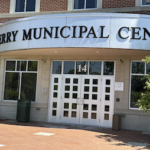 Derry, New Hampshire: Following complaints about electioneering during September’s statewide primaries, Derry town councilors recently approved updated rules aimed at ensuring voter safety at polling places. Councilors voted, 5-2, October 20 to set new restrictions and penalties two weeks before the midterm election. Several voters reported a man in the parking lot at Pinkerton Academy passing out information about the primary election and asking people whom they were voting for, officials said. Electioneering is prohibited inside polling places, but there are designated places for candidates and supporters to stand with signs and provide information outside. Anyone who attempts to influence voters outside of those designated areas could face a fine of up to $1,000.
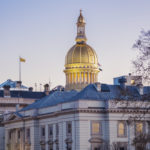 New Jersey: The Assembly Oversight, Reform, and Federal Relations Committee approved legislation October 22 that would bar federal law enforcement and uniformed military service members from standing within 100 feet of polling places and ballot drop boxes, but a scrubbed vote on the Senate floor could prevent the law from being signed in time for this year’s elections. The committee approved the bill in a 4-2 vote along party lines, with supporters citing fears of voter intimidation. It would expand an existing prohibition on state and local police at polling places to encompass federal law enforcement and adopt provisions mirroring federal law that bars military personnel at polls that supporters worried would go unenforced under the Trump administration. The legislation, introduced just this week, would expand a law signed by former Gov. Phil Murphy in 2022 that barred election officials from requesting police presence at polling places to help maintain peace and good order and limited state and local law enforcement presence at polls to emergencies. Supporters said the bill is needed because federal officials, including Homeland Security Secretary Markwayne Mullin and President Donald Trump, have declined to rule out deploying federal agents to the polls on Election Day. Democrats pulled the legislation after worries from Gov. Mikie Sherrill’s office that it might not withstand a constitutional challenge.
State Sen. Latham Tiver (R-Southampton) wants New Jersey to conduct twice-yearly citizenship audits of its voter rolls and strengthen verification requirements for new registrations after learning that a Motor Vehicle Commission software error mistakenly registered thousands of noncitizens to vote. Tiver’s Verify NJ Voters Act (S4838) would require election officials to verify citizenship using MVC records, state and federal agency information, and other government databases. The legislation would give individuals whose citizenship cannot be verified 30 days to provide documentation, preserve existing appeal rights, and establish privacy protections and public reporting requirements.
 Hudson County, New Jersey: The Hudson County Board of Commissioners voted 8-1 last week to introduce an ordinance that would raise the salaries of two county employees, including the county election clerk, despite objections from one commissioner at the prior caucus meeting. In the same vein, the Board of Elections Clerk Michael Harper would see his salary increase from $117,964 to $141,118. Hudson County Administrator Abe Antun explained the gist of the ordinance. “For the clerk to the Board of Elections, that was a resolution that was adopted by the Board of Elections. They wanted the clerk to the board to vibe compensated at the same salary as the superintendent,” Antun stated.
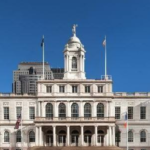 New York City: The New York City Council passed two pieces of legislation that aim to make it easier for detainees on Rikers Island to cast their ballots. The bills passed overwhelmingly on October 22 after a long fight from advocates who said the approximately 7,000 New Yorkers being held on Rikers are disenfranchised by an ineffective voting system on the notorious prison island. Ultimately, allowing detainees to vote in person on Rikers would be difficult and would require legislation at the state level, the Board of Elections and Board of Correction testified at a hearing earlier this year. The legislation passed on last week aims to improve the current mail-in ballot process. Sponsored by Public Advocate Jumaane Williams and Queens Councilmember Selvena Brooks-Powers, the two bills will require the Board of Elections and the Department of Correction to report on voting activities on Rikers and make it easier to cure ballot defects. The public advocate’s bill, Intro 797-A, would require DOC to report annually on voting activities in city jails, including the numbers of completed voter registration forms, absentee ballots distributed to incarcerated individuals, and events held to promote voting. Brooks-Powers’ bill would require the creation of procedures for curing ballots submitted by Rikers detainees. In 2025, around 47 percent of the absentee ballots handed out to detainees in the city’s jails were returned to the city’s BOE for tallying, according to the Vote in NYC Jails Coalition. Statewide, the return rate is a little more than 73 percent for incarcerated voters. Advocates say that expanding voting access for Rikers detainees supports public safety efforts to address mass incarceration and helps reduce recidivism.
 Burlington, Vermont: Burlington voters could be asked in March 2027 to approve new privacy protections for the city’s voter list. The charter change was proposed at the October 26 City Council meeting. It was unanimously referred to the charter change committee. If passed, it would keep voters’ citizenship status and other personal information out of public records, including birth dates, ID numbers, phone numbers and the last four digits of Social Security numbers. Anyone requesting a copy of the voter list would have to sign a statement saying they won’t use it for commercial purposes or knowingly share it with a foreign government or federal agency to get around state restrictions. The proposal says the change is meant to protect people from retaliation for legally voting in local elections. The proposal would build on Burlington’s 2023 charter change allowing legal residents who aren’t U.S. citizens to vote in city elections. Federal law still bars noncitizens from voting in federal elections. Vermont law requires at least two public hearings before a charter change goes to voters. The city plans to hold those hearings Jan. 13 and 19. Voters would decide on Town Meeting Day, March 2, and the Legislature would need to approve the change before it could take effect. In order for this to be on the Town meeting Day ballot, the final language of the charter change needs to be voted on in early December by city councilors.
Legal Updates
 Alaska: Attorneys representing the state of Alaska have asked a federal judge to dismiss a lawsuit by the U.S. Department of Justice that is seeking to halt the certification of the state’s ongoing U.S. Senate election. The lawsuit, ordered by President Donald Trump and filed last week, asks the U.S. District Court for the District of Alaska to prevent the Alaska Division of Elections from declaring a winner in the election unless the winner is the incumbent, Republican Sen. Dan S. Sullivan, an ally of the President. Shortly before noon October 27, Judge Sharon Gleason, an Obama appointee who is presiding over the case, issued an order stating that the federal government has until 3 p.m. October 29 to submit written arguments against the dismissal request. The state has until noon October 30 to offer a rebuttal. The state has asked Gleason to rule on the dismissal request no later than Monday, the day before Election Day. “This will ensure that Alaskans heading to the ballot box (as well as those who have already voted) have confidence that their votes will count and the U.S. Senate election result will be timely certified free from unlawful interference by the United States,” state attorneys wrote. Democratic groups and voting-rights advocates are seeking to join the lawsuit to stop the Justice Department’s effort to prevent Alaska from certifying its U.S. Senate election results if Republican Sen. Dan Sullivan loses. The requests come from Alaskans for Mary, the campaign for Democratic Senate candidate Mary Peltola, the Democratic Party’s Senate campaign committee, and a separate group including the League of Women Voters of Alaska, Common Cause and two individual voters.
 Arizona: The U.S. Supreme Court scheduled oral arguments for early December in a case that could decide whether Arizona can require proof of citizenship to register to vote and if it can purge voter rolls prior to an election. Earlier this year, the high court agreed to hear the 2022 case in which Mi Familia Vota and Living United for Change in Arizona challenged two laws signed by then-Gov. Doug Ducey that would ban new voters who don’t provide proof of citizenship and stop those currently registered from voting by mail and in presidential elections. The laws also require extensive checks of voter rolls for noncitizens and purges of voters. The case could impact similar law in other states. The bills were enacted and passed by the Republican-controlled Arizona legislature, which was acting in response to false claims of widespread noncitizen voting in the 2020 election. President Donald Trump and his allies have long made baseless claims of widespread fraud and noncitizen voting after his loss in 2020. National Republicans and the U.S. Department of Justice petitioned SCOTUS to hear the case after the 9th U.S. Circuit Court of Appeals ruled in 2025, agreeing with a lower court that the laws violate the National Voter Registration Act of 1993 and the Civil Rights Act and run contrary to Supreme Court precedent. The lower court blocked portions of the law from going into effect and the Court of Appeals upheld that decision.
 California: U.S. District Judge David Carter rejected the Trump administration’s bid to sequester as many as 20,000 possible votes by residents the government says are likely noncitizens on the state’s voter rolls. denied the Justice Department’s request to issue a temporary restraining order that would have required state election officials not to process mail-in ballots by individuals on the government’s list until they have verified that these voters are actually U.S. citizens. “Never before in American history has the federal government, on the eve of an election, sought to coerce a state and local government to abandon their own Constitutional elections procedures and bend to the will of the Executive Branch,” Carter said. “In bringing this lawsuit, the Executive would have this Court believe that it reigns as a sole sovereign. But California and its people are sovereign, too.” The government’s request, the judge added, violates longstanding constitutional principles mandating states have control over their elections. If this last-minute request were granted, either party could create chaos for their own political purposes to disrupt the election process, he said. In addition, Carter questioned the credibility of the list of purported noncitizens on California’s voter rolls that Homeland Security compiled, noting a similar list of ineligible voters in Nevada that started with about 16,000 names was dwindled down to just 185 registered voters who all turned out to be citizens. The judge also pointed out the Justice Department, in so far as it is concerned about the integrity of elections, can, as it has been doing in recent days, prosecute individuals who violate the federal statute that makes it a misdemeanor for noncitizens to vote. Carter’s ruling comes after the Ninth Circuit on October 26 threw out the Trump administration’s emergency appeal to force California to set aside votes by residents who the administration maintains might not be U.S. citizens. The three-judge panel issued a decision the day after it held an unusual Sunday hearing. In a per curium order, the panel said it had no jurisdiction over the case because the federal government gave the trial judge just 15 hours to consider its expedited request for a temporary restraining order before filing its appeal. “The United States’ claimed emergency, at least in part, is a self-constructed one,” the panel wrote. “At least part of the delay here is attributable to the United States’ own delay in filing suit, in realizing that existing California state law governs the issuance and processing of ballots, in recognizing that California has millions of registered voters and processes ballots on a schedule aligned with that scale, and in communicating to the court its desired relief.” The appellate panel granted the request by the Los Angeles County registrar-recorder/county clerk to dismiss the appeal.
 Georgia: A class-action lawsuit filed by a Cobb County voter claims that a vendor’s delays in sending out absentee ballots could disenfranchise thousands of the county’s voters. Michael Olaribigbe filed the lawsuit in Cobb County Superior Court on Tuesday naming members of the Cobb County Board of Elections and Registrations and asking the court to grant him and around 2,900 other voters emergency relief. According to the lawsuit, the vendor the county has hired to process and send mail-in ballots has failed to follow Georgia law that requires it to mail or issue ballots within “three days after receiving a timely application for an absentee ballot.” The vendor, New York-based Fort Orange Press, is accused in the lawsuit of delaying mailing absentee ballots for up to almost two weeks, saying that the same vendor was responsible for similar delays in New York, Pennsylvania, and Colorado. Absentee ballots are due by the time polls close on Election Day, which is 7 p.m. on Nov. 3, 2026, for the upcoming midterm election. If you have not received your ballot, you can head to the polls on Election Day to vote in person, however, you will have to sign a document attesting that you are only voting once in the election. Olaribigbe said that he won’t be in Georgia on Tuesday and hadn’t received his ballot by Monday, meaning that he would not be able to vote if relief isn’t granted.
 Kentucky: Jeffery Woodard, 62, of Shepherdsville, has been indicted by a Franklin County grand jury on five counts of Wrongful Registration (Class D Felony), three counts of Convicted Felon Voting (Class D Felony) and one count of being a Persistent Felony Offender, Second Degree. According to the indictment, Woodard unlawfully registered to vote on five separate occasions between 2023-2026, despite being a convicted felon. Woodard also illegally voted in the November General Elections in 2023 and 2024 as well as the May 2026 Primary Election. A Franklin County judge set Woodard’s bond at $25,000. He was taken into custody October 21.
 Indiana: Marion County Superior Court Judge Jennifer Harrison has ruled that the Indiana Election Commission doesn’t have to consider the validity of campaign misconduct allegations ahead of Election Day on Nov. 3. The decision was made following a lawsuit filed by Lincoln Party secretary of state candidate Greg Ballard, who asked the judge to order that the commission hold a meeting regarding campaign finance complaints against Republican candidate Max Engling and Democrat Beau Bayh. Harrison said in her decision that Ballard had “failed to identify any concrete, actual harm” from the commission waiting until its scheduled Nov. 20 meeting. “He instead presents hypothetical harm with no support that if Defendants meet before November 3, it will affect voter decision-making in the Secretary of State race,” Harrison wrote. Ballard said in a statement that he was “exploring our legal options to compel the commission to perform its statutory duty to meet.”
 Michigan: A Court of Claims ruling this week granted a temporary restraining order instructing local clerks across Michigan to maintain the electronic pollbooks created in the Nov. 3 General Election until an underlying lawsuit brought by Bridgewater Township Clerk Michelle McQueer and the Michigan Republican Party can be resolved. The electronic pollbook, or EPB, is “used for processing voters, generating precinct reports, and recording voter history at in-person polling places,” according to a manual for election officials published in 2024 by the Michigan Department of State. Under current Michigan election rules, “electronic pollbook software and associated files must be deleted from all devices by the seventh day following the final canvass and certification of the election,” unless there is a pending recount or audit. McQueer’s lawsuit centers on that rule and what she sees as its potential conflict with federal law, which states that election officers for any federal election must retain “all records and papers which come into his possession relating to any application, registration, payment of poll tax, or other act requisite to voting in such election” for 22 months after any general, special or primary election. “Defendants are directed to instruct all local election officials to retain the EPBs from the November 3 General Election,” the court order states. “The instructions must direct those officials to transfer the EPB from the precinct laptops onto the encrypted flash drives and then to securely store those flash drives until further order of this Court.”
 Minnesota: Hennepin County prosecutors on October 28 said they charged conservative provocateur James O’Keefe and another man with felonies for unlawful voting and identity theft for filming themselves misrepresenting their identities to election judges during the Minnesota Aug. 11 primary. Hennepin County Attorney Mary Moriarty said they were alerted by the Minnesota Secretary of State’s Office that James O’Keefe, Cameron Higby and others were trying to undermine the state’s vouching system. Videos posted by O’Keefe’s operation show them wearing burkas outside precincts during the primary. Moriarty said the voter names they used included some residents who were dead and at least one who voted. While neither man signed the oath to vouch for the other would-be voter — an act Moriarty said would have been felony perjury — “you cannot give somebody else’s name and misrepresent yourself as you go through the process.” An initial court appearance for O’Keefe and Higby has been set for Nov. 16.
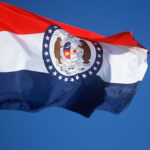 Missouri: Newton County Circuit Court Judge Kevin Selby has issued a temporary restraining order against the county commission, blocking plans to relocate election equipment and renovate an election room just days before the midterms. Selby granted the order following legal action by County Clerk Tami Owens, who argued the commission’s plans threatened election security and could disrupt voting operations. The lawsuit names Presiding Commissioner Daniel Swem, District 1 Commissioner Mark Knight and District 2 Commissioner Ron Wallace in their official capacities. The dispute centers on a former courtroom inside the old Newton County Courthouse that has served as the county’s election room for years. The space is used to store voting equipment and conduct election functions, including ballot tabulation and recounts. The commissioners notified Owens in an October 21 letter that they intended to convert the election room into a conference room, with completion planned for December 1. Owens was instructed to select a new location for the election equipment by October 23 or face the possibility of commissioners beginning the relocation process themselves. In granting the restraining order, the judge determined that moving equipment during an active election could cause immediate and irreparable harm. The court cited potential disruptions to election operations, compromised ballot security and confusion surrounding the handling and location of election materials. The judge also warned that such disruptions could undermine public confidence and potentially disenfranchise thousands of Newton County voters.
 New Hampshire: The Supreme Court issued an emergency order October 22 permitting Republican officials to ban New Hampshire voters from using student identification cards to vote in the November election. The justices granted the application to pause a lower court’s injunction that required New Hampshire Secretary of State David Scanlan to revise guidance he issued announcing that student IDs could no longer be used for any purpose at all. The stay will remain pending the disposition of the appeal in the First Circuit. “This court has repeatedly emphasized that lower federal courts should ordinarily not alter the election rules on the eve of an election,” the court wrote in the order. “Here, the district court did not point to anything that would justify deviating from that principle.” The Supreme Court has ruled against making changes to election rules too close to an election in order to avoid potential voter confusion. But in a dissenting opinion, Justice Ketanji Brown Jackson wrote this particular case is slightly different because the state left its election rules untouched and was attempting to elucidate public confusion. “Here, the district court made a (certainly not clearly erroneous) determination that correcting a publicized misstatement about what New Hampshire’s election rules require was necessary to ensure that certain citizens were not unduly burdened in their exercise of the fundamental right to vote,” she wrote.
 New Jersey: The Atlantic County Board of Elections is deadlocked over whether to count three cure letters deposited in a secure ballot drop box, leaving Superior Court Judge Susan Sheppard to decide the tie-breaker. Deputy Attorney General Andrew Hedin told Sheppard that the statute allows voters to return cure letters to the Board of Elections in person, or by mail, fax, or email – but not to a drop box owned and operated by election officials to accept ballots. “The statute is silent,” Hedin said. Two Democratic commissioners voted to accept the cure letters, but the two Republicans said no. After a break in a hearing that began this morning, Hedin said the two parties could not reach a resolution and the board “is still in deadlock.” Sheppard said she needs more information about the issue – nothing was submitted in writing – before she makes the call. “It looks like the voters went beyond in a good faith attempt to make sure that they were able to vote, and I don’t want in any way to disenfranchise them without having some sort of certification on the record and some sort of factual analysis, so I can make some findings of fact and conclusions of law,” she said. “As it stands right now, I’m unable to do that.” Hedin said the Board of Elections still has “a fair amount of time within early voting.” Assignment Judge Susan Sheppard approved using a secure ballot drop box to receive the cure letters.
Superior Court Judge William G. Mennen IV has ruled that an elderly Somerset County woman will be allowed to vote in this year’s midterm election The woman, who moved to the county, filed a voter registration form on time with help from her niece but forgot to check two boxes: one stating she was a U.S. citizen and the other stating she was at least 17 years old. “It was a mistake,” she said. Mennen noted that the voter also listed her date of birth on her voter registration form and signed a declaration stating she was at least 17 and a U.S. citizen. He noted that the same questions appear at least twice on the same form. “The form is cured in the eyes of the court, and as a result, this voter should be permitted to vote based upon her stated preference,” Mennen stated. “She will be permitted to vote by machine.”
 New Mexico: Robert Johnson, 63, of Annapolis, Maryland has been indicted by a federal grand jury and accused of fraudulently submitting a voter registration application in New Mexico. is charged with procurement and submission of materially false, fictitious and fraudulent voter registration. His attorney did not respond to calls for comment. Johnson was arrested in Milwaukee on October 26 and made his initial appearance before a U.S. magistrate judge in the Eastern District of Wisconsin. He was released on bond pending further proceedings in New Mexico. Johnson allegedly submitted a voter registration application to the Bernalillo County Clerk’s Office Bureau of Elections on Sept. 18, 2022, according to the indictment. The indictment did not give further information.
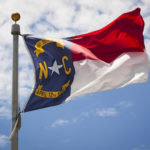 North Carolina: Josh Stein (D) has filed an appeal to reverse a law passed by the General Assembly, which shifted power away from the governor to the state auditor to appoint members of the NC State Board of Elections. Stein has previously made requests to block the enforcement of the law. Stein is now appealing the Court of Appeals’ judgement that Senate Bill 382 did not violate the separation of powers by depriving the governor of control over the enforcement and execution of North Carolina Election Law. He argues that the governor is the state’s chief executive while members of the council of state execute executive power in specific areas. The supervision of NC’s election laws by the auditor is inconsistent with that officer’s constitutional role and prevents the governor from fulfilling his duties described by the constitution. In the appeal, the governor asks that the Court of Appeal’s judgement be placed under discretionary review.
The NAACP took its challenge to North Carolina’s voter ID law to the state Court of Appeals this week, arguing that the law is unconstitutional and racially discriminatory. The appeal follows a federal district court judge’s ruling against the lawsuit earlier this year. The NAACP is asking a three-judge appellate panel to return the case to a single judge so the group can present evidence supporting its claims. The NAACP first filed the lawsuit after North Carolina’s voter ID law took effect in 2023. The group argues that the law discriminates against Black and other minority voters, who it alleges are less likely to have state-issued identification. The lawsuit also challenges the 2018 constitutional amendment that established the voter ID requirement, arguing that it was approved by a legislature shaped by racial gerrymandering. Supporters of voter ID laws have argued the requirements are necessary to prevent voter fraud. North Carolina voters approved the original constitutional amendment in 2018.
 Pennsylvania: The Department of Justice has charged nine more Pennsylvania residents with voting as a noncitizen, according to a press release. Artur Kopacz, 50, of Philadelphia, Inna Henry, 52, of Harrisburg, were both charged with two counts of voting by an alien in the 2022 and 2024 general elections. Osmal Loy, 70, of Fountain Hill, Yehuda Peer, 30, of Merion Station, Alfredo Santiesteban, 73, of Philadelphia, Joyce Donovan, 38, of Selinsgrove, Nina Nyawara, 21, of Selinsgrove, and Joyce Pitts, 80, of Effort, were all charged with with one count of voting by an alien in the 2024 election. Nourten Kuruju, 64, of Luzerne, was charged with one count of voting by an alien in the 2022 general election. The charges announced Monday bring the total number of individuals charged with noncitizen-voting-related crimes in Pennsylvania to 20 since September. Election officials contend that while voter fraud, including noncitizen voting, does occasionally happen, it is exceedingly rare. A Votebeat and Spotlight PA analysis of election crimes since mid-2015 found just 176 allegedly fraudulent ballots have been cast out of more than 67 million votes cast in that period, even if these latest charges — which haven’t yet been proved — are included. If the nine individuals charged Friday are found to have illegally voted, their votes would represent 0.00009% of all votes cast in those elections.
 Texas: The Potter County Republican Party has asked a federal judge in Amarillo to require every Texas ballot to be hand counted before the results of the Nov. 3 midterm elections can be certified. The group’s lawsuit argues that voting machines may be susceptible to outside manipulation, but does not provide proof of vulnerabilities in equipment or the process of counting votes and certifying election results. The lawsuit specifies that it is not alleging that past Potter County or statewide election results have been altered or inaccurately reported. Instead, the lawsuit cites potential for interference from artificial intelligence programs or “malicious actors” taking advantage of voting machine “components manufactured by foreign adversaries” such as China.
Three civil rights organizations have sued Texas Secretary of State Robert Howden and Texas Department of Safety (DPS) Director Freeman F. Martin, demanding the state hand over records related to delays in processing more than 500,000 voter registration applications. The suit, now pending before the U.S. District Court for the Western District of Texas, comes amid concerns about votes being counted in this year’s unusually competitive statewide elections. The National Association for the Advancement of Colored People (NAACP), the NAACP’s Texas chapter, and the Texas chapter of the League of United Latin American Citizens (LULAC) alleged violations of the National Voter Registration Act of 1993, commonly known as the “Motor Voter law,” following reports that more than half a million voter registration transactions were not transmitted to counties for processing until late September 2026. Alicia Pierce, assistant secretary of state for communications, said the office cannot comment on the lawsuit, but she did issue a statement affirming that Texas counties have cleared the backlog. “We don’t know of any counties that had pending applications by the start of early voting,” Pierce said. Heard said, if the backlog has been cleared up, the state should have no problem producing the records his clients have asked for.
 Utah: U.S. District Court Judge David Barlow tossed out a monthslong effort by President Donald Trump’s Justice Department to obtain Utah’s entire, unredacted voter database — for now. In his ruling dismissing the lawsuit against Utah elections chief Lt. Gov. Deidre Henderson, Barlow said the Civil Rights Act does not make the federal government entitled to all of Utah’s election records, contrary to the DOJ’s arguments. Utah’s voter database is “not a record or paper which ‘comes into [the Utah Lieutenant Governor’s] possession,’ so she need not make it ‘available for inspection, reproduction, or copying’ by the Attorney General under Title III [of the Civil Rights Act],” Barlow, a Trump nominee, wrote. The DOJ will likely appeal the ruling. It filed the lawsuit earlier this year after Henderson rejected a request to hand over the entire voter database. Doing so, she has contended, would violate state privacy laws. The database contains voters’ sensitive personal information, including addresses, birth dates and the last four digits of their Social Security numbers. “We appreciate Judge Barlow’s ruling dismissing the Department of Justice’s lawsuit that sought to force us to disclose the private data of every Utah voter,” Henderson said in a statement to The Salt Lake Tribune. “Our office will continue to uphold the rule of law and safeguard the fundamental right to free, fair, and secure elections for the people of Utah.”
Opinions This Week
National Opinions: Voting rights, II | Federal interference, II | U.S. Supreme Court, II | Election apocalypse | Voting rights |
Alaska: Ranked choice voting |
Arizona: Election workers |
California: Ballot counting | Voter ID |
Colorado: County clerks |
Connecticut: Election reforms |
Florida: Plan to vote |
Georgia: Federal interference | Poll workers |
Indiana: Secretary of state race, II |
Kansas: Poll workers |
Kentucky: Federal monitors |
Maryland: Get out the vote |
Massachusetts: Same day registration |
Michigan: Election officials | Poll workers |
Minnesota: Election security | Election litigation | Voting process |
Missouri: Poll workers | Election fraud |
Nevada: Noncitizens | Secretary of state |
New Hampshire: Artificial Intelligence |
New York: Faith in elections |
North Carolina: Good government | Election changes |
Ohio: Voter ID, II | Federal interference |
Texas: Suspended voters |
Utah: Election security | Election protection |
Virginia: Election officials |
Upcoming Events
After the Vote: What the 2026 Midterms Tell Us: Three political scientists and one election law expert examine what the 2026 midterms mean for the country and for California. What do the results reveal about the last two years of President Trump’s term, and about the country’s direction in 2028 and beyond? Where are voters divided, and where do they agree? What can November’s vote teach us about California voters? Moderated by Rick Hasen of UCLA Law, with Christian Grose (USC), Sara Sadhwani (Pomona College), and Chris Tausanovitch (UCLA). When: November 7, 2pm Pacific. Where: Los Angeles.
Assessing the Fairness and Integrity of the November Elections: The Safeguarding Democracy Project at UCLA promotes research, collaboration, and advocacy under the leadership of UCLA Law Professor Richard L. Hasen; one of the nation’s leading election scholars. The Safeguarding Democracy Project is built upon the premise that tackling issues of the U.S. election integrity must be collaborative: across ideologies, across scholarly disciplines, and as a bridge between theory and practice. Our events this semester are focused on the 2026 midterm elections. Speakers: Bill Gates, Arizona State University; Guy-Uriel E. Charles, Harvard Law School; Charles Stewart, MEDSL; Susan Stokes, University of Chicago and Tammy Patrick, Election Center. When: November 16, 3:15pm Eastern. Where: Online.
2026 Elections Summit: In a time of rapid change and evolving challenges to our electoral processes, collective reflection and forward-looking strategy are more important than ever. Bipartisan Policy Center’s 2026 Elections Summit will convene a diverse group of election practitioners, policymakers, and thought leaders to debrief the November election and chart a course forward for U.S. election administration. Be part of a defining moment for democracy as we gather in Washington, DC, to shape its future together. When: December 7, 9am to 4pm Eastern. Where: Washington, DC.
Job Postings This Week
electionlineWeekly publishes election administration job postings each week as a free service to our readers. To have your job listed in the newsletter, please send a copy of the job description, including a web link to mmoretti@electionline.org. Job postings must be received by 5pm on Wednesday in order to appear in the Thursday newsletter. Listings will run for three weeks or till the deadline listed in the posting.
Account Executive, VotingWorks– We are looking for a trusted sales leader who understands that election administrators don’t buy voting machines, they buy trust, both in the equipment and in the vendor. All 83 of Michigan’s counties will soon open at once, and we are in the running for the state RFP enabling us to sell our voting machines. Incumbents will have to re-earn their contracts, and we’ll be competing on equal footing for the first time. This opportunity is time bound. Trust matters deeply in this market. Your job is to build relationships and earn credibility quickly with state and local election officials. You will own the full Michigan territory. You’re responsible for the entire sales process: building pipeline, running demos, navigating procurement, and closing deals. We want sustainable sales contracts that are technically sound, politically supported, and set up for a clean handoff to Customer Success. For your first demos, you’ll be paired with our Executive Director and our Head of Customer Success to learn the messaging and the product. Once you take on demos on your own, you should still know when to bring in executive support and when to handle things yourself. This is a competitive market with a real window of opportunity. If you want to sell something that actually matters to Democracy, and you’re energized by moving fast when the timing is right, we’d like to meet you. Application: For the complete job listing and to apply, click here.
Administrative Services Director, Seminole County, Florida– Seminole County Supervisor of Elections is a constitutional office which prides itself on ensuring the accuracy and integrity of elections in Seminole County, Florida. The office exists to serve people, facilitate the electoral process, and ensure successful, secure and transparent election administration. The Administrative Services Director is a senior leadership position serving as a strategic advisor to the Supervisor of Elections and a key member of the executive leadership team. The position provides office-wide leadership across administration, finance, budgeting, human resources, organizational development, employee engagement, and executive initiatives. Requirements include a Bachelor’s degree in Accounting, Finance, Business Administration, Human Resources, Public Administration, or a related field; advanced degree, CPA, CFE, SHRM/SCP or comparable professional credential preferred. Additionally, seven (7) years of progressively responsible leadership experience in administration, finance, budgeting, human resources, organizational operations or public-sector management, including experience advising executive leadership, is required. Demonstrated experience managing budgets, financial reporting, organizational initiatives and employee engagement; government or election administration experience is preferred. A comparable amount of education, training, or experience may be substituted for the minimum qualifications. Application: For the complete job listing and to apply, click here.
Assistant Executive Director, Chicago Board of Election Commissioners–This full-time exempt position reports directly to the Board’s Executive Director and is responsible for overseeing the Board’s daily administrative operations, including Human Resources, Finance, and Purchasing. Working closely with the Executive Director, the Assistant Executive Director will also oversee general office functions, including but not limited to the mailroom, the copy room, and receptionists. Essential Duties and Responsibilities: Direct supervision of the human resources, finance and procurement functions of the Board. Assess Board policies and develop business strategies to ensure coordination across the various administrative functions in the Board’s downtown and warehouse offices. Monitor performance and provide feedback to senior administrative management, including teaching, supporting and modeling logistics in line with Board policies and procedures. Advise the Executive Director on matters impacting administrative operations. Participate in Board of Election Commissioners meetings, providing updates on current and long-term projects impacting the administration of the Board. Oversee Board financial matters, ensuring best practices for procurement, contracts, grants, and staffing. Direct supervision of ADA and Communication staff. Attend external meetings at the request of the Executive Director, including City/County budget hearings, civic events, intergovernmental matters, conferences, etc. Oversee the operation and selection of staffing of Election Central for Election Day support. Execute other duties as directed by the Executive Director. Salary: $144,000 – 154,000. Application: For the complete job listing and to apply, click here.
Customer Support Center Consultant Level 1, Hart InterCivic– The Customer Support Center Consultant Level 1 (CSC 1) provides Tier 1–2 support for Hart InterCivic products, helping customers troubleshoot issues and keep election operations running smoothly. The CSC I’s primary responsibilities are to: Resolve and route customer issues via phone, email, and remote tools; Document cases in the CRM and communicate status through resolution; and Use product documentation to deliver clear, customer-friendly solutions. This role researches and resolves issues, supports hardware/software configuration and deployment, and provides training or on-site support as needed. It also documents processes and partners with other departments to improve service delivery. This position follows the Proprietary Information and Intellectual Property Agreement and is responsible for protecting company information, including when working off-site or outside normal hours. Application: For the complete job listing and to apply, click here.
Cybersecurity Assessor (Election Security), Apollo Information Systems: The Technical Assessor conducts in-depth technical and program-level cybersecurity assessments of client environments, identifying risk, measuring control maturity, and producing clear, actionable guidance that advances each client’s security posture. This is an experienced assessor role: the individual independently leads assessments end to end, evaluates complex environments against multiple frameworks, and is a trusted voice in front of both technical teams and executives. The assessor also helps mature Apollo’s assessment method. Salary: $80K – $120K. Application: For the complete job listing and to apply, click here.
Elections Data and Analytics Manager, Tennessee Secretary of State’s Office – Responsible for statewide election data governance, voter registration data integrity, business intelligence, reporting, analytics, data integration, and performance measurement. This position serves as the Division’s subject matter expert on election data and ensures accuracy, security, compliance, and accessibility of election information. This position assists ballot review and approval, producing and analyzing election-related state and federal reports, maintaining and assisting in updating elections mobile app. Assist in planning and coordinating the computer functions and responsibilities for the Elections Division which includes, but is not limited to: data processing, integrating the statewide voter registration system with county voter registration systems, improve election reporting capabilities; analyzing and resolving technical software issues (25%) for the Division of Elections and 95 county election commission offices, which includes, but is not limited to cybersecurity practices, and performing other duties as assigned. Salary: Commensurate with experience and State of Tennessee benefits package. Application: For the complete job listing and to apply, click here.
Elections Finance Administrator, King County, Washington: This is an amazing opportunity to be engaged in the election process! The Department of Elections is searching for energetic and resourceful professionals who like to “get stuff done”. The Elections Finance Administrator position in the Elections Department combines an exciting, fast paced environment with the opportunity to cultivate talents and apply a variety of skills. The ideal candidate will thrive in an innovative and fast-paced environment and will not hesitate to roll up both sleeves, work hard, have fun, and get the job done. We are seeking an Elections Finance Administrator to join a mission-driven team that supports essential department operations. The Elections Finance Administrator is a self-motivated administrative professional with strong judgment, accuracy, and a customer-focused approach. In this role, you will support a wide range of core administrative functions including accounts payable, purchasing, payroll, process improvement, and records management. Salary: $38.38 – $48.79 Hourly. Application: For the complete job listing and to apply, click here.
IT Assistant Manager, Palm Beach County, Florida–The Assistant IT Manager plays a vital and supportive role in ensuring the smooth operation of the IT department, aligning both the technical infrastructure and the team with the organization’s goals. This position involves collaborating closely with the Election Technology Director to oversee the implementation of technology solutions that meet the organization’s needs. The Assistant IT Manager helps maintain an efficient and effective IT environment. The Palm Beach County Supervisor of Elections Office is committed to hiring talented individuals with diverse experiences that will enhance the services we provide to the residents of Palm Beach County. We are always looking for dedicated individuals who do all things with Integrity and Accountability, who excel in Customer Service, and believe in Transparent, Secure Democracy. At the Supervisor of Elections Office, we strive to help our employees find passion and purpose. Join us in being the best place to vote. Salary: $85000 to $125000. Application: For the complete job listing and to apply, click here.
Marketplace
electionline provides no guarantees as to the quality of the items and the accuracy of the information provided about the items in the Marketplace. Ads are provided directly by sellers and are not verified by electionline. If you have an ad for Marketplace, please email it to: mmoretti@electionline.org