In Focus This Week
An Influential Election
The role social media content creators can play on election administration
By M. Mindy Moretti
electionline.org
Over Labor Day Weekend, a group of social media content creators took to their platforms to encourage their followers to be poll workers.
While some of the posts were tongue-in-cheek and a play on another type of pole working, the thought behind the campaign was a serious one.
 Every election cycle state and local officials struggle to fill poll worker slots. Just recently in Providence, Rhode Island 1 in 7 poll workers either called out or failed to show up for the September 9 primary meaning some polling locations opened late.
The 2022 Election Administration and Voting Survey (EAVS) from the U.S. Election Assistance Commission reported that 54.1% of jurisdictions had a “difficult” or “very difficult” time recruiting poll workers.
“It can be difficult to get attention for civic action, so I wanted to lean into something that would “trick” the algorithm,” explained Alexandra Cascio, one of the creators behind the campaign. “Back in January, Elizabeth Booker Houston made a click-bait style template to help spread information about ICE. I remembered the success of it, and was inspired by creators like Brian Tyler Cohen and Good Trouble, who leaned into the ‘pole’ pun. I cooked up the template in Canva and shared it with some friends, and it all spiralled from there.”
Cascio said she had a personal goal of getting 1,000 people to sign up to be poll workers and that she got nearly 3,000 people to commit with the whole campaign hitting nearly 30,000 commitments. The content creators all linked to Power the Polls in their posts.
While Cascio worked with Chorus, a creator-led nonprofit organization, she said she saw many other creators create their own versions of the campaign.
“For so many people to come together for an unpaid campaign and such a good cause is still blowing my mind,” Cascio said. “I’ve gotten so many comments and messages from people excited to not only sign up themselves, but to get friends and family signed up as well.”
While we are unaware of any conservative content creators recruiting poll workers, the Republican National Committee does run Protect the Vote, a poll worker-recruitment site.
But using content creators to recruit poll workers is just one possibility. According to research from Pew, about half of U.S. adults (53%) say they at least sometimes get news from social media, roughly stable over the last few years.
In June, the Ash Center for Democratic Governance and Innovation at Harvard Kennedy School released a paper outlining creators’ influence as news sources. The paper, Building Capacity to Use Social Media: How Election Officials Can Leverage Content Creation to Provide Accurate Voter Information, identified the types of creators best suited for partnerships, provided a framework for how elections offices can successfully connect with them and offered suggestions for how election officials can create their own social media content in ways that will reach new audiences.
“[A]s election officials, we want to be where the voters are,” said Tommy Gong, Lane County, Oregon clerk and one of the authors of the paper [Gong is also a board member of the Election Center]. “Surveys reveal that voters and the general public are increasingly using social media for information and the news. This is a far cry from traditional newspapers, radio, and TV news channels. We want to expand and amplify our reach with educating the public about what we do in elections and why they can trust the process.”
According to the Ash paper, the best creators to work with as a local election official are the Non-Political Influencer and the Lifestyle-Based Sporadic Political Influencer. These types of creators are defined by an audience who:
- Already trusts the creator about something other than politics, such as sports, fitness, or general lifestyle content.
- Is less partisan or politically engaged than the audience of a creator who posts about politics at a moderate or high density.
- Is more trusting of micro- and niche creators than they are of large creators. This is corroborated by a 2021 Forbes report,23 which found “stronger relationships built on expertise and trust” with micro-influencers than larger creators. Because smaller creators serve “more niche audiences,” the report claims, they “provide access to a small subset of a targeted demographic.”
While the poll worker campaign helped recruit bodies, content creators can also help recruit hearts and minds so-to-speak. According to the Ash paper, using content creators to fight mis- and disinformation as well as prebunking or, ‘proactively head off the impact of misleading content with accurate information and links to credible sources from an election official’s office.” And finding the right creators may seem like an overwhelming task, but there are organizations like the aforementioned Chorus as well as News Creator Corps.
“They have many followers, some more local than others, and they may be willing to share the news about the upcoming election and what their followers need to know about voting (registration deadlines, voting methods, mailing deadlines, etc),” Gong said. “Given the opportunity, election officials can engage with them in explaining the validity of the election process to build awareness and public trust in elections.”
Content Creators, Election Administration and Voting: Can Social Media be used to Improve the Voter Information Environment: What can election officials do to ensure that voters receive accurate, accessible and trustworthy information? Election officials have deep expertise about elections and are among the most trusted sources of voting information. In this webinar, we will explore how they can use social media’s broad reach to improve the information people receive about elections, voter registration and voting. This discussion builds on the Ash Center paper “Building Capacity to Use Social Media: How Election Officials Can Leverage Content Creation to Provide Accurate Voter Information,” which offers frameworks for collaboration between election officials and content creators. Please join us to learn how election officials are beginning to work with social media influencers and creators to provide accurate, accessible and engaging civic information. This event is co-sponsored by the Shorenstein Center on Media, Politics and Public Policy. When: September 22, 4pm Eastern. Where: Online.
electionline Daily News Email
 What’s the best part of waking up? electionline Daily News in your inbox of course so be sure to sign up for your daily dose.
Each morning you’ll receive the top headlines of the day, plus a listing of states featured in that day’s news round up.
To sign up, simply visit our site and provide us with your email and you’ll begin receiving the news in your inbox each morning.
We Google so you don’t have to!
electionline Merch
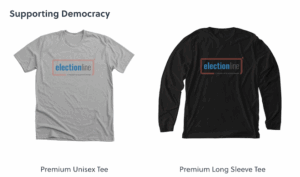 You’ve asked for it, well now you’ve got it! Just in time for all of your holiday gift-giving. We’ve opened up an electionline merch store using Bonfire. Currently we’re offering a couple of different t-shirts, a long-sleeve t-shirt and a hoodie.
Election News This Week
 Federal Update: White House border czar Tom Homan on Sunday said there are no plans in place for Immigration and Customs Enforcement (ICE) officers to “sweep polling locations” in the November midterm elections. Homan told Fox News host Jacqui Heinrich on “The Sunday Briefing” that he has not seen “any operational plans or any discussions on any immigration enforcement operation at polling places,” after Heinrich asked if there was any truth to claims that ICE will be “raiding” polling locations. Investigators may have broken state laws under the direction of top Homeland Security leaders as part of an expansive effort to find noncitizens on the nation’s voter rolls, according to a federal whistle-blower’s account released on September 14. The authorities also required agents to examine at least 40 voters each day, the account said, suggesting a rushed pace that raises questions about the thoroughness of the investigation. The effort has relied on questionable data, and has likely improperly flagged U.S. citizens who are eligible to vote, the whistle-blower said in a nearly 30-page report. During testimony before the Senate Judiciary Committee this week, FBI Director Kash Patel, suggested that he was open to sending federal agents to polling places, raising alarms from Democrats that the Trump administration would act aggressively to assert greater control over the coming elections. The remarks stood at odds with earlier comments indicating that he did not intend to send federal agents to polling places around the country. However, when Senator Peter Welch, Democrat of Vermont, pressed the issue, Patel seemed to reverse course. “I thought you weren’t going to be sending people to the polls,” Welch said. “When did you hear that? Just another lie,” Patel declared, raising his voice. Welch revisited the issue. “So you are sending FBI agents to the polls?” “We have election crisis coordinators manned at all 56 field offices,” Patel replied, appearing to refer to what are known as election crime coordinators. “Election integrity is of paramount importance. This FBI will not shy away from that effort.”
 2026 Elections: This week, 196 days after it began, the 2026 primary season came to an end when the First State held the last-in-the nation primary on the 15th. Like many other state’s this year, early voting was brisk in Delaware. Poll workers in Kent County said turnout has been steady but slow throughout the day. Voter Vickie Hogue was among the voters who cast a ballot Tuesday. She said she hopes more people will participate. “There’s a lot of feelings in our country that our vote doesn’t count, but I think that if you’re in a democracy and you should vote. And I wish more people came out to vote, it could make a big difference,” she said. Last week in Rhode Island four federal election monitors were watching polling places in Pawtucket to ensure city officials followed through on a Biden-era consent order to assist Spanish-speaking voters. They found no significant problems, said Pawtucket’s top election official who anticipates their return in the November general election. “Everything seemed to go really well,” City Registrar Ken McGill said in an interview Thursday morning. “We sent out morning checkers from my office to make sure every polling place was up and running, and that they put all the signs up, both in English and Spanish.” The Rhode Island Board of Elections voted unanimously that the close contest between Republican gubernatorial primary was not close enough to justify a recount. The vote came after an hourlong back-and-forth with trailing candidate Elaine Pelino, who protested a lack of public notification and transparency by election administrators. Pelino acknowledged the 259 votes separating her from likely primary winner Aaron Guckian was slightly wider than the 231-vote margin needed to justify a recount under state law.
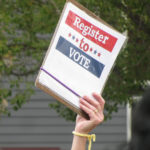 National Voter Registration Day 2026: Monday marked 50 days till Election Day and Tuesday marked National Voter Registration Day. Celebrations were held nationwide with events from big to small. Nebraska Secretary of State Bob Evnen used the day to roll out the state’s new voter registration system that combines voter registration and voter information services into a single online system. The site allows Nebraskans to register to vote, update registration information, change party affiliation, check the status of early or provisional ballots and locate their polling place. “Americans are fortunate to have the right to make our voices heard at the ballot box,” Evnen said in a statement Tuesday. “We’re proud to unveil this new online voter registration system to make it simpler than ever to fulfill our civic duty. I encourage every eligible Nebraskan to verify they are registered and vote on November 3.” Orange County, Florida Supervisor of Elections Karen Castor Dentel debuted a registration-to-go kit, officially called the Election Outreach Kit, during a press conference for National Voter Registration Day. “ A lot of people end up having to figure out how to have a voter registration drive on their own,” Castor Dentel told VoxPopuli after the presser. “They don’t know what information we have available. They don’t always know how to display it or what information is important, so this has everything in it that they might need.” Packed neatly into the kit are info sheets explaining how to get your mail-in ballot, where to find all 27 of the county’s early voting sites and, of course, the voter registration forms. There’s voter swag in there too. Twin Falls, Idaho County Clerk Kristina Glascock said National Voter Registration Day helps ensure residents are ready to cast their ballots in the November election. “It’s an exciting national day for people to check their voter registration,” Glascock said. Staff and students at the University of Maine were encouraging voters of all ages to register ahead of November. “We make it as easy as possible for people to turn out and vote, and we want to ensure that, especially young people or people that maybe move around a little bit and they’re not settled in a fixed location, can show up on election day, get registered to vote, and cast a ballot, which is not the case in every state,” said Associate Professor Robert Glover. In Bernalillo County, New Mexico, the county clerk’s office set up a booth at the University of New Mexico to help students get registered or update their registration. In Tennessee, more than 400 students across eight local schools took part in a voter education rally for National Voter Registration Day. The Memphis Grizzlies Foundation hosted the rally at FedExForum, registering Memphis-Shelby County Schools and local charter school students. Other news can be found here: Pulaski County, Arkansas, Alachua County, Florida, Florida, Iowa, Kentucky, Kansas City, Missouri, Oklahoma, Oregon, Lackawanna County, Pennsylvania, Smith County,, Texas, West Virginia, Wood County, West Virginia and Wisconsin.
 Podcast News: New episodes of High Turnout Wide Margins dropped for a three-episode election technology arc. In S5E2, hosts Brianna Lennon and Eric Fey spoke with Scott Leiendecker, the founder and CEO of KNOWiNK, an electronic poll pad system, and Liberty Vote, as well as a former Republican Elections Director for St. Louis City. In S5E3, Lennon and Fey spoke with Ben Adida. He’s the co-founder and executive director of VotingWorks, a nonprofit organization that builds open-source voting equipment. They spoke about what an open-source system actually is, some of the challenges of getting new voting machines through the certification process, and about the overall health of the voting equipment ecosystem. And in S5E4, the hosts spoke with Jared Marcotte. He’s the founder of The Turnout, a company that focuses on the intersection of technology, software and security in elections. They spoke about what motivated Marcotte to create The Turnout, as well as about the importance of election administrators being able to determine the safety and security of the non-voting system technology they use.
 Sticker News: Alaskans heading to the polls this fall will receive an “I Voted” sticker featuring whales, moose, foxes, musk oxen and bears beneath a sweep of northern lights. The Alaska Division of Elections selected Anchorage-based artist Amanda Rose Warren to create the cover art for the state’s five regional Official Election Pamphlets for the Nov. 3 general election. Her artwork will also appear on the stickers distributed to voters. Each illustration is connected by the same green-and-yellow aurora borealis. Warren also incorporated the American and Alaska flags into all five designs to commemorate the 2026 election. “I am incredibly excited and honored to create the cover art for the Alaska Division of Elections,” Warren said. “It’s a meaningful project for the people of Alaska, and it feels especially special as my oldest child will be voting for the first time this year.” “I truly hope that my artwork brings smiles to faces and encourages everyone to get out and vote,” she said. The Ulster County, New York Board of Elections
 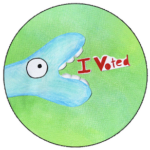 has announced the winning design for its 2026 “I Voted” Sticker. According to the county, the design features a playful blue creature chopping down on the words “I Voted”, designed by a seventh-grade student. Officials said the student, Bea Henry from Mount Laurel Waldorf School in New Paltz, created a sticker that is memorable and a joyful interpretation of civic participation. “Bea’s colorful composition features a blue creature with a big expressive eye and open smile that gives this artwork a cheerful, whimsical personality,” the county board of elections stated. “The bright green background makes the image feel youthful, while the bold red-and-white “I Voted” lettering stands out clearly.” “I’m happy that so many people will have a chance to get my sticker. I hope it makes voting more exciting,” Henry said.
Personnel News: Longtime Vigo County, Indiana Clerk LeAnna Moore is retiring and Elizabeth Stiverson will serve as the interim clerk. Charlotte, Vermont Clerk Mary Mead announced that she will not seek re-election. Brook Schreiner has resigned as the Chatham County, Georgia supervisor of elections. Marianne Harrington as an interim Pulaski County, Arkansas election commissioner.
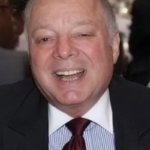 In Memoriam: Stuart “Stu” Soffer, whose years of public service included nearly two decades helping administer elections in Jefferson County and service on the Arkansas State Board of Election Commissioners, died September 12. He was 85. Soffer became a familiar figure in Jefferson County elections after beginning as an election official and later serving on the Jefferson County Election Commission. He served as the commission’s secretary from 2003 until stepping down in June 2021. Soffer also served as chairman of the Jefferson County Election Commission during his tenure and was president of the Arkansas County Election Commissions Association. His election work eventually expanded to the state level. Soffer served as a Republican designee on the Arkansas State Board of Election Commissioners.
New Research & Resources
Safeguarding Election Administration: Profiling Perpetrators and Emerging Threats: Since 2020, election workers have been harassed, targeted, threatened, and intimidated. This thesis examines the 21 cases prosecuted by the U.S. Department of Justice’s Election Threats Task Force. The thesis is the first of its kind to examine and identify behavioral indicators, patterns of radicalization, and shared characteristics among prosecuted election crime cases. The cases were analyzed using a behavioral threat framework focusing on personal grievance, bias motivation, online radicalization, and the pathway to violence with an emphasis on hunters and howlers to contrast the cases and show intent and escalation points. The research relied exclusively on publicly available data and information, including legal documents, press releases, and open-source reporting, to conduct a comparative analysis of the cases and information. Findings reveal consistent demographic and behavioral patterns, including the predominance of middle-aged male offenders, the presence of personal grievances linked to perceived electoral injustice and the amplifying role of online communities, and behavioral health challenges. This thesis contributes to the limited body of scholarly work examining election threat cases through behavioral threat assessment. It offers recommendations for election administrators, election officials, lawmakers, and security practitioners aimed at strengthening election infrastructure, safety, security, and readiness.
Free website health checks for election offices: Most election offices already have everything voters need on their website. The problem is that voters can’t always find it. U.S. Digital Response reviews your site from the outside—the way a voter experiences it—and delivers a prioritized list of recommendations your team can act on. Our experts look at usability, plain language, and accessibility, then work alongside your staff to implement improvements before your next election. The goal is that your team can manage and update the site independently when the project ends. Health checks take 6–8 weeks and are free where legally allowed, with affordable options for jurisdictions that can’t accept free services. Read how it worked in the City of Milwaukee. For offices unsure of where to start, sign up for a 1:1 30-min accessibility testing session with USDR’s Steve Lund.
USPS OIG report on the Primary Elections: The U.S. Postal Service handles the processing, transportation, and delivery of Election and Political Mail across the country. It is committed to fulfilling its role in the electoral process when policymakers and voters choose to use the mail as part of their election systems or as their means to vote, respectively. To do so, the Postal Service aims to employ practices and procedures to help ensure that it meets its customers’ expectations — that Election Mail, especially Ballot Mail, will be delivered timely. On March 31, 2026, an Executive Order was issued pertaining to election administration, and related litigation is ongoing at the time of this report issuance. This audit did not evaluate the Postal Service’s plan to implement this order, but we plan to cover allegations received at the end of August 2026 in subsequent work. Our objective was to evaluate the Postal Service’s processing of Election and Political Mail for the 2026 primary elections. We conducted observations at nine processing facilities and 73 delivery units in eight states during primary elections from March to May 2026. In June 2026, we conducted further observations at five mail processing facilities in New Jersey and Tennessee, in response to a congressional inquiry. From February through May 2026, the Postal Service processed Election and Political Mail with on-time processing scores ranging from 97.75 to 98.99 percent. While most facilities we visited generally adhered to Postal Service’s election-related policies and procedures, there are opportunities to increase understanding and enforcement of postmarking ballots, completing required reports for late arriving Political Mail and the daily all-clear certifications, and posting election-related training materials for employees. Additionally, we found coordination with election officials and communication with customers affected by operational changes could be strengthened. Further, we identified opportunities at specific mail processing facilities that, if employed, could support the timely delivery of Ballot Mail. We made 11 recommendations to address the issues identified in the report. Postal Service management agreed with 10 and disagreed with one. While the Postal Service disagreed with one recommendation, the U.S. Postal Service Office of Inspector General considers management’s comments responsive to all recommendations, as corrective actions should resolve the issues identified in the report.
The Direction of Democracy: Five Years of Deepening Divides in State Voting Policies: With the midterm elections quickly approaching, access to the ballot increasingly depends on where voters live and who they are. Nearly seven in 10 eligible voters in the South now live in a state with a Low or Negative Democracy Policy Score. Comparatively, in the West, fewer than one in 100 do. MAP’s new report, The Direction of Democracy: Five Years of Deepening Divides in State Voting Policies, traces changes in election and voting policies over the past five years across all 50 states and D.C., and, drawing on MAP’s Democracy Maps, it includes a comprehensive verification of every policy change captured since January 2021. In addition to the regional differences documented in the report, there are also related disparities driven by race: nearly half of Black adults nationwide live in Low or Negative scoring states, compared to 35% of all voters in such states. Looking back to 2021 reveals stark, divergent patterns, as documented in the report: the share of Black adults living under the most restrictive voting environments has nearly doubled, and regional policy differences have become even more pronounced.
Election Hero Day Toolkit: Election Hero Day is a nonpartisan, national day of recognition celebrating the tremendous contributions of election officials, their staff, and poll workers. By mobilizing our communities to celebrate and thank our election heroes, we continue to sustain our neighbors and friends who inspire our community and maintain a healthy democracy. The League of Women Voters 2026 Election Hero Day Toolkit is now available with celebration ideas, talking points, and social media graphic and caption templates. Join business leaders, elected officials, nonprofit leaders, and community members around the country to celebrate our election heroes on October 20th, 2026.
Can Public Information Campaigns Restore Trust in American Elections Across Polarized State and Party Lines?: The Constitution empowers states to manage elections, yet this aspect of federalism poses formidable challenges with overlapping geographic and partisan divisions. We first provide descriptive evidence that, even though nonpartisan election officials use similar methods to protect ballot-counting across the country, Republican voters nationwide report low levels of trust in the elections run by the blue state of California, just as Democrats are less trusting of elections in the red state of Texas. Could a public information campaign providing factual messages from election officials help to restore trust across party lines? We report the results of novel survey experiments that expose respondents in one state to messages produced by election officials in another state. Republicans, Democrats, and Independents all become more trusting once they are exposed to information about other states’ election protections. Our findings suggest that a robust public information campaign by state election officials could mitigate polarized trust in election integrity.
Ballot Measures, Legislation & Rulemaking
 Newport Beach, California: The City of Newport Beach will host its first special election on Nov. 3 for the first time in 44 years, after city officials voted to move forward with the special election, which will allow local voters to weigh in on three resident-sponsored initiatives. The Newport Beach City Council voted to move forward with the court-ordered election at a special council meeting on Friday, Sept. 11. The special election will run concurrently with the general election, though Newport Beach voters will receive an additional ballot along with their usual ballot. According to The Orange County Register, a county Superior Court judge rejected concerts regarding the special election from city officials on Monday, setting Newport Beach up for its first special election in 44 years. The concerns, the report said, had to do with the crunched timeline of the special election and possible state election law and city charter conflicts. Superior Court Judge Julianne Bancroft had previously ordered that Newport Beach “take all steps necessary” to hold the election for the initiatives — which were previously scheduled for 2028 — in November. The resident-sponsored initiatives, authored by the Newport Beach Stewardship Association, would change term limits, oversight of public meetings and records and how council members are elected. Attorneys for the Newport Beach Stewardship Association told The OC Register that the city has had ample time to get the three initiatives on the ballot. According to Newport Beach City Staff, the special election could cost up to $1.5 million.
 Michigan Ballot Measure: Following court losses that prevented the measure from getting on the ballot this year, leaders with Americans for Citizen Voting-Michigan are vowing to bring back a citizen-only ballot measure in 2028. Paul Jacob, the chair of Americans for Citizen Voting-Michigan, told the Michigan Advance that for conservative ballot initiatives, “you cannot go in with simply enough signatures according to the law.” “We have to get way more than that many signatures,” Jacob said. “We have to be cheat-proof and rig-proof, and that is what we’re going to be looking to do in 2028, is to come back with enough signatures that they can’t effectively cheat us.” Chris Thomas was Michigan’s Director of Elections from 1981 to 2017, across leadership of both parties. In an interview, Thomas said the assertion that the measure was somehow cheated by the Michigan Bureau of Elections, or the state’s canvassers, was pure “nonsense.” “That’s not anybody treating them adversely. That’s their own problem. It’s their own quality control, and I think that’s the case here,” Thomas said. “What appears to me is that they had this overwhelming number, and they thought they could push it through, and they almost did. They were only a couple signatures short at the end of the day, but had there been some better screening of the petition as it was being delivered to them, and better education of the circulators, a lot of these categories could have been improved.” Thomas added that the group only needs “to improve them marginally in order to get over the top.”
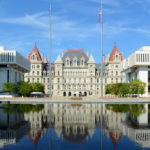 New York: Sept. 11 has a double meaning for voting rights groups in the Empire State. The attacks happened on a historic primary Election Day in New York City that was halted when terrorists struck. Ahead of the upcoming midterm elections this year, voting rights groups statewide are pressuring Gov. Kathy Hochul to sign a measure into law that will extend the time polling locations are open if something happens to delay voting. Democratic state Sen. Andrew Gounardes sponsored this bill in his chamber. It passed the state Legislature this past session. Gounardes explains its intent. “It should be an automatic extension of time any time there’s a delay of more than one hour,” he said. “So, if a poll site is inaccessible for more than an hour, machines are down for more than an hour, if, god forbid, ICE agents take over a polling location this November and prevent people from voting for more than an hour, we should automatically extend the time the polling site is open by that hour.” Gounardes said an exception is if voters didn’t lose their ability to vote during the interruption.
 Oregon: Lawmakers agreed to spend an additional $1.25 million to increase the number of ballot drop boxes across the state. Secretary of State Tobias Read requested emergency funds from state lawmakers to buy 20 more drop boxes and to pay election officials for what he expects will be more voters using ballot drop boxes rather than mailing their ballots this fall. Oregon election officials are encouraging voters to choose the drop box over the mailbox this Election Day. An additional $618,000 will pay for the new drop boxes; $154,000 will go toward BallotTrax, an opt-in option for voters to be able to track the status of their ballot; and $480,000 is earmarked for counties to send updated voter notification cards to inactive voters in an attempt to update the voter list and clear out any inactive voters. Oregon officials have said repeatedly they are confident that the Nov. 3 election will play out as usual. But Read, a Democrat elected to office in 2024, has argued the additional funding will help.
 Atlantic Beach, South Carolina: The Atlantic Beach city council held a second reading Monday on an ordinance that would move all future Atlantic Beach elections to Horry County. This was not the first time the town has attempted the transfer. In April 2024, the town gave final approval for Horry County to run its elections. Horry County tabled that request at the time, asking the town to first certify all contested elections and races. Atlantic Beach’s 2023 mayoral election was under protest at the time. Mayor Josephine Isom had been leading by 18 votes when polls closed two nights earlier, but counted provisional ballots showed her losing to Councilman John David, 65-64. Isom protested the result. In June of this year, the South Carolina Supreme Court ruled in favor of Isom, and she was elected mayor in July. According to Mayor Isom, the Supreme Court advised the council to transfer the election to the county. September 14 the council agreed unanimously to transfer all future municipal elections to Horry County. Horry County must still confirm the transfer.
 South Dakota Guidance: South Dakota’s Secretary of State is offering new guidance to county auditors on how to address voters who are deemed “federal-only” under a new state law. It comes amid a lawsuit in which a voter rights group sued Secretary Monae Johnson. In court documents filed Monday by Johnson, a letter is shared showing she’s instructing auditors to provide more specific information tailored to why a voter was deemed “federal-only. She maintains that her position “lacks authority to promulgate binding regulations that compel local election officials to accept or reject voter-registration applications or that dictate the contents of the notices that are sent to successful or unsuccessful registrants.” In a letter Johnson sent to local election officials, she advises them to do three things: stop sending the original letters to all voters, begin sending the updated letters to voters and send letters to voters who got inaccurate ones with an explanation on how to remedy their full-voter status ahead of the current election’s registration deadline. In the letter to local election officials, Johnson said that “only one letter should be sent to each new federal-only registrant” and that letters should not be sent for both errors “unless the registrant has committed both errors.” As a result, the state disabled the feature in TotalVote, a voting registration system South Dakota uses, that auto-populates a letter to be printed and sent to federal-only voters. That was an issue that had allegedly been causing the “inaccurate letters.” The updated letters Johnson provided to local election officials say the reasoning for being deemed “federal-only” and how to remedy that.
 Arlington, Texas: Arlington City Council will push forward on a resolution regarding November midterm polling site cuts in Tarrant County. A majority of council members indicated an interest in bringing the resolution to a vote at the end of September, following the county commissioners court’s decision to cut 19 of 57 Election Day voting sites and two early voting sites. Council members looked over the resolution language at their Sept. 8 meeting. Mayor Jim Ross said then he worried about the reduction in polling places in the county and city as the population and voting rates continue to grow. “Our community needs to know that we have their back on this thing, and that we’re not afraid to butt heads with people who are doing our voters, our residents, wrong,” Ross said. The formal resolution will go to a vote during the council’s next regularly scheduled meeting on Sept. 29.
 Virginia Guidance: New guidance from the Virginia Department of Elections only ex-felons that were convicted of murder and voluntary or involuntary manslaughter remain disqualified from voting. The update comes days before early voting begins in the midterm elections, and months after a federal judge ordered the state to narrow how it determines voter eligibility under the Virginia Readmission Act. The act is part of a series of Reconstruction-era laws barring former Confederate states from disenfranchising residents except those convicted of felonies recognized as common law in 1870. The Department of Elections said it identified murder and the two types of manslaughter as disqualifying offenses “because they exactly match the elements of one of the offenses listed above.” With early voting beginning and Election Day set for Nov. 3, some people with past felony convictions will now be able to weigh in on the proposed amendments and participate in congressional midterm and local elections.
Legal Updates
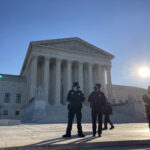 U.S. Supreme Court: The Supreme Court this week rejected President Donald Trump’s bid to restrict mail ballots for the midterm elections, capping a flurry of last-minute legal action with voting already underway. The decision allows states to continue sending out mail ballots under the same processes they’ve used for years and have accounted for nearly a third of votes cast. The Supreme Court majority wrote that the administration’s push to implement the restrictions this year is likely to lose in court, though the brief emergency order didn’t detail its reasoning. Two justices, Samuel Alito and Clarence Thomas, publicly dissented. The Administration had asked the justices, once again at the center of a roiling political controversy, to clear the way for restrictions before the pivotal November contests for control of Congress. Alito wrote in his dissent that the Postal Service “has broad authority to regulate the mail” and likely does have the power to enforce Trump’s restrictions. Justice Brett Kavanaugh, meanwhile, agreed that the restrictions should not go into effect for the midterms but indicated he might rule in favor of the Trump administration if the issue comes back before the court at a later time.
 Federal Litigation: A First Circuit panel denied the Administration’s request to lift a pause on enforcement of changes to mail-in voting restrictions ahead of the midterm elections. President Donald Trump signed an executive order in March that would create lists of eligible voters in each state and instruct the U.S. Postal Service to deliver mail ballots only to verified voters. Under the “Ensuring Citizenship Verification and Integrity in Federal Elections” order, states would be required to update mail ballots with secure envelopes featuring unique tracking barcodes. The federal government could withhold funding from states and localities that do not comply. In a nine-page opinion, the three-judge First Circuit panel ruled the Administration failed to demonstrate on appeal that the new U.S. Postal Service rule would not sow “chaos and widespread voter disenfranchisement” in the lead-up to the November midterms if implemented, as a lower court held earlier this month. “Appellants have not shown that the District Court abused its discretion in determining that any harm to them would be substantially outweighed by the injury that would be caused to appellees and to the public interest, including the millions of Americans who vote by mail, were the final rule to take effect for the Nov. 3 election,” the panel wrote. The panel pointed to the lower court ruling from U.S. District Judge Indira Talwani, who enumerated in her Sept. 4 opinion the practical harms and significant risks of disenfranchisement posed by hastily implementing the mail-in voting rule. “There is no countervailing record evidence disputing the District Court’s findings on these points,” the First Circuit wrote Thursday, affirming Talwani’s conclusions. “Indeed, appellants have not even seriously challenged this aspect of the District Court’s ruling, much less demonstrated why it is clearly erroneous.”
U.S. District Judge Carl J. Nichols in Washington, D.C. ordered that the U.S. Postal Service not implement President Donald Trump’s executive order limiting mail balloting, adding another obstacle to the administration’s effort to rewrite election rules as the Supreme Court is poised to weigh in on the matter. The nation’s highest court already is considering the administration’s appeal of an order by U.S. District Court Judge Indira Talwani in Boston prohibiting the Postal Service from enforcing its new rule on mail voting before this year’s midterm elections. Late on September 13 Nichols handed down a similar hold on the rule, which was issued Aug. 21. “Plaintiffs have demonstrated that, absent an injunction, there is an increased risk that a significant number of otherwise appropriate absentee or mail-in ballots will ultimately not be counted in the upcoming elections,” Nichols wrote in issuing the preliminary injunction. “The public has a strong interest in ensuring that doesn’t happen.” Nichols in May had refused to issue an injunction because he ruled the lawsuit seeking one was brought too early. That was the high court’s reasoning late last month when it lifted an earlier freeze by Talwani. But because the administration had just issued its rule to move ahead with Trump’s plan, the plaintiffs in Boston and Washington, D.C., refiled their lawsuits. Talwani was nominated by former President Barack Obama and Nichols was nominated by Trump.
League of United Latin American Citizens, UnidosUS, Common Cause and the city and county of Denver sued the Trump administration on August 10 to keep armed immigration enforcement agents away from polling places, invoking a Civil War-era criminal law that generally prohibits federal officials from bringing “troops or armed men” to places where elections are held. The lawsuit, filed in federal court in Washington, D.C., came eight days before in-person early voting begins in some states. It asks a judge to declare it unlawful for the administration to send armed agents to polling sites. Homeland Security Secretary Markwayne Mullin said at a Sept. 1 news conference in New York that ICE agents would not patrol polling places, but that they would go to one if there were a threat there or if they were serving a warrant on someone they had been tracking. “If we’re serving a warrant, we will be where we need to be,” he said. DHS has said in statements to media following Mullin’s comments that it “is not planning operations targeting polling locations,” but added that people could be arrested at a polling place if an active public safety threat arose there. The lawsuit cites a year of public comments by Trump administration officials and allies. The plaintiffs argue that pattern, capped by Mullin’s recent remarks, amount to a policy and plan by the administration.
 Alaska: Alaska prosecutors are dropping voter misconduct cases against a group of residents born in American Samoa after a state appeals court threw out felony charges against a woman who checked a box saying she was a U.S. citizen. The state’s Department of Law announced the decision Friday, after a three-judge Court of Appeals panel ruled a week earlier that state law requires proof that defendants who erroneously filled out voter registration forms had a “consciousness of wrongdoing” and intended to break the law. The panel found flaws with a state trooper’s questioning of Tupe Smith, the woman involved in the case that was thrown out, as well as with the grand jury process that led to her indictment. It overturned a lower court’s decision that had kept the charges against her alive. Acting Alaska Attorney General Cori Mills said in a statement that after reviewing the decision and applying it to the facts, prosecutors concluded that they could not prove cases against Smith and the others beyond a reasonable doubt. Her husband, Michael Pese, had also been charged.
 Shasta County, California: The U.S. District Court for the Eastern District of California has formally ordered Shasta County elections official Clint Curtis to testify before a grand jury. Instructions included in the subpoena indicate it’s likely he’ll testify about June primary ballots he’s referred to as “suspect.” Curtis was also instructed to bring with him election-related materials from the June primary, including tens of thousands of voted ballots, when he appears in the Sacramento court. It’s not clear whether Curtis transferring those records to the court would run afoul of a new California law that prohibits removing ballots from the custody of an elections official. The federal subpoena, which was sent on Sept. 10, referred to a request for “preservation, inspection, sampling, and production” and asked Curtis to produce voter identification envelopes, vote records and voted, spoiled, canceled and unused ballots. Complying with that instruction, which specified that he should produce paper records, would require the movement of the more than 55,000 ballots cast in the June election.
 Colorado: The City & County of Denver along with Common Cause, UnidosUS and the League of United Latin American Citizens sued the Trump administration asking a federal judge to issue an injunction that would bar armed U.S. Immigration and Customs Enforcement agents from approaching polling sites during the midterm elections. Plaintiffs such a move would violate a Civil War-era statute specifically criminalizing the stationing of troops at voting locations. “The specter of armed officers at polling places threatens the freedom of this upcoming election,” the coalition said. “It places voters in fear that they will be confronted by armed federal immigration enforcement officers if they choose to cast a ballot.” The coalition points to 18 U.S. Code Section 592, which Congress passed in 1865 before the end of the Civil War over concerns the president could try to influence federal elections. The statute provides a narrow exception only if a hostile foreign power is targeting specific polling sites; it authorizes troops to defend against the attack, not engage in law enforcement activities. “Congress banned armed federal agents at elections sites to provide and preserve free and fair elections, the rule of law, the right to vote and Americans’ confidence in the sanctity of the ballot box,” the coalition said. “Defendants’ disregard for that statutory framework threatens our upcoming election.”
Daniel Brown of Grand Junction turned himself in following an investigation into alleged ballot fraud, according to authorities. District Attorney Dan Rubinstein of the 21st Judicial District Attorney’s Office explained that Brown allegedly took his father Stephen Brown’s mail-in ballot, forged his father’s signature, and submitted the ballot without permission. “In the situation that we had most recently, there was, I think, three separate crimes, 2 versions of forgery that are class 6 felonies, a voting twice crime, and then also using the mail-in ballot process improperly to vote,” Rubinstein said. A handwriting comparison conducted by investigators found that Stephen Brown’s allegedly forged signature resembled Daniel Brown’s handwriting. According to arrest documents, Stephen Brown confirmed he did not give permission for anyone to vote for him and that Daniel filled out the ballot without authorization. The charges carry serious consequences. “When a person casts somebody else’s ballot, if they’ve also voted for themselves, there’s going to be a variety of different offenses that will cover. One of them is voting twice. It’s an unclassified misdemeanor that carries up to four months in county jail as a possible penalty,” Rubinstein said.
 Florida: John Panicci, a temporary elections worker who stole an encrypted computer key during a training session at the Palm Beach County Supervisor of Elections pleaded guilty this week. According to court records, Panicci pleaded guilty to one count of unlawful use of computer electronic devices. Panicci was sentenced to two years’ probation and ordered to perform 100 hours of community service. He was also ordered to do a 12-hour theft abatement test and sentenced to 16 days in jail, but was given credit for the days already served. Panicci, 59, was arrested in March after investigators said he stole an “activator,” an encrypted USB drive used during an election-worker training session at the Supervisor of Elections headquarters on Cherry Road near West Palm Beach. Supervisor of Elections Wendy Sartory Link says no confidential voter information such as names or addresses of actual registered voters was stolen. She says the information on the encrypted thumb drive was the names of fake voters and fake addresses, used for training purposes only.
 Indiana: U.S. District Court Judge Matthew P. Brookman has dismissed a case brought by voting rights group challenging the state’s citizenship verification statutes. The plaintiffs — League of Women Voters of Indiana, Common Cause Indiana, Hoosier Asian American Power and Exodus Refugee Immigration — filed suit last October in the U.S. District Court for the Southern District of Indiana. They allege a pair of recently approved state laws discriminate against voters who have become U.S. citizens by subjecting them to citizenship verification that natural-born citizens will never face. The state of Indiana has rejected or canceled the voter registrations of more than 60% of immigrant Hoosiers challenged under a recent proof of citizenship law — not including several hundred with pending cases. The four groups have argued the laws have forced them to spend significant money and other resources to counteract the laws’ impacts on the people they serve, distracting from their missions. Brookman ruled the allegations don’t hold up to recent precedent established in a 2024 U.S. Supreme Court decision. “The Court confirmed that an organization cannot ‘manufacture’ its own standing by ‘divert(ing) its resources in response to a defendant’s actions,’” he wrote in his order. “These allegations no longer suffice to establish organizational standing because they do not pass muster” under the new test established by FDA v. Alliance for Hippocratic Medicine, he added. Now, plaintiffs must show the challenged statutes affect or interfere with their core business activities, not just their organizational missions, to illustrate their injuries. He dismissed the complaint without prejudice and offered the plaintiffs 28 days to file an amended version. Brookman also denied a motion for a preliminary injunction — which would temporarily pause enforcement of the laws — noting that his dismissal of the complaint leaves no claims pending on which to grant injunctive relief.
The Indiana Supreme Court declared state Sen. Spencer Deery as a three-vote Republican primary winner over a President Donald Trump-endorsed challenger. The court issued its decision about three hours after hearing arguments over whether the Indiana Recount Commission acted properly in disallowing six ballots — all cast for Deery — that lacked a county clerk’s stamp or signature. The court’s one-page order said a majority of the five justices had voted to overturn the Recount Commission’s decision certifying challenger Paula Copenhaver as the primary winner. The court’s order directed the Recount Commission to certify Deery with 6,335 votes to Copenhaver’s 6,332 votes in Senate District 23, which spans all or parts of six counties in the area between Lafayette and Terre Haute. “Election preparations for District 23 shall resume using candidate Spencer R. Deery’s name on the ballot as the Republican candidate for Senate District 23,” the order said.
 Kansas: Mariana Alexandra Dewey, 24, of Wichita has been indicted on multiple charges related to voter fraud. Dewey, a Peruvian citizen, is charged with false claim of citizenship, false claim of citizenship in order to vote, fraudulent election conduct and voting by an alien in a federal election. According to prosecutors, Dewey is accused of misrepresenting herself as a U.S. citizen and casting a ballot in the November 2024 election for president, vice president, Senate and House of Representatives.
 Louisiana: Bridget Johnson, 53, a failed candidate for mayor in a small Louisiana town faces federal charges for allegedly helping a noncitizen to register and vote in her 2024 election. Johnson was indicted last week and her charges made public this week when U.S. Attorney Todd Blanche publicized six arrests in three states related to voter fraud. According to her indictment, Johnson was running for town mayor in Cotton Valley when completed an online voter registration form in July 2024 for Michael Wedderburn, a citizen of Jamaica who lived in Webster Parish at the time. Wedderburn falsely claimed he was a U.S. citizen and voted for Johnson in the mayor’s race, which she lost. She and Wedderburn are each charged with fraudulent voter registration, and Wedderburn is accused of voting by an alien.
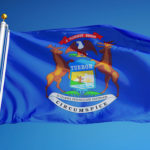 Michigan: Kimberley DiDonato, 60, of Rose Township will stand trial on voter fraud charges after being bound over to circuit court. According to Michigan Attorney General Dana Nessel, Kimberley DiDonato was bound over on Sept. 10 on one count each of Election Forgery and Using a Computer to Commit a Crime, both felonies. DiDonato was arraigned on the charges in June. According to Nessel, DiDonato is an American citizen married to a lawful permanent resident who is ineligible to vote in state and federal elections. DiDonato allegedly posed as her non-citizen husband, falsely claimed he was an American citizen, provided her husband’s identifying information and registered him to vote online in April 2024. Nessel states that upon receiving a voter registration card in her husband’s name, DiDonato contacted her local clerk to cancel the registration in May of that year. DiDonato claimed her intent was to test the registration system for vulnerabilities to unqualified voter registrants. A pretrial date has not yet been set.
 Minnesota: The Minnesota Supreme Court ruled September 11 that the City of Oak Grove can use paper voting rosters in the 2026 election. The Upper Midwest Law Center sued on behalf of the city, arguing that city officials have the authority to decide between paper and electronic voter rosters. Previously, Anoka County officials determined that Oak Grove must use electronic voting rosters. Some say the decision opens the door for more cities across Minnesota to switch back to the old paper books, which critics argue could lead to longer lines and other complications during this fall’s midterm election. “Modern elections require modern technology to speed up voter check-in, protect sensitive data, and support accurate recordkeeping,” Anoka County officials said in a statement. “Since electronic rosters were implemented countywide in 2018, we’ve had no cases of fraud, security breaches, or related issues.” The county continued: “While the Supreme Court’s decision makes election administration more difficult, Anoka County will continue to do what it has always done and ensure that its elections are safe, fair, and secure.” Anoka County had rejected the demand to abandon the electronic poll pads, affirming that elections are secure and there have been no issues with the system. Officials said the switch to electronic rosters has made voter check-in more efficient and less susceptible to human error. At issue was state law that says a county, municipality or school district may use electronic rosters for any election, and that the head elections official may designate that precincts use those poll pads.
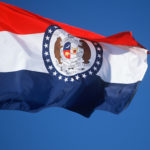 Missouri: The U.S. Supreme Court on September 10 paused a ruling by a federal judge in Missouri that would have allowed the state to use a new congressional map intended to give Republicans an additional seat in the U.S. House of Representatives in the upcoming elections. In a brief, unsigned order, the court granted a request by the organizers of a referendum on the new map to put a ruling by Chief U.S. District Judge Stephen Clark on hold while litigation in the dispute moves forward. The justices’ order, from which there were no public dissents, came less than two days after Justice Brett Kavanaugh, who handles emergency appeals from Missouri, declined to disturb a ruling by the Missouri Supreme Court that barred Missouri from using the new map. With the deadline to send out ballots for military and overseas voters just nine days away, Thursday morning’s order likely means that the state will use the map that it adopted in 2022 – a different map from the one that it used for the state’s primary election on Aug. 4 – for the November elections.
Secretary of State Denny Hoskins agreed to use the state’s 2022 congressional map, hours after a contentious hearing before the Missouri Supreme Court over whether to hold him in contempt. In a statement issued on September 10, Hoskins conceded that the only court order currently in effect is that of the Missouri Supreme Court, which ruled last week that the redrawn 2025 congressional map was not in effect, and never had been in effect, because it is subject to a referendum. “My Office is directing local election authorities to use the 2022 congressional map,” Hoskins said.
Five Missouri voters are seeking roughly $80 million in damages from Secretary of State Denny Hoskins over his handling of the state’s congressional map fight. The lawsuit, filed September 10 in Cole County Circuit Court, seeks class-action status on behalf of approximately 162,000 Missouri voters whose signatures on the People Not Politicians referendum petition were verified.The plaintiffs argue Hoskins failed to perform duties required by state law when he initially rejected the referendum petition challenging Missouri’s 2025 congressional map. In the lawsuit, the five St. Louis area voters also accuse Hoskins of violating his duties when he continued directing election officials to use the 2025 map after the Missouri Supreme Court ordered the state to use its 2022 map for the November election.
In the lawsuit filed September 14, former Director of Election Integrity Nick La Strada sued Secretary of State Denny Hoskins for alleged retaliatory actions against the former election official. The secretary of state’s office is accused of trying to influence elections and conspiring to make up a whistleblower complaint. The secretary of state’s office said it doesn’t comment on pending litigation. Attorneys for La Strada, said that Hoskins fired La Strada after he objected to several actions from the secretary’s office, including not questioning using public funds to influence an election in St. Louis County. La Strada, a Republican, is a former county clerk for Pettis County and served as the director of election integrity beginning in January 2025 in the secretary of state’s office. “We claim Nick was fired because he blew the whistle on what he believed to be violations of law, violations of policy, abuses of power, alteration of technical findings,” attorney Dennis Egan said.
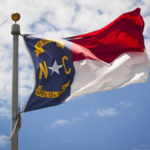 North Carolina: The General Assembly did not violate the constitution when it transferred Board of Elections appointments from the governor to the state auditor, a split Appeals Court panel decided. The legislature passed a controversial law after the 2024 election transferring Board of Elections appointment power to newly elected Republican state Auditor Dave Boliek, taking that power away from Democratic Governor-elect Josh Stein. In the decision issued this week, the Appeals Court overturned the ruling of a three-judge panel that had sided with Stein. Stein contended that the law stripping his appointment powers prevented him from performing his constitutional duty to ensure all laws are followed. In a majority opinion Judge April Wood wrote that the separation of powers was not violated because the legislature assigned Board of Elections duties to another member of the executive branch. “… We cannot hold that the reassignment of duties from the Governor to the Auditor results in a plain and clear violation of the separation of powers,” Wood wrote. “Whether the General Assembly should be allowed to reassign these duties from a public policy standpoint is not for this Court to decide.” The board is apolitical, Wood wrote, and “should not, nor is it designed to, effectuate the policy preferences of any elected or appointed official.” Stein said in a statement he’s going to appeal.
 South Dakota: U.S. District Court Judge Eric Schulte will decide whether South Dakota’s secretary of state is violating the U.S. Constitution with allegedly misleading letters to voters registered as federal-only, and by allegedly failing to tell them how to change their status. Schulte heard oral arguments on September 11 and said he expects to release a decision this week. The case deals with how the state’s chief elections officer is implementing legislation approved by lawmakers and signed into law by Republican Gov. Larry Rhoden in March. The law requires new voter registrations to include proof of citizenship, which can include a birth certificate, passport, driver’s license, non-driver’s identification card or tribal identification card, or “any other type of acceptable documentary evidence of citizenship” permitted under federal law. Photocopies are acceptable for any documents except driver’s licenses or state or tribal identification. The lawsuit asks a judge to force the state to: Accept photocopies of driver’s licenses, tribal IDs and nondriver IDs for voter registration. Rescind guidance requiring in-person registration for people who use such IDs as proof of citizenship. Make sure registrants designated as federal-only are offered accurate explanations as to why they’ve been denied access to state and local ballots. Offer voters registered as federal-only an opportunity to challenge the designation. Schulte heard arguments specifically about the notification letters sent to voters registered as federal-only. The lawsuit was filed by the League of Women Voters and by a Sioux Falls resident, Jaysen Hill. They’re suing South Dakota Secretary of State Monae Johnson and the state Board of Elections.
 Texas: The Texas Supreme Court ruled that Galveston County cannot use its newly approved 2026 precinct boundaries for the November general election. In the Sept. 11 opinion, the court states the county cannot “change the lines applicable to an election after the election has begun.” The new boundaries, which affect precincts for county commissioners, constables and justices of the peace, were redrawn and approved on June 29 — between the March primary election and the November general election. County officials made the maps effective immediately. A Galveston County constable and two county residents filed an emergency petition asking the Texas Supreme Court to block the new precinct boundaries so they couldn’t be used in the November election. The plaintiffs argued the change wasn’t fair to voters or potential candidates whose precincts changed mid-election year. The court instructed the county to use the same precinct maps from the March 2026 primary election in the upcoming November election and only conduct a general election for offices where a primary election was held. However, Sarah Chen, an attorney at the Texas Civil Rights Project, said nothing prevents the County from using the map after the general election. Galveston County Judge Mark Henry previously told Houston Public Media that the new map was designed to improve judicial function for the justices of the peace, create opportunities for fiscal efficiencies within the county government and enhance the likelihood of Republican victories in the area.
Opinions This Week
National Opinions: U.S. Postal Service | Election monitor | Federal interference, II | Vote by mail, II, III, IV | Voter fraud | Election protection | SAVE Act | U.S. Supreme Court, II |
California: Contra Costa County | Voter ID | Vote by mail |
Colorado: Voter readiness | Federal interference | Vote by mail |
Florida: Voting rights | Citrus County | Election security |
Hawai’i: Elections watchdog | Tied elections |
Illinois: Local elections |
Indiana: Secretary of state race, II | Election security |
Minnesota: Election security |
Nevada: Vote by mail |
New Jersey: Voter fraud hearing |
North Carolina: Sunday voting |
North Dakota: U.S. Supreme Court |
Ohio: Voter ID, II | Election administration |
Texas: Poll workers | Voter registration |
Upcoming Events
Election Talk: How are the Media and Social Media Doing in Informing Voters?: The Safeguarding Democracy Project at UCLA promotes research, collaboration, and advocacy under the leadership of UCLA Law Professor Richard L. Hasen; one of the nation’s leading election scholars. The Safeguarding Democracy Project is built upon the premise that tackling issues of the U.S. election integrity must be collaborative: across ideologies, across scholarly disciplines, and as a bridge between theory and practice. Our events this semester are focused on the 2026 midterm elections. Speakers: David Folkenflik, NPR; Carrie Levine, Votebeat, and Shannon McGregor, University of North Carolina. When: September 22, 3:15pm Eastern. Where: Online.
Content Creators, Election Administration and Voting: Can Social Media be used to Improve the Voter Information Environment: What can election officials do to ensure that voters receive accurate, accessible and trustworthy information? Election officials have deep expertise about elections and are among the most trusted sources of voting information. In this webinar, we will explore how they can use social media’s broad reach to improve the information people receive about elections, voter registration and voting. This discussion builds on the Ash Center paper “Building Capacity to Use Social Media: How Election Officials Can Leverage Content Creation to Provide Accurate Voter Information,” which offers frameworks for collaboration between election officials and content creators. Please join us to learn how election officials are beginning to work with social media influencers and creators to provide accurate, accessible and engaging civic information. This event is co-sponsored by the Shorenstein Center on Media, Politics and Public Policy. When: September 22, 4pm Eastern. Where: Online.
2026 WACO Conference: The Wyoming Association of County Officers-County Clerks will hold its annual conference from September 22-24 in Laramie.
Protecting the 2026 Midterm Elections: The Role of Key State Officials: Despite claims by the administration, presidents have no authority under the U.S. Constitution or other mechanisms to unilaterally alter rules for federal elections. The power to administer elections lies strictly with the states and Congress, as federal courts have repeatedly concluded. State and local election officials have a history of overseeing free and fair elections—even during recent emergencies and foreign interference—to ensure they accurately reflect the will of the American people. Please join the Center for American Progress for a conversation with top law enforcement and election officials that will spotlight the role that state attorneys general and secretaries of state play in administering safe and secure elections and the coordination required across state offices, providing transparency into the process for constituents. When: September 23, 10am Eastern. Where: Online.
When Something Happens: The Center for Civic Design is excited to introduce When Something Happens, a nonpartisan voter messaging toolkit designed to assist you in critical moments. When Something Happens is built on our expertise in design communications. The toolkit includes customizable, nonpartisan social media messages to help you communicate with your voters in the moments after something happens. We’d love to show you how the toolkit can assist you in those critical moments. Join us for a webinar to see how you can leverage the toolkit to communicate to your voters. When: September 24, 1pm Eastern. Where: Online
2026 MACO Annual Conference: The Montana Association of Counties will hold its annual conference from September 27-30 in Helena.
Power at the Polls: Confronting Barriers to Accessible Democracy: The 2026 midterm elections will determine the leadership of nearly every level of government, yet for the 1 in 4 Americans with a disability, the right to a private and independent ballot remains under threat. Following a wave of restrictive state voting laws in 2025 and additional bills under consideration to further restrict voting, the complex landscape of procedural barriers could stifle several of the nation’s largest voting blocs. New America will host a virtual event on the state of accessible democracy. This event will highlight grassroots power and examine the legal protections afforded by the ADA and the Voting Rights Act. The panel will discuss critical 2026 initiatives, such as the expansion of curbside voting pilots, the impact of federal “SAVE” legislation, and how election officials can ensure that polling places are physically and digitally accessible for all. The event will feature election experts, democracy experts, and voting experts, including disabled voting rights leaders. When: September 29, 12pm Eastern. Where: Online.
Frontiers of Democracy 2026: At a moment of significant political change in the United States and around the world, the Frontiers of Democracy 2026 convening will explore the essential elements of democratic process, policy, and partnership. Drawing on global, historical, and youth perspectives, and using the framework of generous listening, we will examine the intersections of political pluralism, activism, and academia—and consider how to meet this pivotal moment in history. While this framing guides our conversation, the convening is not limited to a single theme. Sessions will also engage with topics central to Tisch College’s North Star: building robust, inclusive democracy for an increasingly multiracial society. The agenda will feature concurrent breakout sessions, keynotes, plenary sessions, and networking opportunities, including an organization and poster fair. We are pleased to announce Danielle R. Holley, President of Mount Holyoke College as this year’s keynote speaker. We look forward to seeing you there! When: October 2-4. Where: Medford, Massachusetts.
National Voter Education Week: Voters should have the information they need to cast their ballots with confidence. That’s where National Voter Education Week comes in. Help voters find their polling location, understand their ballot, and make a plan to vote by joining our week-long campaign. When: October 5-9.
Democracy Summit: The Center for Journalism & Democracy will host its 4th Annual Democracy Summit. With journalists and newsrooms across the country fighting to defend press freedom, the Democracy Summit will feature substantive conversations examining the growing threats to journalism and democratic institutions and how journalists and news organizations can respond. As the 2026 midterm elections approach, join newsroom executives, domestic and international journalists, legal scholars and democracy leaders for a full day of learning, strategy and preparation focused on press freedom, election coverage and democratic resilience. This year’s Democracy Summit will include: Conversations with the nation’s leading voices in media and journalism; Timely discussions on press attacks, democratic erosion and the fight to defend journalism; Exchanges with international journalists sharing lessons on democratic backsliding and recovery; A real-time election reporting scenario to stress-test your decision desk preparedness; and A live newsroom simulation testing editorial and legal judgment. More than 250 journalists gathered from across the country for a day of learning and discussion from some of the top experts in their fields for the last summit. It is time to gather again. When: October 6, 9am Eastern. Where: Washington, DC and online.
What Can Go Wrong (and What Can Go Right) with November’s Midterm Elections?: The Safeguarding Democracy Project at UCLA promotes research, collaboration, and advocacy under the leadership of UCLA Law Professor Richard L. Hasen; one of the nation’s leading election scholars. The Safeguarding Democracy Project is built upon the premise that tackling issues of the U.S. election integrity must be collaborative: across ideologies, across scholarly disciplines, and as a bridge between theory and practice. Our events this semester are focused on the 2026 midterm elections. Speakers: Jonathan Diaz, Campaign Legal Center; Matt Germer, R Street Institute; and Justin Leavitt, Loyola Law School. When: October 13, 3:15pm Eastern. Where: Online.
Election Hero Day: Election Hero Day is a nonpartisan, national celebration recognizing the tremendous contributions that election officials, their staff, and poll workers make to ensure a safe, secure voting experience for all Americans. Taking place on October 20, 2026, nonprofits, business leaders, brands, public officials, and more will unite to honor the election heroes in our communities. With your support, Election Hero Day will help boost election official morale ahead of Election Day and send a clear message to the public that we support our friends and neighbors who play such a vital role in preserving our democracy. When: October 20.
Vote Early Day: When Americans vote early, they ensure last-minute problems, long lines at the polls, confusing election laws, or voter disinformation cannot prevent us from casting our ballot. Vote Early Day is a tentpole moment for partners nationwide to engage with voters and empower them with the tools to cast their ballots early. When: October 27.
Assessing the Fairness and Integrity of the November Elections: The Safeguarding Democracy Project at UCLA promotes research, collaboration, and advocacy under the leadership of UCLA Law Professor Richard L. Hasen; one of the nation’s leading election scholars. The Safeguarding Democracy Project is built upon the premise that tackling issues of the U.S. election integrity must be collaborative: across ideologies, across scholarly disciplines, and as a bridge between theory and practice. Our events this semester are focused on the 2026 midterm elections. Speakers: Bill Gates, Arizona State University; Guy-Uriel E. Charles, Harvard Law School; Charles Stewart, MEDSL; Susan Stokes, University of Chicago and Tammy Patrick, Election Center. When: November 16, 3:15pm Eastern. Where: Online.
2026 Elections Summit: In a time of rapid change and evolving challenges to our electoral processes, collective reflection and forward-looking strategy are more important than ever. Bipartisan Policy Center’s 2026 Elections Summit will convene a diverse group of election practitioners, policymakers, and thought leaders to debrief the November election and chart a course forward for U.S. election administration. Be part of a defining moment for democracy as we gather in Washington, DC, to shape its future together. When: December 7, 9am to 4pm Eastern. Where: Washington, DC.
Job Postings This Week
electionlineWeekly publishes election administration job postings each week as a free service to our readers. To have your job listed in the newsletter, please send a copy of the job description, including a web link to mmoretti@electionline.org. Job postings must be received by 5pm on Wednesday in order to appear in the Thursday newsletter. Listings will run for three weeks or till the deadline listed in the posting.
Account Executive, VotingWorks– We are looking for a trusted sales leader who understands that election administrators don’t buy voting machines, they buy trust, both in the equipment and in the vendor. All 83 of Michigan’s counties will soon open at once, and we are in the running for the state RFP enabling us to sell our voting machines. Incumbents will have to re-earn their contracts, and we’ll be competing on equal footing for the first time. This opportunity is time bound. Trust matters deeply in this market. Your job is to build relationships and earn credibility quickly with state and local election officials. You will own the full Michigan territory. You’re responsible for the entire sales process: building pipeline, running demos, navigating procurement, and closing deals. We want sustainable sales contracts that are technically sound, politically supported, and set up for a clean handoff to Customer Success. For your first demos, you’ll be paired with our Executive Director and our Head of Customer Success to learn the messaging and the product. Once you take on demos on your own, you should still know when to bring in executive support and when to handle things yourself. This is a competitive market with a real window of opportunity. If you want to sell something that actually matters to Democracy, and you’re energized by moving fast when the timing is right, we’d like to meet you. Application: For the complete job listing and to apply, click here.
Administrative Specialist II, King County, Washington–This is an amazing opportunity to be engaged in the election process! This position will be filled as a Term-Limited Temporary (TLT) position or Special Duty Assignment (SDA) for current King County employees who have passed their initial probationary period. It is anticipated to last until December 2027. The Department of Elections is searching for energetic and resourceful professionals who like to “get stuff done”. The Administrative Specialist II positions in the Voter Services Department combines an exciting, fast-paced environment with the opportunity to cultivate talents and apply a variety of skills. The ideal candidate will have a desire to help ensure the democratic process through public service. They will thrive in an innovative environment and will not hesitate to roll up both sleeves, work hard, have fun, and get the job done. Salary: $29.46 – $37.47 Hourly. Deadline: September 28. Application: For the complete job listing and to apply, click here.
Assistant Director for Elections Technology, Tennessee Secretary of State’s Office– Serves as the Division of Elections’ technology manager and advisor, who works in coordination with the Tennessee Secretary of State’s IT Division and is responsible for statewide election technology strategy, cybersecurity, state voter registration data, election reporting systems, business continuity planning, technology procurement, and oversight of election technology support provided to Tennessee’s 95 county election commissions. This position coordinates technology projects, monitors system performance, supports election security efforts, and serves as a liaison between the Division of Elections, state IT personnel, county election officials, and technology vendors. The position helps ensure election technology systems remain secure, dependable, and compliant with applicable state and federal requirements. The Assistant Director supervises two employees. Application: For the complete job listing and to apply, click here.
Assistant Executive Director, Chicago Board of Election Commissioners–This full-time exempt position reports directly to the Board’s Executive Director and is responsible for overseeing the Board’s daily administrative operations, including Human Resources, Finance, and Purchasing. Working closely with the Executive Director, the Assistant Executive Director will also oversee general office functions, including but not limited to the mailroom, the copy room, and receptionists. Essential Duties and Responsibilities: Direct supervision of the human resources, finance and procurement functions of the Board. Assess Board policies and develop business strategies to ensure coordination across the various administrative functions in the Board’s downtown and warehouse offices. Monitor performance and provide feedback to senior administrative management, including teaching, supporting and modeling logistics in line with Board policies and procedures. Advise the Executive Director on matters impacting administrative operations. Participate in Board of Election Commissioners meetings, providing updates on current and long-term projects impacting the administration of the Board. Oversee Board financial matters, ensuring best practices for procurement, contracts, grants, and staffing. Direct supervision of ADA and Communication staff. Attend external meetings at the request of the Executive Director, including City/County budget hearings, civic events, intergovernmental matters, conferences, etc. Oversee the operation and selection of staffing of Election Central for Election Day support. Execute other duties as directed by the Executive Director. Salary: $144,000 – 154,000. Application: For the complete job listing and to apply, click here.
Customer Support Center Consultant Level 1, Hart InterCivic– The Customer Support Center Consultant Level 1 (CSC 1) provides Tier 1–2 support for Hart InterCivic products, helping customers troubleshoot issues and keep election operations running smoothly. The CSC I’s primary responsibilities are to: Resolve and route customer issues via phone, email, and remote tools; Document cases in the CRM and communicate status through resolution; and Use product documentation to deliver clear, customer-friendly solutions. This role researches and resolves issues, supports hardware/software configuration and deployment, and provides training or on-site support as needed. It also documents processes and partners with other departments to improve service delivery. This position follows the Proprietary Information and Intellectual Property Agreement and is responsible for protecting company information, including when working off-site or outside normal hours. Application: For the complete job listing and to apply, click here.
Cybersecurity Assessor (Election Security), Apollo Information Systems: The Technical Assessor conducts in-depth technical and program-level cybersecurity assessments of client environments, identifying risk, measuring control maturity, and producing clear, actionable guidance that advances each client’s security posture. This is an experienced assessor role: the individual independently leads assessments end to end, evaluates complex environments against multiple frameworks, and is a trusted voice in front of both technical teams and executives. The assessor also helps mature Apollo’s assessment method. Salary: $80K – $120K. Application: For the complete job listing and to apply, click here.
Election Worker – Office Assistant (Extra Help, Seasonal), San Mateo County, California– The Elections Division is an exciting, fast-paced environment, especially as elections approach. This is an excellent opportunity to work with a group of dynamic, well-organized, and highly efficient individuals committed to the democratic process. The San Mateo County Registration & Elections Division is seeking full-time, seasonal Election Worker – Office Assistants to assist in the upcoming November 3, 2026, Statewide General Election. This is an excellent opportunity to be involved in the election process! We are currently seeking dedicated, enthusiastic and hard-working individuals for temporary, full-time positions to be hired into one of the following areas: Ballot retrieval, vote by mail, voter registration/clerical support, voter helpdesk support, supplies, field techs/warehouse. This is an extra-help, at-will assignment, paid on an hourly basis. Extra-help hours are dependent on the business needs of the department and therefore work hours may vary from week to week. Extra-help employees shall not exceed 1,040 hours of work per fiscal year. Some extra help positions are eligible for benefits under the Affordable Care Act. Extra-help employees are not guaranteed permanent status at the end of the assignment. Salary: $24.91/hour. Application: For the complete job listing and to apply, click here.
Elections Data and Analytics Manager, Tennessee Secretary of State’s Office – Responsible for statewide election data governance, voter registration data integrity, business intelligence, reporting, analytics, data integration, and performance measurement. This position serves as the Division’s subject matter expert on election data and ensures accuracy, security, compliance, and accessibility of election information. This position assists ballot review and approval, producing and analyzing election-related state and federal reports, maintaining and assisting in updating elections mobile app. Assist in planning and coordinating the computer functions and responsibilities for the Elections Division which includes, but is not limited to: data processing, integrating the statewide voter registration system with county voter registration systems, improve election reporting capabilities; analyzing and resolving technical software issues (25%) for the Division of Elections and 95 county election commission offices, which includes, but is not limited to cybersecurity practices, and performing other duties as assigned. Salary: Commensurate with experience and State of Tennessee benefits package. Application: For the complete job listing and to apply, click here.
Executive Director, Ranked Choice Voting Resource Center– The Ranked Choice Voting Resource Center is a national, nonpartisan 501(c)(3) organization dedicated to making ranked choice voting elections successful. We provide research, education, technical tools, and practical support to election administrators, policymakers, advocates, media, and the public. We currently support our partners across the country with a remote, distributed team of seven full-time staff members and a $1M annual budget. The incoming Executive Director will lead the Center’s next phase of growth — expanding our team and revenue base while maintaining the credible, high-caliber service that has earned the trust of partners nationwide. In the process, you’ll help shape the delivery and public perception of election innovation in the United States. Salary: $140,000 – $175,000. Application: For the complete job listing and to apply, click here.
GIS Specialist, Palm Beach County, Florida– Help power accurate, well-run elections through smart mapping and rock-solid data. As a GIS Specialist II with the Palm Beach County Supervisor of Elections, you’ll own core geospatial datasets, turn complex information into clear maps and insights, and improve the workflows teams rely on to plan and execute election operations. Your work helps ensure precinct, polling place, and district data is accurate and easy to use—supporting operational readiness, transparency, and timely decision-making. You’ll maintain and enhance GIS databases, produce print and web-ready map products, perform quality control and spatial analysis, and keep GIS synchronized with the Voter Registration System. You’ll collaborate with both technical and non-technical teams, document standards and changes, and provide training and troubleshooting support. Salary: $72,800 to $87,000. Application: For the complete job listing and to apply, click here.
IT Assistant Manager, Palm Beach County, Florida–The Assistant IT Manager plays a vital and supportive role in ensuring the smooth operation of the IT department, aligning both the technical infrastructure and the team with the organization’s goals. This position involves collaborating closely with the Election Technology Director to oversee the implementation of technology solutions that meet the organization’s needs. The Assistant IT Manager helps maintain an efficient and effective IT environment. The Palm Beach County Supervisor of Elections Office is committed to hiring talented individuals with diverse experiences that will enhance the services we provide to the residents of Palm Beach County. We are always looking for dedicated individuals who do all things with Integrity and Accountability, who excel in Customer Service, and believe in Transparent, Secure Democracy. At the Supervisor of Elections Office, we strive to help our employees find passion and purpose. Join us in being the best place to vote. Salary: $85000 to $125000. Application: For the complete job listing and to apply, click here.
Marketplace
electionline provides no guarantees as to the quality of the items and the accuracy of the information provided about the items in the Marketplace. Ads are provided directly by sellers and are not verified by electionline. If you have an ad for Marketplace, please email it to: mmoretti@electionline.org